

What happens to all the words people type and then delete? The half-written apology. The confession that felt too heavy. The simple “I miss you” that sat in a text box for ten minutes before the backspace key won. Most of those words vanish forever. But since around 2015, a corner of the internet has been collecting them. (Internet & Technology research)
The Unsent Project is a digital archive where people submit messages they wrote but never sent to someone, usually a former partner. The messages are displayed on cards, and visitors can read through a growing sea of things left unsaid. It sounds small. It is not. The project has become one of the internet’s most quietly enormous emotional archives, and it raises genuinely interesting questions about confession, anonymity, and why people feel better after typing a message nobody will receive.
What Exactly Is the Unsent Project?
The project is simple. A person writes a message they never sent. They submit it through a form, usually with one extra detail: the hair color of the person the message was meant for. That detail is the project’s signature quirk. Each submission appears on a card colored to match, so a message for a blonde ex sits on a yellow card, a brunette’s on brown, and so on. The result is a wall of human longing sorted by a detail that should be irrelevant and somehow isn’t. (Use notion project management practical setup guide)
The project is widely credited to Rora Blue, an artist whose work often circles themes of identity, memory, and emotional exposure. What began as an art-driven idea grew into a public website and a large social media presence, with screenshots of individual cards circulating constantly on Instagram, TikTok, and Pinterest. A single card, sometimes just one sentence long, can reach millions of people.
It is worth being precise about what the project is not. It is not a therapy service, not a crisis line, and not a messaging platform. Nobody receives the messages. That is the entire point.
Where the Idea Came From
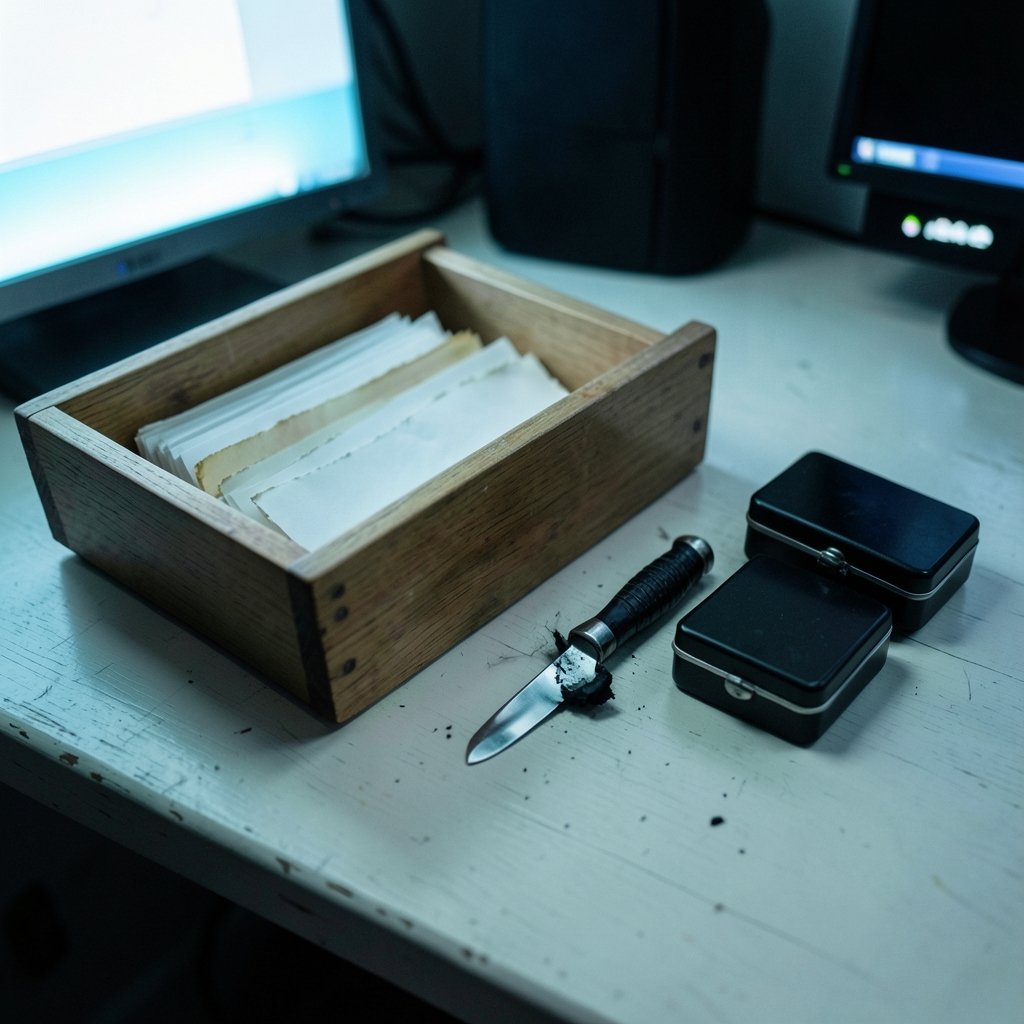
The Unsent Project started as an art project before it became a website, growing out of an interest in the gap between what people feel and what they actually say. The premise borrows from a much older human habit: the letter you write and never mail. Writers have long described drafting angry letters to burn or apology letters to keep in a drawer. The internet simply gave that ritual a public shelf. (Xbox project helix amd chip family whats actually confirmed)
The timing mattered. By the mid-2010s, social platforms had trained people to broadcast, not withhold. A project built entirely around withholding, and then displaying the withheld thing anonymously, was a gentle act of rebellion. It also arrived alongside a broader culture of screenshots and text-message confessionals, where a single captured message could function as a short story.
How the Project Works in Practice
The mechanics are deliberately minimal. Submissions follow a short, consistent pattern, and the low friction is a big part of why it works. There is no account to create, no profile to maintain, and no reply to wait for.
- The writer composes a message to someone they never sent it to.
- They choose the recipient’s hair color from a set of options.
- They submit the message, which appears on a card in that color.
- The card joins a public archive that anyone can browse.
- Selected cards get shared on the project’s social channels, where they often travel far beyond the site itself.
The hair-color field is easy to mock, but it does real work. It turns an abstract feeling into a small, concrete act of recall. Choosing a color forces the writer to picture a specific person rather than a vague sense of regret. That specificity is a big part of the emotional pull.
Why It Resonates So Widely
The project’s appeal rests on a few psychological mechanisms that researchers have studied for years.
The relief of expression without consequences
People often assume that saying a hard thing out loud is what brings relief. Research on emotional disclosure suggests the benefit comes largely from the act of putting feelings into language, not from the audience. Writing about a painful experience in a structured way has been linked to improved mood and reduced stress in studies of expressive writing. The Unsent Project offers that benefit with zero social risk. Nobody is embarrassed at dinner. Nobody gets left on read. (Stress)
Anonymity lowers the cost of honesty
When there is no name attached, people admit things they would never say in public. The project’s archive is full of admissions that read like they were typed at 2 a.m., because many probably were. Anonymity is not a loophole here. It is the enabling condition.
Reading others’ messages normalizes your own
There is a particular comfort in scrolling a wall of messages and finding your exact feeling written by a stranger. Psychologists describe this as universality, one of the factors in group support that helps people feel less alone. The archive functions a little like a very large, very quiet support group with no meeting time.
The card format makes grief beautiful
A plain block of text is easy to scroll past. A colored card with one line of handwriting-style type is a small design object. Presentation changes how much attention people give content, and the project’s visual consistency is a large part of why individual cards get shared so widely.
The Submissions Themselves
The messages tend to fall into recognizable categories. A few appear again and again:
| Type of message | What it usually sounds like | Why people write it |
|---|---|---|
| The late apology | “I should have said sorry when I had the chance.” | Guilt that never found an outlet |
| The unspoken confession | “I loved you the whole time.” | Fear of rejection |
| The final word | “I hope you’re happy. I mean it.” | Closure that was never delivered |
| The small memory | “I still can’t drive past your street.” | Grief attached to a place |
| The self-directed note | “I’m sorry I let myself stay so long.” | Processing a relationship’s cost |
What stands out is how short most of them are. Very few submissions read like essays. The best ones land in a sentence or two, which is exactly how real unsent messages look in a text box at midnight.
Common Misunderstandings About the Project
A few persistent myths are worth clearing up.
Myth one: someone receives the message. Nobody does. The recipient is never contacted, and in most cases is never named. The project is a record, not a delivery service.
Myth two: it is a dating or hookup site. It is not. There is no matching, no messaging, no interaction between users. It is closer to a public diary than a social network.
Myth three: it is only for romantic heartbreak. A large share of submissions are romantic, but people also write to parents, friends, teachers, and themselves. The theme is not romance. The theme is unfinished business.
Myth four: the project is a modern invention with no precedent. Public confession has a long history, from anonymous advice columns to postsecret-style mail art projects. The Unsent Project updates a familiar format for a generation that lives in text boxes.
How to Use It Well (and What to Avoid)
For people who find the site genuinely useful, a few practical notes help.
Do write the message before you browse. Reading a hundred cards first tends to shape what you write. Draft yours cold, then explore the archive.
Do treat it as a ritual, not a habit. Submitting one message about one person can feel like closing a door. Submitting twenty in a week is usually a sign that something needs attention elsewhere.
Do not expect a reply. Some submitters quietly hope the recipient will somehow see it. They won’t. If a message truly needs to be delivered, the project is not the delivery mechanism.
Do not submit identifying details. Even anonymous archives can expose people. Names, workplaces, and specific locations have no place in a public submission.
Do not use it as a substitute for support. If a message is about self-harm or a crisis, a public archive is the wrong place. Professional support exists for exactly that reason.
The Project in a Wider Cultural Context
The Unsent Project sits at the intersection of several trends that have defined the last decade of online life. One is the rise of anonymous confession culture, where people share secrets with strangers rather than friends. Another is the screenshot as a literary form, where a single captured line of text functions as a poem. A third is the slow shift away from broadcast-style social media toward smaller, stranger, more specific corners of the internet.
It also connects to something people building their own online spaces think about constantly: how much structure a community needs. Running a large public archive means handling moderation, privacy, and emotional safety, which is not so different from the trade-offs anyone faces when they set up a project management workflow for a small team or decide whether self-hosting is worth the cost. The same questions about scale, cost, and responsibility show up whether you are collecting unsent messages or spinning up infrastructure, and guides on whether something like Amazon S3 really costs a small project or business much reflect how often those decisions come down to unglamorous practicalities.
What makes the project unusual is that its constraints are its appeal. No accounts. No replies. No algorithm deciding which heartbreak deserves reach. That simplicity is harder to maintain than it looks.
Does the Project Actually Help Anyone?
The honest answer is that it helps some people and does very little for others. There is no published clinical trial on unsent-message archives, and anyone claiming otherwise is overreaching. What exists is a large body of research on writing about difficult emotions, which generally finds modest benefits for people who process feelings through language. There is also the simple, unmeasured value of recognition: seeing your exact situation described by a stranger can make a lonely feeling feel shared.
The project’s critics have a fair point too. Public confession can become performance. Reading hundreds of sad messages in one sitting can leave people feeling worse rather than better. And there is a risk that a private ritual gets turned into content, stripped of the person behind it. The project works best when it is used as a small, private act inside a very public place.
Conclusion
The Unsent Project endures because it solves a problem almost everyone has: what to do with words that cannot be said. It does not deliver messages, fix relationships, or replace a difficult conversation. What it offers is smaller and more useful. A place to put the thing you typed and deleted. A reminder that thousands of other people are holding the same unsaid sentence. And a quiet argument that sometimes the act of writing something down is the whole point, even if nobody ever reads it, and especially if a stranger does.
Frequently Asked Questions
Who created the Unsent Project?
The project is widely credited to the artist Rora Blue, whose work explores identity, memory, and emotional exposure. It grew from an art-driven concept into a public website and a large social media presence where individual message cards are frequently shared.
Does the person you write about ever receive the message?
No. The Unsent Project does not deliver messages to anyone. Submissions are displayed anonymously in a public archive, and recipients are generally not named. It is a record of things left unsaid, not a messaging service.
Why do submissions ask for the recipient’s hair color?
The hair color determines the color of the card the message appears on, which gives the archive its visual signature. It also pushes the writer to picture a specific person rather than a vague feeling, which makes the submission feel more concrete.
Is the Unsent Project free to use?
Browsing the archive and submitting a message are free. There is no account, subscription, or paywall involved. The project’s simplicity, with no profiles or replies, is central to how it works.
Is it safe to submit a message?
Submitting is anonymous, but no public archive is completely risk-free. Avoid including names, workplaces, addresses, or any detail that could identify you or another person. If a message concerns self-harm or a crisis, contact a professional support service instead of posting it publicly.
What is the difference between the Unsent Project and just writing in a journal?
A journal is private and has no audience. The Unsent Project is public but anonymous, which means a submission can be read and recognized by strangers. Many people find that recognition comforting, while others find a private notebook more useful for processing difficult feelings.



