What if the “best” music format has nothing to do with specs and everything to do with how you actually listen? That question sits at the heart of every format debate right now. Streaming catalogs are enormous, vinyl sales keep climbing, and hi-res files promise studio-grade detail. Yet plenty of listeners still feel unsure about where to put their money.
This guide walks through the real trade-offs of each format. It covers what the numbers mean, what they hide, and which setup fits which kind of listener in 2027.
Why the Format Question Got Complicated Again
A decade ago the answer was simple: streaming won on convenience, and everyone else argued about the margins. That has changed. Hi-res streaming went from a niche add-on to a standard feature across major platforms. Physical media staged a comeback that refuses to fade. And a growing number of listeners now run two or three formats side by side instead of picking one.
The result is a market where the “right” answer depends on your habits, your gear, and what you want from a listening session. A commuter with wireless earbuds and a collector with a dedicated listening room are not solving the same problem.
Streaming: The Default That Earned Its Place

Streaming is where most people start, and for good reason. A single subscription opens millions of tracks, playlists, radio stations, and discovery tools that surface new music faster than any record store ever could. Portability is unmatched. Your library follows you from phone to car to kitchen speaker.
The catch is ownership. With streaming, you rent access rather than own files. If a licensing deal lapses or you cancel, the music goes with it. Connection quality matters too. A weak signal turns a lossless stream into a buffering spinner.
The hi-res streaming race, briefly
Hi-res streaming arrived in waves. Tidal launched its Masters tier in January 2017 using the MQA codec. Qobuz followed in May 2017 with lossless FLAC hi-res. Amazon Music HD arrived in 2019, and in 2021 Apple Music added hi-res lossless to its standard subscription at no extra cost, which pushed hi-res audio toward a mass-market audience. Spotify’s own hi-res plans have long been the subject of speculation rather than a finished product, so check the platform’s official page before you build a purchase around it.
That timeline matters because it shows hi-res streaming is no longer experimental. It is a normal subscription feature. The practical question is whether your ears and your gear can use it.
What you actually need to hear a difference
A hi-res stream is only as good as the chain that plays it. Bluetooth headphones compress the signal before it reaches your ears, which undercuts the point. A wired connection, a capable DAC, and a quiet listening environment do far more for perceived quality than a bigger bitrate number on its own.
Practical tip: before upgrading a subscription tier, test one album you know deeply on both tiers with the same headphones. If nothing changes, you have your answer for now. Many listeners report that the gap between 16-bit and 24-bit depth is easier to hear than differences in sample rate, which is a useful thing to know when comparing download options.
Vinyl: Ritual, Masterings, and Honest Limits
Vinyl’s revival is not a fluke. Sales have grown for roughly two decades, and the format has settled into a stable role as a premium, intentional purchase rather than a mass-market default.
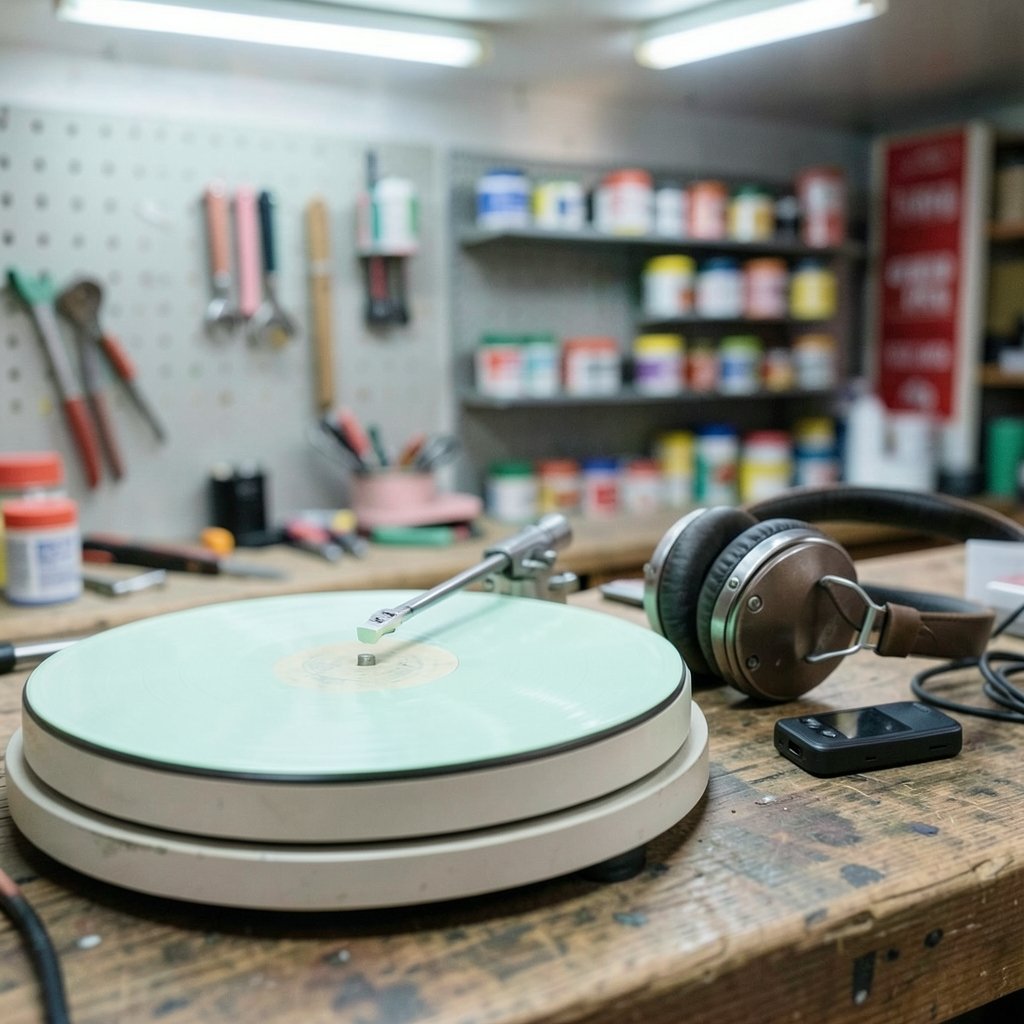
The appeal is partly mechanical. Pulling a record from its sleeve, setting it on the platter, and lowering the needle forces you to sit down and listen. That ritual is a quiet protest against the frictionless skip button. Cover art and lyric sheets become objects you hold, not thumbnails you scroll past.
The measurement problem
On paper, vinyl loses badly. A 24-bit hi-res file can carry a dynamic range of about 144 dB. A standard CD manages around 96 dB. Vinyl tops out somewhere between 50 and 75 dB, before you even count surface noise and the occasional pop. If the only metric were dynamic range, physical discs would have been beaten decades ago.
But the numbers miss two things. First, a well-kept original pressing can preserve the character of the era’s master tape, while some streaming versions are remastered or drawn from unclear sources. Second, the loudness war squeezed dynamics out of many digital masters, flattening the quiet details that make a recording breathe. Listeners who compare an original LP against a modern stream and prefer the LP are not wearing nostalgia goggles. There is often a real, audible reason.
What vinyl demands from you
Vinyl rewards effort and punishes shortcuts. A cheap turntable with a worn stylus will damage records and sound thin. Setup matters: cartridge alignment, tracking force, and a clean stylus all shape the result. Storage matters too, since heat and warping ruin pressings quietly.
Common mistake: buying a starter turntable and expecting it to match a digital source on clarity. Vinyl is a different listening experience, not a higher-fidelity one by default. Go in expecting warmth, texture, and ceremony, and you will rarely be disappointed.
CDs and Local Files: The Forgotten Middle
CDs sit in an odd spot. They are physical, so they satisfy the urge to own something. They are digital, so they carry no surface noise and no wear from repeated play. The standard is 16-bit at 44.1 kHz, a format engineered in 1982 to hold roughly 74 minutes of stereo audio on a 12 cm disc.
Early CD masters earned a reputation for harshness, partly because fitting audio into that rigid container required steep anti-aliasing filters that could introduce glare. Modern mastering has largely moved past that. And the CD market has shown notable rebounds in Europe and North America, which tells you the format is not dead so much as quietly useful.
Local files take the same idea further. Downloads from stores and artist pages give you true ownership, offline playback, and control over which master you keep. The trade-off is housekeeping. You need backups, sensible folder structure, and consistent metadata, or your library becomes a mess within a year.
A practical approach many listeners land on: use one app for streaming and discovery, another for the local library, and a dedicated control app for a network player. That split keeps each tool doing what it does best.
Hi-Res Downloads: Ownership With a Spec Sheet
Hi-res downloads combine the permanence of a file with the resolution of a premium stream. You buy once, keep forever, and play offline without asking permission from a server.
The risk is overspending on resolution you cannot use. A 24/192 file is not automatically better than a well-mastered 16/44 version. The master matters more than the container. Before buying, check which master a store is selling and whether your DAC and headphones can resolve the difference. Also confirm file format compatibility with your player, since not every device handles every codec.
If you are the type who wants a reference copy of twenty favorite albums and streams everything else, hi-res downloads are a sensible anchor for that small core collection.
Matching Format to Listener
The fastest way to choose is to match the format to your habits rather than to a spec sheet.
| Listener type | Priority | Sensible choice | Watch out for |
|---|---|---|---|
| Catalog explorer | Discovery and convenience | Streaming, lossless tier if available | Source and master quality varies |
| Reference-album listener | Traceability and stability | Local lossless files plus a network player | Backups and metadata upkeep |
| Physical collector | Ownership and ritual | Vinyl, with a properly set-up turntable | Setup cost and storage conditions |
| Budget-conscious hybrid | Flexibility | CD rips plus a basic stream | Duplicate purchases and clutter |
Notice that no row says “best sound.” That is deliberate. Each format wins on a different axis, and most people end up combining two. The format guide question is really a question about which compromises you can live with.
Practical Setup Tips That Actually Work
A few habits separate listeners who are happy with their systems from those who keep buying gear.
- Fix the room and the headphones before the source. A quiet space and a decent wired pair will reveal more than a subscription upgrade.
- Level-match when comparing formats. Louder almost always sounds better, so a fair test requires equal volume.
- Keep one reference album. Use the same track across formats and setups so changes are measurable to your ears.
- Back up local files in two places. Drives fail, and a library without a backup is a temporary library.
- Buy the master, not the bitrate. Check release notes and remaster credits before paying a premium.
- Do not chase specs your chain cannot deliver. Bluetooth and budget speakers cap the benefit of hi-res files.
Common mistake: upgrading three parts of the chain at once, then having no idea which change helped. Change one thing, listen for a week, then decide.
Where 2027 Is Heading
Three trends look durable. Hi-res streaming keeps becoming a baseline feature rather than a premium upsell. Physical media holds its niche as a deliberate, collector-driven purchase. And local libraries persist among listeners who want control over masters and offline access.
The interesting shift is behavioral. Format loyalty is fading in favor of format mixing. Someone might stream on the train, play vinyl on Sunday, and keep a folder of hi-res files for critical listening. That is not indecision. It is a portfolio approach, and it fits how people actually live with music.
If you are planning around release calendars and events, the same logic applies to scheduling your listening budget. Just as readers check the AP exam schedule 2027 dates, digital format, and deadlines to plan study time, or follow the Daytona 500 2027 date, format, and watch details to plan a race weekend, music fans can map album drops and format releases ahead of time instead of reacting late. (Bluestacks vs gameloop vs memu obs streaming workflows 2027)
Conclusion
There is no single winner in the vinyl versus streaming versus hi-res argument, and anyone who claims otherwise is selling something. Streaming wins on access and discovery. Vinyl wins on ritual, tangibility, and often on mastering character. CDs and local files win on ownership without fuss. Hi-res downloads win when you want a permanent reference copy of the albums you love most.
The smart move in 2027 is to stop treating this as a loyalty test. Pick the format that matches how you listen on a given day, invest in the parts of the chain that limit you, and test with your own ears before spending more. The best format is the one that gets you listening more often.
FAQ
Is vinyl actually higher quality than streaming?
Not by the numbers. Vinyl’s dynamic range is roughly 50 to 75 dB, well below the 96 dB of a CD and the 144 dB ceiling of 24-bit hi-res. Vinyl can still sound preferable when an original pressing preserves a master that later digital versions remastered or compressed, so the gap is about mastering and character, not raw specs.
Do I need hi-res streaming to hear better sound?
Usually not first. Headphones, a wired connection, a decent DAC, and a quiet room change perceived quality more than a higher bitrate. Test one familiar album across tiers at matched volume before paying for an upgrade, and let your own ears decide.
What is the difference between 16-bit and 24-bit audio?
Bit depth sets dynamic range, meaning the span between the quietest and loudest sounds a format can hold. A 16-bit CD offers about 96 dB, while 24-bit hi-res reaches around 144 dB. Many listeners find the 16-to-24-bit jump easier to notice than changes in sample rate, though the master still matters most.
Why do people still buy CDs when streaming exists?
CDs offer ownership, offline playback, and no surface noise or wear from repeated play. They are also cheap secondhand and easy to rip into a local library. The CD market has rebounded in parts of Europe and North America, which suggests the format’s practical appeal has not gone away.
Can I combine formats without wasting money?
Yes, and most listeners do. A common pattern is a streaming subscription for discovery, a small vinyl collection for intentional listening, and a folder of local lossless files for reference albums. The key is avoiding duplicate purchases and keeping local files backed up in two places.
What should I check before buying a hi-res download?
Confirm which master the store is selling, whether the file format works with your player, and whether your headphones and DAC can resolve the extra resolution. A well-mastered 16/44 file often beats a poorly sourced 24/192 one, so read the release notes before paying a premium.