Shopping for the best Android tablets in 2027 is easier than it has been for years, and harder in one specific way: there is now a genuinely good option at almost every price, so the right choice depends on what you will actually do with it. If you want the short answer, buy the Samsung Galaxy Tab S11 if you want the best all-rounder, the OnePlus Pad 3 if you want the most performance for the money, and the Xiaomi Pad 7 if you want a sharp, fast mid-range tablet without paying flagship prices.
We compare six contenders on display, chip, battery, stylus support and software updates.
Key takeaways
- Samsung Galaxy Tab S11 is the best all-rounder: OLED display, S Pen included, seven years of updates.
- OnePlus Pad 3 is the performance pick: Snapdragon 8 Elite, 13.2-inch 144Hz screen, 12,140mAh battery.
- Xiaomi Pad 7 is the value pick: 144Hz 3.2K display and Snapdragon 7+ Gen 3 at a mid-range price.
- Lenovo Tab P12 suits big-screen reading and media, but its update window is the shortest here.
- Pixel Tablet only makes sense at a deep discount; Fire Max 11 is a media tablet, not a full Android tablet.
The best Android tablets at a glance
| Tablet | Display | Chip | Battery | Stylus | Updates |
|---|---|---|---|---|---|
| Galaxy Tab S11 | 11-inch AMOLED, 120Hz | Dimensity 9400+ | 8,400mAh, 45W | S Pen included | 7 years |
| Galaxy Tab S11 Ultra | 14.6-inch AMOLED, 120Hz | Dimensity 9400+ | 11,600mAh, 45W | S Pen included | 7 years |
| OnePlus Pad 3 | 13.2-inch LCD, 144Hz | Snapdragon 8 Elite | 12,140mAh, 80W | Sold separately | Shorter; check policy |
| Xiaomi Pad 7 | 11.2-inch LCD, 144Hz | Snapdragon 7+ Gen 3 | 8,850mAh, 45W | Sold separately | Shorter; check policy |
| Lenovo Tab P12 | 12.7-inch LCD, 60Hz | Dimensity 7050 | 10,200mAh, 30W | Pen included in some regions | Security updates to June 2027 |
| Google Pixel Tablet | 10.95-inch LCD, 60Hz | Tensor G2 | 27Wh (about 7,020mAh) | USI 2.0 pens; no first-party pen | Min. 5 years security |
| Amazon Fire Max 11 | 11-inch LCD, 60Hz | MediaTek MT8188J | 7,500mAh | Sold separately | Fire OS, based on Android 11 |
Specifications below are manufacturer specifications and published review data, not our own test results.
Samsung Galaxy Tab S11 and S11 Ultra: the best all-rounders
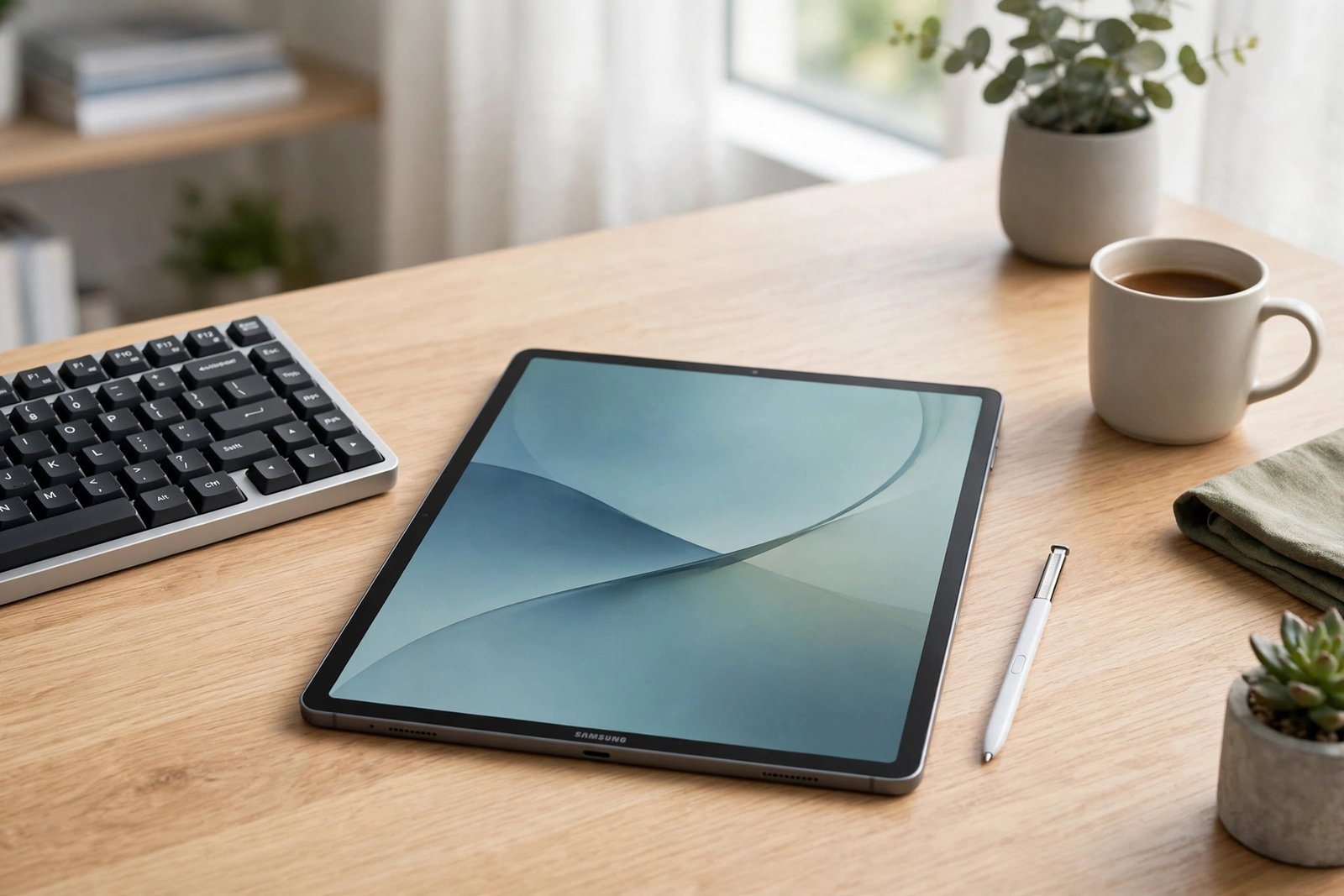
Samsung remains the default Android tablet maker: it is the only one with the complete package. The Tab S11 has an 11-inch Dynamic AMOLED 2X display (2,560 by 1,600, 120Hz, up to 1,600 nits peak brightness); the S11 Ultra stretches the same panel to 14.6 inches (2,960 by 1,848) with an anti-reflective coating. Both use the MediaTek Dimensity 9400+ chip with 12GB of RAM and ship with Android 16 and One UI 8.
The S Pen is included, needs no charging and attaches magnetically — the equivalent pen costs extra on almost every rival here. Both tablets keep a microSD slot, both are rated IP68, and Samsung promises seven years of updates, the longest commitment in this guide. The S11 has an 8,400mAh battery; the Ultra has an 11,600mAh battery, the largest Samsung has put in a tablet. Both charge at 45W. The older Galaxy Tab S10 range is still worth a look at a discount.
Best for: most buyers who want one tablet that does everything well and keeps getting updates for years.
OnePlus Pad 3: the performance pick
The OnePlus Pad 3 is the fastest Android tablet most people can buy. Its 13.2-inch LCD measures 3,392 by 2,400 pixels and runs at up to 144Hz, driven by Qualcomm’s Snapdragon 8 Elite chip with 12GB of RAM. The 12,140mAh battery is the largest in this guide, and 80W charging refills it far faster than the 45W charging on the Samsung tablets.
That screen is also the Pad 3’s main drawback: at 13.2 inches and around 675g, it is a two-handed device, and it will not suit anyone who wants a tablet for reading in bed. The stylus and keyboard are sold separately, so budget for them if you plan to take notes or type. Availability has been uneven in the United States and Europe, so confirm stock and warranty in your region before buying. The older Pad 2 (12.1-inch 144Hz LCD, Snapdragon 8 Gen 3, 9,510mAh battery) is still a strong buy at a discount.
Best for: power users, gamers and multitaskers who want maximum speed and screen space for the money.
Xiaomi Pad 7: the value pick
The Xiaomi Pad 7 is the tablet to buy when the Samsung and OnePlus flagships feel overpriced for what you actually do. Its 11.2-inch LCD runs at 3,200 by 2,136 pixels and 144Hz, with HDR10 and Dolby Vision support, so films and reading look far better than the price suggests. The Snapdragon 7+ Gen 3 chip handles everyday work, split-screen multitasking and most games without complaint, and the 8,850mAh battery charges at 45W.
Xiaomi sells a Focus Pen stylus and a keyboard cover separately, both worth adding if you plan to annotate documents or write at length. The tablet launched with Android 15, and Xiaomi’s update commitment is shorter than Samsung’s seven years, so check the current update policy for your region before buying.
Best for: buyers who want a fast, sharp mid-range tablet and would rather spend the savings on accessories.
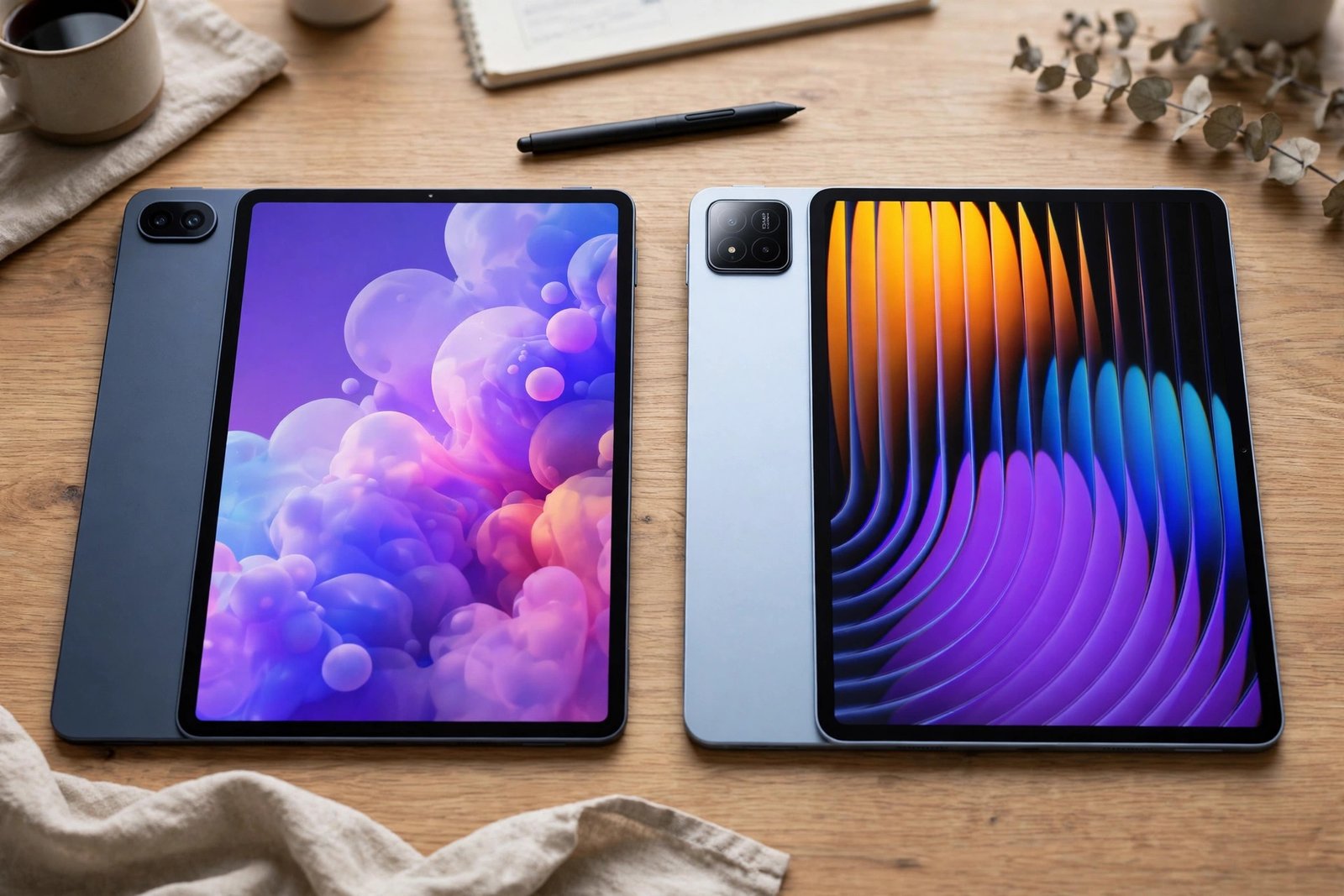
Lenovo Tab P12: the big-screen bargain
The Lenovo Tab P12 takes a different approach: a very large screen for relatively little money. Its 12.7-inch LTPS LCD measures 2,944 by 1,840 pixels, with 96% DCI-P3 colour coverage and four JBL speakers with Dolby Atmos. It runs on the MediaTek Dimensity 7050 chip with 8GB of RAM and 128GB of storage, expandable by microSD, and its 10,200mAh battery is rated for up to 10 hours of video playback.
The Tab Pen Plus stylus is included in some regions, with 4,096 pressure levels, tilt detection and palm rejection, and Lenovo sells a detachable keyboard in the same ThinkPad-inspired style. The weaknesses are the 60Hz refresh rate, which feels less smooth next to the 120Hz and 144Hz screens here, and software support: Lenovo lists security maintenance for the standard model through June 2027, so buy it at a discount. Check the exact model number and update window before buying. If your main use is sketching rather than note-taking, compare it with the best drawing tablets with no screen.
Best for: readers, students and media watchers who want the biggest screen per pound and do not need a high refresh rate.

Google Pixel Tablet: buy it only at a deep discount
The Google Pixel Tablet is the oldest tablet in this guide, and it shows. Launched in June 2023, it has a 10.95-inch LCD at 2,560 by 1,600 pixels and 60Hz, a Google Tensor G2 chip, 8GB of RAM and 128GB or 256GB of storage. Its battery is a 27Wh unit, around 7,020mAh, rated by Google for up to 12 hours of video streaming. It supports USI 2.0 stylus pens, but Google sells no first-party pen for it.
Its Charging Speaker Dock turns the tablet into a smart display with better sound when docked. But the Tensor G2 chip is now several generations old, and Google promised a minimum of five years of security updates from launch. Buy it only when the price reflects its age; at anything close to full price, the Xiaomi Pad 7 or a discounted Samsung is the better buy.
Best for: Google smart-home households who find it heavily discounted and mainly want media and a docked display.
Amazon Fire Max 11: a media tablet, not a full Android tablet
The Amazon Fire Max 11 needs a clear label, because it is easy to buy for the wrong reasons. It is an 11-inch tablet with a 2,000 by 1,200 display, a MediaTek MT8188J chip, 4GB of RAM and 64GB or 128GB of storage, expandable by microSD. Its 7,500mAh battery is rated by Amazon for up to 14 hours of reading, browsing, video and music. The price is the lowest in this guide by a wide margin.
The catch is Fire OS, Amazon’s system based on Android 11. It has no Google Play Store by default, so many Android apps need workarounds or are unavailable, and the app selection is built around Amazon’s own services. It is a poor fit if you need Google apps, Microsoft Office or a specific note-taking app, and the optional stylus is sold separately.
Best for: budget buyers who mainly stream video, read and browse inside Amazon’s ecosystem.
How to choose: a five-question checklist
Use this checklist before you spend anything. It takes two minutes and prevents the most common regret: buying a big flagship for a job a mid-range tablet would have done.
- What is the main job? Notes and drawing need a good stylus, ideally included in the box. Media needs a bright screen and good speakers.
- How big is too big? An 11-inch tablet fits in most bags and in one hand. A 13- or 14.6-inch tablet is better for split-screen work and worse for reading in bed.
- Will it still be updated in three years? Samsung promises seven years of updates on the S11 range. Shorter windows mean an earlier end to security patches.
- What does the full kit cost? A stylus and keyboard can add a large sum to tablets that do not include them. Add those costs before comparing prices.
- Where will you actually use it? If it lives on a desk, battery and weight matter less. If it travels, weight, battery and a case matter more. Students weighing an Android tablet against an iPad should also read our iPad Air vs iPad Pro for students comparison, and anyone choosing between a tablet and a laptop for school should look at Chromebook vs iPad for school.
Frequently asked questions
Which Android tablet is best overall in 2027?
The Samsung Galaxy Tab S11 is the best all-rounder for most people: OLED display, included S Pen, microSD slot, IP68 rating and seven years of updates. The OnePlus Pad 3 is faster and has a bigger screen and battery, but it is larger, heavier and its stylus costs extra.
Is the Samsung Galaxy Tab S11 worth it over the S10 FE?
Yes, if you want the OLED screen, the faster Dimensity 9400+ chip and the longest update promise. No, if you mainly read, stream and take notes: the S10 FE has an included S Pen, a microSD slot and a 90Hz display at a much lower price.
Do Android tablets get long software updates?
It depends on the maker. Samsung promises seven years of operating system and security updates for the Galaxy Tab S11 range, and Google promised a minimum of five years of security updates for the Pixel Tablet.
Can an Android tablet replace a laptop?
For browsing, email, notes, media and light document work, yes, especially with a keyboard and Samsung’s DeX desktop-style mode. For heavy desktop software or professional video editing, a laptop is still the safer choice.
The bottom line
The best Android tablet in 2027 is the one that matches your main job, not the one with the longest specification sheet. Samsung’s Galaxy Tab S11 is the safest recommendation for most buyers, the OnePlus Pad 3 is the pick for speed and screen space, and the Xiaomi Pad 7 is the smart buy for everyone who wants flagship feel without the flagship price.
Start with the checklist above, add the cost of the stylus and keyboard you will actually use, and check current pricing and availability in your region before you buy.