
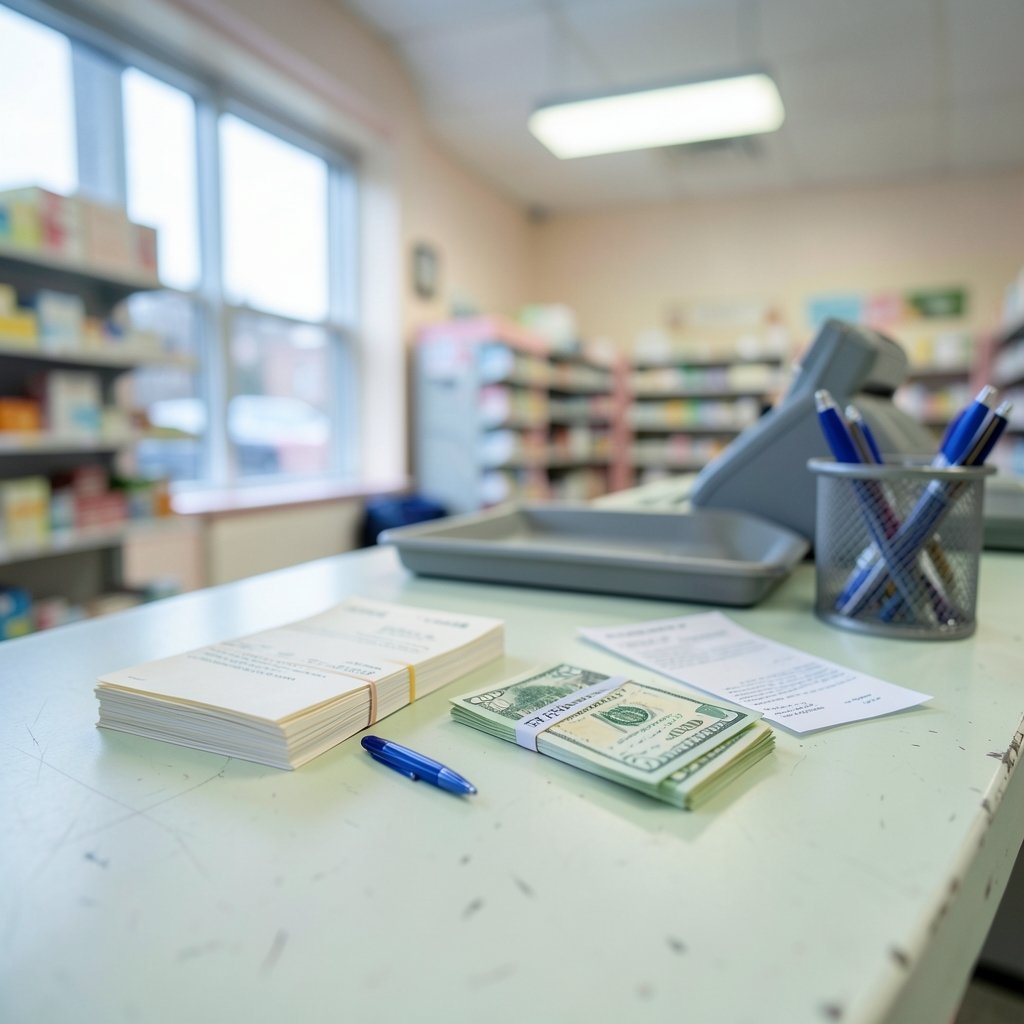
What if you need to pay rent, send cash to a relative, or settle a bill, and your bank is already closed? For a lot of people, the nearest Walgreens looks like the obvious answer. The chain is open late, it sits on almost every other corner, and it sells money orders at the photo counter or the register. But before you grab your cash and head out the door, it helps to understand how the service actually works, what it costs, and where the quiet snags tend to hide.
This guide walks through the practical side of buying a money order at Walgreens: how the process works, what the typical fees and limits look like, which payment methods get accepted, and the mistakes that trip people up most often. It also covers the fraud angle, because money orders are one of the favorite tools of scammers, and knowing the warning signs matters more than saving a dollar on a fee.
How Walgreens Money Orders Actually Work
A Walgreens money order is a prepaid payment instrument you buy at the store and then hand to someone else as payment. You pay the face value of the money order plus a service fee, and the store prints a document with the amount, a serial number, and a payee line. The recipient can cash it at many banks, check cashers, or retailers, or deposit it like a check.
One detail that surprises people: Walgreens does not issue these money orders itself. The service runs through a third-party money-transfer provider. Historically that was Western Union, and in more recent years the chain has leaned on InComm Payments for money orders and similar services. That matters because the provider, not the cashier, controls the terms. If you have a problem with a lost or stolen money order, the refund path usually runs through the provider’s customer service, not the store manager.
Availability also varies by location. Most Walgreens stores offer money orders, but not every single one does, and hours can be limited at stores with reduced staffing overnight. A quick phone call before you drive over saves a wasted trip, especially if you need a large amount or you’re buying several money orders at once.
What You Will Pay: Fees and Limits
Here is the honest answer about Walgreens money order fees: they change, they vary by state, and any number you read online should be treated as a rough guide rather than a promise. Reported fees have generally landed in the range of roughly $1 to $2 per money order, with the exact amount depending on where you live and when the fee schedule was last updated.
The maximum face value has commonly been reported around $1,000 per money order, which lines up with the cap many U.S. retailers use. If you need to pay $2,500, you will likely be buying three separate money orders and paying three separate fees, so factor that into your budget.
| Feature | Typical Walgreens practice | What to verify in store |
|---|---|---|
| Fee per money order | Roughly $1 to $2 | Current fee for your state |
| Maximum face value | Commonly around $1,000 | Current cap at that store |
| Accepted payment | Cash, sometimes debit | Whether debit is allowed |
| Credit cards | Generally not accepted | Store-specific rules |
| Issuer | Third-party provider | Which provider handles refunds |
The single most useful habit here is to ask the cashier for the total before you commit. “What’s the fee, and what’s the most I can put on one?” takes five seconds and prevents the awkward moment when you’ve already counted out cash.
Paying for a Money Order: Cash, Debit, and the Credit Card Problem
Walgreens money orders are typically purchased with cash, and sometimes with a debit card. Credit cards are generally not accepted, and that is not a Walgreens quirk. It is standard practice across the money order industry, because a credit card charge can be reversed after the money order has already been cashed. The issuer would be left holding the loss.
This creates a real practical snag. Plenty of people assume they can just swipe a card, and they show up at the counter empty-handed. If you are planning a large purchase, pull the cash first. ATMs inside the store may charge a fee, so withdrawing from your own bank beforehand is usually cheaper.
There is also a paperwork angle worth knowing. Money order sellers are regulated as money services businesses, and federal rules require recordkeeping and reporting for certain transactions. FinCEN’s overview of money services business registration explains the registration and reporting duties that apply to sellers of money orders and similar instruments. In practice, this means large cash transactions can trigger identification requests or reports, so bring a valid ID if you are buying a substantial amount.
Step by Step: Buying One at the Counter
The process is simple, but a few small choices make it smoother.
- Confirm the store sells money orders and check the counter hours. Some locations process them only at certain registers or during certain shifts.
- Bring cash, plus a backup debit card in case the store accepts it.
- Decide the exact amount and the payee name before you reach the counter. You will fill in the payee yourself, but knowing the spelling avoids a messy correction.
- Pay the face value plus the fee, and keep the receipt.
- Fill out the money order with a pen, not pencil, and make sure the amount in words matches the amount in numbers.
- Photograph or photocopy the completed money order and the receipt before you hand it over. This is the step almost everyone skips, and it is the one that saves you if the payment goes missing.
That last point deserves emphasis. A money order is a negotiable instrument, which means whoever holds it can often cash it. Cornell’s Legal Information Institute entry on UCC Article 3 explains the legal framework that governs negotiable instruments like money orders, including the rules around endorsement and transfer. Losing an unendorsed money order is annoying but fixable. Losing a signed one is closer to losing cash.
Common Mistakes People Make
A few errors show up again and again at retail counters.
Leaving the payee blank. Some buyers think a blank money order is more flexible. It is also more dangerous, because anyone who finds it can fill in their own name. Write the payee immediately.
Signing before handing it over. Sign the money order only when you are actually giving it to the recipient or mailing it. An unsigned money order is much harder for a thief to cash.
Forgetting the fee math. If your rent is $1,000 and the cap is $1,000, you are fine. If your rent is $1,050, you need two money orders and two fees. Budget for that.
Assuming the store can refund it. Refunds and stop payments generally run through the issuing provider, and they take time. The store can point you in the right direction, but it usually cannot hand you cash on the spot for a lost money order.
Skipping the receipt. Without proof of purchase, tracing a money order becomes far harder. The receipt carries the serial number that the provider needs.
There is a broader money-management angle here too. People who lean on money orders for routine bills often do so because they lack a bank account or want to avoid overdraft fees. That trade-off is worth thinking through carefully, in the same way it is worth understanding where the real costs sit when you look at how identity threat detection really costs and where the money goes for businesses protecting themselves.
Fraud Warning: When Someone Asks for a Money Order
Money orders are popular with scammers for one reason: they are hard to reverse. Once the money is collected, getting it back is a long, uncertain process. The gift card scam works in a similar way, and victims rarely get their money back, which is why the same caution applies here.
Watch for these patterns:
- Someone asks you to pay by money order for a purchase you found online, especially a rental, a pet, or a vehicle you have not seen in person.
- A “buyer” sends you a check for more than the asking price and asks you to wire or money-order the difference back.
- A caller claims to be from the IRS, a utility, or a court and demands immediate payment by money order.
- Anyone pressures you to hurry, stay on the phone, or keep the transaction secret.
Legitimate businesses and government agencies do not demand payment by money order under time pressure. If a request feels rushed, it usually is a scam.
Walgreens vs. Other Places to Buy a Money Order
Walgreens is convenient, but it is not the only option, and the comparison is worth a minute of your time.
| Where | Typical fee | Typical cap | Notes |
|---|---|---|---|
| Walgreens | Roughly $1 to $2 | Around $1,000 | Late hours, wide locations, cash preferred |
| U.S. Postal Service | Set fee, published | $1,000 domestic | Official terms published by USPS |
| Banks and credit unions | Often free for customers | Varies | Requires an account |
| Grocery and check-cashing stores | Varies | Varies | Often competitive fees |
The U.S. Postal Service publishes its official money order terms, fees, and the $1,000 domestic cap, which makes it a useful benchmark when you are comparing costs. If you have a bank account, your bank may issue money orders or cashier’s checks for free or a small fee, which usually beats a retail counter. Walgreens wins on hours and convenience, not on price.
Keeping Records and Getting Help If Something Goes Wrong
If a money order is lost, stolen, or never arrives, act quickly. Contact the issuing provider’s customer service with the serial number, the purchase date, the amount, and the store location. You will usually need to complete a claim form, and there may be a waiting period before a refund or replacement is issued, because the provider needs time to confirm the original has not been cashed.
Consumer protections for money transfers exist, and the Consumer Financial Protection Bureau’s guidance on money transfers and remittances explains the rules that apply to these transactions and what recourse consumers generally have. Knowing the framework helps you ask the right questions when you file a claim.
Practical recordkeeping tips that actually work:
- Store the receipt and a photo of the money order in the same place, ideally a cloud folder you can reach from your phone.
- Note the date you handed it over and to whom.
- If you mailed it, keep the tracking number.
- Follow up within a few days if the recipient has not confirmed receipt.
Small habits like these turn a stressful loss into a manageable paperwork problem.
Conclusion
Walgreens money orders are a genuinely useful option when you need a safe, traceable payment and your bank is closed or you do not have an account. The service is widely available, the process takes minutes, and the fees are modest. But the details matter: bring cash, expect a cap of roughly $1,000 per money order, ask about the fee before you commit, and never leave the payee line blank.
The bigger lesson is about awareness. Money orders sit at the intersection of convenience and risk. Used for a rent payment to a landlord you know, they are simple and safe. Used to pay a stranger who demanded one over the phone, they are a one-way street for your money. Treat every request for a money order as a prompt to slow down and ask why. That single habit will protect you far more than any fee comparison ever will.
Frequently Asked Questions
Does Walgreens sell money orders?
Yes, most Walgreens locations sell money orders at the register or photo counter, though availability and hours vary by store. The money orders are issued through a third-party provider rather than by Walgreens directly, so refunds and tracing requests typically go through that provider’s customer service rather than the store.
How much does a Walgreens money order cost?
Reported fees have generally fallen in the range of roughly $1 to $2 per money order, but the exact amount varies by state and changes over time. Always confirm the current fee at the counter before you pay, and remember that if your payment exceeds the per-order cap, you will pay a separate fee for each money order you buy. (Z wave inclusion vs exclusion order matters every device)
What is the maximum amount for a Walgreens money order?
The cap has commonly been reported around $1,000 per money order, consistent with many U.S. retail money orders. If you need to send more than that, you will need to purchase multiple money orders. Confirm the current limit at your specific store, since it can differ by location and provider.
Can you pay for a Walgreens money order with a credit card?
Generally no. Money orders are typically purchased with cash, and sometimes with a debit card, but credit cards are usually not accepted. The reason is practical: a credit card charge can be reversed after the money order has been cashed, leaving the issuer exposed to the loss. Bring cash to be safe.
What should you do if a Walgreens money order is lost or stolen?
Contact the issuing provider’s customer service right away with the serial number, purchase date, amount, and store location. You will likely need to file a claim and wait through a processing period while the provider confirms the money order has not been cashed. Keeping your receipt and a photo of the completed money order makes this process much faster.
Are money orders safe to send to someone you do not know?
They are not a good idea for strangers. Money orders are difficult to reverse once cashed, which makes them a favorite tool for scammers who demand payment by phone or for online purchases you cannot verify in person. Legitimate businesses and agencies do not pressure you to pay by money order on a deadline, so treat urgency as a red flag.



