What Is AI Demand Sensing?
A shop orders fifty umbrellas because last October sold fifty umbrellas, then a wet week arrives and they sell out by Wednesday. In both cases the plan was built on what happened last year, while the demand that mattered was happening right now. AI demand sensing is the attempt to close that gap.
Demand sensing uses artificial intelligence to read short-term signals — today’s sales, this week’s weather, a sudden social media trend, a local event — and turn them into a picture of what customers will want in the next few days or weeks. It is not a yearly forecast. It is a near-term read on demand, updated constantly, so a business can order the right stock and schedule the right staff before the rush arrives.
This guide explains what AI demand sensing is, how it works, what kinds of signals it reads, where it helps most, and where it can still mislead you. It is written for small and mid-sized businesses that plan stock and staffing week by week.
Key takeaways
- AI demand sensing reads short-term signals to predict what customers will want in the next few days or weeks.
- It works best for stock and staffing decisions, where a small change in timing makes a big difference.
- Its signals include recent sales, weather, local events, promotions, and online search and social trends.
- It complements longer forecasts rather than replacing them: sensing handles the near term, forecasting handles the season.
- Bad or missing data is the main cause of failure — sensing is only as good as the signals fed into it.
| Detail | What to know |
|---|---|
| Definition | Using AI to read short-term demand signals and predict what customers will want soon |
| Time horizon | Days to a few weeks, updated daily or more often |
| Main signals | Recent sales, weather, local events, promotions, search and social trends |
| Used for | Ordering stock, scheduling staff, and timing promotions |
| Typical cost | Often built into inventory and planning tools; standalone tools often start from around $40 to $100 per month |
| Main limit | It cannot predict sudden shocks it has never seen before |
| Check it by | Comparing each week’s sensed demand with what actually sold |
What demand sensing actually means
Demand sensing is the practice of spotting changes in customer demand as they happen, rather than waiting for the monthly sales report. Traditional planning looks backwards: last year’s sales, last quarter’s average, a seasonal pattern. Sensing looks at what is happening now — sales this morning, a weather front arriving on Friday, a product going viral overnight — and asks what it means for next week. The difference is speed. A forecast tells you December will be busy; sensing tells you this coming weekend will be busier than last weekend, and by how much.
The “AI” part matters because no person can watch all those signals at once. A small retailer might track fifty products across three channels while also watching the weather, local events, and competitor prices. AI models can weigh those signals together and flag the handful of products where demand is about to move. They do not replace judgement: a shop owner who knows a road closure will kill footfall on Saturday still knows more than the model. Sensing works best as an early warning system that a human then checks against what they know about their own street, customers, and suppliers.
How AI demand sensing works
A demand sensing system starts by gathering signals. The most important is your own sales data: what sold, when, at what price, and through which channel. Around that it layers external signals — weather forecasts, public holidays, school terms, local events, promotions, and online search and social trends for your products. The model learns how each signal has related to sales in the past: rain lifts umbrella sales, a payday weekend lifts grocery baskets, a viral video lifts one specific product for about ten days.
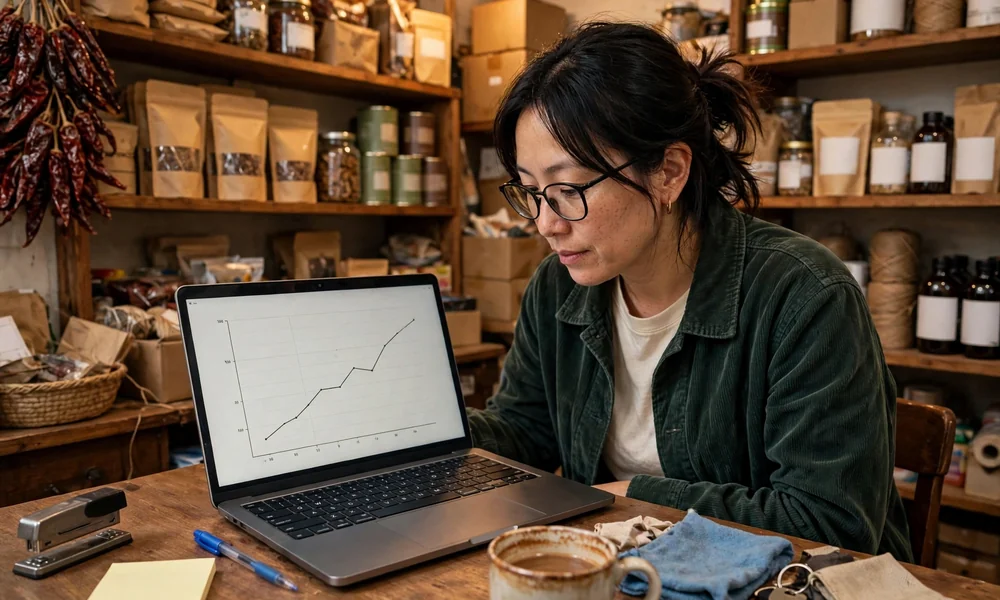
Once trained, the model runs constantly. Each new day of sales, each weather update, each promotion launch feeds in, and the expected demand for the next few days or weeks is recalculated. The output is usually simple: expected units per product per day, a confidence range, and a flag when expected demand jumps or falls sharply. The team then acts on it — ordering more of the rising product, moving staff to the busy shift, or delaying a promotion that would land on a quiet week.
Types of demand signals
Internal signals come from your own business and are the most reliable. Point-of-sale data shows what actually sold, while website and app data shows what people searched for and added to baskets without buying — often the earliest sign of rising interest. Stock levels matter too: a product that is out of stock looks like it has no demand, so sensing systems must know what was unavailable, not just what sold.
External signals explain why demand moves. Weather is the classic one: temperature, rain, and storms shift demand for clothing, food, drink, and outdoor goods within days. Local events — festivals, matches, school holidays, roadworks — move demand for a specific place and a specific week. Online signals, such as search volume and social media mentions, catch trends before they reach the till, though they are noisy and need checking against real sales.
Benefits and risks of AI demand sensing
The main benefit is fewer empty shelves and less dead stock. When a business orders to sensed demand instead of last year’s average, it holds less of what does not sell and runs out less often of what does. That shows up directly in cash: less money tied up in slow stock, fewer emergency orders at high prices, and fewer lost sales. Staffing improves in the same way. A café that knows Saturday will be busy can roster an extra pair of hands; a warehouse that knows Tuesday will be quiet can schedule maintenance instead of overtime.
The risks are real and worth naming. The most common is trusting a signal that is actually noise: a one-day spike caused by a single bulk buyer can look like a trend and trigger an order nobody needs. Data gaps are the second risk — if sales records are incomplete or stock-outs are not recorded, the model learns the wrong lessons. There is also a privacy and security side: sensing systems pull together sales, customer, and location data, so they need proper access controls and care with personal information. Our guide to what cybersecurity is explains the basics of protecting business data before connecting new tools to it.
Where AI demand sensing is used in the real world
Retail is the most natural home for demand sensing. Grocery stores use it to order fresh food that spoils in days, fashion shops use it to move stock between stores when a style takes off in one city, and online sellers use it to time restocks around promotions. The pattern is the same everywhere: short shelf life or fast-moving trends make weekly planning too slow, and sensing fills the gap between the monthly plan and the daily reality.
Food, hospitality, and services use it for staffing as much as for stock. A restaurant chain senses demand from bookings, weather, and local events to roster chefs and servers; a hotel senses it to set staffing and housekeeping schedules; a delivery business senses it to place drivers where orders will appear. In each case the value is the same: a decision made a few days earlier, with a little more confidence, is worth more than a perfect decision made too late.
AI demand sensing vs traditional forecasting
Traditional forecasting and demand sensing answer different questions. Forecasting looks months ahead: how much will we sell next quarter, how many staff will we need at Christmas, how much warehouse space should we rent next year. It works from history and seasonal patterns, and it changes slowly. Sensing looks days ahead: what will sell this weekend, should we order more now, do we need extra staff on Friday. It works from live signals, and it changes daily. A business needs both, and confusing them is the most common mistake in this area.
The practical difference shows up in what you do with each one. A forecast sets the budget and the big orders; sensing adjusts the small ones. If the forecast says summer will be strong, you hire and stock for the season. If sensing says next week will be hotter than expected, you move stock forward and add a shift. For the longer view, our guide to the best AI tools for sales forecasting covers tools built for that bigger planning job, while our roundup of the best AI tools for cash flow forecasting shows how demand expectations feed into money planning.
Checklist: judging demand sensing honestly
Use these checks before buying a tool or trusting its output.
- Your sales records are complete, including stock-outs and returns, for at least six months.
- The tool explains which signals drove each demand call, not just a single number.
- You can compare sensed demand with actual sales every week, in plain numbers.
- Someone on the team checks the model’s calls before orders are placed.
- Customer and sales data is protected with proper access controls.
- The cost is justified by fewer stock-outs and less dead stock, not by the demo alone.
Frequently asked questions
What is the difference between demand sensing and demand forecasting?
Forecasting looks months ahead using history and seasonal patterns. Sensing looks days or weeks ahead using live signals such as recent sales, weather, and local events. Sensing adjusts the plan; forecasting sets it.
Does AI demand sensing work for small businesses?
Yes, if the business has clean sales records. A shop with a few hundred products and six months of sales data can use sensing built into an inventory tool. The value is biggest where stock spoils fast or trends move quickly.
What data does demand sensing need?
At minimum, daily sales by product, stock levels, and prices. It improves with weather, local events, promotions, and online search data. Without stock-out records, it will mistake “out of stock” for “no demand”.
Can demand sensing predict sudden events?
No. It cannot predict a shock it has never seen, such as a sudden closure or a viral moment with no precedent. It can react faster than a monthly plan once the shock starts showing in sales and search data.
How much does AI demand sensing cost?
It is often built into inventory and planning tools, so the extra cost may be small. Standalone tools often start from around $40 to $100 per month for small businesses. Prices change often, so check current pricing before you commit.
How do you know if demand sensing is working?
Compare each week’s sensed demand with what actually sold, and track stock-outs and leftover stock over a month or two. If both fall while sales hold steady, the system is earning its keep.
The bottom line
AI demand sensing is a short-term lens on customer demand: it reads today’s sales, the weather, local events, and online trends, and turns them into a picture of what will sell in the next few days or weeks. For stock and staffing decisions, that near-term picture is often more valuable than a quarterly forecast, because it arrives while there is still time to act. Its limits are honest ones — it needs clean data, it cannot foresee shocks, and it should never place orders without a human check.
The sensible way to start is small: pick your fastest-moving products, feed the system six months of clean sales data, and compare its calls with reality for a month. If stock-outs fall and dead stock shrinks, expand it. In 2027, the businesses that plan stock and staff best will not be the ones with the most data, but the ones that listen to the freshest signals.