Picture asking a chatbot for an email draft and receiving a fresh version in seconds, rather than a list of existing emails. That small change can save a user time, but it also raises questions about where the words came from and whether they are sound. Generative AI has spread quickly, though adoption remains uneven.
Generative AI reached 53% population-level adoption within three years, faster than personal computers or the internet. In the United States, 28.3% of people had adopted it by early 2026, ranking 24th among the countries compared. Those adoption figures point to rapid growth, not universal use.
This guide explains how systems make new outputs, what those outputs can do, and where your judgment matters. You will see why an answer can sound natural without being reliable. The useful question is not whether an answer sounds human, but how the system produced it and whether it deserves your trust.
Key Takeaways
- Generative AI makes new material from patterns learned in data.
- Different systems create text, images, audio, video, code, and other outputs.
- A prompt guides a response but does not ensure accuracy.
- Retrieval can add outside information without retraining a model.
- Human review matters when an output affects people or important decisions.
- Test tools on a clear, low-stakes task before relying on them.
What Is Generative AI and How Does It Work?
Generative AI is a type of AI that learns patterns from existing data and uses them to create new material. New material can include text, images, video, audio, or other synthetic content. The National Institute of Standards and Technology, or NIST, describes it as AI that models input data’s structure and traits to create derived content.
Generative AI creates content, while predictive AI estimates outcomes from past data. Their methods can overlap, but their main jobs differ. Machine learning lets models learn patterns from data; many traditional machine-learning systems classify items or predict likely outcomes.
Generative AI creates an output; predictive AI classifies or forecasts information. A system’s purpose matters more than whether its answer sounds human.
ChatGPT is a generative AI system
ChatGPT is an LLM-based generative AI system. An LLM, or large language model, handles language tasks such as writing, translation, and summarizing. Large language models are one part of generative AI, not a name for every kind of model.
A token is a small piece of text, such as a word or word fragment, that a model processes as a unit. ChatGPT uses prompts and context to create a response in language. It does not simply look up a finished answer for every request.
Copilot is a generative AI assistant
Microsoft Copilot is a generative AI assistant, though its features vary by product. Some versions help with writing or search, while others work inside Microsoft apps. The name can refer to different tools and features, so the task depends on the specific Copilot product.
These products sit on top of models and software systems. If you want to see how generative AI can support online writing, this AI guide for SEO covers research and draft review. The practical distinction is whether a system creates a new output or only classifies or forecasts existing information.

How Do Generative AI Models Learn?
A foundation model begins as a broadly trained system that can be adapted for more specific work. Developers train it on large collections of data so it can learn statistical patterns. Training does not give a model a reliable stored answer to every possible question.
Training data may include text, code, images, or other material, depending on the model. A neural network adjusts its internal settings as it learns which patterns often appear together. The result can be useful across tasks, yet its knowledge reflects the data and methods used during development.

Foundation models learn patterns at scale
A foundation model gives developers a starting point for many applications. GPT and Llama are examples of model families. Their broad training can support tasks such as writing, question answering, translation, and code assistance.
These models do not understand each prompt as a person would. They learn relationships among patterns and use those relationships to produce likely outputs. A model’s apparent range can be wide, even when its answers fail on unfamiliar or poorly stated tasks.
Fine-tuning and human feedback shape a task
Fine-tuning adapts a trained model with examples for a narrower task. A team might use task-specific examples to shape how a model answers customer questions. This process changes the model’s behavior for that work, but it does not make every response correct.
Human feedback can also help developers tune relevance and quality. Reviewers may compare responses or mark which ones better meet a goal. That feedback helps guide model behavior; it does not replace careful testing or guarantee that all users will get the same result.
RAG brings in outside information
Retrieval-augmented generation, or RAG, finds relevant documents when a user asks a question. The system adds those documents to the context used for that response. Unlike fine-tuning, RAG does not change the original model’s learned settings.
This approach can bring fresher material into an answer without retraining the base model. A business might retrieve current product manuals or approved policy files. Yet retrieval can return incomplete or wrong documents, and access rules can affect which information the system finds.
RAG can also expose gaps in data quality or access control when organizations connect it to internal files. A practical guide to using AI models explains the difference between training and retrieving documents. Retrieved material can update the context for one response, but it does not make the base model’s learned knowledge automatically current.
How Does Generative AI Produce a Response?
A chatbot response is assembled piece by piece from the prompt and the context the model can use. Each prompt guides generation, but it cannot force an exact answer. ChatGPT is one example of a text-generating chatbot.
The system’s steps differ for text and images. An LLM predicts the next token using the text available so far. An image system may start with random noise and refine it into an image.

- You supply a prompt with a request, question, or task.
- The system breaks text into tokens the model can process.
- The model uses context to predict a text token or refine an image.
- The system assembles the output for you to review.
A short prompt may leave out details that matter, such as audience, tone, or format. Adding those details can make an output more useful. Still, fluent text can contain a made-up fact, and a polished image can miss the requested details.
A prompt is a guide, not a fact-checking tool. The model can respond in natural language while missing the point or using weak information. A clear prompt can steer the response, but it cannot guarantee that the result is correct.
Which Architectures Power Generative AI?
A text model and an image model can create new material through different mathematical routes. Transformers, diffusion models, generative adversarial networks, and variational autoencoders each work in a distinct way. These are approaches, not a checklist that every product must combine.
Their history also differs. VAEs appeared in 2013, GANs in 2014, diffusion models in 2015, and the transformer architecture in 2017. These dates mark introductions, not the start of every current product built with them.
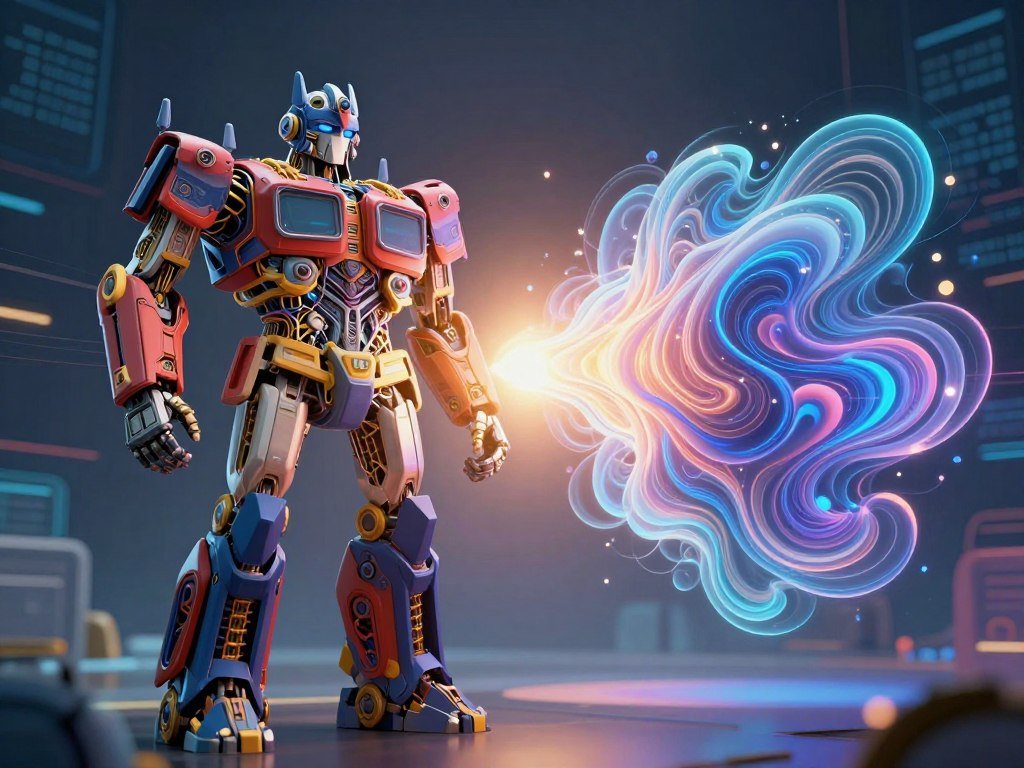
Transformers predict sequences with attention
Transformers use attention to represent relationships among parts of a sequence. Attention helps a model weigh how words or tokens relate to one another across a prompt. This can support text generation and other tasks that involve ordered data.
Transformers are common in language models because they handle links across a sequence. They can use earlier context when producing later text. Their strength does not mean every answer is accurate, or that every transformer creates language alone.
Diffusion models build outputs from noise
Diffusion models learn to reverse a process that adds noise to data. During generation, a model starts from noise and gradually removes it, shaping an output such as an image. The repeated steps can turn a general prompt into a detailed visual result.
Diffusion methods also appear in work with audio and other media. A system’s output depends on its design, training data, and prompt. For an example of how image tools differ by workflow, see this AI image tool comparison.
GANs and VAEs generate in different ways
Generative adversarial networks, or GANs, use a generator and a discriminator. The generator makes an output, while the discriminator judges whether it looks real. Their competition can help the generator make convincing images or other data.
Variational autoencoders, or VAEs, use an encoder and a decoder. The encoder maps input data into a compact representation; the decoder uses that representation to create an output. VAEs can support controlled generation and learn useful patterns in data.
| Architecture | Core mechanism | Common strength |
|---|---|---|
| Transformer | Attention across a sequence | Text and sequence tasks |
| Diffusion | Gradual noise removal | Detailed image generation |
| GAN | Generator competes with discriminator | Realistic synthetic outputs |
| VAE | Encoder and decoder | Structured data generation |
Some tools combine methods, while others use one main approach. Choose the architecture explanation that fits the output type, rather than assuming every model creates content the same way.
What Are Some Generative AI Examples?
A draft email, a code suggestion, and an image made from a prompt are all examples of generative AI outputs. The same broad idea can support many kinds of content creation. Each output still needs review before it is used.
Generated examples are starting points, not finished work. A system may miss a key detail, use the wrong tone, or return code that does not run. What counts as a good result depends on the task and the person who checks it.
Text and code generation
ChatGPT can draft an email, summarize a long report, or suggest a first version of a product description. You can ask for a shorter summary or a different tone. The result can save time on routine writing, but it may leave out a detail from the original.
GitHub Copilot assists with code by suggesting lines or blocks as a developer works. A programmer can use suggestions to explore an approach, then test and revise the code. A suggestion that looks neat may still include a bug or security flaw.
Other writing tasks include brainstorming headlines, turning notes into a meeting summary, and drafting customer replies. For paid work, people still shape the final text and check its claims. One guide describes ways people apply AI to content creation and services.
Image and video creation
DALL-E 3 can generate images from text prompts. A designer might request a concept image for a campaign, a scene for a presentation, or a visual draft for a product idea. The image can help a team discuss direction before investing in finished design work.
Sora and Runway are examples of video-generation systems. They can help create short clips for a pitch, a storyboard, or a social post. Video outputs may have visual changes or details that do not hold together from one frame to the next.
Review image rights, fit, and small details before using an output in public. A generated logo or product image may look plausible without matching a real brand or item. The use case sets how much editing and review the work needs.
Audio, speech, and synthetic data
Generative systems can create speech, music, and other audio. A team might draft a voice-over or test a sound concept before hiring performers. The final audio still needs checks for clarity, rights, and the way it may affect listeners.
Some models create synthetic data for training or testing. In drug discovery, a system may propose molecular structures for researchers to study. Those structures are candidates for further work, not proof that a safe or effective medicine exists.
Synthetic data can help when real examples are limited, but it may not reflect every real-world case. A researcher or designer needs to judge the output against the standards of the task. The same basic idea can produce very different media, so judge each result against the needs of its task.
What Do Adoption Figures and Job Forecasts Show?
Widespread use does not mean every person or organization uses the same kind of AI. In 2026, organizational AI adoption reached 88%, while four in five university students used generative AI. Those figures track different groups and kinds of use.
The estimated annual value of generative AI tools to U.S. consumers reached $172 billion by early 2026. That figure reflects estimated value, not a count of users or a measure of output quality. Adoption surveys also differ in their questions and samples.
Use is widespread but uneven
Organizational AI adoption can include systems that predict demand or sort records, not only generative tools. A Federal Reserve note compares U.S. surveys and shows that their measures differ. The Federal Reserve adoption analysis separates firm use from workers’ use of generative AI.
Students, office workers, designers, and customer service teams may use different applications. A student might ask for a study outline, while a business uses a model to draft replies. A reported adoption rate does not tell you how often people use a tool or how well it works.
Work patterns also vary by firm size and industry. A company may use an AI system without giving every employee access. The number is best read with its group, time, and definition in view.
Employment projections are not guarantees
One compilation gave 0.0% automation probability to each of 65 occupations, then ranked them by projected U.S. job growth from 2024 to 2034. The Bureau of Labor Statistics projected 40% growth for nurse practitioners and 20% for physician assistants during that period.
It also projected 17% growth for postsecondary nursing instructors and 17% for mental health counselors. Those forecasts describe expected job counts, not which tasks will change or how a workplace will use AI. An occupation can grow while its daily work shifts.
A 0.0% automation score does not mean that no task in a job can change. Forecasts help with planning, but they cannot promise a person’s future job security. Treat an occupation’s projected growth as a planning signal, not a guarantee that its daily work will stay unchanged.
How Can Generative AI Be Used in Cybersecurity?
A security team can use a generative system to explore a threat scenario, while an attacker can use similar tools to make a scam more convincing. The same ability to create text or media can help defenders or aid misuse. Human checks and established security controls remain necessary.
Teams can use AI to support analysis, but generated material cannot confirm that a threat is real. The NIST Cybersecurity Framework gives organizations a named structure for organizing cybersecurity work. It does not replace their own security controls.
- Summarize security alerts for an analyst to review.
- Create synthetic data for testing security systems.
- Draft controlled phishing simulations for staff training.
- Help teams explore possible response scenarios.
Attackers can use generative AI to write convincing phishing messages or build fake identities. Deepfakes can alter images, video, or audio to make false events seem real. A familiar voice or face is not enough to prove who sent a message.
Security teams should check alerts against logs, known contacts, and other evidence. Training simulations need clear controls so staff do not mistake a test for a real attack. Treat generated threat analysis as a lead for investigation, not as proof that an incident happened.
What Risks Should Users and Organizations Manage?
A response can sound confident and still be inaccurate, biased, or unsafe to share. Fluent wording does not prove that a claim is true. Check the system’s intended use and the possible harm before relying on its output.
Generative AI incidents rose to 362 in 2025, up from 233 in 2024. That count signals growing concerns, but it does not prove that every model or user caused harm. Risks depend on the system, data, and choices around its use.
Errors, bias, privacy, and deceptive media
A model can invent a plausible fact, mix up details, or give different answers to similar prompts. Bias in training data can shape which people or views appear in an output. These problems matter more when a response affects access, safety, money, or rights.
Entering private business or personal information can expose it to a tool in ways the user did not expect. Generated text or images may also raise intellectual-property questions. Deepfakes can mislead viewers, yet an altered image alone does not prove who made it or why.
Organizations face added risks when systems access internal files or take actions through other tools. RAG can expose weak data quality and access controls. A clear owner, limits on access, and records of key actions help teams see how a system was used.
How NIST and EU rules guide safeguards
NIST’s AI Risk Management Framework is voluntary. It supports trustworthiness across AI design, development, use, and evaluation. NIST released its Generative AI Profile on July 26, 2024, with guidance on governance, content provenance, testing, and incident disclosure.
The EU AI Act groups uses by risk. Unacceptable-risk applications are prohibited, high-risk applications face rules, limited-risk applications have lighter transparency duties, and minimal-risk applications are unregulated. The Act does not automatically classify every generative AI system as high-risk.
Covered chatbot and deepfake interactions must tell end users they are interacting with AI. General-purpose model providers have separate duties, including technical records for authorities on request and information for downstream providers. They must also meet copyright rules and publish a summary of training content.
Providers of general-purpose models that present systemic risk must assess and reduce risks, track serious incidents, report them, and provide cybersecurity protections. The Act also prohibits systems that generate non-consensual intimate imagery or child sexual abuse material, along with certain harmful social-scoring systems.
The MIT Sloan analysis of AI risks stresses that both model design and workplace choices shape harm. Teams can use the following checks before and during use.
| EU AI Act risk tier | Treatment | Transparency or restriction |
|---|---|---|
| Unacceptable | Prohibited | Covered practices are banned |
| High | Regulated | Rules apply to high-risk uses |
| Limited | Lighter duties | Some transparency duties apply |
| Minimal | Unregulated | No specific AI Act duties |
- Verify claims that could affect important decisions.
- Avoid entering sensitive information without authorization.
- Review outputs for bias and harmful content.
- Keep a process for reporting incidents.
Check the system’s intended use and applicable rules before relying on it in a high-impact setting.
How Do You Choose a Generative AI Tool?
The most-used chatbot is not automatically the best fit for every task. In October 2026, ChatGPT had the largest estimated U.S. share among generative-AI chatbots, at 52.1%. Usage share measures use, not accuracy or quality.
Choose by task, privacy needs, and expected use. The October estimates cover monthly active users across U.S. web and mobile platforms, as shares of the category total. A different group of users or task could lead to a different choice.
Popularity shows use, not quality
These estimated shares describe use in one market and month. They do not show how well each tool performs on writing, research, or another task. Test tools with the kind of work you expect to give them.
| Chatbot | Estimated U.S. share | Month |
|---|---|---|
| ChatGPT | 52.1% | October 2026 |
| Google Gemini | 26.9% | October 2026 |
| Claude AI | 10.6% | October 2026 |
| Grok | 3.4% | October 2026 |
| Perplexity | 1.9% | October 2026 |
Microsoft Copilot had 1.3%, DeepSeek had 0.4%, and Meta AI had 0.1%. The October chatbot shares add up across the category, but they are not a quality ranking or a measure of the best tool for you.
Compare subscription tiers with the task
Paid tiers can offer higher usage limits or access to different features. In 2026, ChatGPT Plus and Claude Pro each cost $20 per month. Google AI Pro cost $19.99 per month in the United States.
| Plan | Monthly price | Market |
|---|---|---|
| ChatGPT Plus | $20 | 2026 |
| Claude Pro | $20 | 2026 |
| Google AI Pro | $19.99 | United States, 2026 |
| ChatGPT Pro | $200 | 2026 |
| Google AI Ultra | $249.99 | United States, 2026 |
ChatGPT Pro cost $200 per month. Claude Max had 5× and 20× usage tiers for $100 and $200 per month. Google AI Ultra cost $249.99 per month in the United States.
- Match the tool to the task you need it to do.
- Check privacy and data controls before entering work material.
- Compare usage limits with your expected demand.
- Test output on representative work before you commit.
A costly tier may make sense for frequent, demanding work, but not for a rare task. Compare the tool’s output on your own task before paying for a higher usage tier.
How Capable Is Generative AI on Real Tasks?
A system can perform impressively on one benchmark and still stumble on a familiar everyday task. Coding scores on SWE-bench Verified rose from 60% to near 100% in a single year. Benchmark gains apply to defined tests, not every real-world task.
On OSWorld, AI-agent task success rose from 12% to about 66%, yet agents still failed roughly one in three attempts on structured benchmarks. That gap matters when a system must complete several steps without a person checking each one.
Strong results can sit beside surprising errors. Gemini Deep Think earned a gold medal at the International Mathematical Olympiad, while the top model answered analog-clock questions correctly 50.1% of the time. These tests measure different skills.
As of March 2026, Anthropic’s top model led the top U.S.-China AI model comparison by 2.7%. That lead describes one comparison, not a universal ranking of intelligence. A model can excel at coding or math and still struggle with ordinary visual reasoning.
Use benchmark results to understand performance on a specific test. A high score may help you decide what to try, but your task can differ from the test’s design and conditions. Treat a benchmark result as evidence about a defined test, not a promise about every real-world task.
Conclusion
Generative AI is most useful when you know what you want it to do and what must be checked. A clear task gives a model a better chance to produce useful material. Your review decides whether that material is ready to use.
Start with one low-stakes task, such as summarizing notes or drafting a routine message. Give the system a clear prompt, then compare its result with a trusted source or the original material. This small test can show where the tool helps and where it needs your judgment.
Try one low-stakes task, refine the prompt, and verify the result before relying on it.
FAQ
What type of AI is ChatGPT?
ChatGPT is a generative AI system built around a large language model. It creates language in response to prompts, such as a request to explain an idea or draft a message. Its replies are generated outputs, not guaranteed facts. You can use it for writing or summaries, but important details still need a check against reliable information.
What are the top 3 most used AI?
The top three U.S. generative-AI chatbots by estimated October 2026 usage share were ChatGPT at 52.1%, Google Gemini at 26.9%, and Claude AI at 10.6%. These shares estimate monthly active users across U.S. web and mobile platforms. They measure use within the chatbot category, not accuracy, safety, or which tool works best for a particular task.
Which is the smartest AI right now?
No single test establishes the smartest AI overall. As of March 2026, Anthropic’s top model led the top U.S.-China AI model comparison by 2.7%. That result reflects one comparison, and different tests measure different skills. A model that leads in coding or reasoning may still make errors on everyday tasks or another type of problem.
Is ChatGPT still the best AI?
ChatGPT had an estimated 52.1% U.S. generative-AI-chatbot share in October 2026, but that share measures use, not quality. The best choice depends on the task, such as writing, research, coding, or image work. Try the same representative task in the tools you are considering, then compare accuracy, usefulness, and privacy controls.
What to not ask an AI?
Do not enter confidential or sensitive information unless you have permission and the tool’s data controls allow it. Do not rely on an unverified AI answer for a high-stakes decision about health, money, safety, or legal rights. A chatbot can sound certain while giving a wrong answer. Use a trusted source or qualified person to check decisions that could cause harm.