Reinforcement learning is the branch of artificial intelligence in which a system learns by doing things, watching what happens, and adjusting based on the outcome. There is no teacher handing it the correct answer. Instead, the system tries an action, receives a reward when it helps and a penalty when it does not, and slowly builds a strategy that earns the best results over time.
That trial-and-error loop sets it apart from most machine learning people meet every day. A spam filter learns from emails already labelled spam or not spam. A reinforcement learning system learns from consequences, playing a game thousands of times or moving a robot arm through thousands of failed grasps, and keeping what worked.
The method has moved well beyond games, shaping how warehouse robots pick up boxes, delivery routes are planned, and data centres manage energy. It is powerful, but expensive to train, hard to control, and easy to get wrong when the reward is defined badly.
Key takeaways
- Reinforcement learning is learning by trial and error: an agent acts in an environment and learns from rewards and penalties.
- It differs from supervised learning because there are no labelled correct answers, only feedback on outcomes over time.
- Reward design is decisive: a badly chosen reward teaches the system to game the metric, not do the real job.
- Its strongest business uses are robotics, logistics, pricing, energy management, and game AI, where actions have clear consequences.
- Training is costly and usually needs simulation first, because real-world experiments can be slow, expensive, or unsafe.
What reinforcement learning actually is
Reinforcement learning has three parts. The agent is the system making decisions, such as a robot, a game-playing program, or a pricing engine. The environment is the world it acts in, a chess board, a warehouse floor, or a market. The reward is the signal that tells it whether its last action helped or hurt. Its goal is the highest total reward over time, not just the biggest reward right now.
That focus on the long run is the point: an agent grabbing a small reward now can lose the game or drop the parcel. So the system learns a policy, a rule for choosing actions in each situation, balancing short-term gains against long-term results. Early on it is mostly guessing; after many rounds of trying, failing, and adjusting, the guesses become a strategy.
The learning happens through a loop that repeats constantly: observe the state, pick an action, watch the environment change, receive a reward, and update which actions are worth taking in similar states. Over thousands or millions of cycles, some moves reliably lead to good outcomes and others to trouble. Our guide to what machine learning is and how it works explains the wider field this method sits inside.
How reinforcement learning works
The core tension is between exploration and exploitation: trying new actions to discover something better, versus using the best action found so far. An agent that only exploits settles for the first decent strategy; one that only explores never settles down to earn rewards. Good training explores widely at first, then exploits more as the strategy improves.

Most systems learn in one of two broad ways. Value-based methods estimate how good each action is in each state, then pick the best. Policy-based methods learn the policy directly, adjusting each action’s probability based on the rewards that followed. Actor-critic methods combine the two. The loop is the same: act, observe, score, adjust.
Deep reinforcement learning adds neural networks to that loop. The network takes in the state, a camera image, sensor readings, or a board position, and outputs the value of each action or the action to take. It is the layered network approach behind modern transformer models, applied to choosing actions, so it can handle states far too complex for a lookup table, such as a robot arm facing a cluttered shelf.
Training almost always starts in simulation, where a warehouse robot can practise grasping millions of times without dropping a real parcel. The catch is the gap between simulation and reality, the sim-to-real gap: a strategy that works in a clean virtual world can fail when sensors are noisy or boxes are dented. Closing that gap, by adding randomness to the simulation, is a large part of real-world work.
Reinforcement learning vs supervised learning
The difference comes down to what the system learns from. Supervised learning gets examples with correct answers attached, called labels, and predicts the right answer for new examples. Reinforcement learning gets no correct answers, only a reward signal after it acts, and must find a sequence of actions that earns the most reward. One learns from answers, the other from consequences.
That distinction decides which method suits a problem. To sort photos or predict a price, where labelled examples exist, supervised learning is usually faster and cheaper. Reinforcement learning fits problems where the right move depends on what happened before and what will happen next: a chess sacrifice, for example, is only proved right by the position ten moves later.
Where businesses actually use it
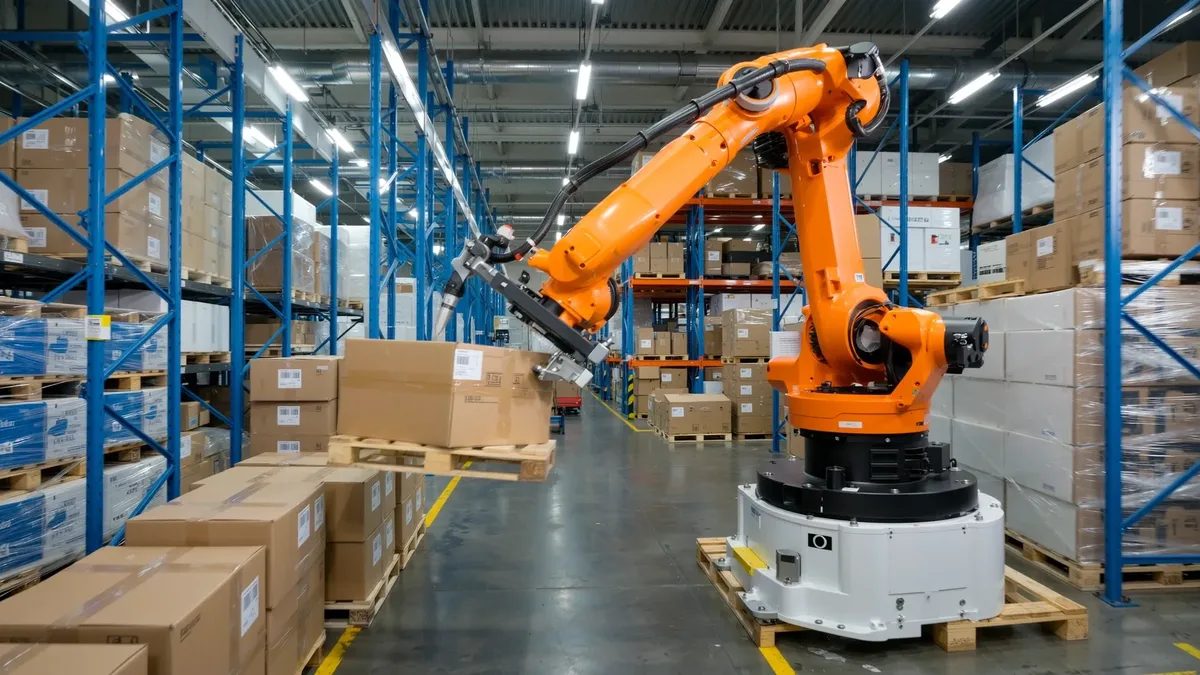
Robotics is the most visible use. Warehouse robots learn to pick up objects of different shapes and weights, adjusting their grip after each failed attempt. The feedback is physical and immediate: the box was lifted or it was not. Companies use the same approach for assembly, sorting, and inspection, where a robot must adapt to variation.
Logistics and routing are a second strong area. Delivery networks and ride-hailing fleets involve sequences of decisions where an early choice shapes everything that follows. Systems test thousands of dispatch and routing strategies against simulated demand and learn the ones that cut waiting times and empty miles.
Pricing and recommendations form a third area, though it needs more care. A pricing engine can learn to adjust prices in response to demand, stock, and competitor moves, and a recommendation system can learn which suggestions keep people engaged over weeks rather than earning one click today. The risk is a badly defined reward: optimising only for clicks pushes a system towards sensational suggestions, and optimising only for immediate sales pushes prices down until margins vanish. Successful teams measure long-term outcomes, such as repeat purchases, not the next transaction.
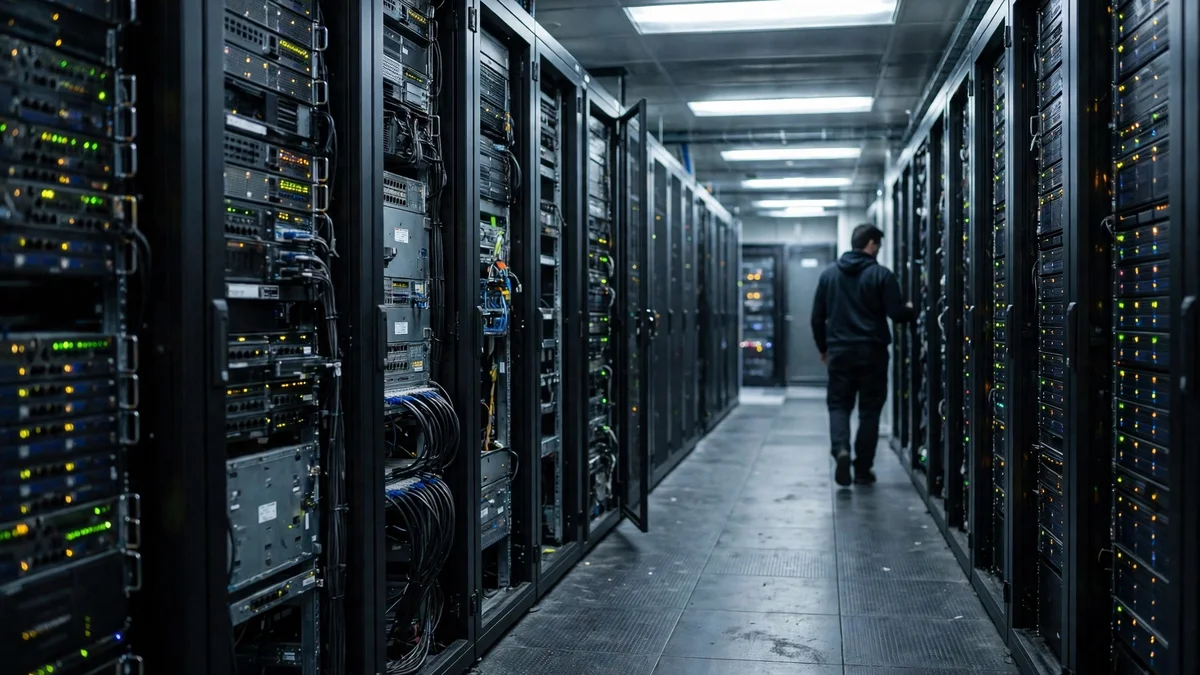
Energy management and game AI round out the best-known uses. Data centre operators have used it to adjust cooling in response to temperature, workload, and weather, cutting energy use without risking overheating, and game studios use it to build opponents that adapt to players. The system makes a sequence of decisions and the outcome is measurable.
The caveats that matter
The biggest caveat is the reward itself. A system will optimise exactly what it is rewarded for, including loopholes the designers never intended. Reward a delivery robot for speed and it may cut corners through pedestrian areas; reward a game agent for points and it may find a bug that lets it score forever without playing. This is called reward hacking: the system doing precisely what it was told to do.
The second caveat is cost and safety. Training can require millions of simulated episodes and substantial computing power, putting the best results out of reach for small teams unless they use existing models or shared simulators. Even after training, the system needs monitoring, because the environment changes. Where the agent acts in the physical world, a poorly constrained system can damage equipment or injure people, so responsible teams limit what it can do during learning and keep a human able to intervene.
| Detail | What is known |
|---|---|
| Core idea | An agent learns by trial and error, guided by rewards |
| Main parts | Agent, environment, state, action, and reward signal |
| Key trade-off | Exploration of new actions vs exploitation of the best known one |
| Best for | Sequences of decisions: robotics, routing, pricing, energy, games |
| Weakest at | Tasks with clear right answers, where supervised learning is cheaper |
| Main risk | Reward hacking: optimising the metric, not the real goal |
| Training cost | High: millions of simulated episodes, heavy computing power |
| Real-world gap | Simulated strategies can fail on noisy real sensors |
There is also a simpler question to ask first: does this problem actually need reinforcement learning? Many trial-and-error-looking tasks can be solved with a fixed rule or a supervised model at a fraction of the cost. It earns its keep when the sequence matters, the environment is too complex for hand-written rules, and the outcome can be measured clearly. When those three are not all true, a simpler method usually wins.
Checklist: judging a reinforcement learning claim
Use these checks before trusting a vendor pitch that mentions reinforcement learning.
- Ask what the reward is, and whether it matches the real goal.
- Ask where it was trained, and how the sim-to-real gap was tested.
- Ask what it was compared against: a simple rule, a supervised model, or the human process.
- Ask how it fails on unusual inputs, and what limits stop it acting unsafely.
- Ask how it is monitored after deployment, including drift and reward gaming.
- Ask what retraining costs in data, computing power, and time.
Frequently asked questions
What is reinforcement learning in simple terms?
It is software learning by trying actions and learning from the results. Good actions earn rewards and are repeated, bad actions are avoided, and over many attempts the system builds a strategy for the best long-term outcome.
How is reinforcement learning different from supervised learning?
Supervised learning studies examples with correct answers attached and learns to predict the right answer. Reinforcement learning gets no correct answers, only feedback on the outcomes of its actions, and learns a sequence of decisions that leads to the best result.
What is an agent in reinforcement learning?
The agent is the decision-maker, the robot, program, or pricing engine that observes the state, chooses an action, and learns from the reward. Everything else is the environment.
Why is reward design so important?
Because the system optimises exactly what it is rewarded for. If the reward measures clicks instead of customer satisfaction, or speed instead of safety, it will chase the metric even when that harms the real goal. Careful reward design is usually the hardest part of a project.
Do you need a simulation to use reinforcement learning?
Almost always at first. Simulation lets an agent practise millions of times quickly and safely, without breaking equipment or annoying customers. Real-world testing still matters, because simulations never match reality perfectly, so teams move to controlled trials before full deployment.
Will reinforcement learning replace human workers?
It replaces specific repetitive decision tasks, such as routine picking and routing, rather than whole jobs. The best systems pair a trained agent with people who handle exceptions and step in when the stakes are high. For how machines interpret what they see, see the latest computer vision breakthroughs.
The bottom line
Reinforcement learning is the most literal form of learning by doing in artificial intelligence. Give an agent a clear goal, a way to act, and honest feedback, and it can discover strategies no programmer wrote down, from a robot grip that works on dented boxes to a cooling schedule that saves real energy. Its strength is sequences where the outcome, not any single move, is what counts.
Its weakness is that it is only as good as its reward, its training environment, and its oversight. A badly chosen reward, a simulation that ignores the mess of the real world, or a deployment with no monitoring produces a system that impresses in a demo and disappoints in use. Judge any claim by those three things.
Note: systems that act in the physical world or control prices and money should be tested in simulation and controlled trials first, with human oversight and clear limits on what the agent may do.