What Is Tokenization in AI?
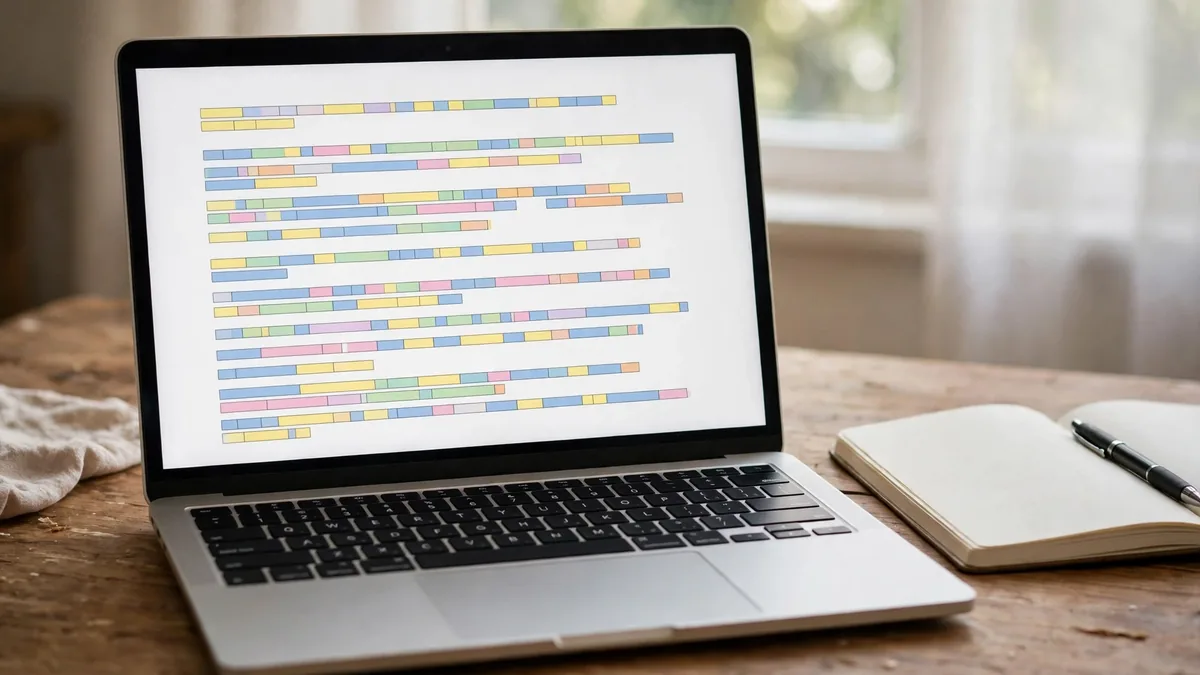
Tokenization in AI is the process of breaking text into small pieces called tokens before a model can read it. A token might be a whole word, part of a word, or a single punctuation mark, and the model works with these pieces rather than the raw sentences you type. Every chatbot answer you have seen began with tokenization, because a model cannot process language until it has been turned into numbers.
The idea sounds technical, but the reason is simple: computers work with numbers, not words. Tokenization is the bridge between the two, turning a sentence into numbered pieces a model can look up, compare, and predict from. How that bridge is built affects cost, language handling, and even the odd mistakes a model makes.
Understanding tokenization helps anyone who uses AI tools regularly. It explains why some prompts cost more than others, why a model can struggle with a rare word, and why counting words is not the same as counting tokens. This guide explains what tokenization is, how it works, and where its limits lie.
Key takeaways
- Tokenization splits text into tokens — words, word parts, or characters — that a model can turn into numbers.
- One token is roughly three-quarters of an English word, but the ratio changes a lot across languages and text types.
- Most modern models use subword tokenization, which balances a manageable vocabulary against the ability to handle rare words.
- Token counts drive API pricing, so long prompts and long answers cost more than short ones.
- Tokenization shapes model behaviour: it affects spelling, numbers, code, and how well a model handles non-English text.
What tokenization means in practice
When you send a message to a chatbot, the first thing that happens is not thinking — it is chopping. The sentence “Tokenization splits text into pieces” might become tokens like “Token”, “ization”, ” splits”, ” text”, ” into”, and ” pieces”. Each token is then matched to a number in the model’s vocabulary, a fixed list of pieces the model was built to recognise. The model never sees your sentence as letters; it sees a sequence of numbers.
Tokenization also sets the model’s working memory. Every model has a limit on how many tokens it can consider at once, known as its context window. A prompt, the conversation so far, and the answer all share that budget, and when the count grows too large, the oldest material drops out of view.
How tokenization works step by step
Modern tokenizers are trained on huge collections of text before the model itself is trained. The process starts with individual characters and repeatedly merges the most frequent pairs into larger pieces, until the vocabulary reaches its target size. The result covers common words whole and rare words in parts, keeping the vocabulary small enough to be practical.

At run time, the tokenizer applies those learned rules to your text. It scans from left to right, matching the longest pieces it knows, and falls back to smaller pieces for anything unfamiliar. A made-up brand name or a typo will still be tokenized — just into more, smaller pieces — which is why unusual words cost more tokens. The process is deterministic: the same text always produces the same tokens with the same tokenizer.
After tokenization, each token is converted into a vector — a list of numbers capturing something about its meaning and its relationships to other tokens. The model works with those vectors, predicting the next token again and again until the answer is complete. The predicted tokens are then joined back into readable text.
The main types of tokenizers
The oldest approach is word-level tokenization, where each word becomes one token and anything unknown becomes a placeholder. It is simple, but it breaks down quickly: a model would need a huge vocabulary to cover every word form, and it cannot handle a word it has never seen. Word-level tokenizers are now rare in large models.
Subword tokenization is the middle ground almost every major model uses today. Methods such as byte-pair encoding and WordPiece split words into frequent chunks, so common words stay whole and rare words split into recognisable parts. This keeps vocabularies in the tens of thousands while handling new words gracefully. It is the reason a model can read a word it has never seen before and still make a reasonable guess at its meaning.
Why tokenization matters: the benefits
The first benefit is efficiency. A well-designed tokenizer packs meaning into fewer tokens: shorter sequences, faster processing, and lower costs. Since most AI services charge by the token, compact representation saves real money at scale. Our look at what AI search engines really cost, including subscriptions and tokens shows how token counts feed directly into the monthly bill for AI tools.
The second benefit is flexibility. Subword tokenization lets one model handle many languages, technical terms, and even code, without a separate vocabulary for each. A model can process English, Spanish, and Python in the same conversation because its tokenizer breaks all of them into pieces it knows. That shared representation is part of why general-purpose models feel so versatile.
The third benefit is robustness. Because rare and misspelled words are split into parts rather than rejected, a model can cope with typos, brand names, and new slang. It may not always understand them perfectly, but it can usually make a sensible attempt. For businesses using AI with real customer messages, that tolerance is genuinely useful.
The risks and limits to know
Tokenization is not free of problems. One visible one is arithmetic: a model that sees 1,742 as two or three arbitrary chunks has no clean sense of its digits, which is part of why AI tools sometimes stumble on simple sums. Spelling is another weak spot — a model that stores “strawberry” as a few chunks cannot reliably count the letter “r” in it.
Language fairness is a bigger concern. Tokenizers trained mostly on English represent English compactly but can split other languages into many more pieces, making them slower and more expensive. A sentence that costs ten tokens in English might cost thirty in another, and quality can suffer too. Businesses serving customers in several languages should test token counts and quality in each one.
Security and privacy add a further wrinkle. Prompts are tokenized before they reach the model, and the token sequence can leak through logs or billing records in ways plain text would not, so sensitive data should be handled with the same care as any other input. For a broader view of the risks around AI tools, our guide on what cybersecurity is explains the basics of keeping business data safe when new tools enter the workflow.
Tokenization in real products
Chatbots are the most familiar example. When you write a prompt, the token count of your message plus the conversation history decides how much of the context window is used and, on paid plans, what the request costs. Long pasted documents consume the budget quickly, which is why experienced users summarise in stages. Short, focused prompts are cheaper and often get better answers.
Search and content tools use tokenization behind the scenes too. AI writing assistants, detectors, and summarizers all start by splitting text into tokens, and their accuracy depends on how well the tokenizer fits the text. A detector judging whether a passage was written by AI, for example, is sensitive to token patterns, and our overview of AI content detectors explains what those tools can and cannot reliably tell you.
Tokenization compared with related ideas
Tokenization is often confused with embedding, but the two are different steps. Tokenization cuts text into pieces; embedding turns each piece into a vector of numbers that captures meaning. Tokenization is the slicing, embedding is the translation into numbers, and the model then works with the embeddings. Confusing the two is common, but they solve different problems.
A useful comparison is with stemming in old-fashioned search, which reduced words to their roots so “running” and “runs” matched. Tokenization does something similar in spirit — it finds reusable pieces — but it preserves far more information, because the pieces are learned from real usage rather than from a fixed set of rules. That learned quality is what lets modern models handle new words without a dictionary update.
Tokenization in AI at a glance
The table below gathers the essential facts about tokenization.
| Detail | What to know |
|---|---|
| Definition | Splitting text into tokens before a model processes it |
| Typical size | One token is roughly three-quarters of an English word; the ratio varies by language |
| Main method today | Subword tokenization, such as byte-pair encoding and WordPiece |
| Why it matters | Token counts drive API pricing, context limits, speed, and multilingual quality |
| Known weak spots | Arithmetic, spelling tasks, and higher costs for non-English text |
| Related steps | Embedding turns tokens into number vectors; chunking splits long documents |
| Practical tip | Short, focused prompts cost fewer tokens and often get better answers |
Checklist: using tokenization knowledge well
These six checks turn the theory into habits that save money and improve results.
- Count tokens, not words, when estimating the cost of a prompt or an API call.
- Keep prompts short and focused: remove filler before sending, not after paying for it.
- Summarise long documents in stages instead of pasting everything into one prompt.
- Test token counts and answer quality in every language your business serves.
- Do not paste sensitive data into prompts without checking how the tool stores inputs.
- Remember that spelling and arithmetic tasks need extra checking, because tokens hide letters and digits.
Frequently asked questions
What is a token in AI?
A token is a piece of text — a word, part of a word, or a character — that a model works with. Text is split into tokens, each matched to a number, and the model processes those numbers rather than the original letters.
How many words is 1,000 tokens?
Roughly 750 English words. The real number varies: code, numbers, and non-English languages often use more tokens per word, while plain English prose sits close to the average.
Why do AI tools charge by the token?
Because tokens measure the actual work the model does. Longer inputs and answers need more computation, so pricing follows the token count of the prompt plus the answer.
Does tokenization affect answer quality?
Yes. A tokenizer that splits a word awkwardly can make it harder for the model to understand, and one that handles a language poorly can reduce quality there. Good tokenization is part of why the same model can feel fluent in one language and clumsy in another.
Can I see how my text is tokenized?
Many providers publish a tokenizer tool where you can paste text and see the tokens and the count. Developers can also use open tokenizer libraries to check counts before sending a request to a paid API.
Is tokenization the same as encryption?
No. Tokenization in AI splits text for processing, and the tokens can be turned back into the original text. It differs from tokenization in payments, where a card number is replaced with a random stand-in, and it is not encryption.
The bottom line
Tokenization in AI is the quiet step that makes everything else possible: it turns human language into numbered pieces a model can process, and the way it does that shapes cost, speed, language quality, and even the mistakes a model makes. Knowing that tokens, not words, are the unit of work explains pricing, context limits, and why short prompts often work better.
For anyone using AI tools at work, the practical lesson is simple. Write shorter prompts, count tokens when the bill matters, test in every language you serve, and double-check spelling and arithmetic. The model does the clever part, but tokenization sets the terms.