

Quick Answer: Where to buy a fridge?
You can buy a fridge from large electrical retailers, department stores, manufacturer-direct stores, local independent appliance shops, and second-hand marketplaces. Each route offers a different mix of price, delivery service, warranty support and returns flexibility, so the best choice depends on how much hand-holding you want and how tight the budget is.
Online-only retailers and manufacturer stores often undercut high-street prices but charge separately for delivery, installation and old-appliance removal. Local independents usually cost a little more but frequently include connection and a longer in-store warranty conversation. Second-hand and refurbished sellers are the cheapest option, though you carry more risk on condition and safety.
Before committing, compare the total delivered price, the energy rating on the current A to G scale, the warranty length, the delivery and installation fees, the returns window, and whether the retailer will take away your old fridge.
Why the Shop You Choose Matters More Than the Fridge
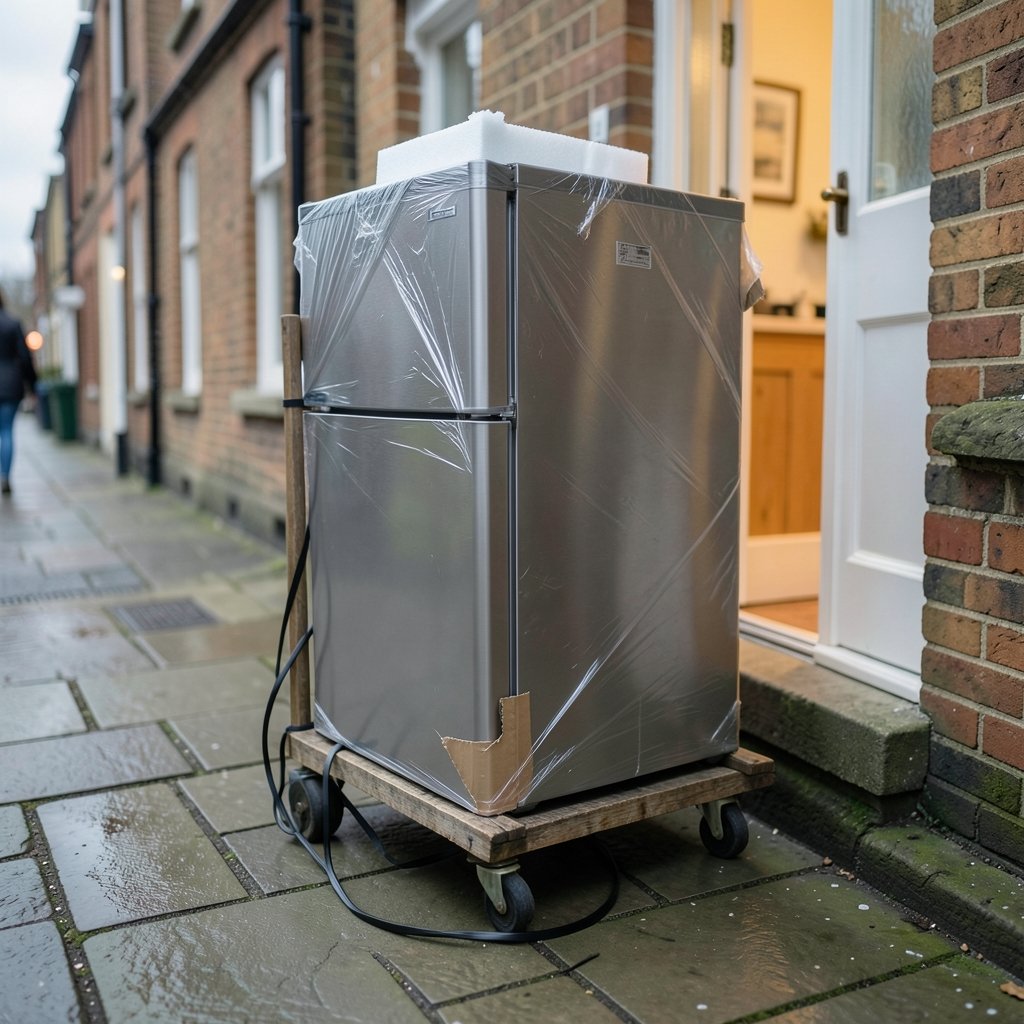
Walk into any showroom and the fridges all look similar. Stainless steel, glowing interiors, a sticker promising low running costs. The real difference between a good purchase and a frustrating one usually isn’t the appliance at all. It’s the seller.
A fridge is one of the few things people buy where the transaction continues long after the money changes hands. Delivery drivers squeeze units through doorways. Warranty claims get filed two years later. A fridge that arrives scratched needs replacing fast, before the food spoils. Who you bought from determines how painful each of those moments becomes. (Cash money order near me where buy one fast cheap)
There’s also a legal layer most shoppers never think about. In the UK, buying online gives you a 14-day right to cancel under the Consumer Contracts Regulations 2013, which came into force in June 2014. That right generally does not apply when you buy in a physical shop. It’s one of the most misunderstood rules in retail, and it shapes where smart buyers choose to spend.
The Main Places to Buy a Fridge
Large electrical retailers
Chains like Currys, AO and Argos dominate the UK market, and for good reason. They carry wide stock, offer next-day delivery, and provide installation and old-appliance recycling as paid add-ons. The trade-off is that delivery, connection and removal are usually separate line items, so the sticker price rarely reflects what you actually pay.
The advantage here is volume. If a model turns out to be a lemon, a big retailer has a returns process and a customer service team. The disadvantage is that add-on fees can add £40 to £80 to a mid-range purchase, and delivery slots fill up around bank holidays.
Department stores and premium retailers
John Lewis and similar stores position themselves on service. Delivery and installation are often bundled, warranties can stretch to five years on selected models, and staff tend to know the range better than a warehouse floor assistant. You pay for that in the headline price.
If a fridge is going into a fitted kitchen and the measurements are tight, this route is often worth the premium. Getting a specialist to confirm the unit will fit through the doorway and sit flush under a counter saves a lot of grief.
Manufacturer-direct stores
Samsung, LG, Bosch and others now sell directly. Prices fluctuate with promotions, and warranty terms can differ from what retailers offer. One practical trap: manufacturer stores often use the same third-party delivery partners as the big retailers, so the installation experience may be identical even though the paperwork isn’t.
Local independent appliance shops
Independents are the quiet winners for anyone who values a conversation. They’ll often match a competitor’s price, include connection in the cost, and remember your name when something goes wrong. Stock is narrower, and you may wait longer for a specific model, but the after-sales relationship is genuinely different.
Second-hand, refurbished and marketplace sellers
Charity shops, Facebook Marketplace and specialist refurbishers sell fridges at a fraction of retail. The savings are real, but so is the risk. UK electrical safety guidance recommends checking second-hand appliances for a portable appliance test or equivalent before use, and asking about age and service history.
If you’re weighing up budget options across categories, the same logic that applies to cheap electronics generally applies here: the cheapest unit is rarely the cheapest ownership. A similar principle shows up in guides like best e readers 2026 actually matters before you buy, where upfront price and total value pull in different directions.
| Seller type | Typical price | Delivery included? | Old fridge removal | Returns flexibility |
|---|---|---|---|---|
| Large electrical chain | Mid to low | Usually extra | Paid add-on | Strong, especially online |
| Department store | Mid to high | Often included | Often included | Strong |
| Manufacturer direct | Varies with promos | Usually extra | Sometimes | Varies by brand |
| Local independent | Mid | Often included | Often included | Negotiable, personal |
| Second-hand / refurb | Low | Rarely | No | Usually none |
What the Law Actually Gives You
Two pieces of legislation do most of the heavy lifting for UK fridge buyers.
The Consumer Rights Act 2015, in force since 1 October 2015, gives you a 30-day short-term right to reject faulty goods for a full refund. After 30 days, you’re entitled to repair or replacement, and if that fails, a price reduction or final refund. This applies whether you bought in-store or online.
The Consumer Contracts Regulations 2013 add the 14-day cancellation right for distance purchases. That covers online, phone and mail order. Buy a fridge in a showroom and that cooling-off window doesn’t exist, which is why so many people order online even after viewing in person.
There’s a third layer worth knowing. Fridges fall under the WEEE Regulations 2013, which means retailers selling fridges generally have to offer take-back of your old appliance. Many charge for it, but the obligation to offer the service exists. Ask before you buy, because a surprise £25 removal fee on delivery day is annoying.
Energy Labels: The Detail That Trips People Up
On 1 March 2021, the UK energy label changed. The old A+++ to G scale was replaced with a simpler A to G scale, and noise level in decibels was added to the label. The rescale was deliberate: too many appliances had clustered at the top of the old scale, so the new one reset the goalposts.
The practical consequence is that older stock may still carry A+++ labels while newer, more efficient models show a B or C on the new scale. Comparing the two directly is misleading. Always check which scale a label uses before deciding one fridge beats another.
Running costs matter more than most shoppers expect. A fridge runs 24 hours a day, every day, for a decade or more. A model rated two grades lower can quietly cost more in electricity than the price difference at the till.
Delivery, Doorways and the Mistakes People Make
Here’s where real purchases go wrong, again and again.
Measuring the gap but not the route. A fridge that fits the alcove may not fit through the front door, around the stair bend, or past the kitchen island. Measure the doorway width, the hallway, and any tight corners. Standard fridge-freezers are around 60cm wide, but American-style models can hit 90cm or more.
Forgetting the door swing. Fridges need clearance to open. A unit that opens against a wall is a daily irritation.
Assuming installation is included. At most large retailers it isn’t. Connection, levelling and plumbing for water-dispensing models are frequently separate charges.
Ignoring the old unit. Book removal at the point of sale. Once the new fridge is in, hauling the old one to the tip becomes your problem.
Skipping the returns window. If you order online, open and inspect the fridge as soon as it arrives. The 14-day cancellation clock starts on delivery, and reporting transit damage late complicates everything.
Should You Buy Online or in Store?
Online wins on price transparency and legal protection. You can compare specs side by side, read reviews, and you get the 14-day cancellation right. The downside is that you can’t open the door, feel the build quality, or judge how loud the compressor really is.
In-store wins on inspection and immediate possession. You can measure against a display model, ask questions, and take it home the same day. But you lose the cooling-off right, and showroom lighting flatters every appliance.
A hybrid approach works well: view in store, then buy online from the same retailer if the price or terms are better. Just confirm the model number matches exactly, because retailers often stock near-identical variants with different suffixes and slightly different specs.
The same “compare the fine print, not the headline” instinct applies across consumer purchases. It’s the theme behind pieces like benefits canva alternatives where other tools actually win, where the visible feature list matters far less than the terms buried underneath.
Warranty, Reliability and Independent Reviews
Warranty length varies wildly. Many fridges come with a one-year manufacturer guarantee as standard, with retailers or brands extending it to five or ten years on selected models, sometimes only for parts and labour on the compressor.
Independent testing is worth consulting before you commit. Which? publishes fridge reviews and reliability surveys based on member data, and its methodology pages are publicly viewable even though full reviews sit behind a subscription. That kind of aggregated reliability data tells you more than a hundred star ratings on a retailer’s own site.
A practical tip: register the warranty immediately after delivery. Manufacturers frequently require registration within a set window, and missing it can void cover on a fault that appears 18 months later.
Buying Second-Hand Without Getting Burned
Refurbished and second-hand fridges can be genuinely good value, particularly for a garage, rental property or temporary setup. The checklist is short but non-negotiable.
Ask for the age and ask why it’s being sold. Check the door seals by closing a piece of paper in the door and seeing whether it pulls out easily. Look for rust along the bottom edge, which suggests moisture problems. Listen to it run. Smell the interior. And confirm it has been safety tested, ideally with a portable appliance test sticker or documentation.
Avoid anything with visible damage to the back panel or exposed wiring. A fridge is a sealed system, and repairs to the refrigerant circuit cost more than most second-hand units are worth.
Matching the Purchase to Your Situation
A first flat, a family kitchen and a rental refurbishment all call for different approaches. Someone furnishing a starter home on a tight budget should look at refurbished units from a seller offering a short guarantee. A family replacing a built-in appliance should prioritise installation, accurate measurements and a long warranty. A landlord replacing a unit every few years should weigh reliability data heavily and buy from a retailer with a straightforward fault-replacement process.
Budgeting for the extras matters too. Delivery, installation, removal and any plumbing can add a meaningful percentage to the purchase price, and those costs vary enough between retailers that comparing them is often more valuable than chasing a £20 discount on the appliance itself.
Conclusion
Where to buy a fridge comes down to a trade-off between price, service and protection. Large retailers and manufacturer stores offer competitive prices and robust online returns, but charge for delivery and installation. Department stores and local independents cost more but bundle the service that makes a difficult delivery painless. Second-hand sellers offer the lowest prices with the least protection.
Whichever route you take, confirm the total delivered cost, check the energy label against the current A to G scale, measure every doorway on the route, book old-appliance removal upfront, and know your rights: 30 days to reject a faulty fridge under the Consumer Rights Act 2015, and 14 days to cancel an online order under the Consumer Contracts Regulations 2013. Get those basics right and the fridge itself becomes the easy part.
Frequently Asked Questions
Is it cheaper to buy a fridge online or in a shop?
Online prices are often lower, but the gap narrows once delivery, installation and removal fees are added. The bigger online advantage is legal: distance purchases come with a 14-day cancellation right that in-store buys generally don’t have.
Do retailers have to take away my old fridge?
Under the WEEE Regulations 2013, retailers selling fridges generally must offer take-back of old appliances. Many charge a fee for the service, so confirm the cost and book it at the point of sale rather than on delivery day.
How long should a new fridge last?
Most fridges are expected to run for around ten years, though compressor quality, ventilation and placement all affect lifespan. Keeping the unit away from direct heat and cleaning the rear coils periodically helps it reach that figure.
What energy rating should I look for?
On the post-2021 A to G scale, aim for C or above if budget allows. Because fridges run continuously, a higher rating usually pays back the price difference in electricity savings over the appliance’s life.
Can I return a fridge if it doesn’t fit?
If you bought online, yes, within the 14-day cancellation window, though you may cover return delivery costs. In-store purchases usually can’t be returned simply because of sizing, which is why measuring doorways and alcoves before buying is essential.
Is buying a refurbished fridge a good idea?
It can be, especially for a spare or rental unit. Check the age, test the door seals, inspect for rust, confirm it has been safety tested, and buy from a seller offering at least a short guarantee. Avoid units with damage to the rear panel or wiring.



