
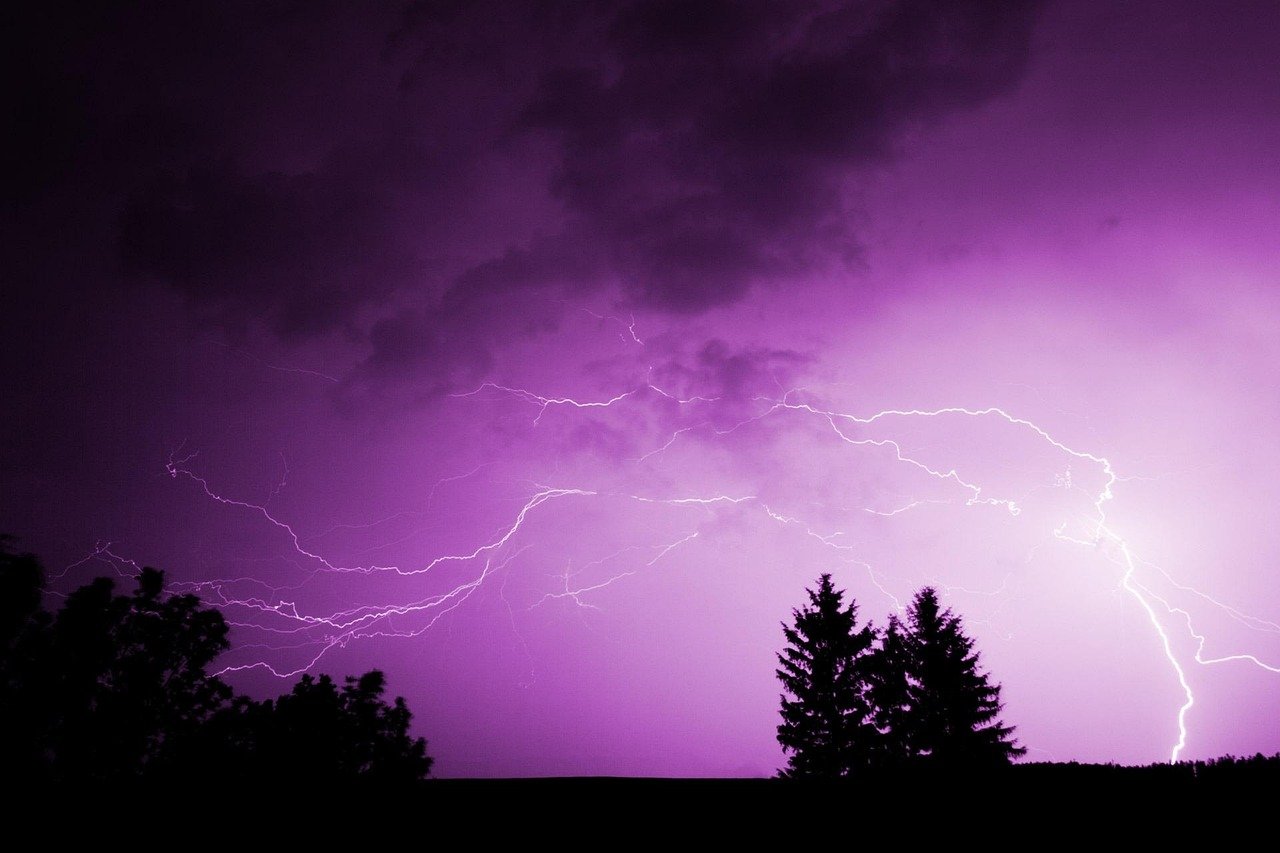
What if the brightest flash you ever saw in a storm was not a special kind of lightning at all, but the same ordinary bolt pushed past what your eyes could handle? That question is what people are asking when they search for “whitening lightning,” a phrase they type after a storm leaves them stunned by a flash so bright it seemed to bleach the whole sky. The term is slippery. It is not a standard label in meteorology, and you will not find it sitting neatly in official glossaries next to “sheet lightning” or “dry lightning.” Yet the thing people are describing is real, and the science behind it is genuinely interesting.
What “Whitening Lightning” Actually Describes
Most people who use the phrase are pointing at a visual effect rather than a formal classification. They saw a bolt that looked white, or a flash that seemed to whiten the clouds around it, and they reached for the most descriptive words they had.
That is worth stating plainly: whitening lightning is not an established scientific term. It does not appear as a defined entry in the major glossaries that meteorologists rely on, and researchers who study lightning do not classify strikes by whether they look “whitened.” What does exist is a set of real, well-documented reasons a flash can appear white. The phrase is best understood as a description of appearance, not a category of discharge.
This matters because the label can send people looking for the wrong explanation. Someone who searches for “whitening lightning” often assumes they witnessed something rare or unusual. In most cases, they witnessed something ordinary under unusual viewing conditions.
Why Lightning Looks White in the First Place

Lightning is a transient electric discharge with enormous current, and the visible channel is a channel of hot plasma heated to tens of thousands of kelvin. At those temperatures, the light is not a single color. It is a mix of emission from ionized nitrogen and oxygen, and the balance of that mix shifts with the peak current and the channel temperature.
Higher peak currents tend to produce a whiter, bluer-white appearance. Lower-current flashes can look more orange or pink, especially when seen through humid air or dust. So there is a genuine physical basis for a bolt reading as “white” rather than colored.
Then there is the perceptual layer, which is where most of the confusion lives. Two effects dominate:
Overexposure. A very close or very bright flash can saturate a camera sensor or overwhelm the light receptors in your eye. When a signal maxes out, it reads as pure white regardless of its true spectral mix. This is the same reason a photo of a bright light source often shows a featureless white blob instead of the color you remember.
Atmospheric scattering. Distance softens and shifts color. Air scatters shorter wavelengths, and a flash seen through miles of atmosphere, rain, or cloud can lose its color character and arrive at your eye as a diffuse white glow.
Put those together and you get the classic experience: a flash that seems to whiten everything, followed by a search for a name that does not quite exist.
The Terms People Confuse With It
Part of the reason “whitening lightning” feels familiar is that it echoes several real colloquial terms. Each one means something specific, and none of them is the same thing.
| Term | What it actually means | Why it gets confused |
|---|---|---|
| Heat lightning | Ordinary lightning seen from far away, with thunder too distant to hear | Sounds like a special type; the flash often looks pale and silent |
| Sheet lightning | Lightning that lights up a cloud from within or behind, appearing as a diffuse flash | Looks like a whitening of the sky rather than a bolt |
| Dry lightning | Lightning with little or no precipitation reaching the ground | Fire-relevant term that gets mixed up with appearance-based names |
| Whitening lightning | Not a formal term; a description of a white-looking flash | The name sounds official but is not |
The heat lightning confusion is the most common. People see a distant flash that seems to whiten the horizon, hear no thunder, and conclude they saw something unusual. In reality, they saw ordinary lightning from far enough away that the sound never reached them. That is a helpful thing to know, because it turns a mystery into a simple distance effect.
Sheet lightning is the other frequent culprit. When a flash happens inside or behind a cloud, you do not see the channel. You see the cloud glowing, which can absolutely look like the sky whitening for a split second.
What Actually Works When You Want to Identify a Flash
If you want to know what you saw, guessing from color is a weak method. Here is what actually helps, in order of usefulness.
- Note the time between flash and thunder. Count the seconds. Sound travels far slower than light, so the gap gives you a rough distance estimate. A long gap means a distant flash, which explains a pale, silent appearance.
- Check whether you saw a channel or a glow. A visible, branching channel is a direct strike. A formless glow is light diffused through cloud.
- Look at the sky conditions. Clear-sky flashes far on the horizon are almost always distant storms, not a special phenomenon overhead.
- Check local lightning data after the fact. Storm tracking services and weather apps log strike times and locations. Matching your memory to a timestamp settles most arguments.
- Resist the color-first approach. Color is the least reliable clue, because cameras, eyes, humidity, and distance all distort it.
A common mistake is trusting a phone photo. Phone cameras handle extreme brightness poorly, and a saturated sensor will render almost any close flash as pure white. If your only evidence is a photo where the bolt looks bleached, you have evidence of overexposure, not of a rare event.
Why the White Appearance Is Genuinely Useful to Understand
The same overexposure problem shows up in plenty of everyday tech, and understanding it saves people from buying things they do not need. A projector throwing a washed-out white image onto a wall is dealing with the same core issue: too much light in one place, and detail disappearing into a bright blob. If you have ever wondered whether a plain wall is good enough for a projected image, the answer depends on how the surface handles reflected light, and there is a solid practical breakdown of why a projector screen white walls actually improves picture in some setups but ruins it in others.
Bright light and how our eyes and screens handle it is a thread that runs through a lot of consumer decisions. People worry about screen glare and eye strain and end up asking whether do blue light glasses actually work evidence really shows what the marketing promises. The honest answer, much like with lightning color, is that perception and measurement are not the same thing.
There is also a hardware angle. If you are choosing between display technologies for a room with difficult lighting, the source matters as much as the surface, and a comparison of laser vs led projector which light source fits your room covers how each handles brightness in real conditions.
None of this is a detour from the lightning question. It is the same principle: when a light source is far brighter than the sensor or surface receiving it, you lose information and gain a white patch. Learning to recognize that pattern is genuinely useful.
Safety Does Not Depend on the Name
Here is the part that matters more than any label. Whether a flash looks white, blue, pink, or orange, the safety rules are identical. Lightning does not care what you call it.
The core guidance is simple and well established: when thunder roars, go indoors. If you can hear thunder, you are within range of a strike. Move into a substantial building or a hard-topped vehicle, stay away from windows and plumbing, and wait at least thirty minutes after the last thunder before going back outside.
A few practical points people get wrong:
- “Heat lightning” is still lightning. The fact that you cannot hear thunder does not mean the storm is harmless where you are, and it does not mean the flash was a special type.
- Rubber soles and sneakers do not protect you. This is one of the most persistent myths in storm safety.
- Standing under a tree is worse than standing in the open. Tall isolated objects attract strikes.
- A white flash nearby means you are close. If the flash and the thunder arrive almost together, you are in the danger zone right now.
The color of the bolt is a curiosity. The distance is the thing that keeps you alive.
How the Term Spreads, and Why That Is Normal
Language does this constantly. People see something striking, reach for a vivid description, and the description starts circulating as if it were a technical term. “Whitening lightning” fits that pattern perfectly. It is descriptive, memorable, and sounds official enough that others repeat it.
There is no harm in using the phrase conversationally. The trouble only starts when someone treats it as a defined category and builds conclusions on top of it, such as assuming a white flash behaves differently, carries different risk, or signals a rare atmospheric event.
A useful habit is to separate three questions whenever a weather term comes up:
Is it a defined term? Check whether it appears in a standard glossary. If it does not, treat it as informal.
Is the phenomenon real? Often yes, even when the name is not official. White-looking flashes are real. The name is just a description.
What is the practical takeaway? For lightning, the takeaway is always the same: distance and shelter, not color.
That three-question habit works well beyond weather. It applies to plenty of terms that sound technical but turn out to be shorthand, including the ones that show up in product marketing and tech troubleshooting. A phrase like “white spots” on a screen sounds clinical until you dig in, and a practical guide to white spots phone they get rid them shows how much of the fix comes down to identifying the actual cause rather than the label.
What to Tell Someone Who Asks About It
If a friend describes seeing “whitening lightning,” the most helpful response is not a correction. It is a short explanation that respects what they saw.
Tell them the flash was probably real and probably ordinary. Explain that very bright or very close strikes can saturate the eye and any camera pointed at them, which makes the channel read as white. Mention that distance and cloud can turn a normal bolt into a diffuse glow that seems to whiten the sky. Then point out that the phrase is not an official term, so they should not expect to find it in a weather glossary.
Finally, bring it back to safety. Ask how long the gap was between flash and thunder. If it was short, they were close, and that is worth knowing regardless of what the flash looked like.
Conclusion
“Whitening lightning” is a description in search of a definition. The phrase is not standard meteorology, and treating it as a formal category leads people toward the wrong explanations. But the experience behind it is completely real. High peak currents, atmospheric scattering, and plain old overexposure all conspire to make some flashes look pure white, and the effect is strongest exactly when a strike is close enough to matter.
The practical upshot is refreshingly simple. Judge a storm by distance and sound, not by the color of the flash. Count the seconds, get indoors when thunder arrives, and stay there well after the last rumble. Keep the phrase if you like it, because it captures something true about how a brilliant flash can seem to bleach the sky. Just do not let a memorable name convince you that the ordinary rules of storm safety have changed. They have not, and they will not.



