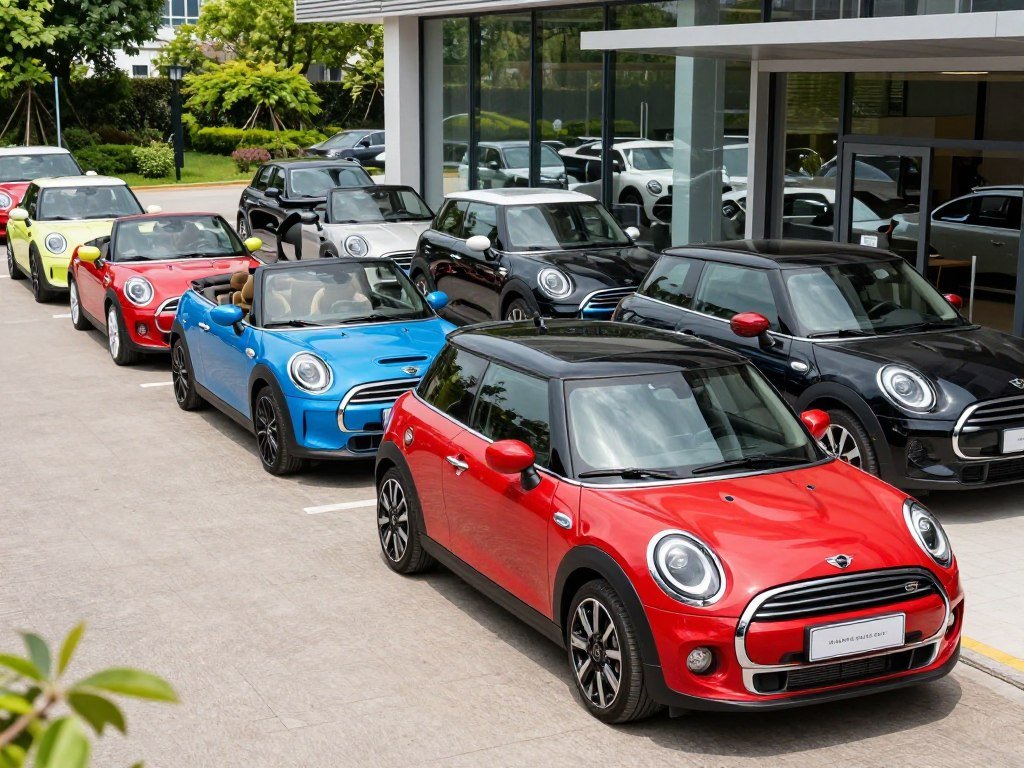
BMW Group owns the MINI brand, while MINI remains a distinct marque with its own identity. If you are comparing vehicles, that difference can affect how you read a badge, a company name, or a model listing. An independent automotive brand is a vehicle marque with its own identity and models that can be owned by a larger company.
MINI has British roots, yet its present-day corporate structure is part of a global automaker. U.S. drivers can choose from a range that includes small hatchbacks, convertibles, performance models, and an SUV. Ownership and brand identity answer different questions.
Key Takeaways
- BMW Group owns MINI.
- MINI remains a separate consumer-facing brand.
- MINI USA handles the brand’s U.S. business within BMW of North America, LLC.
- The MINI Countryman is a MINI SUV, not a BMW-branded model.
- Production locations depend on the vehicle model.
- Model history and condition matter when you compare pre-owned options.
Understanding that difference makes it easier to read MINI’s history and compare its vehicles.
Who Owns MINI Cooper Today?
BMW Group owns MINI, and MINI USA operates within BMW of North America, LLC. That makes the parent company the same across the world, while the U.S. operating unit manages the brand’s business for American buyers. The roles are distinct, even though both are part of the same corporate group.
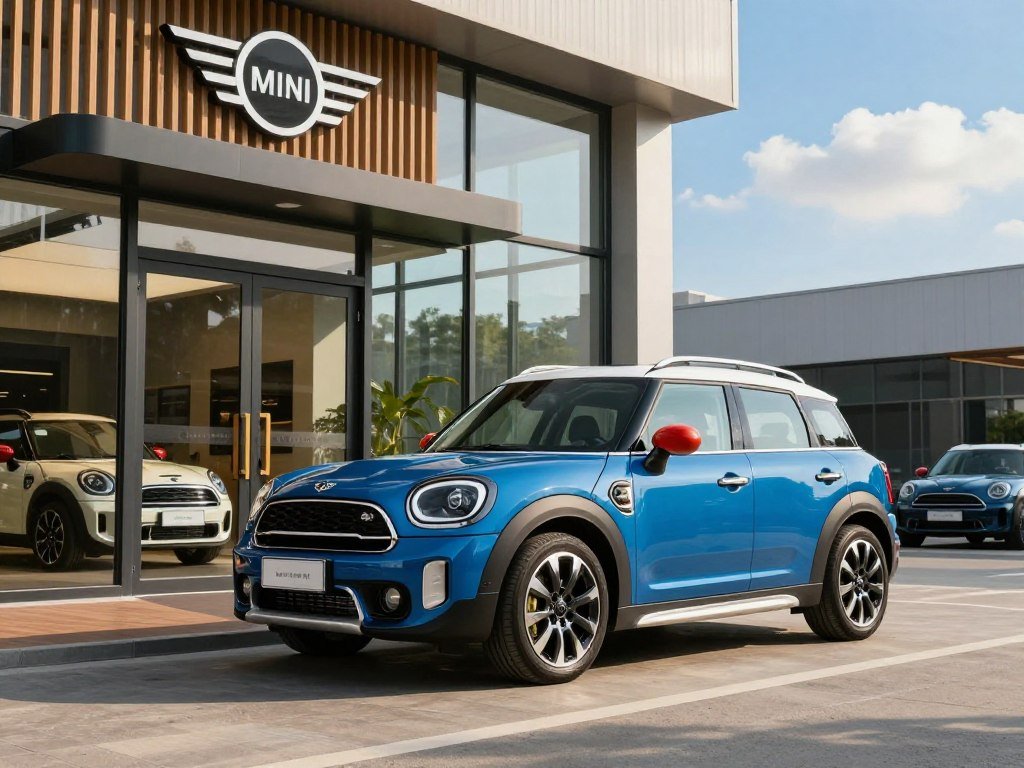
The MINI Cooper SUV, called the MINI Countryman, belongs to the MINI brand rather than the BMW vehicle range. An independent automotive brand is a vehicle marque with its own identity and models that can be owned by a larger company. MINI is independent in its brand identity, not separate from BMW Group ownership.
BMW Group owns MINI, but a MINI Countryman is sold as a MINI, not as a BMW.
MINI USA is a business unit of BMW of North America, LLC. It is not a separate parent company that owns MINI, and it is not the name on the vehicle’s badge. The global parent is BMW Group; the U.S. unit handles MINI’s American business.
This distinction helps when you browse a dealer’s inventory or compare cars online. A company can own more than one brand, while each brand offers its own models, design, and name. MINI has its own lineup and customer-facing identity, though it is part of the BMW Group.
That structure also explains why MINI’s corporate ownership does not turn its SUV into a BMW model. The Countryman carries MINI’s styling and model name, and it sits within MINI’s range. A dealer may sell vehicles from both brands, but a shared corporate owner does not erase their separate badges.
For a U.S. buyer, the dealership sells a MINI vehicle under the MINI brand, not under the BMW name.
How BMW Became MINI’s Parent Company
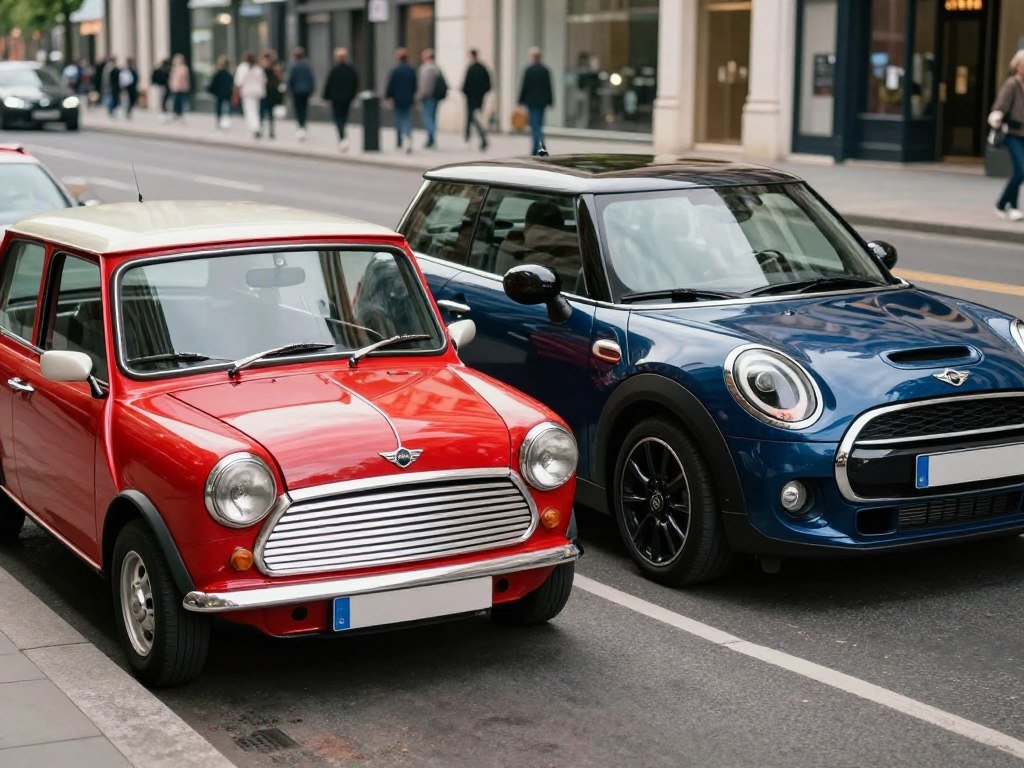
The original Mini began as a response to postwar fuel concerns, decades before BMW introduced the modern successor. Its small size and clever layout helped make it a distinct car in its own right. The design was practical first, then became a lasting part of automotive history.
BMW acquired the Mini brand in 1994 and has owned it since 2000. The modern MINI Cooper successor launched in 2001, linking the old British car to a new era under BMW.
MINI Cooper Models by Year
- 1957: A fuel shortage challenge led Alec Issigonis to design a small, fuel-efficient car for four adults.
- 1959: The first MINI launched with wheels near the corners and a sideways-mounted engine.
- 1961: John Cooper’s performance changes led to the Classic MINI Cooper 997.
- 1962: Pat Moss won the Netherlands Tulip Rally in a MINI.
- 1994: BMW acquired the Mini brand.
- 2000: BMW retained the brand after the Rover Group breakup.
- 2001: The modern MINI Cooper successor launched.
From the Original Mini to BMW
Issigonis placed the engine sideways and pushed the wheels toward the car’s corners. That layout gave passengers useful room inside a compact body. It also helped the original Mini feel nimble on narrow streets.
John Cooper saw sporting promise in the small car and changed it for better performance. The Classic MINI Cooper 997 arrived in 1961. One year later, Pat Moss won the Netherlands Tulip Rally, while MINI earned three Monte Carlo Rally victories from 1964 to 1967.
The car’s success helped its name travel far beyond Britain. The original Mini became known for its small footprint, rally results, and distinct design. Its long history still shapes how drivers view the MINI brand today.
BMW acquired the Mini brand in 1994 as part of its involvement with the Rover Group. When BMW broke up Rover Group in 2000, it kept the Mini brand. That move set the stage for a new vehicle rather than a simple return of the old car.
The modern MINI Cooper was made at the former Morris Motors Plant Oxford site in Cowley, Oxfordshire. That 2001 successor kept a link to the classic design while bringing a new car to buyers. It was made bmw owned, but it carried the MINI name and identity rather than a BMW badge.
The 2001 launch marked the start of MINI’s modern era under BMW ownership.
Is MINI Cooper a BMW?
A MINI Cooper is owned by BMW Group, but it is sold as a MINI, not as a BMW. MINI and BMW are separate consumer-facing brands, each with its own badge and model names. Corporate ownership is not the same as the name on the car.
“BMW MINI Cooper” is not the vehicle’s brand name. The car is a MINI Cooper, and BMW Group is its parent company. BMW is a German automaker; MINI is a British automotive brand founded in Oxford.
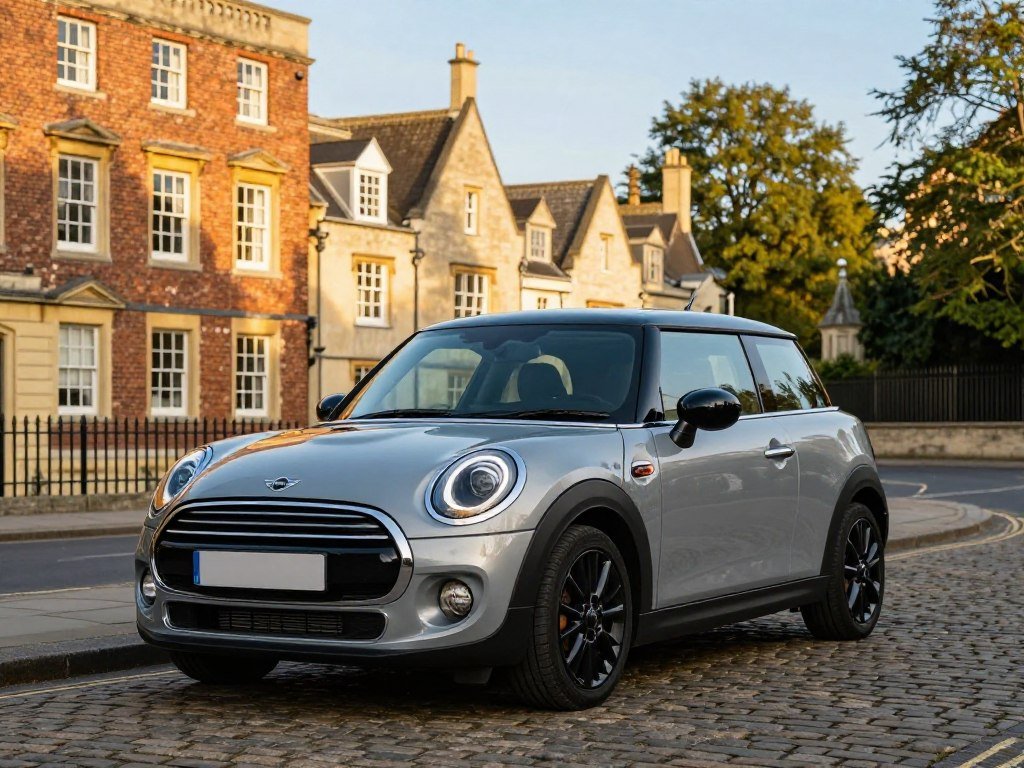
That difference can be confusing when you see the brands together in a dealer’s inventory. A dealer may offer BMW and MINI vehicles at nearby showrooms, or under one business group. Still, a MINI Cooper is not a BMW model simply because both brands share a parent.
MINI’s British roots and design cues help explain its identity, but no single detail decides who owns the brand. For example, a Union Jack design element can nod to British heritage. It does not change the corporate owner, and it does not make the vehicle a BMW.
The words “MINI Cooper BMW” may appear together in a listing or conversation, but they describe two different things: the vehicle brand and its corporate parent. BMW did make MINI part of its wider business, but the brand has its own range. Not every MINI model is a BMW model, and not every BMW is related to MINI as a vehicle.
That distinction matters when you compare cars by name, features, or dealer options. You can compare a MINI vehicle with a BMW vehicle, but each one keeps its own model range and badge. A shared owner does not make the brands interchangeable.
Check the badge and model name when comparing vehicles, because corporate ownership does not make two brands interchangeable.
Where Are MINI Coopers Made?
The combustion-engine MINI Cooper hatchback and convertible are centered on production in Oxford, England. Since 2024, Oxford has been the key site for those models. Production depends on the model, so the MINI badge alone does not tell you where a vehicle was built.
The third-generation MINI Countryman is produced at BMW’s Leipzig plant in Germany. That makes its production location different from the Oxford-centered production of the combustion-engine hatchback and convertible.
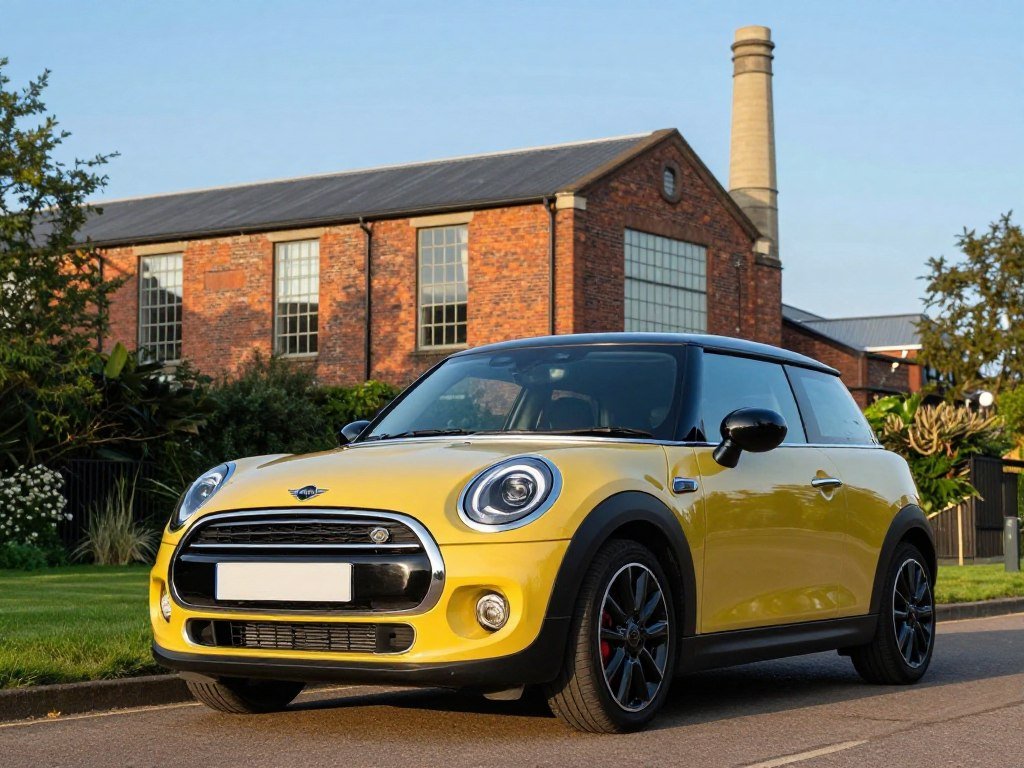
Oxford is a long-standing part of MINI’s manufacturing story, but current production is not limited to one country. The MINI Hardtop and convertible have their own production path. The MINI Countryman follows another, reflecting its generation and place in the wider model range.
This distinction can help if you are comparing a new vehicle with a pre-owned one. A listing may identify a MINI Cooper, a MINI Countryman, or another body style, but the model name does not make every production detail identical. The same brand can build different models at different plants.
BMW’s ownership also does not mean all MINI vehicles are made in Germany. The Oxford and Leipzig examples show why a broad claim about every MINI being made in one country would be wrong. Each vehicle’s model and generation shape the answer.
For a specific vehicle, confirm its model generation and production details rather than relying on the MINI badge alone.
What MINI Models Are Available for 2026?
The 2026 U.S. MINI lineup offers five unique vehicles, spanning small hatchbacks, open-air driving, performance models and the Countryman. You can choose a compact two-door, a roomier four-door, or a convertible. The right body style depends on how you plan to use the car.
Listed starting prices range from $29,500 to $49,400 before destination and handling. The price depends on the model and trim, while the Countryman listings begin at Signature Plus rather than Signature.
2026 MINI Models by Body Style
- 2-door Hardtop: a small hatchback for compact city driving.
- 4-door Hardtop: a hatchback with more doors for passenger access.
- Convertible: an open-air option in Cooper and Cooper S versions.
- JCW performance models: higher-performance Hardtop, Convertible, and Countryman choices.
- Countryman: the MINI SUV, including S ALL4 and JCW ALL4 versions.
2026 MINI Prices and Trim Levels
The 2026 MINI Cooper Hardtop 2 Door starts at $29,500 for Signature Trim. Signature Plus starts at $31,900, and Iconic starts at $33,600. The Cooper S Hardtop 2 Door starts at $32,800, $35,200, and $36,900 across those trims.
The Cooper Hardtop 4 Door starts at $30,500 for Signature, $32,900 for Signature Plus, and $34,600 for Iconic. The Cooper S Hardtop 4 Door starts at $33,800, $36,200, and $37,900, respectively.
The Cooper Convertible starts at $34,600 for Signature, $37,000 for Signature Plus, and $38,700 for Iconic. The table shows the starting prices for these five models and trims.
| Model | Signature | Signature Plus | Iconic |
|---|---|---|---|
| Cooper Hardtop 2 Door | $29,500 | $31,900 | $33,600 |
| Cooper S Hardtop 2 Door | $32,800 | $35,200 | $36,900 |
| Cooper Hardtop 4 Door | $30,500 | $32,900 | $34,600 |
| Cooper S Hardtop 4 Door | $33,800 | $36,200 | $37,900 |
| Cooper Convertible | $34,600 | $37,000 | $38,700 |
The Cooper S Convertible costs $37,900 in Signature, $40,300 in Signature Plus, and $42,000 in Iconic. The JCW Hardtop 2 Door costs $38,900, $41,300, and $43,300 across the same trims. JCW means John Cooper Works, MINI’s performance label.
The JCW Convertible starts at $44,600 in Signature, $47,000 in Signature Plus, and $49,000 in Iconic. Countryman S ALL4 starts at $38,900 in Signature Plus and $42,300 in Iconic. JCW Countryman ALL4 starts at $46,900 and $49,400 in those trims.
The Countryman prices listed have Signature Plus and Iconic trims, not a Signature price. Every listed price excludes the $1,175 destination and handling charge, so include that amount when comparing the full starting cost.
Compare the trim and destination charge before treating a starting price as the amount due.
What Does MINI Ownership Cost Beyond the Sticker Price?
A useful budget starts with both the insurance coverage you choose and the fuel grade your MINI requires. Insurance averages offer a reference point, while your actual bill depends on your own details. Fuel choice also affects what you spend each time you fill up.
The average MINI Cooper insurance premium is $130 per month across all policies. That average, updated October 29, 2026, includes different coverage types and does not predict a specific driver’s rate.
Insurance Premiums and Coverage
Liability coverage averages $93 per month, while full coverage averages $167 per month. Both averages were updated October 29, 2026. The difference reflects the coverage types represented, not a promise that a certain driver will pay either amount.
An individual premium depends on the driver, location, vehicle, coverage, and insurer. A clean driving history may lead to a different quote than a recent claim, while a ZIP code can also affect rates. These averages are reference points, not a quote for your car.
Premium Fuel for the MINI Cooper
GEICO lists premium gasoline as the fuel type for the 2026 MINI Cooper. Most 2025 and 2026 MINI Cooper models are recommended to use premium unleaded gasoline rated at 91 octane or higher. Average MINI Cooper insurance costs can help frame a budget, but they do not cover fuel spending.
Fuel costs change with local pump prices, driving habits, and how often you use the vehicle. A long commute can mean more frequent fill-ups than occasional short trips. Your total also shifts with the price of premium gasoline in your area.
Insurance and fuel are only two recurring costs to consider. Your coverage choices shape the insurance bill, while the model’s fuel guidance shapes what you put in the tank. A dealer can provide vehicle details, but a personal insurance quote comes from an insurer.
Get an insurance quote for the exact vehicle and driver, and check the owner’s manual for the model’s fuel guidance.
Which MINI Cooper Years Should Buyers Approach Carefully?
A used MINI’s maintenance record and inspection results matter more than mileage alone. The 2007-2010 Cooper S with the N14 engine deserves particular caution because it can have several engine-related faults. That warning does not mean every car from those years will fail.
MINI Cooper years to avoid include 2007-2010 Cooper S models with the N14 engine. Common concerns include high oil use, timing-chain tensioner failures, and fuel-pump breakdowns. The most common problem to discuss is engine trouble in older Cooper S models, especially a failed timing-chain tensioner.
MINI Cooper Years to Approach Carefully
Models from 2011-2013 use the N18 engine, which improved on N14 problems. They can still develop cooling-system leaks and early suspension wear. A service record can show whether a past owner fixed those issues or left them for the next buyer.
A car’s condition depends on how it was driven and maintained, not just its model year. Look for clear records of repairs and scheduled service. A certified pre-owned MINI may come with added checks, but the specific vehicle still deserves a close review.
Wear Items and Mileage Checkpoints
Many third-generation MINIs have an upper engine mount that often fails around 60,000 miles. Control-arm bushings and strut mounts often need replacement around 50,000-70,000 miles. Thermostat housings and water pumps can need replacement around 60,000-80,000 miles.
| Component | Mileage checkpoint | What to inspect |
|---|---|---|
| Engine mount | Around 60,000 miles | Mount wear or failure |
| Suspension bushings and strut mounts | 50,000-70,000 miles | Worn bushings and mounts |
| Thermostat housing and water pump | 60,000-80,000 miles | Leaks or needed replacement |
These figures are checkpoints, not set failure dates. A technician can check for worn parts, leaks, and repair needs during a pre-purchase inspection. Ask for service records and compare them with what the inspection finds.
Properly maintained MINI Coopers can last over 150,000 miles, and some owners report 200,000 miles or more. Those figures are possible outcomes, not a promised lifespan for any individual vehicle. A neglected car may need costly work much sooner.
Properly maintained MINI Coopers can exceed 150,000 miles, but a high odometer reading alone cannot show whether one is a sound buy. Pay close attention to the maintenance trail and the technician’s findings before weighing the asking price.
Have a qualified MINI technician inspect the specific vehicle before buying, especially if its service history is incomplete.
What Should Drivers Know Before Choosing a MINI?
The right MINI is the one whose size, body style and running costs fit the way you actually drive. Compact packaging and distinctive styling may suit you if maneuverability and design matter most. Passenger and cargo space should still guide your choice.
Match the model to your daily route, the people you carry, and your full ownership budget. The MINI Countryman SE ALL4 is an electric Countryman model, while not every MINI is electric. Your powertrain choice should fit your usual driving and access to charging.
“Poor man’s BMW” is a casual comparison, not an official vehicle category or a precise description of MINI’s separate identity.
A small hatchback can be easy to place in a tight parking spot, but it may not suit every passenger or load. The MINI Countryman offers a different shape and size. Consider how often you carry friends, sports gear, groceries, or luggage before choosing a body style.
Performance preferences matter, too. Some drivers want the feel of a standard Cooper, while others may prefer a John Cooper Works model. Regular driving conditions also matter, from crowded city streets to longer highway trips and winter roads.
Use these four checks to narrow your options before browsing dealer inventory:
- Passenger and cargo fit for your usual trips.
- Daily route and parking needs, including tight spaces.
- Preferred powertrain, including gas or electric options.
- Complete ownership budget for fuel, insurance, and upkeep.
Once you identify the right size and powertrain, compare the specific vehicle’s features and trim. A dealer can help you check current inventory, but the best fit comes from your own needs. Try the seats and cargo area with the people and items you often carry.
Sit in the vehicle and check your real passenger and cargo needs before deciding.
Conclusion
MINI is BMW Group-owned, but it has its own brand identity and range of vehicles. That means a MINI keeps its own badge and model name, even as it belongs to a larger company. The distinction helps you compare vehicles on the terms that matter to you.
Think about which model fits your space, driving needs, and budget. Then review its full costs, including fuel and insurance, before contacting a dealer. A test drive can help you judge the size and feel in person.
Compare the model, fuel guidance and ownership budget that fit your needs before arranging a test drive.
FAQ
Who manufactures Mini Coopers?
MINI manufactures and sells the vehicles under the MINI brand, while BMW Group is the brand’s parent company. The badge and model name on the car are MINI, not BMW. BMW’s ownership does not change the vehicle’s consumer-facing identity. The Countryman, for example, is a MINI SUV, even though BMW Group owns the brand.
What car is the poor man’s BMW?
“Poor man’s BMW” is a casual label sometimes applied to MINI, not an official vehicle category. MINI is a distinct brand owned by BMW Group, with its own identity and lineup. The phrase does not precisely describe the brand or mean that a MINI is a BMW model. Compare each vehicle by its actual model, features, and cost.
Are Mini Coopers expensive to insure?
The average MINI Cooper insurance premium is $130 per month across all policies. That average is a reference point, not a quote for your situation. Your rate can change with the coverage you choose and details about the driver, vehicle, location, and insurer. Compare quotes for the specific model and coverage you plan to buy.
Which MINI is not to buy?
Use extra caution with 2007-2010 Cooper S models that have the N14 engine. They can face high oil use, timing-chain tensioner failures, and fuel-pump breakdowns. That history does not mean every example is defective or should be rejected. Review the service records and arrange an inspection before deciding whether a specific car is worth buying.
At what mileage do Mini Coopers start having problems?
There is no single mileage when every MINI Cooper starts having problems. Some wear items often need attention between 50,000 and 80,000 miles, depending on the part, model, and maintenance. Suspension bushings and strut mounts often need replacement around 50,000-70,000 miles. Thermostat housings and water pumps can need work around 60,000-80,000 miles.
What are the downsides of owning a MINI Cooper?
Common trade-offs include limited space in smaller models, premium-fuel guidance for most 2025 and 2026 models, and costs that vary by driver and vehicle. A compact hatchback may not fit every passenger or cargo need. Insurance rates and maintenance bills also depend on your situation and the car’s condition. Check the specific model before you commit.
Do MINI Coopers require premium gas?
Most 2025 and 2026 MINI Cooper models are recommended to use premium unleaded gasoline rated at 91 octane or higher. The fuel grade can affect your regular driving budget, especially if you drive often. Check the owner’s manual for the exact model’s guidance, since fuel needs can differ by vehicle and year.
What is the average lifespan of a MINI Cooper?
Properly maintained MINI Coopers can exceed 150,000 miles, and some owners report reaching 200,000 miles or more. Those figures do not promise a set lifespan for every car. Maintenance, past repairs, and the way the vehicle was used all matter. Service records and an inspection can help you judge a particular MINI’s condition.