
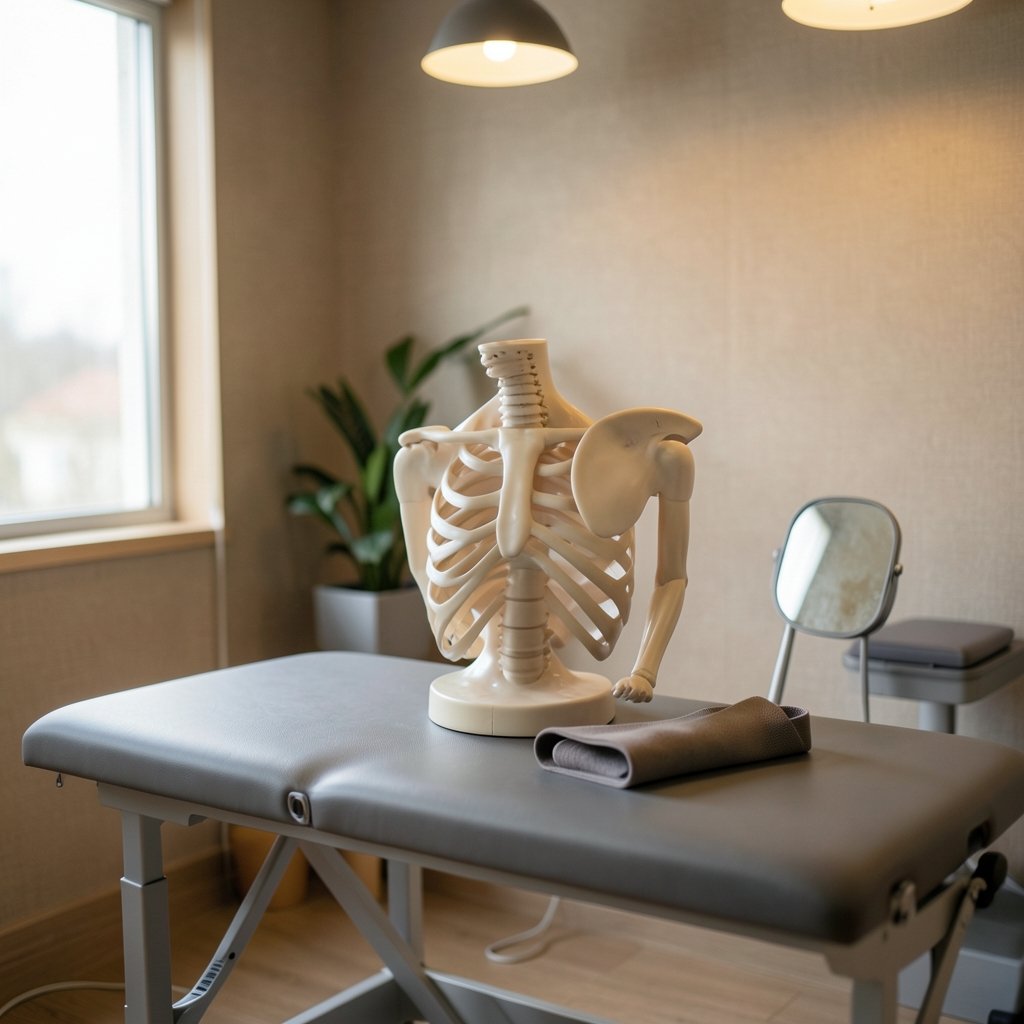
Have you ever caught a glimpse of your back in a mirror and noticed one shoulder blade jutting out like a small wing? Or watched someone raise their arm and seen the same thing happen? That visible ridge along the inner edge of the shoulder blade has a name: winged scapula. It is not a disease in itself. It is a sign that something has interrupted the delicate teamwork that normally holds the shoulder blade flat against the rib cage.
The good news is that a winged scapula is often treatable, and many people recover well with the right approach. The trick is figuring out which structure failed and why, because the label “winged scapula” covers several very different problems. This article walks through the anatomy, the causes, how clinicians tell the types apart, and what actually helps in practice, including the mistakes that slow recovery down.
What the Shoulder Blade Is Supposed to Do
The scapula is the flat, triangular bone that sits over the upper back ribs. It is not locked to the spine. Instead, it floats on a bed of muscle and glides across the rib cage as the arm moves. That mobility is what lets a person reach overhead, throw a ball, or scratch their back.
Holding the scapula in place is a team effort. Several muscles anchor it, and each one pulls in a slightly different direction:
- The serratus anterior wraps around the side of the ribs and pulls the scapula forward and flat against the chest wall. It is the main muscle that keeps the inner border from lifting off.
- The trapezius spans the upper back and neck and helps elevate, retract, and rotate the scapula.
- The rhomboids sit between the spine and the inner scapular border and pull the blade toward the spine.
When any of these muscles weakens or stops working, the balance tips. The scapula drifts away from the ribs, and the inner border lifts. That lift is the wing.
The Nerve Behind Most Cases
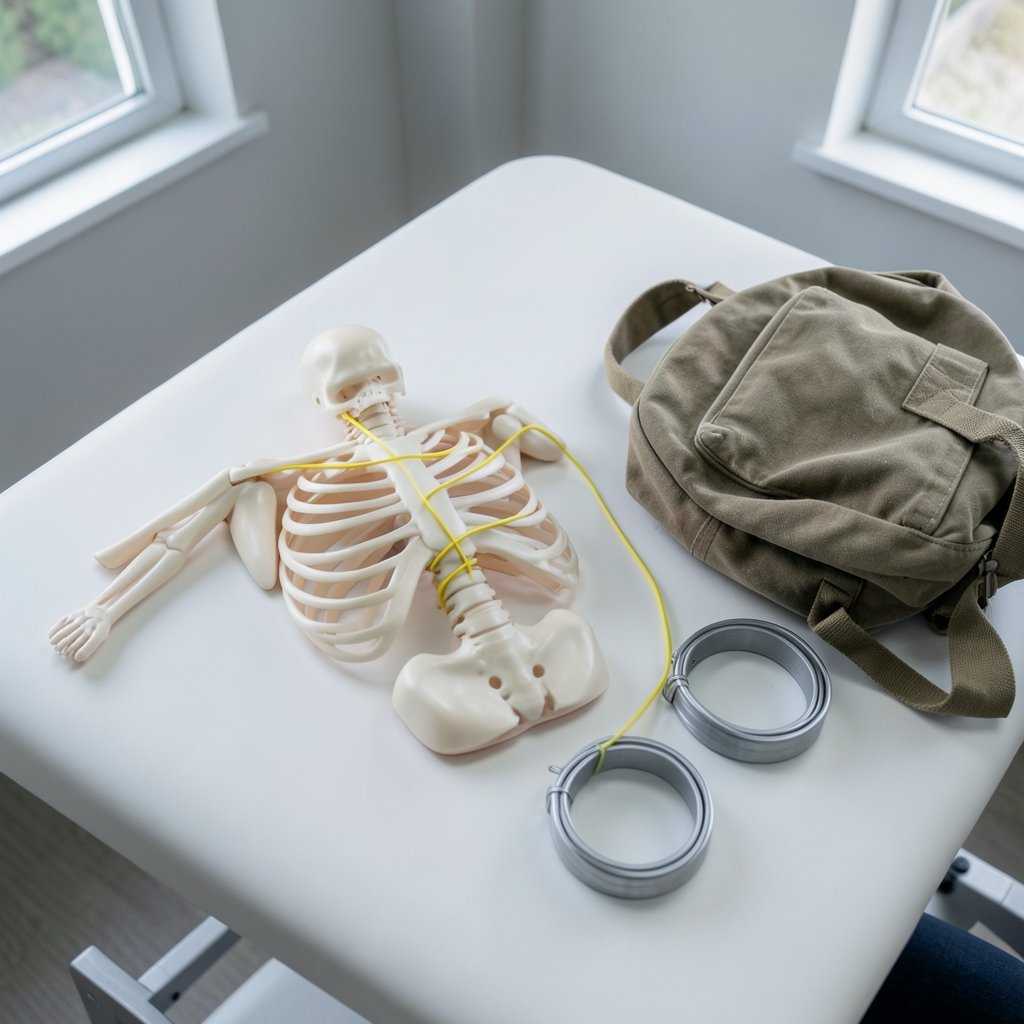
Muscles only work if their nerve supply is intact, and this is where the story gets specific. The serratus anterior is powered by the long thoracic nerve. That nerve is unusual. It forms from nerve roots at the C5, C6, and C7 levels of the neck, then travels a long, exposed path down the side of the chest wall to reach the muscle.
Because it is long and lies close to the surface, the long thoracic nerve is vulnerable to stretch and compression. It can be injured by a heavy backpack strap, by prolonged pressure from a stretcher or operating table, by a fall that jams the shoulder, or by surgery in the armpit or chest. When it fails, the serratus anterior weakens, and the result is medial winging, where the inner border of the scapula lifts away from the ribs. This is the most commonly described pattern of scapular winging.
Other nerves matter too. The spinal accessory nerve supplies the trapezius, and its injury produces a different look, with the scapula sitting lower and rotated outward. The dorsal scapular nerve feeds the rhomboids, and its involvement is less common.
Reading the Wing: Medial vs. Lateral Patterns
Not every prominent shoulder blade is the same. Clinicians sort winging into patterns based on which direction the scapula drifts, and that direction points toward the injured nerve.
| Feature | Medial winging | Lateral winging |
|---|---|---|
| Prominent border | Inner (medial) edge lifts off the ribs | Outer (lateral) edge and shoulder drop |
| Muscle usually weak | Serratus anterior | Trapezius |
| Nerve usually involved | Long thoracic nerve | Spinal accessory nerve |
| Typical arm test | Pushing forward against a wall | Abducting the arm to the side |
| Common look | Blade looks like a wing pushed backward | Shoulder droops, blade slides outward |
A third, less common pattern involves the rhomboids and can show up as mild medial prominence with a different history. Sorting out which pattern is present is the first real step, because treatment and prognosis differ.
How Clinicians Confirm the Diagnosis
The physical exam is simple and revealing. The classic maneuver is the wall push-up test, also called a scapular push-up. The person stands facing a wall, places both palms flat, and pushes. If the serratus anterior is weak, the inner border of the scapula lifts away from the chest wall on the affected side, sometimes dramatically. Watching from behind while the person raises the arm forward and overhead can reveal the same drift.
Observation matters as much as any single test. A clinician looks for asymmetry at rest, checks shoulder height, and notes whether the scapula sits lower or rotates differently on one side. They also ask about the timeline: did the wing appear suddenly after an infection or a stretch, or did it creep in over months?
Electrodiagnostic testing comes next when the picture is unclear or when surgery is being considered. Electromyography and nerve conduction studies can localize which nerve is damaged and gauge how severe the injury is. Imaging such as X-rays or MRI is used mainly to rule out other causes, such as a bone problem, a rib abnormality, or a shoulder joint issue, rather than to confirm winging itself.
What Causes It
Causes fall into a few broad buckets, and the history often points to the right one.
Nerve injury from stretch or pressure. Carrying a heavy pack on one shoulder for long periods, sleeping awkwardly, or lying on a hard surface during a long procedure can compress the long thoracic nerve. So can a sudden reach or a fall.
Neuralgic amyotrophy. Also called Parsonage-Turner syndrome, this is an inflammatory condition that causes sudden, severe shoulder pain followed by weakness. It is a well-recognized cause of serratus anterior palsy. The pain typically comes first and fades as the weakness sets in, which is a useful clue.
Trauma and surgery. Procedures in the armpit, chest, or neck can injure the relevant nerves. So can fractures and dislocations around the shoulder.
Muscular dystrophy and other muscle disease. Less often, winging reflects a primary muscle disorder rather than a nerve problem. In those cases, other muscles are usually weak too, and the pattern is more widespread.
Compensation from another problem. Sometimes the scapula is not truly winged but appears so because of weakness elsewhere, poor posture, or a shoulder joint problem that changes how the blade moves.
Practical Tips That Actually Help
Here is where experience matters. A few habits make a real difference during recovery, and a few common mistakes reliably slow things down.
Do get the diagnosis pinned down early. The single biggest mistake people make is assuming a winged scapula is just bad posture and launching into generic back exercises. If a nerve is injured, the wrong exercises can reinforce bad movement patterns or cause pain. A proper exam, and sometimes nerve testing, saves months of guessing.
Do respect the nerve’s need for rest from pressure. If a heavy bag or a tight strap is the suspected culprit, stop using it on that shoulder. Avoid prolonged positions that stretch or press the nerve, such as sleeping with the arm overhead or leaning on the armpit.
Don’t overdo strengthening right away. When a nerve is recovering, the muscle cannot yet respond to hard training. Pushing through fatigue with heavy resistance work tends to produce compensation, where other muscles take over and the scapula still drifts. Gentle, controlled movement comes first.
Do work with a physical therapist who knows scapular mechanics. Therapy usually focuses on restoring scapular control, improving posture, and gradually loading the serratus anterior and trapezius as nerve function returns. The pace is set by how the nerve recovers, not by how hard the person trains.
Don’t ignore pain that comes before weakness. Sudden severe shoulder pain followed by a drooping or winged blade is a pattern worth reporting promptly. Early recognition of that sequence helps guide care.
Do keep the rest of the shoulder moving. Complete rest is rarely the answer. Gentle range-of-motion work helps prevent stiffness in the shoulder joint while the nerve recovers.
What Recovery Usually Looks Like
Most cases of winged scapula from nerve injury are managed without surgery. The typical path is physical therapy, activity modification, and time. Nerves heal slowly. Recovery can take months, and the timeline varies widely depending on the cause and severity.
During that period, the goals are practical. Keep the shoulder from stiffening. Maintain strength in the muscles that still work. Rebuild scapular control gradually. Many people see meaningful improvement, though the pace can feel frustratingly slow, and some notice the wing most when they are tired.
Surgery is reserved for selected cases, such as a nerve that is not recovering or a structural problem that therapy cannot address. Options include nerve transfer or tendon transfer procedures designed to restore scapular control. These are specialized decisions made with a surgeon who handles shoulder and nerve conditions, and they are not a first-line answer.
Common Mistakes and Misconceptions
A few beliefs about winged scapula cause trouble.
- “It’s just a posture problem.” Sometimes posture plays a role, but a true wing usually reflects a nerve or muscle issue that needs proper evaluation.
- “More exercise is always better.” With a recovering nerve, more is not better. The right amount and the right timing matter.
- “It will fix itself in a few weeks.” Some cases do improve on their own, but nerve recovery often takes months, and waiting too long without assessment can delay helpful care.
- “Both sides must look the same.” Mild asymmetry is common and often harmless. The concern is a new, noticeable wing, especially with weakness or pain.
When to Seek Help
A person should get evaluated when a shoulder blade becomes visibly prominent, especially if it appeared suddenly, if it comes with weakness in raising or pushing the arm, or if it follows an infection, injury, or surgery. Pain that precedes weakness deserves prompt attention. So does winging that interferes with daily tasks like lifting, reaching, or carrying.
For readers who want to explore shoulder and movement care further, more resources are available at
Conclusion
A winged scapula is a visible signal, not a final answer. It points to a specific mechanical problem, most often weakness of the serratus anterior from long thoracic nerve injury, and sometimes to the trapezius or rhomboids. The direction the blade drifts, the history behind it, and targeted testing all help sort out the cause. What works in practice is unglamorous but effective: get an accurate diagnosis, take pressure off the nerve, use guided physical therapy, and give recovery the time it needs. What does not work is guessing, overtraining, or assuming it is only posture. With the right approach, most people can regain control of the shoulder blade and get back to the movements they care about.
Frequently Asked Questions
What does a winged scapula look like?
The inner edge of the shoulder blade lifts away from the rib cage, creating a visible ridge or wing on the back. It often becomes most obvious when the person pushes against a wall, raises the arm, or reaches forward. One side usually looks different from the other.
Is a winged scapula serious?
It depends on the cause. Many cases come from a nerve injury that improves with time and physical therapy. Others reflect an underlying condition that needs medical attention. Because the treatment differs so much by cause, an evaluation is worthwhile rather than assuming it is harmless.
Which nerve is most often involved?
The long thoracic nerve is the most commonly described culprit. It powers the serratus anterior, the muscle that holds the scapula flat against the ribs. Injury to this nerve produces medial winging, where the inner border lifts.
Can a winged scapula heal on its own?
Some cases do improve without surgery, especially when a nerve recovers over time. Recovery can take months, and physical therapy usually supports the process. Whether it heals on its own depends on the cause and severity, which is why testing and follow-up matter.
Can exercise make it worse?
Exercise done at the wrong time or with too much resistance can reinforce compensation, where other muscles take over while the scapula still drifts. Gentle, guided movement is generally safer than heavy training during nerve recovery. A physical therapist can set the right pace.
When should someone see a doctor about it?
Evaluation is wise when the wing appears suddenly, comes with weakness in the arm, follows an injury or surgery, or interferes with daily tasks. Sudden severe shoulder pain followed by weakness is a pattern that deserves prompt attention.



