
What makes a story survive for more than a century, hopping from a Chicago printing press to a Hollywood soundstage to the screen in millions of living rooms? For The Wizard of Oz, the answer is a mix of luck, craft, and one of the most famous color tricks in movie history. L. Frank Baum‘s book arrived in 1900, and MGM’s 1939 film turned it into something close to a national myth. But the two versions are not the same story, and the differences tell you a lot about how adaptations work.
This piece walks through the book’s origins, the film’s rocky production, the changes that made it iconic, and the myths that still cling to it. It also separates what is documented from what is merely repeated.
A Chicago Book That Almost Didn’t Happen
L. Frank Baum was a serial failure before he was a famous author. He ran a newspaper, sold crockery, and tried several other trades before settling on children’s fiction. He published The Wonderful Wizard of Oz in 1900 through the George M. Hill Company, with illustrations by W. W. Denslow. The pair had already scored a hit with Father Goose, His Book a year earlier.
The book was a commercial success almost immediately. Baum, who had a businessman’s instincts alongside a storyteller’s, kept going. He wrote more than a dozen Oz books over the following two decades, and after his death in 1919 other authors continued the series. That long tail matters: the Oz universe was a franchise long before anyone used the word.
A practical note for readers who want the original text: the 1900 book is in the public domain in the United States, and digitized copies are easy to find. Reading even the first few chapters is a useful exercise, because it shows how much the film invented. The book’s Dorothy is younger and more matter-of-fact. The Scarecrow, the Tin Woodman, and the Cowardly Lion are all there, but the tone is drier and more episodic.
From Page to Screen: What MGM Changed
The 1939 film, directed by Victor Fleming (with uncredited work from others, including King Vidor), compressed and reshaped the book substantially. It was released in the United States on August 25, 1939, and it was not an obvious blockbuster. It cost a fortune, went through multiple directors, and faced a crowded release year.
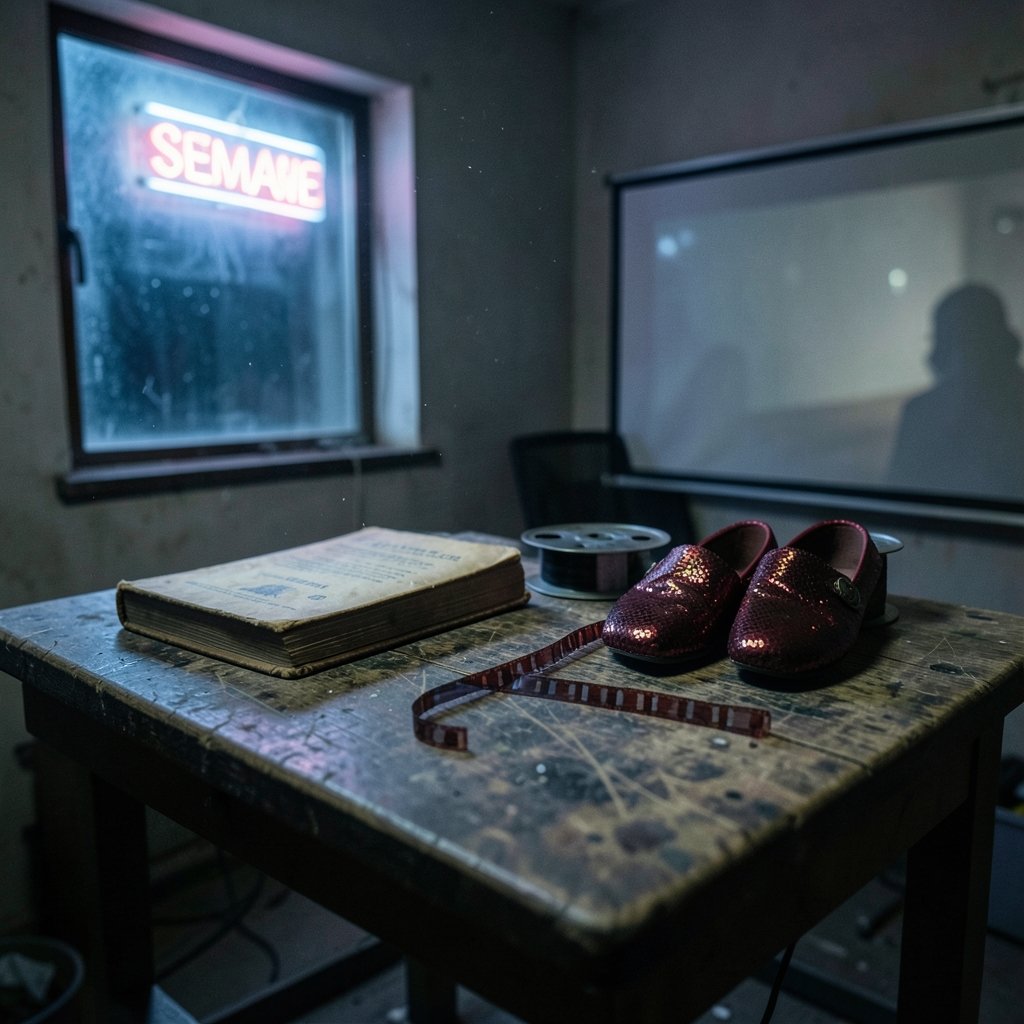
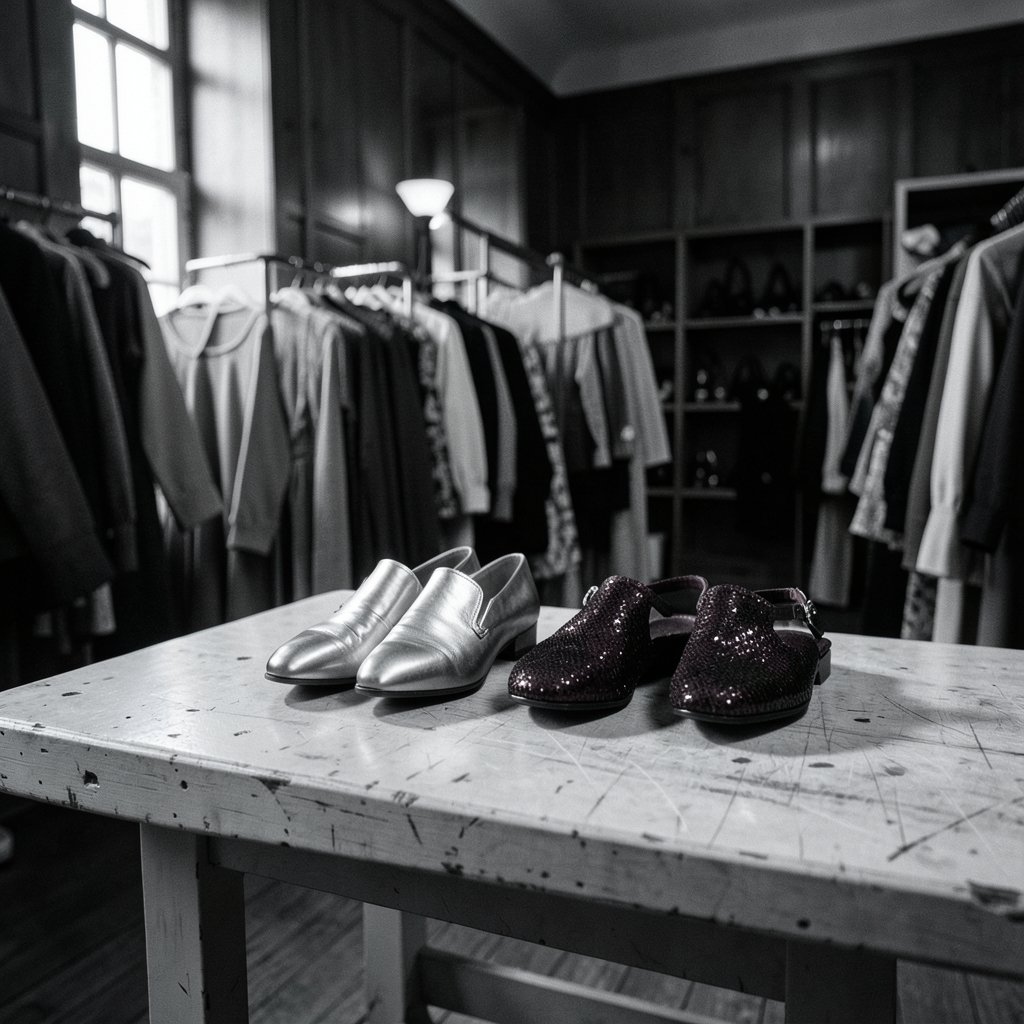
The biggest change is the shoes. In Baum’s book, Dorothy wears silver shoes. In the film, they are ruby slippers. The switch is usually explained as a way to show off the new three-strip Technicolor process, though the exact reasoning is debated by film historians. Either way, the ruby slippers became the image people remember.
Other changes are just as telling:
| Element | Book (1900) | Film (1939) |
|---|---|---|
| Dorothy’s shoes | Silver | Ruby |
| Dorothy’s age | Young child | Teenager (Judy Garland) |
| The Wicked Witch of the West | Appears briefly | Major antagonist |
| Kansas | Gray and grim | Sepia-toned, then full color |
| The journey | Episodic, many side stops | Tightened into a single arc |
The film also invented the frame story of Dorothy dreaming the whole thing, which softens the book’s stranger, more dangerous edges. It also gave the Wicked Witch a much larger role, partly because a strong villain makes for better cinema.
For a full list of credits and release details, the AFI Catalog of Feature Films is a reliable reference for the 1939 production.
Judy Garland and the Role That Defined Her
Judy Garland was born on June 10, 1922, which means she was 16 or 17 during filming. Her Dorothy is sweet, a little fragile, and unmistakably a teenager. That casting choice shifted the emotional center of the story: the film is less about a child’s adventure and more about a young person’s longing for home.
Garland’s performance is also the reason “Over the Rainbow” became a standard. The song, with music by Harold Arlen and lyrics by E. Y. Harburg, won the Academy Award for Best Original Song at the 12th Academy Awards in 1940, honoring films from 1939. The Academy’s own ceremony archive lists the winners and nominees for that year.
There is a common misconception worth correcting here. Garland did not win an Oscar for the role, and the film did not win Best Picture. It lost to Gone with the Wind, another 1939 release. The Oz film won for its song and for its score, but its reputation grew over decades rather than arriving fully formed.
The Technicolor Trick That Still Works
The film’s visual scheme is simple and brilliant: Kansas is shot in sepia, and Oz explodes into full three-strip Technicolor. The transition happens when Dorothy opens the door after landing in Munchkinland, and it remains one of the most effective uses of color in film history.
That choice does more than look pretty. It makes the fantasy world feel like a release, and it makes the return to Kansas feel like a loss. Modern viewers who watch on a phone screen may miss how radical this was in 1939, when color was still a premium attraction and most films were black and white.
The sepia sections also age better than you might expect. Because they are deliberately muted, they avoid the faded look that plagues some color films of the era. If you ever get the chance to see a restored print in a theater, take it. The contrast between the two worlds lands much harder on a big screen.
Production Chaos, and Why It Didn’t Sink the Movie
The film’s production is a case study in how a troubled shoot can still produce a classic. Several directors cycled through the project before Fleming settled in. The original Tin Man, Buddy Ebsen, had to leave because of a severe reaction to the aluminum makeup. The makeup and costumes were genuinely hazardous by modern standards.
The Wicked Witch’s green makeup stained Margaret Hamilton‘s skin, and she was injured in a fire during a stunt. These stories circulate widely, and many are well documented in studio records and later interviews. They are worth knowing because they explain why the film feels so physical. The danger on set translated into a world that looks lived-in and slightly unsafe.
The lesson for anyone adapting a beloved book is that fidelity is not the goal. The film kept the bones of Baum’s story and rebuilt the flesh. It cut characters, added a villain, and invented the dream framing. Audiences rewarded that.
Is the Book a Political Allegory?
This is where the conversation gets slippery. A popular reading holds that The Wonderful Wizard of Oz is an allegory for 1890s Populism, with the yellow brick road standing for the gold standard, the silver shoes for the silver standard, and the Wizard for a fraudulent politician. The interpretation spread widely in the 1960s and is still repeated in classrooms.
The problem is that many scholars, including Baum’s biographers, dispute it. There is no direct evidence that Baum intended a political parable, and he wrote the book as a fairy tale for children. Treat the allegory reading as a contested interpretation, not a fact. It is a fascinating lens, but it is not settled history.
A balanced approach is to present it as one reading among several. The book does reflect its era’s anxieties about money, farming, and authority, but that is different from a coded political program.
The Film’s Long Afterlife
The film was added to the National Film Registry in 1989, its first year of operation, which signals its cultural weight. The Library of Congress’s National Film Preservation Board explains the registry and lists the selections. Being named in the inaugural class put Oz alongside a small group of films deemed essential to American cinema.
The story also kept changing. Later adaptations, prequels, and retellings have ranged from the excellent to the forgettable. The 1939 film remains the reference point, but Baum’s book remains the source. Readers who only know the movie are missing the stranger, funnier, more unpredictable original.
For anyone comparing the two, it helps to track specific version differences rather than relying on memory. A match-by-match breakdown, like this read washington wizards vs miami heat match player stats style of side-by-side comparison, shows how much detail gets lost in a general summary. The same discipline applies here: line up the book and the film scene by scene, and the changes jump out.
Practical Tips for Exploring Oz
If you want to go deeper without wasting time, a few habits help.
- Read the first three chapters of the 1900 book before rewatching the film. The differences will be obvious and memorable.
- Watch the film on the best screen you have. The sepia-to-color transition is the point.
- Check credits rather than trusting summaries. The AFI Catalog and similar archives resolve most arguments about who did what.
- Separate documented history from fan lore. The ruby slippers are real; some of the wilder rumors about the set are not.
- Read at least one later Oz book. Baum’s sequels are uneven but show how far he pushed the world.
A common mistake is assuming the film invented everything. It invented a lot, but the book invented more. Another mistake is treating the Populist allegory as settled. It is a theory, and a contested one.
Conclusion
The Wizard of Oz endures because it works on two levels at once. As a children’s story, it is a road trip through a strange land with friends who each lack something. As a cultural artifact, it is a case study in adaptation, marketing, and the power of a single visual idea. Baum’s 1900 book gave the world the characters and the map. The 1939 film gave them a look and a song that never quite left the culture.
The healthiest way to enjoy it is to hold both versions in mind. Read the book, watch the film, and notice what changed. The gaps between them are where the real story lives.
Frequently Asked Questions
When was The Wizard of Oz book published?
L. Frank Baum’s The Wonderful Wizard of Oz was published in 1900 by the George M. Hill Company in Chicago, with illustrations by W. W. Denslow. It was an immediate success and led to a long series of sequels.
Who played Dorothy in the 1939 film?
Judy Garland played Dorothy. She was born on June 10, 1922, making her 16 or 17 during filming. Her performance and her recording of “Over the Rainbow” became defining moments of her career.
Did The Wizard of Oz win Best Picture?
No. The 1939 film was nominated but lost Best Picture to Gone with the Wind. It did win for Best Original Song (“Over the Rainbow”) and for its score at the 12th Academy Awards in 1940.
Why are the slippers ruby instead of silver?
In Baum’s book, Dorothy wears silver shoes. The film changed them to ruby slippers, most often explained as a way to showcase the three-strip Technicolor process. The exact reasoning is still debated by historians.
Is The Wizard of Oz a political allegory?
Some readers interpret the book as an allegory for 1890s Populism, with the yellow brick road and silver shoes standing for monetary debates. Many scholars and Baum’s biographers dispute this, so it is best treated as a contested reading rather than established fact.
When was the film released?
MGM’s The Wizard of Oz was released in the United States on August 25, 1939. It was directed by Victor Fleming, with uncredited work by others including King Vidor, and it was added to the National Film Registry in 1989.



