As of October 2026, PlayStation has the lower-priced standard flagship, while Xbox still offers the cheaper entry-level console. For buyers in the United States, that split matters: a limited budget can point to one system, while a higher-end comparison points to another.
Total ownership cost means the console purchase plus the games, subscriptions and add-ons a buyer pays for over time. This comparison focuses on US prices as of October 2026, including current models and common ongoing expenses.
The cheapest way into gaming and the best-priced standard flagship are different questions. Your answer can also change with the titles you want, physical games you own, and services you plan to use.
A buyer should compare the exact model and the games they plan to play, not just the platform name.
Key Takeaways
- Xbox Series S 512GB has the lowest current entry price.
- The disc PS5 costs less than the disc Xbox Series X.
- Digital and disc models offer different ways to play games.
- Subscriptions and storage add to total ownership cost.
- Xbox may suit players with older Xbox games or Game Pass habits.
What Does Xbox vs PlayStation Price Look Like in the US?
The disc PS5 is $150 less than the disc Xbox Series X at current US recommended prices. Model and drive configuration matter, since the two brands offer different tiers and storage options.
PS5 prices rose on April 2, 2026. The recommended prices are $599.99 for PS5 Digital Edition, $649.99 for the disc PS5, and $899.99 for PS5 Pro. Those prices were previously $499.99, $549.99 and $749.99.
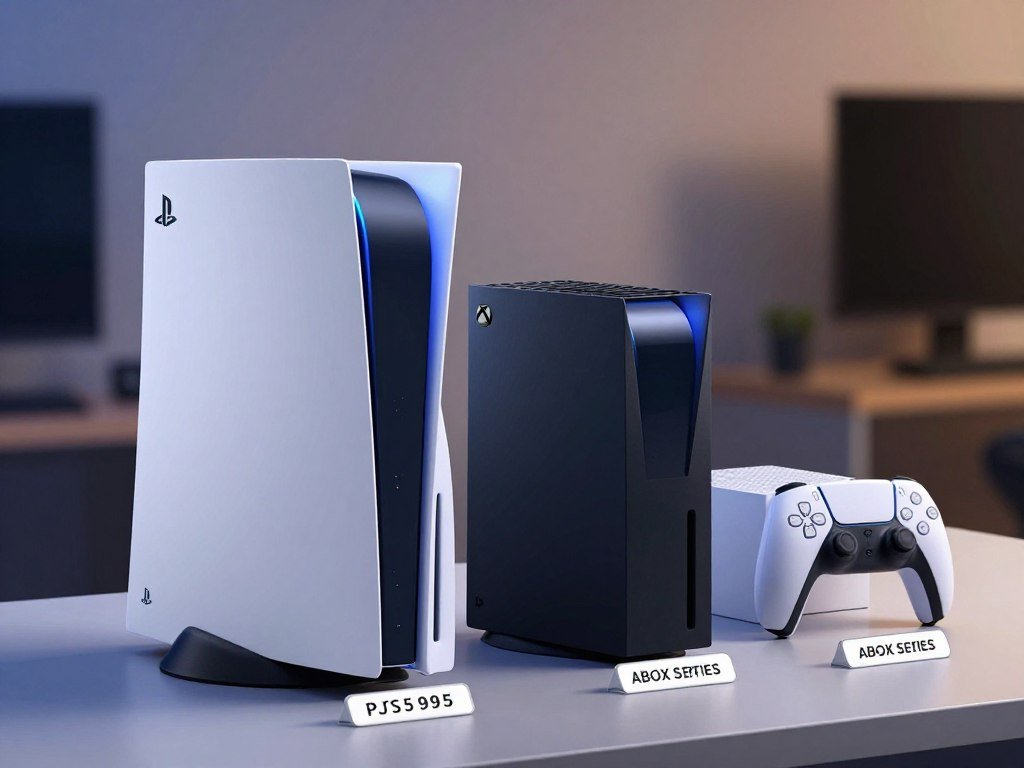
Here are five common models, with their listed storage and price-change notes.
| Model | Storage or drive | US recommended price | Price-change note |
|---|---|---|---|
| PS5 Digital Edition | Digital, no disc drive | $599.99 | Up from $499.99, April 2, 2026 |
| PS5 | Disc drive | $649.99 | Up from $549.99, April 2, 2026 |
| PS5 Pro | Digital, disc drive sold separately | $899.99 | Up from $749.99, April 2, 2026 |
| Xbox Series S | 512GB, digital-only | $499.99 | Up $100, August 1, 2026 |
| Xbox Series X | 1TB, disc drive | $799.99 | Up $150, August 1, 2026 |
The other current Xbox prices are $599.99 for Series S 1TB and $749.99 for Series X 1TB Digital. Microsoft raised US prices on August 1, 2026, by $100 for 512GB models and $150 for 1TB models.
Microsoft also discontinued the 2TB model. The BBC report on Xbox price increases described the change and its storage and memory cost context.
PS5 launched in North America on November 12, 2020, and Xbox Series X|S launched worldwide on November 10, 2020. Confirm the exact model name before comparing a listing, because Series S, Series X and PS5 Digital Edition are not interchangeable tiers.
Compare the same console tier and drive type before judging which price is lower.
The digital edition and disc versions may look alike in a listing, but the drive changes which games and media they can use.
Which Console Is Cheapest for Your Budget?
For the lowest upfront spend, choose Xbox Series S 512GB; for a standard disc flagship, the PS5 costs less. The cheaper pick depends on whether you mean entry price or a like-for-like flagship.
Xbox is cheaper at the entry tier, while PlayStation is cheaper at the disc flagship tier. Xbox Series S is not a direct hardware equivalent to PS5, and it has a different performance and storage tier from Xbox Series X.
These three picks fit common spending plans:
- Xbox Series S 512GB for the lowest current entry price.
- PS5 Digital Edition for a digital-only PlayStation option.
- Disc PS5 for a buyer comparing standard disc flagships.
The Series S can make sense when the goal is current-generation Xbox gaming at the lowest console price. A player who needs a disc drive, more storage or the Series X hardware tier should not treat its lower price as a direct discount on the same machine.
For the question of Xbox or PS5, which is cheaper, the short answer is Xbox for the entry model and PlayStation for the standard disc flagship. A PS5 versus Xbox price comparison only works when the model and format match.
Buyers choosing for a household may also weigh shared play and game access; a family gaming console guide can help compare those needs across systems.
Digital-only models can suit players who buy downloads and do not need a disc drive. A disc model may fit better when physical games already sit on the shelf.
Choose by the least expensive model that still supports the games and features you need, rather than paying for a higher tier by default.
Do Bundles and Deals Make Either System a Better Buy?
A bundle is only a better buy when its extra items are things you would otherwise pay for. The total package matters more than a large discount label.
An advertised bundle is not automatically a saving if it includes a game, controller or subscription you do not want. Compare its contents with the console and items you would buy separately.
Use this checklist before choosing a bundle or individual listing:
- List every item included with the console.
- Decide whether you want the added game.
- Check whether an extra controller would be useful.
- Read the seller’s stated condition and return terms.
A bundle with a game you planned to buy may save money in practice. An unwanted game can make the package cost more than buying only the console you need.
A PS5 offered for $300 can be worth buying if it works, has the right model, and includes suitable accessories. Its condition and the seller’s return terms should also be acceptable.
For example, a buyer who needs a second controller may value one in the box, while a solo player may not. The same bundle price can mean very different value to those two buyers.
Look closely at whether the listing names a standard PS5 or a PS5 Pro, and whether it includes the drive configuration you want. A low total alone cannot show what the system can play.
Compare the complete contents and condition before treating a low advertised total as a bargain.
What Do Game Pass and PlayStation Plus Cost?
Game Pass Ultimate costs more per month than PlayStation Plus Premium, while the two services package different features. The right tier depends on whether you play on console, PC or both.
Game Pass Ultimate costs $22.99 a month, and PlayStation Plus Premium costs $19.99 a month. Ultimate includes console and PC game access, online console multiplayer, and unlimited Xbox Cloud Gaming.
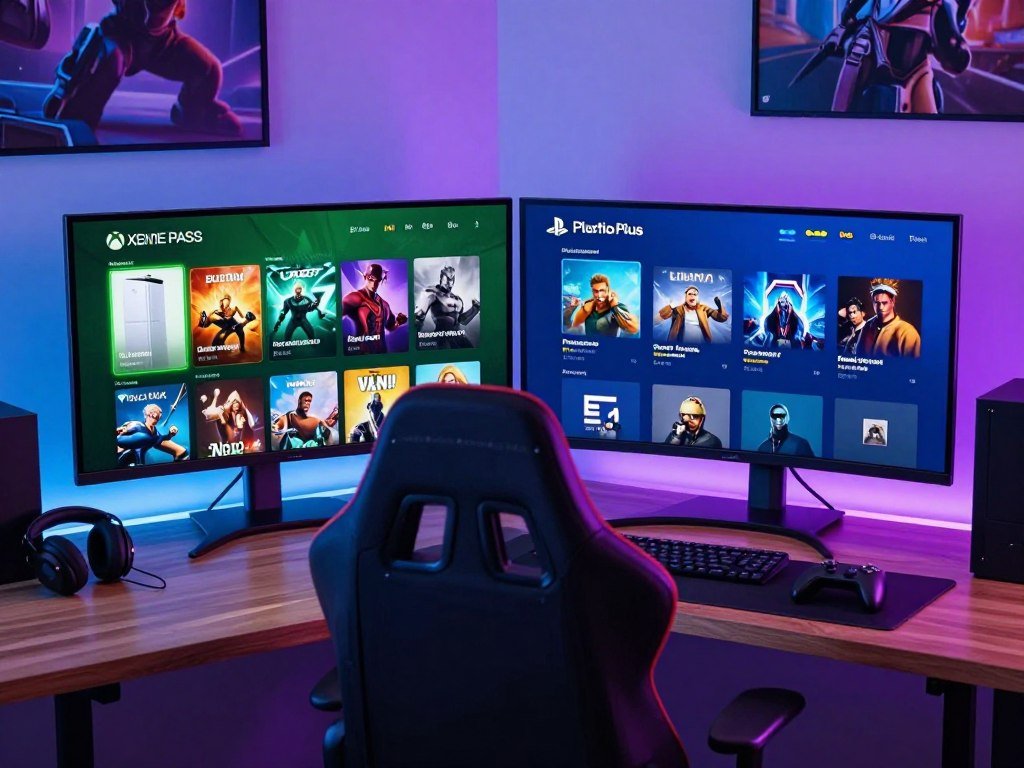
Prices and features vary by tier, as the table shows.
| Service and tier | Monthly price | Online multiplayer and catalog access | Cloud or release-access note |
|---|---|---|---|
| Game Pass Ultimate | $22.99 | Online console multiplayer; hundreds of games on Xbox and PC | Unlimited Xbox Cloud Gaming |
| PC Game Pass | $13.99 | PC game catalog; no console multiplayer | PC access; future Call of Duty titles arrive later |
| PS Plus Essential | Price varies by billing term | Online multiplayer; no Game Catalog | No catalog cloud streaming included |
| PS Plus Extra | Price varies by billing term | Online multiplayer and Game Catalog | Catalog access on PlayStation |
| PS Plus Premium | $19.99 | Online multiplayer and Game Catalog | Cloud streaming for select PS5 games |
PC Game Pass and Ultimate prices fell on April 21, 2026, from $16.49 and $29.99. Essential and Extra prices can depend on billing term, so their monthly equivalent may differ.
All PlayStation Plus tiers include online multiplayer. Extra and Premium add the Game Catalog, and Premium streams select PS5 games to PS5 consoles and PlayStation Portal remote players.
The official PlayStation Plus membership details describe those tier benefits. Game Pass Ultimate covers Xbox console and PC, while PC Game Pass is for PC.
From 2026, future Call of Duty titles join Game Pass Ultimate and PC Game Pass during the following holiday season, about a year after launch, rather than at launch. Check whether the games and features you will actually use are on the specific tier before committing to a recurring charge.
What Costs Add Up After the Console?
The console is only one part of the budget if you also buy games, subscribe or add storage. Those extra costs can change which system fits your spending over time.
Total ownership cost depends on the games you buy, the months you subscribe and whether you expand storage. A buyer who picks up many games pays differently from one who mainly uses a subscription catalog.
Storage expansion works differently on each platform. The PS5 has a standard M.2 NVMe slot, which accepts a compatible internal solid-state drive. Xbox Series X|S uses a proprietary expansion card.
That difference can shape a later upgrade. A buyer may compare compatible M.2 drives for PS5, while an Xbox owner needs an expansion card made for the system.
Physical-game players may budget for used or discounted discs, while all-digital players rely on digital purchases and their account library. Neither route has one cost for every buyer, since play habits and chosen titles vary.
Recurring spending can include Game Pass or PlayStation Plus, along with game purchases and storage add-ons. A subscription may reduce separate game buying for someone who plays its catalog, but it adds little value if unused.
Accessories can also enter the budget when a buyer needs another controller or a headset. Those purchases are optional, so compare them with actual use rather than assuming every player needs them.
A family sharing one console may buy several games or controllers, while one player may need only a single title. A family-focused console guide can help households weigh shared play and add-ons.
Estimate your own game and subscription use over the first year before deciding which console has the lower total ownership cost.
How Do the PS5 and Xbox Series X Specs Compare?
Xbox Series X has the higher GPU compute figure, while PS5 has the faster stated SSD throughput. Those figures describe hardware design, not the exact result in every game.
Both consoles support output up to 4K at 120 fps in supported games. An SSD, or solid-state drive, stores game data on flash memory and helps load it quickly.
GPU and CPU differences
The table compares headline figures for the two standard flagships.
| Specification | Xbox Series X | PS5 | What the difference means |
|---|---|---|---|
| GPU compute | 12.155 TFLOPS | 10.28 TFLOPS | Theoretical GPU capacity, not a fixed game result |
| GPU clock or units | 52 compute units at 1.825 GHz | 36 compute units up to 2.23 GHz | Different unit counts and clock speeds |
| CPU clock | 3.8 GHz, or 3.6 GHz with SMT | Up to 3.5 GHz | Clock figures do not show every workload |
| Raw SSD throughput | 2.4 GB/s | 5.5 GB/s | PS5 has the higher stated raw rate |
| Supported output target | Up to 4K at 120 fps | Up to 4K at 120 fps | Game and display support are required |
Storage speed and supported display targets
Xbox Series X can reach 4.8 GB/s compressed SSD throughput. PS5’s compressed rate is about 8-9 GB/s, though game data and compression methods affect use.
GPU compute figures describe theoretical capacity, not a guaranteed visible performance gap. Game developers choose settings and frame targets that fit each console’s hardware.
A screen also needs to support the chosen resolution and refresh rate. A 4K, 120 fps output target does not mean every game runs at that level.
Console specs can help explain why one machine may have an advantage in a specific task. They cannot predict every scene, mode or update.
Treat specs as clues to each machine’s design, not as a promise that every game will run better on the same console.
Do Games Run Better on PS5 or Xbox Series X?
The same game can favor different consoles on different measures, so there is no reliable all-game performance winner. Game by game, the results can shift with updates and chosen modes.
Neither PS5 nor Xbox Series X consistently wins across multiplatform games. Optimization can matter more than a small lead in a spec sheet.
Compare the parts of a game experience that you notice most:
- Resolution: some games trade image detail for a faster mode.
- Frame rates: performance modes often target 60 or 120 fps.
- Loading: scenes and fast travel can load at different speeds.
- Ray tracing: reflections and lighting can vary by game and mode.
Resolution affects how sharp a scene looks, while frame rates affect motion and response. A mode may favor one instead of maximizing both.
A 120 fps mode needs support from the game and a display that can show it. If either part lacks support, the console cannot deliver that experience.
Loading times can differ by title, and a console’s storage figures do not settle every comparison. Developers may build loading screens and data handling in different ways.
Ray tracing can add realistic light, shadows or reflections, but a game may limit it to certain modes. Those choices can change alongside resolution and frame rates.
Check the performance mode for the particular game you care about instead of choosing from a single benchmark number.
Which Games and Exclusives Fit Each Platform?
The strongest game-based reason to choose a console is whether its particular franchises are the ones you want to play. Specific titles matter more than a broad claim that one library is better.
Platform-associated series are not automatically exclusive for every release. Availability can change by title and launch plan, so check the game you have in mind.
PlayStation games and story-led favorites
PlayStation is associated with God of War and The Last of Us. Both series offer examples of story-led games that may appeal to players who value character and narrative.
That association does not mean every entry has the same platform status or release plan. A buyer choosing for one upcoming title should check its confirmed systems.
Xbox franchises and cross-platform releases
Xbox is associated with Halo and Forza Horizon. Forza Horizon can suit players who want open-world racing, while Halo is a long-running science-fiction action series.
Microsoft’s multiplatform publishing means a familiar Xbox franchise may not always stay exclusive to Xbox hardware. Xbox has aimed to bring more first-party releases to PS5, though plans vary by game.
The report on Xbox’s PlayStation release plans notes that timing and platforms differ across titles. Fable is planned for a multi-platform release, while Forza Horizon 6 is planned for PS5 later.
A useful PlayStation and Xbox exclusives list should group series by association, then check each game separately. God of War and The Last of Us are PlayStation examples; Halo and Forza Horizon are Xbox examples.
Players comparing a specific PS5 game can browse PS5 game picks across genres, then check its platform and release details.
Verify the platform availability of a specific upcoming title before buying a console for it.
Which Console Plays More Older Games?
Xbox Series X has the broader named-generation backward-compatibility span, while PS5’s main backward-compatibility library is PS4. Older libraries can matter when a buyer already owns games.
Xbox Series X supports games from original Xbox, Xbox 360 and Xbox One. PS5 supports most PS4 titles, rather than offering the same named span across older generations.
Xbox Series X backward compatibility covers these generations:
- Original Xbox games.
- Xbox 360 games.
- Xbox One games.
Backward compatibility does not mean every older game works. Support can vary by title, so check the exact game before relying on it.
A player with a substantial Xbox One or Xbox 360 library may value staying in the Xbox family. Keeping access to familiar games can matter more than switching for a new feature.
PS5 supports most PS4 games, which can help players carry forward a recent PlayStation library. The word “most” matters: a specific title still needs a support check.
When a game is supported, the console may run it through its backward-compatibility features. That does not guarantee every old disc, digital version or add-on works in the same way.
For households choosing among systems, family console options can help frame game access alongside age ratings and shared play.
Check the exact older game you own before counting it as a reason to switch platforms.
Should You Choose a Disc or Digital Edition?
Choose a disc model if physical game discs or 4K UHD Blu-ray movies are important to you. The drive choice affects which games and media the console can use.
A digital-only console cannot play a physical game disc. PS5 Digital Edition has no disc drive, while the disc PS5 and disc Xbox Series X include 4K UHD Blu-ray drives.
Use these three questions to pick a format:
- Do you own physical game discs you still want to play?
- Do you want to watch 4K UHD Blu-ray movies?
- Are you comfortable buying games digitally?
Xbox Series S is digital-only, while Xbox Series X comes in digital and disc configurations. The PlayStation choice is between PS5 Digital Edition and the disc PS5.
A digital edition can fit a player who buys downloads and does not use physical media. A disc model gives more options for games and movies, but only when the drive is included.
Check the model name closely in listings. “Xbox Series X” alone does not tell you whether that version has a disc drive, and PS5 versions also differ.
The format can shape how you use games you already own. Digital purchases and physical discs are not interchangeable on a console without the matching drive.
Make the format decision before comparing listings, since the drive changes what media the console can use.
Is PlayStation Selling Better Than Xbox?
PlayStation 5 is selling substantially more units worldwide than Xbox Series X|S. Sales estimates show a wide gap, while each company reports its numbers differently.
Estimated worldwide PS5 sales reached 94,913,317 by August 2026, compared with 35,324,797 Xbox Series X|S units. Sony separately reported shipped units, which are not the same measure as estimated sales.
The August 2026 comparison shows the scale of the difference:
| Measure | PS5 | Xbox Series X|S | Period |
|---|---|---|---|
| Estimated worldwide lifetime sales | 94,913,317 | 35,324,797 | Through August 2026 |
| Combined-market share | 72.9% | 27.1% | August 2026 |
| 12-month sales gap | 13,063,513 more units | 13,063,513 fewer units | 12 months through August 2026 |
The August 2026 sales estimates put PS5’s lead at 59,588,520 units overall. Those figures are estimates, not Sony’s shipped total.
Sony reported 95.3 million PS5 consoles shipped worldwide as of June 30, 2026. That total included 1.6 million consoles in the April-June quarter.
Microsoft reported that Xbox hardware revenue fell 29% across fiscal 2026, which ran from July 2025 through June 2026. Revenue is business context, not a count of consoles sold.
Worldwide reach can affect the size of a platform’s player base, but it does not show which games fit one buyer. Treat sales leadership as useful context about platform reach, not as proof that either console is the right personal choice.
Should You Buy a PS5 Now or Wait for PS6?
If you want to play current PS5 games now, buying a PS5 is a reasonable choice rather than waiting on an unannounced successor. Playing during the wait gives the current console immediate value.
Sony had not confirmed a PS6 name, release date, price or official hardware image as of October 2026. Waiting makes sense if you do not need a console and can wait for confirmed details.
When buying a PS5 now makes sense
Buying now suits a player who wants current PS5 games and expects to use the console during the wait. The system can meet that need without a promise about when another generation will arrive.
A new console does not make the prior generation stop working at once. Support, game releases and firmware updates can continue after a successor reaches the market.
What the PS4 lifespan suggests
The PS4 launched in 2013 and continued receiving firmware updates in 2026, when it was 13 years old. That history shows support can last well beyond a new generation’s arrival.
It does not guarantee the PS5 will follow the same timeline. A buyer should not treat one generation’s update history as a fixed support promise for another.
Waiting is sensible for someone who has no current need and is comfortable delaying a purchase until official successor details arrive. It is less appealing if current games are already on the player’s shortlist.
PS4 firmware updates continued in 2026, a useful example of how long console support can last. The timing of future support still depends on Sony’s choices.
Decide based on whether you will use a console during the wait, not on an assumed PS6 launch schedule.
Could PS6 or the Next Xbox Cost $1,000?
Neither a $1,000 PS6 price nor a $1,200 next Xbox price has been confirmed. Those figures are estimates about future hardware, not announced retail prices.
A bill of materials estimates component cost before retail expenses; it is not a console’s selling price. Sony had not confirmed a PS6 name, price, release date or official hardware image as of October 2026.
What the PS6 cost estimates mean
A March 2026 estimate put the PS6 bill of materials at about $760. On June 27, 2026, that estimate rose by around $200, to close to $960.
Neither estimate proves the PS6 will sell for $1,000. Retail pricing can include costs beyond components, and Sony has not announced the console’s price.
Reports in October 2026 described a 2028 launch as an expectation or possibility. Sony had not announced that date or an official delay.
What has been estimated for the next Xbox
Moore’s Law Is Dead estimated that the next Xbox could cost more than $800 but might not need to cost more than $1,200. The estimate drew on leaked specifications, not a Microsoft retail-price announcement.
Microsoft said console storage and memory prices had risen by more than 2.5 times, and expected another doubling by fall 2027. That cost pressure adds uncertainty to future hardware estimates.
Microsoft’s storage and memory cost outlook gives context for component pricing, but it cannot set a future console’s retail price.
Treat future-console price figures as planning scenarios until the companies announce retail prices.
What Are the Biggest Pros and Cons for Each Player?
For the most budget-conscious buyer choosing a standard flagship, PlayStation is the stronger default, while an existing Xbox library can make Xbox the better personal fit. Your library can outweigh a small hardware difference.
Choose PlayStation for its associated story-led franchises and lower-priced standard flagship; choose Xbox for older Xbox games or the Game Pass ecosystem. Each platform’s services suit different play habits.
Why PlayStation fits some buyers better
PlayStation suits players drawn to God of War and The Last of Us, along with buyers comparing standard disc flagships. Its main drawback for some owners is narrower backward compatibility than Xbox’s support across three named older generations.
PlayStation Plus offers its own mix of online play, catalogs and streaming by tier. A buyer who prefers that structure may find it a better match than Xbox’s subscription approach.
When Xbox is the stronger fit
Xbox fits players with an original Xbox, Xbox 360 or Xbox One library, and those who value Game Pass. Halo and Forza Horizon are familiar examples of its associated franchises.
Xbox Series X|S hardware offers wider named-generation backward compatibility, while PS5 supports most PS4 games. Neither system’s service is automatically better; the value depends on games and features used.
Friends can shape the choice, too. Playing with a regular group may matter more than a minor spec advantage, especially when everyone already uses one platform.
For a player weighing handheld options alongside a home console, these Steam Deck alternatives show how game libraries and play styles can lead to different picks.
Xbox and PlayStation pros and cons come down to games, compatibility, hardware and services. Existing purchases and friends’ platform can be more useful than abstract spec-sheet superiority.
Let the games you will play and the library you already own outweigh a small paper-spec advantage.
Consider which service you would keep for a full year, not just which one looks appealing for one month. That habit gives a clearer picture of recurring value.
Conclusion
For most buyers comparing standard flagships, PS5 is the simpler value pick, while Xbox is strongest when its library and services fit your habits. The lower entry price still belongs to Xbox Series S, a different hardware tier.
Existing Xbox games or regular Game Pass use can make Xbox the better personal choice. Before buying, write down three must-play games and confirm the console format each one supports.
Write down your three must-play games, confirm the console model they support and buy the system that covers them.
FAQ
Is PS5 selling better than Xbox?
Yes, August 2026 estimates put PS5 lifetime sales at 94,913,317 units versus 35,324,797 for Xbox Series X|S. The figures estimate worldwide sales, while Sony separately reported 95.3 million PS5 units shipped by June 30, 2026. Sales totals show platform reach, but they cannot tell you which console fits your games or budget.
Will PS6 cost $1000?
No confirmed PS6 retail price exists. The close-to-$960 figure is an unconfirmed bill-of-materials estimate, which estimates component costs before retail expenses. It does not establish a $1,000 selling price. Sony had not confirmed the PS6 name, price or release date as of October 2026, so future price claims remain uncertain.
Is the next Xbox going to cost $1200?
No confirmed retail price exists for the next Xbox. One estimate says it could cost more than $800 but might not need to cost more than $1,200. That is an estimate based on leaked specifications, not a price Microsoft has announced. A retail price can differ from a component-cost estimate.
Is a PS5 worth $300?
Yes, a PS5 at $300 can be worthwhile if it works and matches the model you need. Check whether the controller and other included accessories are suitable, and read the seller’s stated condition and return terms. A low price does not help if the console is faulty or lacks a drive you need.
Should I buy a PS5 in 2026 or wait for PS6?
Buy a PS5 now if you want its current games and will use it during the wait. Waiting makes sense if you do not need a console and are comfortable delaying your purchase until official successor details arrive. Sony had not confirmed a PS6 release date as of October 2026, so an assumed launch schedule is not a firm buying plan.
Is it still worth buying a PS5 now?
Yes, a PS5 is still worth buying if its games and features meet your needs. The PS4 continued receiving firmware updates in 2026, when it was 13 years old, though that does not guarantee the PS5 will receive support for the same length of time. Buy based on the games you want to play now.
How long will the PS5 lifespan be?
There is no confirmed PS5 support end date or fixed lifespan. The PS4 launched in 2013 and still received firmware updates in 2026, at age 13. That history shows support can continue well into a later console generation, but it does not promise a specific PS5 timeline.
What is the disadvantage of PS5?
One disadvantage is narrower backward compatibility than Xbox’s named support for original Xbox, Xbox 360 and Xbox One games. PS5 supports most PS4 titles. Its subscription options also differ from Xbox Game Pass, so players who rely on that catalog model may prefer Xbox. Check a specific older game’s support before buying.