

What does an analyst actually do in the first ten minutes of a shift? That question sounds simple, but it splits the security operations market cleanly in three. Palo Alto Networks Cortex XSIAM, CrowdStrike’s Falcon Next-Gen SIEM, and Rapid7 InsightIDR all promise to detect and stop attacks faster. Yet each one asks the analyst to start the day somewhere different: an incident queue, a query console, or a detection feed. (Keyboard foam mod sound differences actually changes)
That starting point shapes hiring, training, runbooks, and even how many tools a SOC needs. This comparison looks at the workflow differences rather than the marketing. It also flags where names and packaging get slippery, because “CrowdStrike SIEM” is shorthand rather than a single product label.
What each platform actually is
Before comparing workflows, it helps to define the category itself. A SIEM collects security telemetry, correlates events, and surfaces things worth investigating, as the NIST glossary entry on security information and event management explains. All three platforms do that. They just wrap it in very different packaging. (NIST SP 800-61: Computer Security Incident Handling Guide)
Cortex XSIAM launched in 2022 as an “AI-driven security operations platform.” It bundles SIEM, SOAR-style automation, attack surface management, and analytics on one data layer. The pitch is consolidation: detection, triage, and response run inside one console instead of across stitched-together tools. Official Cortex XSIAM documentation describes the platform and its modules.
CrowdStrike’s SIEM story is the Falcon platform’s Next-Gen SIEM module, announced in 2024. It is built on LogScale, the technology CrowdStrike gained when it acquired Humio in 2021. LogScale uses its own query syntax and a streaming, index-free architecture, documented in the LogScale and Humio documentation library. So the “CrowdStrike SIEM” in any comparison headline really means a module inside Falcon. (Wazuh siem detect php2shell 13 steps 2026)
Rapid7 InsightIDR is a cloud SIEM with detection built around user behavior and attacker behavior analytics. It combines SIEM, UEBA, endpoint detection, and deception (honeypots) in one cloud service. Its workflow leans on pre-built detections and an investigation view rather than authoring everything from scratch. The InsightIDR documentation covers detections, investigations, and response.
| Platform | Core identity | Analyst’s first screen | Automation style |
|---|---|---|---|
| Cortex XSIAM | Consolidated SOC platform | Incident queue with playbooks | Native, built into the platform |
| Falcon Next-Gen SIEM | SIEM module inside an EDR platform | Query console (LogScale) | Falcon Fusion workflows |
| InsightIDR | Cloud SIEM with UEBA and deception | Detection feed and investigation graph | Pre-built detections, third-party SOAR |
Where the analyst’s day begins
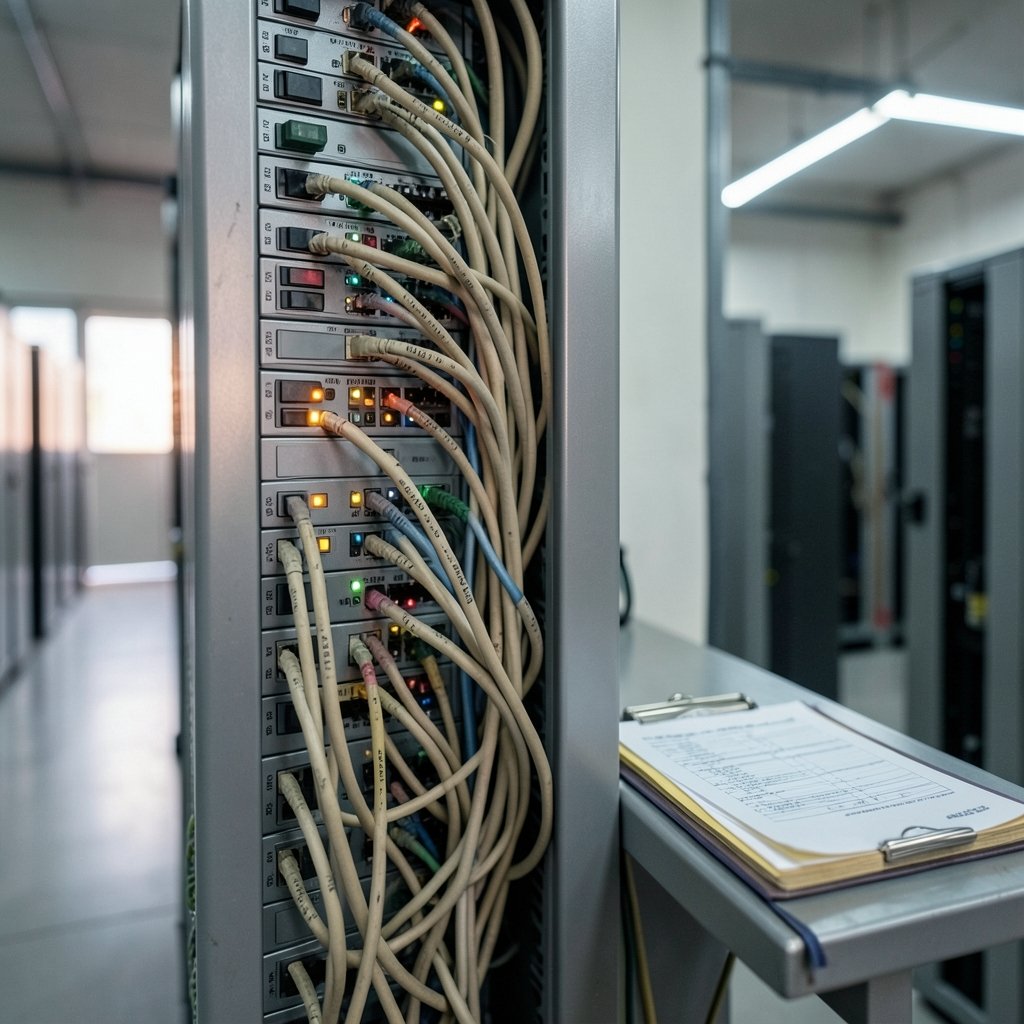
The single biggest workflow divider is where work enters the analyst’s view.
XSIAM is incident-centric. It ingests telemetry, correlates it, and surfaces a small number of incidents with built-in playbooks attached. Analyst work starts from a case, not a search. That is a genuine philosophical shift: instead of hunting through alerts, the analyst receives a packaged problem with context already assembled. The trade-off is that when the platform’s correlation gets it wrong, the analyst has to work backwards through a machine-built narrative. Teams moving from query-first tools often describe this as losing the ability to “just go look.”
CrowdStrike’s Next-Gen SIEM is query-first. Because it inherits LogScale’s model, analysts write and save searches, and correlation rules are expressed in that same query language. The console is the center of gravity. For people who like to poke at data, this feels powerful. For people who want a queue of work, it can feel like a blank page every morning.
InsightIDR sits between the two. Analysts typically start from a triggered detection, pivot through the investigation graph (users, assets, IPs), and then close or escalate. Custom detection authoring exists, but it is secondary to the pre-built rule set. That makes onboarding gentler and the ceiling lower for teams with unusual environments.
A practical tip: before any demo, ask each vendor to show the first screen an analyst sees after logging in. Not the dashboard. The working screen. That single screenshot tells you more about daily life than any feature matrix.
Detection languages and the migration tax
Every platform has its own detection language, and none of them are portable. LogScale queries, XSIAM’s XQL (Cortex Query Language), and InsightIDR’s detection rules must be re-authored when you move. The Cortex XDR and XQL documentation shows the query language lineage XSIAM shares.
This is the hidden cost in every comparison. Licensing discussions focus on per-gigabyte ingestion and per-endpoint fees. The real migration tax is the detection library. A mature SOC may hold hundreds of tuned rules, each with institutional knowledge baked in: why the threshold is set where it is, which false positives were suppressed, which business context was added.
Three practical lessons from teams that have done this:
- Inventory every custom detection before signing anything, including its owner and last-tuned date.
- Port the top 20 rules that catch real incidents first, not the full library.
- Keep the old platform running in parallel for at least one full quarter, and compare alerts weekly.
Common mistake: assuming out-of-the-box content replaces custom rules. It rarely does. Vendor content covers common attacker behavior; your environment’s weirdness is your job. The shared mapping layer that makes coverage comparable across platforms is MITRE ATT&CK, which lets teams score detection coverage even when the underlying languages differ.
Automation: native playbooks versus add-ons
Response automation is where packaging boundaries get blurry, and where 2027 buying decisions will likely turn.
XSIAM bundles SOAR-style playbooks into the platform. The workflow implication is that response actions, such as isolating an endpoint or disabling an account, sit next to the incident rather than in a separate tool. Fewer handoffs, fewer context switches.
CrowdStrike offers Falcon Fusion for workflow automation alongside Next-Gen SIEM. Because Falcon is an EDR platform first, automation can act directly on endpoint telemetry without a separate forwarder. That native telemetry is the real differentiator: onboarding first-party endpoint data skips the normalization steps that third-party-first SIEMs require. Third-party ingestion is supported, but the depth of out-of-the-box normalization varies by source, so verify per integration. (Obsidian vs logseq local first notes compared by workflow)
InsightIDR integrates with Rapid7’s automation tooling and third-party SOAR platforms; the InsightConnect documentation explains where that automation sits relative to the SIEM. The workflow consequence is that response automation may live outside the console, which changes analyst handoffs and who owns a playbook when it breaks.
The question to ask in evaluation: when a playbook fails at 3 a.m., who fixes it, and in which tool? If the answer involves three logins, that is a workflow cost you will pay every week.
Data onboarding and the normalization burden
Ingestion is where workflow promises meet plumbing. XSIAM’s consolidated data layer aims to normalize everything once, so analytics and automation share the same view. That is elegant in theory. In practice, every new log source still needs parsing, field mapping, and validation, and the first month of any deployment is mostly this work.
CrowdStrike’s advantage is that its own endpoint data arrives already understood. The friction appears when you add firewalls, identity providers, and cloud audit logs from other vendors. Each integration needs checking, because “supported” and “well-normalized” are different claims.
InsightIDR’s cloud delivery keeps onboarding simple for common sources, which suits mid-sized teams without dedicated data engineering. The trade-off is less control over exotic sources.
A common mistake across all three: measuring success by sources connected rather than detections working. A SOC with 40 log sources and no validated detections is worse off than one with 12 sources and a tested rule set. Track detection efficacy, not connector counts.
Cost, staffing, and the skills each platform rewards
Workflow differences translate directly into hiring profiles. XSIAM rewards analysts who think in cases and trust automation, plus engineers who can tune correlation logic. CrowdStrike rewards people comfortable in a query language; if your team already writes LogScale searches, the ramp is short. InsightIDR rewards analysts who triage well and know when to escalate, with less need for detection engineering.
That has budget consequences beyond licensing. A query-first platform without query-capable staff becomes an expensive log archive. An incident-first platform without tuning discipline becomes an alert factory with a nicer interface. Neither failure shows up in a proof-of-concept with vendor engineers driving.
Practical advice for 2027 planning: run a two-week pilot with your own analysts, your own data, and your own top five use cases. Score how long it takes to reach a first finding you can act on, not feature count. Ask each vendor what happens when their AI correlation is wrong: it will be wrong sometimes, and the recovery workflow matters more than the happy path.
How the three compare side by side
| Dimension | XSIAM | Falcon Next-Gen SIEM | InsightIDR |
|---|---|---|---|
| Entry point | Incident queue | Query console | Detection feed |
| Detection authoring | XQL, platform-native | LogScale query language | Pre-built rules, custom secondary |
| Native telemetry edge | Broad platform data | First-party endpoint data | Cloud and identity sources |
| Automation location | Inside the platform | Falcon Fusion | Integrated or third-party SOAR |
| Best fit | Large SOCs consolidating tools | Query-skilled teams heavy on Falcon | Mid-sized teams wanting fast time-to-value |
None of these rows is a verdict. A 50-person SOC with a detection engineering team will likely prefer the query-first model. A 6-person team juggling three consoles will likely prefer the incident-first or detection-first model. The table just makes the trade-offs visible before the sales cycle blurs them.
Conclusion
The XSIAM versus CrowdStrike versus InsightIDR decision is less about which platform detects more and more about which workflow your team can sustain on a Tuesday afternoon in month eight. XSIAM asks analysts to trust a consolidated incident model. CrowdStrike asks them to speak query. InsightIDR asks them to triage well and lean on defaults. All three converge on platform consolidation, but they start from different places, and that starting point becomes your operating rhythm.
Product names, module packaging, and licensing boundaries for all three vendors change frequently, so verify every 2027-specific claim against current vendor documentation at publication time. The workflow questions, though, stay stable: where does the day begin, who owns the detections, and what happens when automation fails?
FAQ
What does “CrowdStrike SIEM” actually refer to?
It is shorthand for the Falcon platform’s Next-Gen SIEM module, announced in 2024 and built on LogScale technology from the 2021 Humio acquisition. CrowdStrike does not sell a standalone product called “CrowdStrike SIEM,” so any comparison should clarify this before evaluating features.
Which platform is easiest for a small security team?
InsightIDR generally offers the gentlest ramp because its workflow starts from pre-built detections and an investigation graph rather than requiring detection authoring. Small teams without dedicated detection engineers tend to reach a first finding they can act on faster there, though the ceiling for highly customized environments is lower.
Is XSIAM a replacement for a SIEM or something broader?
Broader. XSIAM combines SIEM, SOAR-style automation, attack surface management, and analytics on one data layer. It is positioned as a consolidated security operations platform, so the workflow centers on incidents and playbooks rather than raw alerts or ad hoc queries.
Do detection rules transfer between these platforms?
No. LogScale queries, XSIAM’s XQL, and InsightIDR’s rule format are not portable, so migration means re-authoring detections and playbooks. The practical approach is to inventory custom rules, port the highest-value ones first, and run platforms in parallel for at least a quarter.
Why does the first screen an analyst sees matter so much?
Because it defines daily rhythm. An incident queue, a query console, and a detection feed demand different skills, different staffing, and different runbooks. A platform that matches your team’s habits gets tuned; one that fights them becomes an expensive log archive.
How should a team evaluate these platforms in 2027?
Run a two-week pilot with your own analysts, your own data, and your top five use cases. Score how long it takes to reach a first finding you can act on, and the recovery workflow when correlation is wrong. Ignore feature counts and dashboards driven by vendor engineers.



