
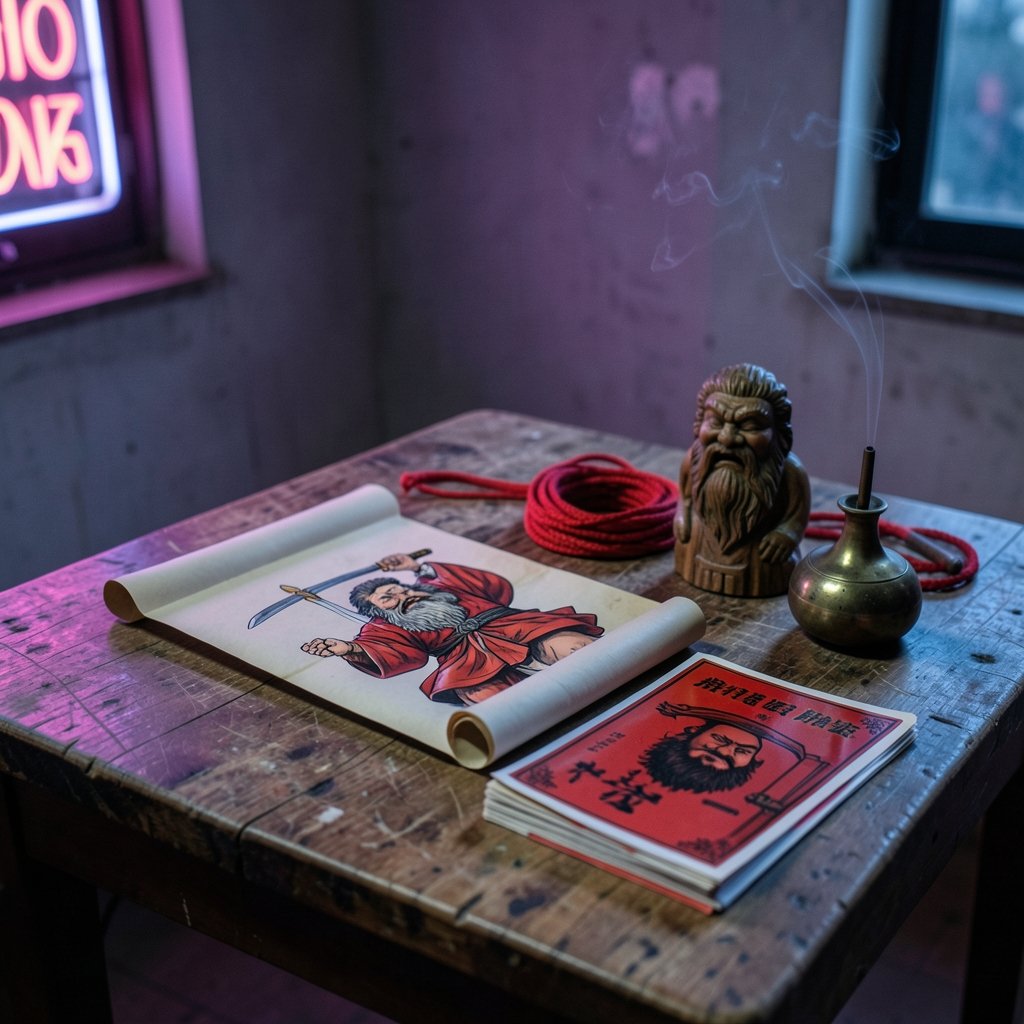
What would you do if a small, mischievous demon started tormenting you in your sleep? According to one of China’s most famous legends, an emperor faced exactly that problem, and the solution came from a fierce, bearded ghost named Zhong Kui (鍾馗). For centuries, his scowling face has hung on doors, appeared in paintings, and shown up in festival customs across East Asia. He is one of the most recognizable figures in Chinese popular religion, yet he is also one of the most misunderstood. Is he a god, a ghost, or a literary invention? The honest answer is that he is a little of all three.
This article looks at what Zhong Kui actually is, where his story comes from, how his image changed over time, and what practical role he plays in homes and festivals today. It also flags the parts of his legend that historians still argue about, so you can separate solid tradition from later embellishment.
Who Is Zhong Kui?
Zhong Kui is a demon-queller in Chinese popular religion and folklore. In plain terms, he is the figure people call on when they want evil spirits kept away. He is best known as a slayer of ghosts and a protector against evil forces, and his job is less about rewarding good behavior than about hunting down and capturing troublesome spirits.
He is usually shown as a large, fierce, bearded man dressed in scholar’s or official’s robes. He often carries a sword, and he is sometimes pictured with a bat. The bat is a visual pun: the Chinese word for bat (蝠, fu) sounds like the word for good fortune (福, fu). So a bat fluttering near Zhong Kui carries a lucky double meaning. That said, the bat is common rather than universal, and regional and period variations in his appearance are large. There is no single canonical version of him.
One important point: Zhong Kui is not a calm, distant deity in the way some gods are. He is a rough, scary, working figure. His appeal comes precisely from how intimidating he looks. The whole idea is that a face scary enough to frighten a demon is a face worth putting on your front door.
The Legend of the Emperor’s Dream
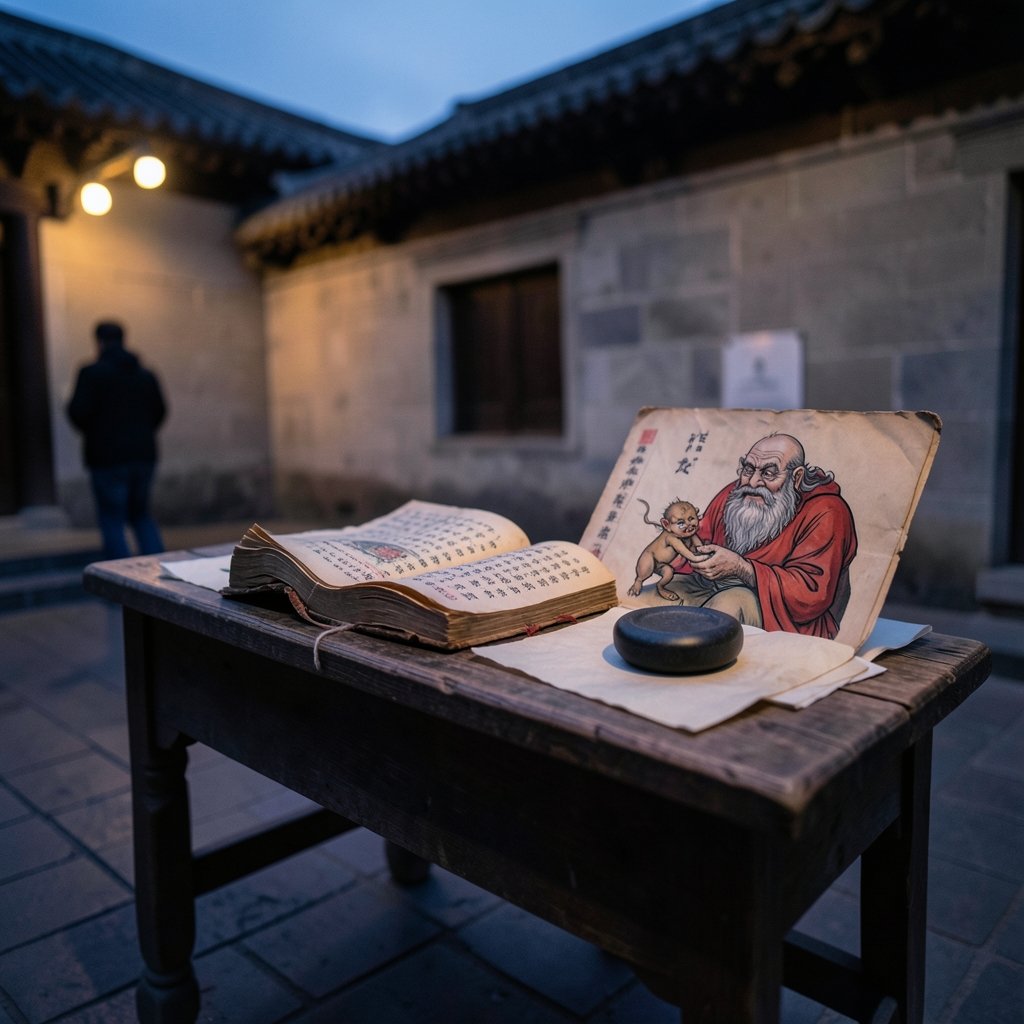
The best-known origin story for Zhong Kui involves Emperor Xuanzong of the Tang dynasty (reigned 712 to 756). In the tale, the emperor dreamed that a small demon was harassing him. Then a much larger ghost appeared, seized the little demon, and dealt with it. That large ghost was Zhong Kui. When the emperor woke, he was so impressed that he had Zhong Kui’s image painted.
The story is recorded in the Tang Yishi (唐逸史), a text attributed to Lu Zhao (盧肇). Here is where a careful reader should slow down. The authorship and dating of that text are debated by scholars. The Tang dynasty ran from 618 to 907, but the surviving record of the dream tale may not be as old as the story it tells, and the attribution to a single author is not settled. So the tale is best treated as a traditional origin story rather than a documented historical event.
That matters for a bigger reason: the historical existence of a person named Zhong Kui is not established. Much of his “biography” is legendary. Whether he began as a folk figure, a literary invention, or a Daoist ritual figure is still unresolved among researchers. What is clear is that the figure took hold in the popular imagination and stayed there.
How Zhong Kui Fits Into the Spirit World
In the folk pantheon, Zhong Kui is sometimes treated as a specialized ghost-catcher invoked in exorcistic practice. His exact status shifts depending on who you ask. Folk tradition, Daoist ritual, and literary sources do not always agree on what he is or how much authority he has.
He also appears in the Ming dynasty novel Journey to the West (Xiyouji), where he serves as a demon-quelling official in the celestial bureaucracy. The standard 100-chapter edition of that novel dates to the 16th century, within the Ming period of 1368 to 1644. In the novel’s world, heaven is organized like a government office, and Zhong Kui has a job in it. That bureaucratic framing is part of what makes him so memorable: he is not a remote cosmic force but a working official with a specific assignment.
This fluid role is one of the most interesting things about him. He is not locked into a single religious system. He moves between folk practice, Daoist ritual, and literature, picking up different meanings along the way.
Zhong Kui in Art and Iconography
Zhong Kui is a favorite subject in painting and printmaking, and the imagery is remarkably consistent in its general type even as the details vary. The core elements are usually some combination of the following:
| Element | What It Signals |
|---|---|
| Fierce, bearded face | Intimidation of evil spirits |
| Scholar’s or official’s robes | Bureaucratic authority over ghosts |
| Sword | Active demon-quelling power |
| Bat (sometimes) | A pun on good fortune (蝠/福) |
| Large, imposing build | Physical dominance over small demons |
The robes are worth pausing on. A demon-queller dressed as a scholar or official is a very Chinese idea: the fight against evil is framed as an act of administration, not just brute force. Zhong Kui does not simply scare demons away. He processes them.
His imagery also spread beyond China. In Japan, he is known as Shōki and appears in painting and prints. In Korea, he shows up in art as well. The Edo period in Japan (1603 to 1868) is the best-documented stretch of that transmission, though the figure clearly traveled earlier and through multiple channels.
Zhong Kui and the Dragon Boat Festival
Zhong Kui is associated with the Duanwu festival, also called the Dragon Boat Festival, in some regions. His image was displayed to ward off evil and disease, alongside other figures credited with expelling plagues.
This is a good example of regional variation. The custom is documented in later imperial sources, but it was never uniform across China. In some places Zhong Kui was a Duanwu figure; in others he belonged to New Year customs. If you travel through different regions or look at collections from different centuries, you will see him attached to different occasions.
Door Guards and New Year Prints
Zhong Kui is a popular subject in Chinese New Year and door-guard prints, where he often appears paired with, or in place of, other protective figures. The logic is simple and practical: a picture of a terrifying ghost-catcher on your door is a message to any wandering spirit that this household is defended.
Door-guard prints as a genre are about boundary protection. They mark the line between the safe inside and the uncertain outside. Zhong Kui fits that role perfectly because his whole identity is about stopping things from getting in.
What Actually Works in Practice
If you are trying to understand or use Zhong Kui imagery, a few practical notes help. These come from how the tradition is actually handled rather than from any single rulebook.
Match the image to the occasion. New Year prints and Duanwu displays are not always interchangeable. If you are following a regional custom, check what that region actually does rather than assuming one form fits all.
Do not treat one version as the standard. The bat, the sword, and the robes vary by region and period. A painting without a bat is not “wrong.” A print with a sword and no bat is still recognizably Zhong Kui.
Placement matters more than perfection. Door-guard prints belong at entrances, facing outward. The point is the boundary, not the frame.
Expect the figure to be scary. A common mistake is looking for a gentle, friendly version. Zhong Kui’s function depends on him looking fearsome. Softening him too much undercuts the whole idea.
Be careful with claims about his history. It is easy to repeat a tidy biography that presents the Tang dream as settled fact. It is not. The tale is traditional, the text’s dating is debated, and his historical existence is unproven. Saying so is more accurate, not less interesting.
Common Mistakes People Make
A few misunderstandings come up again and again when people encounter Zhong Kui for the first time.
The first is treating him as a major god with a fixed, official role. In practice, his status varies between folk, Daoist, and literary traditions. He is better understood as a fluid figure than as a fixed deity with a job description.
The second is assuming the name has a settled meaning. The etymology of 鍾馗 is uncertain. One common explanation links it to a word for a mallet or club, but that explanation is contested. It is a reasonable guess, not a proven fact.
The third is assuming the bat is always there. It is common, but not universal, and its meaning depends on the pun being recognized.
The fourth is reading the legend as history. The dream story is a traditional origin tale. It tells us what people believed and how they explained the figure, not what actually happened at the Tang court.
Why Zhong Kui Still Matters
Zhong Kui has lasted because he solves a problem every culture recognizes: the fear of unseen harm. He offers a concrete, visual answer. Put this fierce face on your door, display it at the festival, and the household is protected. The logic is old, but it is not naive. It is a way of turning anxiety into a picture you can live with.
He also shows how Chinese popular religion actually works. Figures move between folk practice, organized ritual, and literature. They pick up new meanings and lose old ones. They are not frozen in place. Zhong Kui’s long career, from a dream tale to door prints to a cameo in a Ming novel to paintings in Japan and Korea, is a case study in how a single figure can travel.
Conclusion
Zhong Kui is a demon-queller, a ghost-catcher, and a protector against evil spirits, and he is one of the most recognizable figures in Chinese folklore. His legend centers on an emperor’s dream recorded in the Tang Yishi, though the text’s dating and authorship are debated and his historical existence is unproven. His image, a fierce bearded man in scholar’s or official’s robes, often with a sword and sometimes a bat, appears in paintings, New Year prints, door-guard displays, and Duanwu customs, with wide regional variation. He also turns up in Journey to the West as a celestial official, and he traveled to Japan as Shōki and to Korea in art. The honest picture is a figure whose role is fluid, whose origins are argued over, and whose appeal is durable. For anyone exploring Chinese protective imagery, he is the place to start.
What does Zhong Kui represent?
Zhong Kui represents protection against evil spirits. He is a demon-queller whose job is to capture and slay ghosts, and his fierce appearance is meant to frighten harmful forces away from homes and communities.
Is Zhong Kui a god or a ghost?
He is best described as a demon-queller whose status varies by tradition. In folk practice, Daoist ritual, and literature, he is treated differently, and scholars see his role as fluid rather than fixed. He is not a simple, single-category deity.
What is the story behind Zhong Kui?
The best-known story says Emperor Xuanzong of the Tang dynasty dreamed of a small demon harassing him and a large ghost, Zhong Kui, who captured it. On waking, the emperor had his image painted. The tale is recorded in the Tang Yishi, though the text’s dating and authorship are debated.
Why is Zhong Kui shown with a bat?
The bat is a visual pun. The Chinese word for bat (蝠, fu) sounds like the word for good fortune (福, fu), so a bat near Zhong Kui carries a lucky meaning. The motif is common but not universal, and it varies by region and period.
Does Zhong Kui appear in Journey to the West?
Yes. In the Ming dynasty novel Journey to the West, he appears as a demon-quelling official in the celestial bureaucracy. The standard 100-chapter edition dates to the 16th century, within the Ming period of 1368 to 1644.
Was Zhong Kui a real person?
There is no established evidence that a historical person named Zhong Kui existed. Much of his biography is legendary, and scholars treat the figure as a product of folk, literary, and ritual traditions rather than a documented individual.



