What if the most important years in technology aren’t the ones already behind us, but the two sitting just ahead? That’s the strange position anyone watching the industry finds themselves in right now. The 2026-2027 window is shaping up as a rare hinge point, a stretch where several massive bets, from AI infrastructure to app store economics to the next console generation of graphics hardware, all come due at roughly the same time. Some of those bets will pay off. Others will look foolish in hindsight. Either way, the decisions made in these two years will echo for a long while.
This article walks through the forces converging on that window, what to watch, and where the smart money and the smart skeptics disagree.
Why 2026-2027 Stands Out
Most years blend together. A product ships, a chip launches, a policy changes, and life moves on. But occasionally a cluster of timelines lines up so that the same 24-month stretch holds a stack of consequential moments at once. The 2026-2027 period looks like one of those clusters.
Three big threads run through it. First, the AI infrastructure buildout reaches a point where the spending either justifies itself or starts to look like a bubble. Second, hardware roadmaps from the major chipmakers hit a generational transition. Third, regulatory and legal decisions around app stores, platform fees, and market power start to bite in ways that change how software gets sold.
None of these threads is isolated. They feed each other. A cheaper chip makes AI cheaper to run, which changes which AI products survive, which changes how much money flows into the platforms selling those products. Pull one thread and the others move.
The AI Infrastructure Question Nobody Can Dodge

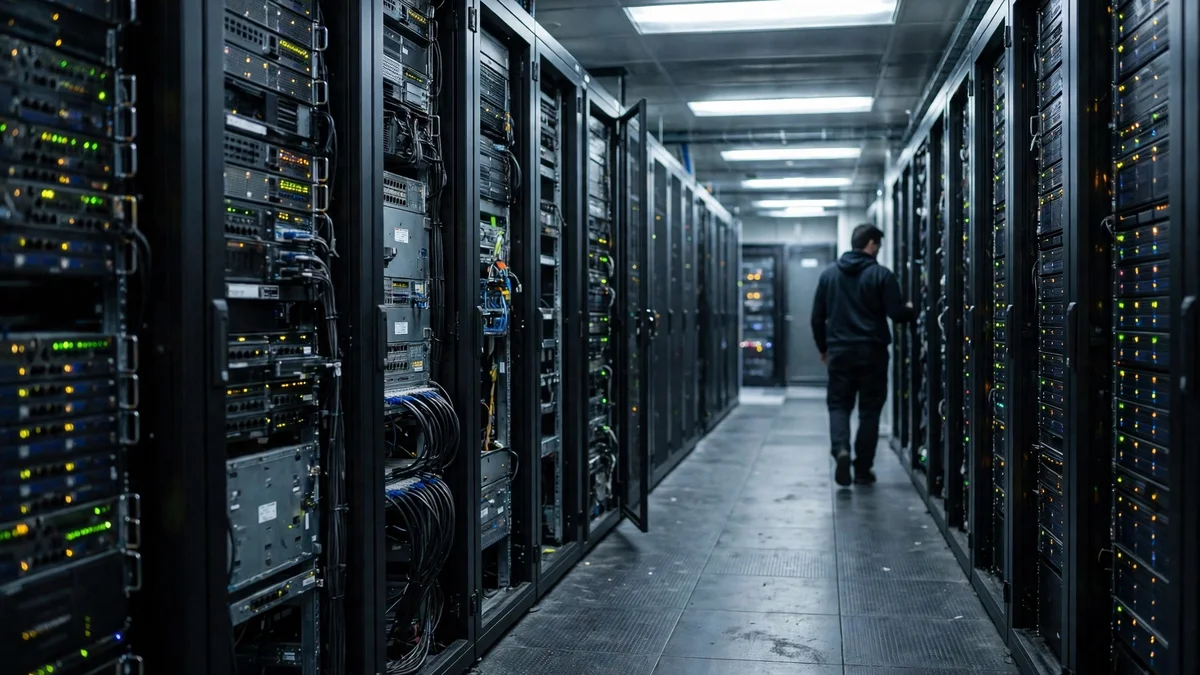
The single biggest story of 2026-2027 is whether the enormous sums pouring into data centers, chips, and power generation turn into durable revenue or a spectacular overshoot. The comparison people keep reaching for is the telecom bust of the early 2000s, when fiber was laid at a frantic pace, demand arrived slower than expected, and a lot of companies vanished even though the infrastructure itself eventually proved useful. That parallel keeps resurfacing for a reason: the pattern of “build first, figure out the customers later” is familiar, and the stakes are enormous. You can read a fuller breakdown of that comparison in this analysis of the AI infrastructure race and the 2000 telecom bust.
What makes 2026-2027 different from a simple repeat is that the demand side is real, not speculative. Enterprises are actually buying. The question is whether they’re buying enough, fast enough, to absorb the capacity coming online. If they are, the buildout looks visionary. If they aren’t, the write-downs will be brutal and the consolidation will be fast.
What to watch in practice
For anyone trying to read the tea leaves, a few practical signals matter more than headlines:
- Utilization rates at the big cloud providers. Full racks mean real demand. Empty ones mean trouble.
- Power contracts. Data centers need electricity, and long-term power deals are a leading indicator of confidence.
- Enterprise renewal rates. If companies renew AI subscriptions at high rates, the spending is sticky. If they churn, the whole thesis wobbles.
A common mistake is to treat any single quarter’s earnings as a verdict. Infrastructure cycles play out over years, not quarters. The 2026-2027 window is long enough to see a trend, not long enough to see the final score.
Hardware Roadmaps Collide With Reality
The chip side of 2026-2027 is its own drama. Nvidia’s consumer graphics roadmap has been the subject of endless speculation, with questions swirling about whether the next generation, the RTX 60 series, actually lands on schedule or slips past its expected window. That uncertainty ripples outward, because gamers, workstation buyers, and AI researchers all plan around these launches. The full picture of the timing debate is worth reading in this piece on whether the Nvidia RTX 60 series skips a 2027 launch.
The practical takeaway for buyers is simple and slightly annoying: don’t build a purchasing plan around a rumored launch date. Hardware roadmaps slip. They slip for manufacturing reasons, for demand reasons, and sometimes just because a company decides to stretch a generation. If you need a machine in 2026, buy for what exists in 2026, not for what might arrive in 2027.
The AI chip squeeze
Meanwhile, the data-center side of the chip business is a different animal. Demand for AI accelerators has been so intense that allocation, not price, is the binding constraint. That’s a strange market. When you can’t buy as many as you want no matter what you pay, the usual supply-and-demand logic breaks down, and companies start doing odd things like signing multi-year agreements years in advance.
By 2026-2027, the question becomes whether new manufacturing capacity finally catches up. If it does, prices soften and margins compress. If it doesn’t, the allocation era continues and the companies with the best relationships keep winning.
The Software Layer Gets Crowded and Cheaper
While the hardware and infrastructure stories dominate headlines, the software layer is where most people will actually feel 2026-2027. AI assistants and chatbots have gone from novelty to commodity astonishingly fast. The competition among the major models, and the tools built on top of them, has turned into a race to see who can deliver the most capability at the lowest price. A useful snapshot of how the leading assistants stack up is available in this roundup of the best AI chatbots and what’s under the hood.
What’s changing in this window is the shift from “which model is smartest” to “which model is cheap enough and reliable enough to run at scale.” That’s a much less glamorous question, but it’s the one that determines which products survive. A model that’s 5% smarter but 10x more expensive is a research curiosity. A model that’s slightly less clever but cheap enough to embed everywhere is a business.
Building on top of the models
For anyone actually building with these tools, the practical lessons from 2026-2027 are worth internalizing now:
- Don’t marry a single model. The leaders change every few months. Build so you can swap providers without rewriting everything.
- Watch the cost curve alongside the benchmark scores. The cheapest capable model usually wins the volume game.
- Test on your own data. Generic benchmarks tell you almost nothing about how a model handles your specific mess.
A common mistake is to pick a model because it topped a leaderboard, then discover it’s too expensive or too slow for production. The teams that do well are the ones that treat model choice as an operational decision, not a religious one.
App Stores, Fees, and the Fight Over 27 Percent
One of the quieter but more consequential storylines of 2026-2027 is the legal and regulatory pressure on platform fees. Apple’s long-running battle over its App Store commission, including the high-profile dispute over the 27 percent fee that followed earlier antitrust rulings, is a case study in how a single percentage point can reshape an entire economy of developers. The legal twists and what they mean for app makers are covered in this look at the Apple Supreme Court fight over the 27 percent App Store fee.
Why does this matter beyond lawyers and developers? Because app store economics determine what kinds of software can exist. A high commission means only certain business models survive. Lower it, and suddenly a whole tier of small developers becomes viable. The 2026-2027 window is when several of these fights reach resolution, and the outcomes will shape what gets built for years.
What developers should actually do
If you make software for mobile platforms, the practical advice is to build flexibility into your pricing and distribution from day one. Don’t assume the current fee structure lasts forever. Don’t assume it changes either. The developers who get hurt are the ones who built a business that only works under one specific set of platform rules.
The Tools Getting Better in the Background
Not every 2026-2027 story is a billion-dollar drama. Some of the most useful progress is happening in the unglamorous corners. Translation tools, for instance, have quietly become genuinely good, and the gap between the major options has narrowed in ways that matter for anyone working across languages. A practical comparison of the leading options is worth a read in this breakdown of AI translation tools and how DeepL, ChatGPT, and Google compare.
The same pattern shows up in dozens of smaller categories. Tools that were clumsy in 2024 become usable in 2026. Usable tools become invisible infrastructure by 2027. That’s the quiet engine of the whole period: a thousand small improvements that, stacked together, change what’s possible.
A note on retro gaming and other hobbies
Even the hobbyist corners of tech are getting attention. Emulator front-ends and achievement systems have matured to the point where setting them up is no longer a weekend project for the technically inclined. If that’s your thing, there’s a solid walkthrough of the RetroAchievements setup for PC emulators. It’s a reminder that the 2026-2027 window isn’t only about corporate strategy. It’s also about the small quality-of-life improvements that make the technology feel less like work.
Tesla’s Three Hardware Bets
No roundup of 2026-2027 would be complete without mentioning the companies making multiple simultaneous hardware bets. Tesla is the clearest example, with its robotaxi ambitions, its Semi truck program, and the long-delayed Roadster all converging on roughly the same period. Whether all three land, or whether some slip, is one of the more entertaining questions of the window. A detailed look at the three-way hardware gamble is available in this piece on Tesla’s robotaxi, Semi, and Roadster bets.
The lesson here is about focus. Companies that bet on many hardware fronts at once tend to see timelines slip, because engineering resources are finite and every program competes with the others. Watching which of Tesla’s bets actually ships on time is a useful proxy for how well the whole operation is running.
How to Think About the 2026-2027 Window
So what’s the right frame for all of this? A few principles hold up well.
Treat timelines as provisional. Every roadmap in this article could slip. The companies themselves often don’t know when things will ship until they’re close. Plan for delays, and you’ll rarely be disappointed.
Separate the narrative from the numbers. The AI infrastructure story, the chip story, and the platform fee story all have loud narratives attached. The numbers underneath are quieter and more reliable. Follow the numbers.
Watch the second-order effects. The interesting stuff usually happens one step removed from the headline. A cheaper chip changes which AI products survive. A lower app store fee changes what gets built. A slipped launch changes what people buy in the meantime.
Don’t over-index on any single year. The 2026-2027 window matters, but it’s not the end of history. It’s a stretch where several long-running trends reach a checkpoint. Some will pass, some will stumble, and the ones that stumble will get another shot.
Conclusion
The 2026-2027 window is best understood not as a single event but as a convergence. AI infrastructure spending, hardware roadmaps, platform economics, and a hundred smaller tool improvements all hit their checkpoints in roughly the same 24 months. That makes the period unusually consequential and unusually hard to predict. The people who navigate it well will be the ones who watch the underlying numbers, stay flexible about which models and platforms they depend on, and resist the urge to treat any single headline as the final word. The next two years won’t settle every question, but they’ll narrow the field considerably, and that’s worth paying attention to.
FAQ
What makes 2026-2027 more significant than other two-year stretches?
Several major timelines converge in the same window: the AI infrastructure buildout reaches a point where returns get tested, chipmakers hit generational transitions, and platform fee disputes reach resolution. When that many consequential threads line up at once, the period tends to produce outsized change.
Will the AI infrastructure spending turn out to be a bubble?
That’s the central question of the window and nobody knows the answer yet. The comparison to the early 2000s telecom bust is fair in pattern but not necessarily in outcome, because enterprise demand for AI is real rather than speculative. The deciding factor is whether demand grows fast enough to absorb the capacity being built.
Should I wait for the next generation of graphics cards before buying?
Generally, no. Hardware roadmaps slip routinely, and a rumored launch date is not a purchasing plan. If you need a machine in 2026, buy based on what’s available in 2026. Waiting for a product that may or may not arrive on schedule is a good way to spend a year without a working setup.
How will app store fee changes affect ordinary users?
Indirectly but meaningfully. Lower platform fees tend to make more business models viable, which means more apps, more competition, and often lower prices. Higher fees narrow the field. Users rarely see the fee itself, but they feel its effects through what gets built and what gets abandoned.
Which AI model should I build my product on?
Build so you can switch. The leading models change every few months, and the cheapest capable option usually wins at scale. Rather than committing to one provider, design your system so swapping models is a configuration change rather than a rewrite.
Is the 2026-2027 window a good time to start a tech company?
It’s a mixed picture. Infrastructure and hardware are capital-intensive and dominated by giants, which makes them hard for newcomers. But the software layer, where models are cheap and tools are mature, is more accessible than ever. The best opportunities tend to sit one step removed from the headlines, in the second-order effects nobody is watching yet.