
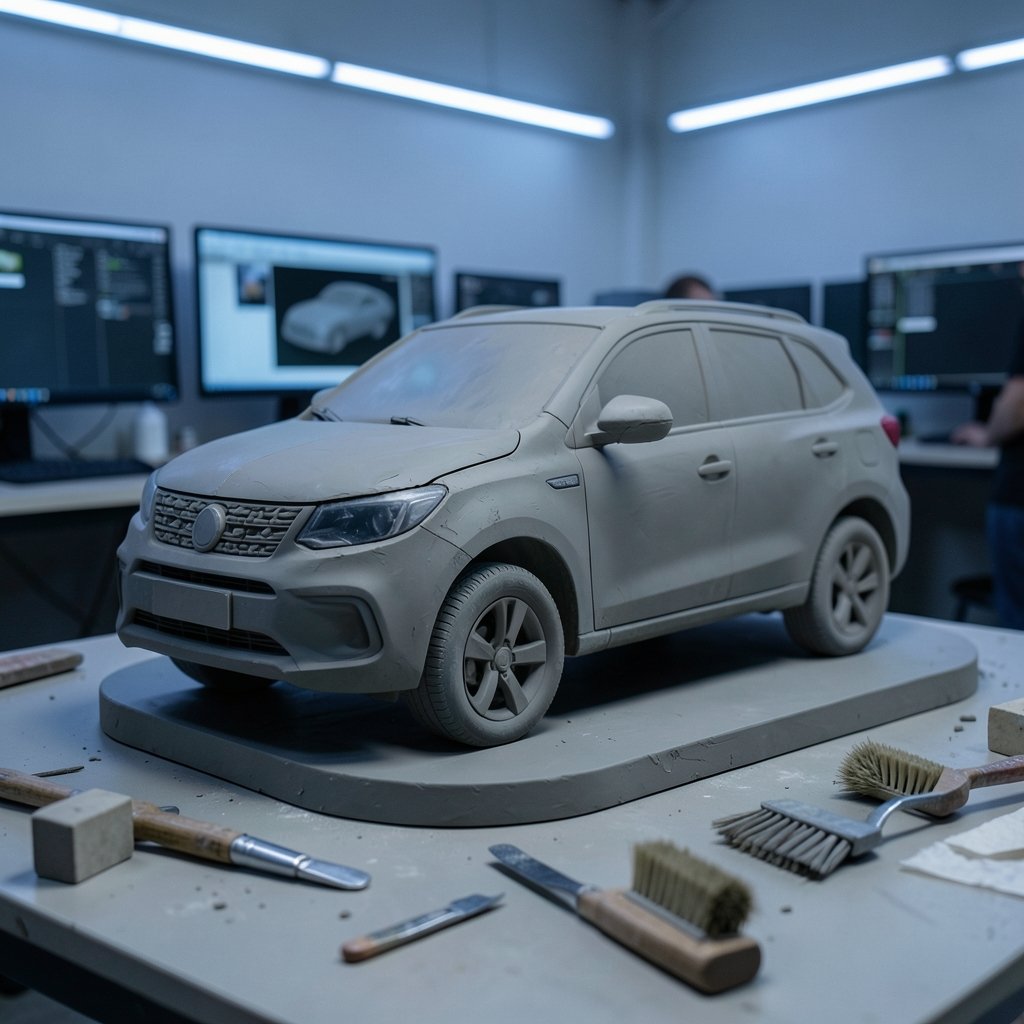
Will the 2027 Hyundai Tucson be a mild facelift or a full next-generation overhaul? That question has driven thousands of searches, forum threads, and speculative YouTube videos. The honest answer is more complicated than most headlines suggest, and it matters a great deal if you are deciding whether to buy now or wait.
Here is a balanced look at what is actually known, what is reasonably expected based on Hyundai’s own product cadence, and how to read the rumor mill without getting burned.
The State of Play: No Official Confirmation Yet
The fourth-generation Tucson, internally coded NX4, arrived for the 2022 model year. It brought the polarizing “parametric jewel” grille, hidden daytime running lights that blend into the grille surface, and a sharp, angular body that still looks modern on the road.
Since then, Hyundai has refreshed the Tucson for several markets with running updates, but the company has not issued a formal press release confirming a 2027 redesign with a specific launch date. That is the single most important fact in this entire article. Any outlet or video that states a confirmed 2027 redesign date is, at minimum, overstating what is publicly known.
What the automotive trade press has reported for some time is that a mid-cycle refresh or a next-generation Tucson is expected in the 2026 to 2027 window. That framing comes from reporting by established outlets rather than from Hyundai itself. Treat it as informed expectation, not confirmation.
Why the Distinction Matters
Car buyers get hurt by rumor cycles. Someone reads that a “totally redesigned Tucson arrives in 2027,” delays a purchase, and then discovers the actual change was a bumper tweak and a new screen. Or the opposite happens: a buyer pulls the trigger on a 2026 model weeks before Hyundai announces something genuinely significant.
The practical rule is simple. Until Hyundai’s own newsroom publishes a press release or a teaser campaign with a date, the 2027 Tucson’s design remains unconfirmed.
What a Redesign Would Realistically Include
Even without official confirmation, Hyundai’s recent product history gives a fairly clear picture of what a redesign typically involves. Looking at how the company handled the new Kona, the refreshed Elantra, and the latest Santa Fe tells you a lot about priorities.
| Area | Likely Direction | Confidence Level |
|---|---|---|
| Exterior design | Sharper, more boxy or angular styling; evolution of the parametric grille language | Moderate |
| Interior | Larger single-panel or dual-screen layout, fewer physical buttons | High |
| Powertrains | Expanded hybrid and plug-in hybrid options; possible new electrified variant | Moderate to high |
| Safety tech | Standardized advanced driver assistance features across trims | High |
| Platform | Possible carryover with updates, or a new architecture | Low to moderate |
The interior prediction is the safest bet. Hyundai has been steadily moving toward wide, integrated display panels and slimmer dashboards across its lineup. The current Tucson’s interior, while functional, is starting to look dated next to newer siblings.
Powertrains are where things get interesting. Hyundai has been aggressive about electrification, and the Tucson Hybrid has been a strong seller. A redesign would almost certainly lean harder into hybrid and plug-in hybrid configurations, possibly with a fully electric option depending on how the company positions its dedicated EV line.
The Design Language Question
Hyundai’s design team has been shifting toward what some observers describe as a more rugged, boxy aesthetic. The latest Santa Fe went dramatically upright. Whether the Tucson follows that path or stays sleek is genuinely unknown.
If you want a sense of how much AI-assisted design tools are changing the way enthusiasts mock up and visualize speculative vehicle renders, the same creative explosion is happening in other visual fields. The best AI interior design tools for 2027 before and after results show how quickly concept imagery now spreads, which is part of why unverified Tucson renders circulate so fast.
How to Separate Real News From Renders
This is where most readers get lost. A stunning image of a “2027 Tucson” appears on social media, gets shared thousands of times, and suddenly people believe it is a leaked photo. Almost always, it is not.
Here is a practical checklist for evaluating any Tucson redesign claim you encounter.
- Check the source. Is it Hyundai’s official newsroom, a credentialed automotive outlet, or an anonymous account?
- Look for a date and a named spokesperson. Real product news usually includes both.
- Reverse-image search the photos. Renders and AI-generated images are easy to trace.
- Be skeptical of “leaked” interior shots. These are frequently from unrelated concepts or older models.
- Cross-reference at least two established outlets before believing a spec sheet.
This same discipline applies to any tech purchase decision. If you are researching tools while you wait for car news, the guidance in when not to use an AI chatbot in 2027: 7 honest cases makes a similar point: verify before you commit.
The Buying Decision: Wait or Buy Now?
This is the question most readers actually care about, and it deserves a straight answer rather than a hedge.
If you need a vehicle in the next six months, buy one. The current Tucson is a genuinely competitive compact SUV with strong warranty coverage, a comfortable ride, and good fuel economy in hybrid form. Waiting a year or more for an unconfirmed redesign is a poor trade if you have a real transportation need.
If you can wait 12 to 18 months and you specifically want the newest design and tech, waiting is reasonable, with one caveat. You will likely pay more. New-generation models typically launch at higher prices with fewer incentives, and the first model year of any redesign carries some risk of teething issues.
The Depreciation Angle
Here is a factor people often overlook. A redesign typically accelerates depreciation on the outgoing generation. If you buy a 2026 Tucson and a redesigned 2027 arrives a year later, your resale value takes a bigger hit than it would in a normal year.
That cuts both ways. It also means buying the outgoing generation near the end of its run can be a smart value play, especially if dealers are motivated to move inventory. Negotiating leverage tends to improve as a model ages.
What Hyundai Has Actually Been Doing
Rather than guessing, look at the company’s track record. Hyundai has consistently used mid-cycle refreshes to add features: bigger screens, updated driver assistance suites, revised grille designs, and new wheel options. These are not trivial changes.
The pattern suggests that even a “refresh” rather than a full redesign could deliver noticeable improvements. Buyers sometimes dismiss a facelift as cosmetic, but in Hyundai’s case, refreshes have historically included real functional upgrades.
For context on how fast the broader tech landscape is moving and how it influences what consumers expect inside a vehicle cabin, the comparison in 10 best AI chatbots with GPT-5 and Claude under the hood in 2027 illustrates the pace. In-car assistants and infotainment systems are being benchmarked against consumer AI tools, and that pressure shapes what automakers prioritize.
Common Mistakes Buyers Make When Following Redesign News
A few patterns show up again and again, and avoiding them will save you time and money.
Mistake one: trusting a single source. One article, one video, or one forum post is not confirmation. Product news requires corroboration.
Mistake two: confusing model years with calendar years. A “2027 model” can go on sale in 2026. This gap trips up a huge number of shoppers who assume the car arrives in January of its model year.
Mistake three: assuming global news applies locally. Hyundai sells different trims and powertrains in different markets. A redesign detail confirmed for one region may not reach yours, or may arrive later.
Mistake four: ignoring the dealer timeline. Even after an official announcement, vehicles take months to reach lots. Announcement dates and availability dates are rarely the same.
Mistake five: letting rumors freeze a decision indefinitely. There is always another redesign coming. At some point, the car you can drive today beats the car you are waiting for.
Where the Rumor Mill Gets Its Fuel
Speculation thrives because the signals are genuinely ambiguous. Spy photographers capture camouflaged test mules, which could be a Tucson refresh, a different model entirely, or an early prototype. Enthusiasts generate renders. Aggregators repackage it all with confident headlines.
None of that is malicious, but it creates an information environment where speculation hardens into apparent fact. The responsible approach is to enjoy the speculation while keeping a clear line between “reported” and “confirmed.”
If you want a sense of how quickly AI-generated visual content now shapes public expectation across consumer categories, the best AI animation tools for 2027 that actually work without design skills are a useful parallel. The barrier to producing convincing imagery has collapsed, and that applies to vehicle renders too.
What to Watch For Next
Rather than refreshing rumor sites daily, watch a few specific signals. These are the milestones that actually indicate a redesign is close.
- Hyundai’s official newsroom publishing a press release or teaser campaign
- Dealer communications about order cutoffs for the current model
- Spy shots from established automotive outlets with credible sourcing
- Auto show scheduling announcements naming the Tucson
- Regulatory filings that reveal new dimensions or powertrain specs
When two or three of these line up, you have real signal. Until then, you have noise.
Conclusion
The 2027 Hyundai Tucson redesign is best described as expected but unconfirmed. Trade reporting points to a refresh or new generation in the 2026 to 2027 window, and Hyundai’s own product history suggests it adds interior, tech, and electrification upgrades whenever that happens. But no official announcement has locked in a date, a design, or specifications.
That leaves buyers with a clear framework. If you need a car now, the current Tucson remains a solid choice and end-of-cycle pricing may work in your favor. If you can wait and want the newest design, waiting is defensible, provided you accept higher launch pricing and first-year risk. Either way, verify before you commit, and do not let unconfirmed renders drive a five-figure decision.
FAQ
Will there definitely be a 2027 Hyundai Tucson redesign?
No. Hyundai has not officially confirmed a 2027 redesign. Trade reporting suggests a refresh or next-generation model is expected in the 2026 to 2027 window, but that is informed expectation rather than a confirmed product announcement. Until Hyundai publishes a press release with a date, treat the redesign as unconfirmed.
When would a redesigned Tucson go on sale?
If a redesign is confirmed for the 2027 model year, it would likely reach dealers sometime in 2026, since model years and calendar years rarely align. Even after an official announcement, expect several months between the reveal and vehicles arriving on lots.
Should I wait for the 2027 Tucson or buy the current model?
It depends on your timeline. If you need a vehicle within six months, buying the current Tucson is sensible. If you can wait 12 to 18 months and specifically want the newest design and technology, waiting is reasonable, though you should expect higher pricing and fewer incentives at launch.
What changes are most likely in a Tucson redesign?
Based on Hyundai’s recent product direction, the most probable changes are a larger integrated screen layout, fewer physical buttons, expanded hybrid and plug-in hybrid options, and broader standard driver assistance features. Exterior styling direction is much harder to predict and remains genuinely unknown.
How can I tell if a “leaked” 2027 Tucson photo is real?
Check the source first. Credentialed automotive outlets with named sourcing are far more reliable than anonymous accounts. Reverse-image search the photos, since many renders are AI-generated or recycled from unrelated concepts. Cross-reference at least two established outlets before accepting any image or spec sheet as real.
Does a redesign hurt the value of the outgoing model?
Generally yes. A new generation typically accelerates depreciation on the previous one, since buyers gravitate toward the newer design and feature set. That said, end-of-cycle models often come with stronger dealer discounts and incentives, which can offset some of the resale impact for buyers who plan to keep the vehicle long term.



