What will the 2027 Tucson actually look like when it reaches a dealer lot? That question comes up a lot, and the honest answer is more interesting than a spec sheet. The Hyundai Tucson is one of the best-selling compact SUVs in the United States, and every model year brings a wave of speculation about redesigns, powertrains, and price jumps. The 2027 model year sits at a genuinely uncertain point in the nameplate’s life cycle, which makes it a topic worth unpacking carefully rather than repeating rumor as fact.
Why the 2027 Tucson Is Harder to Pin Down Than It Sounds
The current fourth-generation Tucson arrived for the 2022 model year in the US market, following a global reveal in late 2020. Hyundai gave it a notable mid-cycle refresh for 2025, with revised styling and an updated cabin. That timeline matters because it tells you where the 2027 Tucson likely falls: somewhere in the back half of the current generation’s run, potentially approaching the point where a full redesign gets announced.
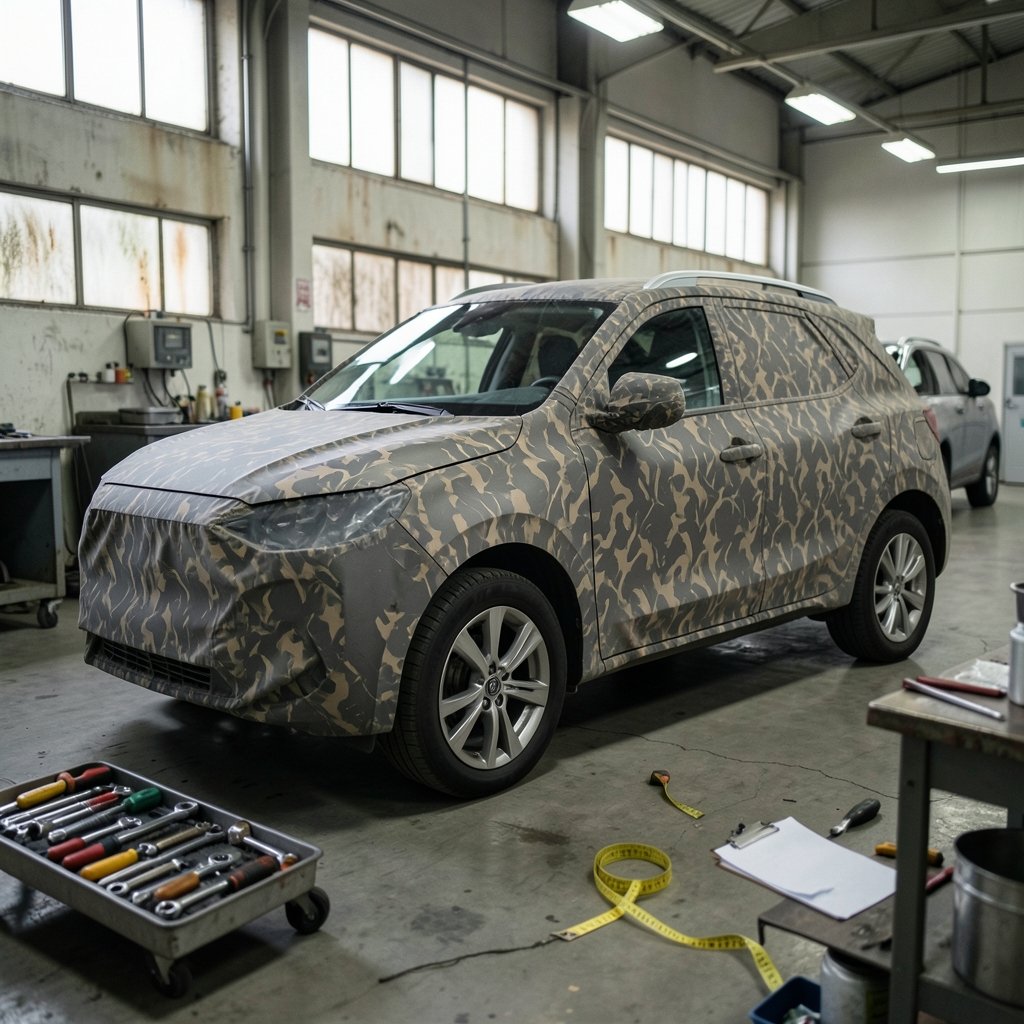
Here is the part most articles gloss over. Automakers rarely confirm details about a model year two or three years out. Hyundai has not published a complete, official 2027 Tucson spec sheet, and anything circulating online should be treated as either informed projection or pure speculation. Buyers who plan purchases around unconfirmed rumors often end up disappointed. The smarter approach is to understand the pattern of how Hyundai has handled the Tucson so far, then map that pattern onto 2027.
A practical tip: when you see a “2027 Tucson revealed” headline, check the date and the source. Trade press reporting based on spy shots is different from an official press release, and the two get blended together constantly.
The Model-Year Timeline, Laid Out Clearly
Understanding the generational rhythm removes a lot of the guesswork. Here is how the Tucson’s recent history breaks down.
| Model Year | What Happened | Buyer Impact |
|---|---|---|
| 2022 | Fourth-generation Tucson launched in the US | New design language, new platform, hybrid options |
| 2023 | Minor feature adjustments | Small packaging changes |
| 2024 | Carryover with trim tweaks | Steady, predictable lineup |
| 2025 | Mid-cycle refresh | Updated exterior and interior styling |
| 2026 | Expected carryover from refresh | Refinement, not reinvention |
| 2027 | Unconfirmed; likely late-cycle or transition year | Depends on Hyundai’s redesign timing |
The takeaway from that table is simple. A mid-cycle refresh typically buys a vehicle three to four years before a full redesign. If the refresh landed for 2025, a 2027 Tucson is more likely to be a refined version of what you can buy today than a ground-up new vehicle. That is not a bad thing. Late-cycle models tend to be the most sorted, most reliable versions of any generation because the automaker has had years to fix early problems.
What “2027 Tucson” Might Mean Beyond the SUV
It is worth flagging that the phrase is ambiguous. Tucson is also a city in Arizona, and a search for “2027 Tucson” can surface municipal planning documents, budget forecasts, and event schedules rather than vehicle information. There is no verified, dated information here about any Tucson, Arizona plan for 2027, so treat city-related results with the same skepticism you would apply to car rumors.
For the purposes of this article, the focus is the vehicle. But if you landed here looking for city information, that ambiguity is exactly why checking the source context matters. Search engines blend the two constantly.
Powertrains: Where the Real Decisions Happen
The most consequential question for a 2027 Tucson buyer is not styling. It is what sits under the hood. The current Tucson lineup offers a conventional gasoline engine, a hybrid, and a plug-in hybrid. Hyundai has been steadily pushing electrification across its range, and the direction of travel is clear even if specific 2027 numbers are not.
What buyers should watch for:
- Hybrid availability across more trims. Hybrids have moved from niche to mainstream, and widening availability is the most common mid-cycle move.
- Plug-in hybrid range improvements. Battery costs have fallen, and PHEV range figures have crept upward industry-wide.
- Possible discontinuation of the base non-hybrid. Some automakers have trimmed entry powertrains as emissions rules tighten.
- All-wheel-drive packaging. AWD availability by trim is a detail that changes year to year and matters a lot in cold-weather states.
If you are cross-shopping and want to understand how AI tools now shape product research and buying comparisons, it helps to know which assistants actually reason well about specifications. A comparison of deepseek vs chatgpt vs gemini judge output quality is a useful primer on why chatbot answers about vehicle specs can differ so wildly.
Pricing: What a 2027 Tucson Will Probably Cost
Nobody outside Hyundai can quote a 2027 Tucson price with confidence. What can be said is directional. Compact SUV prices have climbed steadily for several years, driven by inflation, added standard safety technology, and electrified powertrains that cost more to build than a plain four-cylinder.
Common mistake: assuming the base MSRP tells the whole story. Destination charges, dealer add-ons, and trim-level packaging routinely push the real transaction price thousands above the advertised starting figure. When a 2027 Tucson price is eventually announced, compare the out-the-door number, not the headline.
A second mistake is ignoring the total cost of ownership. Insurance premiums, tire replacement on larger wheels, and hybrid battery longevity all factor in. Buyers who focus only on the sticker often feel blindsided two years in.
Safety and Technology: The Areas Most Likely to Improve
If history is any guide, the 2027 Tucson will benefit from incremental safety and tech upgrades rather than dramatic ones. Advanced driver assistance systems have become table stakes in the compact SUV segment, and Hyundai has generally been generous with standard equipment compared with some rivals.
Expect continued emphasis on forward collision avoidance, lane keeping, blind-spot monitoring, and adaptive cruise control. Infotainment screens have grown across the industry, and over-the-air software updates are becoming standard rather than premium. The practical benefit for buyers is that even a mid-trim 2027 Tucson will likely feel well-equipped.
One caution: more screens and more software mean more potential for glitches. Early adopters of any new infotainment system sometimes deal with bugs that get patched later. If reliability matters more to you than novelty, a late-cycle model year like 2027 is often the safer bet precisely because the software has matured.
How the 2027 Tucson Fits in a Crowded Segment
The compact SUV segment is brutally competitive. The Tucson goes head to head with the Toyota RAV4, Honda CR-V, Nissan Rogue, and Ford Escape, among others. Each has its own rhythm of redesigns and refreshes, and the 2027 model year will see several of them at different life-cycle stages.
Where the Tucson has historically competed well is on value and design boldness. Its styling is more adventurous than most rivals, and its warranty coverage has been a genuine differentiator. Where it has sometimes lagged is in resale value and, at certain points, in hybrid fuel economy versus the segment leaders.
For shoppers who want to weigh tools that help with research and comparison, understanding the landscape of AI shopping assistants is genuinely useful. A look at the 10 best ai chatbots e commerce 2027 that rescue abandoned carts shows how much of the buying conversation now happens through automated agents, including for vehicles.
Practical Advice for Anyone Planning a 2027 Tucson Purchase
Timing a car purchase around an unconfirmed model year is risky. Here is what actually works in practice.
Wait if you can, but set a decision date. If you need a vehicle now, waiting two years for a 2027 Tucson that may not differ much from a 2026 is a poor trade. If your current car has another year or two in it, waiting gives you options.
Track official channels, not rumor mills. Hyundai’s own announcements are the only reliable source for confirmed 2027 details. Everything else is informed guesswork until then.
Test drive the current model now. The 2027 Tucson will almost certainly drive similarly to the current generation. Spending an afternoon with a 2025 or 2026 model tells you more about whether the vehicle suits your life than any spec sheet.
Check insurance quotes before you commit. Rates vary enormously by trim and powertrain. A hybrid sometimes insures for less than a comparable gas model, and sometimes for more.
Do not assume the redesign is coming in 2027. Plenty of buyers hold off for a “next generation” that arrives a year later than expected. If a redesign is your reason for waiting, confirm it first.
For readers thinking about how digital tools shape modern purchase decisions, a broader look at the 15 best ai tools e commerce stores 2027 conversion boosters offers context on how retail research has changed. And if you are weighing whether automated help is right for your situation at all, there is real value in the honest framing found in when not to use an AI chatbot in 2027: 7 honest cases.
What Would Actually Change the Picture
A few developments would materially shift what the 2027 Tucson looks like. A confirmed next-generation platform announcement would be the biggest signal. A significant shift in federal emissions rules could accelerate powertrain changes. And a major battery cost breakthrough would make a longer-range plug-in hybrid far more likely.
Absent any of those, the most probable outcome is a 2027 Tucson that refines what already exists: a well-equipped, boldly styled compact SUV with hybrid options and a strong warranty. That is a reasonable thing to want, even if it is not the dramatic overhaul some headlines promise.
Conclusion
The 2027 Tucson is best understood as a question mark sitting at a predictable point in a well-documented life cycle. The current generation launched for 2022, got a refresh for 2025, and now sits in the stretch where automakers typically refine rather than reinvent. Buyers who expect a ground-up redesign in 2027 may be waiting for something that arrives later, or never arrives in that exact year. Buyers who expect a polished, well-equipped compact SUV with mature software and proven mechanicals are probably closer to the truth.
The practical move is not to obsess over unconfirmed 2027 details. It is to test drive the current model, understand the powertrain choices, check real ownership costs, and watch official announcements rather than rumor threads. That approach works whether the 2027 Tucson turns out to be a mild carryover or a surprise step forward.
What is the 2027 Hyundai Tucson?
It is the projected model year 2027 version of Hyundai’s compact SUV. Hyundai has not published a complete official specification for it, so current details are based on the model’s established life cycle rather than confirmed announcements.
Will the 2027 Tucson be a completely new generation?
Probably not. The current generation launched for the 2022 model year and received a mid-cycle refresh for 2025. A full redesign in 2027 is possible but not confirmed, and late-cycle model years typically bring refinement rather than reinvention.
How much will the 2027 Tucson cost?
No official price has been announced. Compact SUV prices have risen steadily for several years due to inflation, added safety technology, and electrified powertrains. Buyers should plan around the out-the-door price rather than the advertised starting MSRP.
What engines will the 2027 Tucson offer?
The current lineup includes a gasoline engine, a hybrid, and a plug-in hybrid. Hyundai has been expanding electrification across its range, so wider hybrid availability and improved plug-in range are reasonable expectations, though nothing is confirmed for 2027.
Is it worth waiting for the 2027 Tucson?
Only if your current vehicle can last another year or two and you specifically want the newest model year. The 2027 Tucson will likely drive similarly to the current generation, so test driving a 2025 or 2026 model now tells you most of what you need to know.
Could “2027 Tucson” refer to something other than the car?
Yes. Tucson is also a city in Arizona, and the phrase can surface municipal plans or event schedules. No verified information confirms any specific Tucson, Arizona plan for 2027, so check the source context before assuming a search result is about the vehicle.