What actually changes in your rack when a server vendor announces a launch? That question matters more than the press release, because a “launch” can mean three very different things: a chip that exists on a slide, a system that has been validated but not built, or a box you can order on Monday. The gap between those three states is where most buying mistakes happen.
The current wave of server hardware launches sits at an unusual moment. AMD’s 6th Gen EPYC 9006 Series processors, formerly codenamed “Venice,” are moving from announcement into shipping systems. Intel’s next-generation Xeon Diamond Rapids is appearing in physical hardware at trade shows but is not yet a product you can buy. And the storage tier is getting its first real PCIe Gen 6 platforms. Understanding which stage each launch is in tells you whether to plan, wait, or order.
Why “launch” means different things to different vendors
Vendors use the same word for wildly different milestones. A chip launch usually means the silicon is final and OEMs have samples. A platform launch means a server design has been validated against that chip. A shipping announcement means channel inventory exists.
The practical test is simple: can you get a quote with a delivery date? If the answer is no, you are looking at a roadmap, not a product. That distinction matters because procurement cycles, software certification, and refresh budgeting all depend on real availability, not announced availability.
This cycle shows all three stages at once. That is normal, and it is exactly why reading launch coverage carefully pays off.
AMD EPYC 9006: the platform that is actually shipping
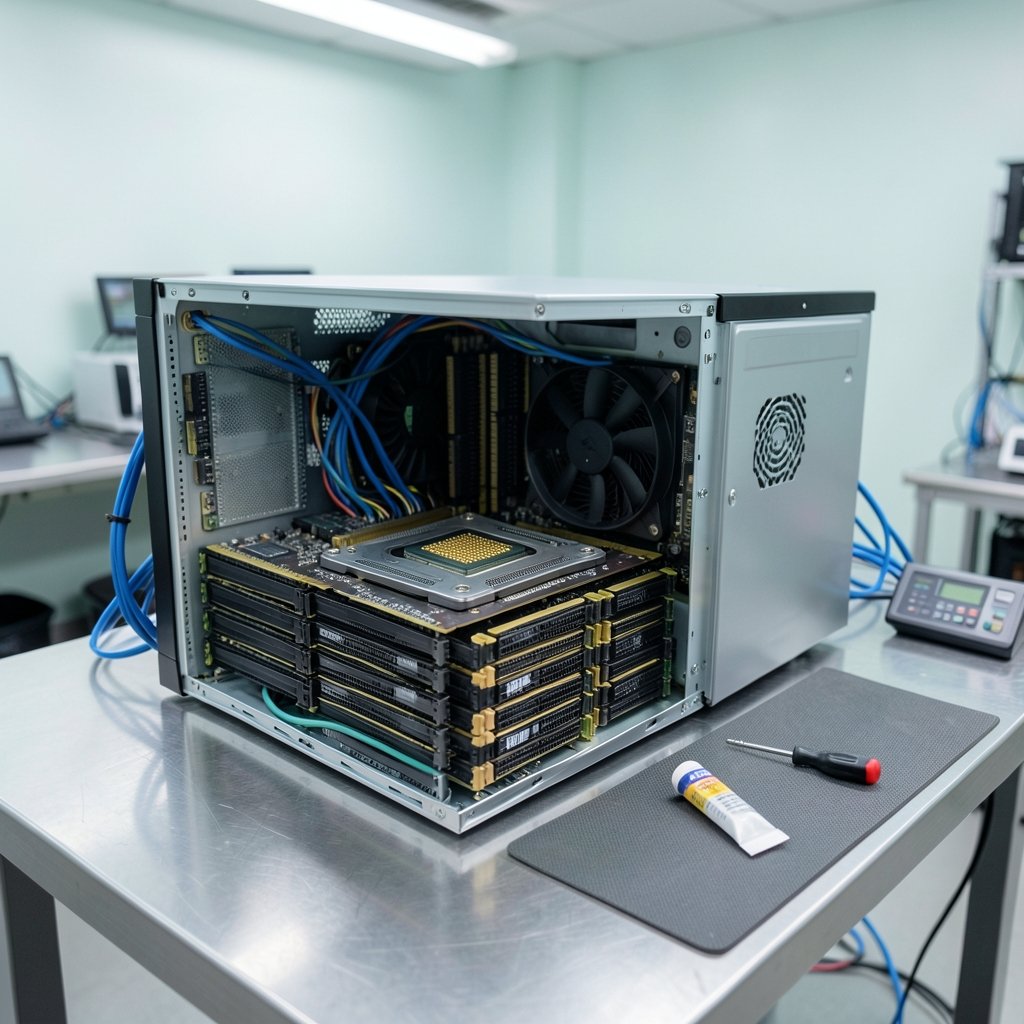
The most concrete movement comes from AMD’s 6th Gen EPYC 9006 Series. According to PRNewswire’s coverage of Supermicro’s next-generation server announcement, the H15 server portfolio built on these processors achieved multiple SPEC CPU world records on 2U Hyper and CloudDC systems.
The headline numbers from that same announcement are the ones buyers should write down. The H15 generation delivers up to 33% more cores, 2x PCIe bandwidth, and 1.6 TB/s of memory bandwidth per socket. Those are not marketing round numbers; they map directly to workload behavior. More cores per socket changes your virtualization density math. Doubled PCIe bandwidth changes how many accelerators or NVMe drives you can feed without starving them. Memory bandwidth per socket is the number that decides whether an inference job runs at full speed or waits on data.
HPE has also moved, launching two ProLiant Gen13 servers built on the 6th Gen AMD EPYC processors, aimed at AI inference, agentic AI, data analytics, virtualization, and simulation workloads. The company paired the compute refresh with security and management features, which is the pattern to expect across this generation: the CPU is the headline, but the platform-level security and lifecycle tooling is where the differentiation lives.
What the core and bandwidth jump means in practice
A 33% core increase per socket is not automatically a 33% throughput gain. It depends entirely on whether your workload scales with cores or with memory bandwidth. Dense container hosts and parallel batch jobs tend to benefit most. Single-threaded licensing-bound databases may see less, and their per-core licensing costs can rise if you are not careful about how you count.
The 1.6 TB/s per socket memory bandwidth figure is the more interesting one for AI inference. Inference is frequently memory-bandwidth-bound rather than compute-bound, so a platform that feeds the cores faster can improve tokens-per-second without any change to the model. That is a genuine reason to refresh beyond the spec sheet.
The 2x PCIe bandwidth story connects to the storage launches below. If you are planning an all-flash tier, the interconnect between CPU and drives is now less likely to be the bottleneck.
Supermicro’s all-flash storage push and PCIe Gen 6
Supermicro announced new extensions to its AMD EPYC-based all-flash storage server portfolio, with the first systems now shipping. The Petascale system is powered by the 6th Gen AMD EPYC 9006 Series, and more products will follow as AMD launches additional SP8 CPU versions, per Supermicro’s own announcement.
The technical claim worth noting: these are the first storage products supporting the PCIe Gen 6 I/O specification, with 100% greater sequential read bandwidth over PCIe Gen 5. That is a doubling of the pipe, not a marginal bump.
Supermicro validated the platform across its CloudDC, GrandTwin, and Hyper families with software-defined storage partners including Hammerspace, IBM, MinIO, Nutanix, Scality, VAST Data, VDURA, and WEKA. That partner list is the part most readers skip, and it is arguably the most useful detail in the announcement. A storage server is only as good as the software layer certified on it. If your SDS vendor is on that list, the integration risk drops sharply.
The catch nobody mentions in the press release
Doubling sequential read bandwidth does very little for random small-block workloads. If your storage tier serves databases with 4K random reads, PCIe Gen 6 will not transform your numbers. It matters for AI training data pipelines, media processing, backup targets, and analytics scans, where large sequential transfers dominate.
The other practical issue is fabric. A Gen 6 storage server plugged into a Gen 5 switch or a Gen 5 NIC gets you nothing. Budget for the whole path, not the box alone. This is the single most common mistake in storage refresh planning, and it shows up after the hardware arrives.
Intel Xeon Diamond Rapids: visible, but not yet buyable
Intel’s next-generation server CPU is showing up in physical systems. A Bull Sequana XH31600 compute blade displayed at SC26 carried four Intel Xeon Diamond Rapids packages, arranged as two dual-socket compute nodes with 16-channel memory each, as ServeTheHome reported from the show floor.
That is a meaningful signal. Physical packages in a partner chassis mean the socket and platform design are far enough along to build around. The LGA9324 socket had already been seen covered by an ASRock Rack board at OCP Summit 2026.
But visible hardware at a conference is not a shipping product. There is no pricing, no SKU list, and no order date in what has been shown. Readers planning an Intel refresh should treat Diamond Rapids as a 2027 planning assumption rather than a current purchase, and should verify availability with their vendor rather than relying on trade-show coverage.
The 16-channel memory configuration is the detail worth tracking. Memory channels per socket drive bandwidth, and bandwidth drives AI inference performance. If Intel ships 16-channel platforms broadly, the competitive pressure on memory bandwidth in this generation will be real.
The rest of the launch wave: edge, sovereign AI, and Arm
Not every launch is a data center CPU refresh. Three other threads are worth tracking because they affect different buyers.
Edge HPC. Avalue launched the HPS-GNRU1A 1U high-density server and HPM-GNRUP industrial server board, combining the Intel Xeon 6 platform with PCIe Gen 5 and high-density NVMe storage. The pitch is real-time processing and low latency outside traditional data centers. If you run inference at a factory or retail site, this category now has credible options.
Sovereign AI. Fujitsu launched the FUJITSU-MONAKA processor and MONAKA Server, targeting sovereign AI infrastructure, and plans to sell the processor globally as a stand-alone product to cloud operators, data center operators, and server vendors. The driver is straightforward: governments and regulated industries want tighter control over where AI systems are built and how supply chains are monitored. That is a procurement requirement, not a performance one, and it changes shortlists in ways benchmarks never capture.
Arm in the data center. A “Vera” CPU with 88 custom Armv9.2 cores, 176 threads through physical resource partitioning, and native FP8 support has been described in trade coverage. Native FP8 on the CPU is unusual and points at a specific niche: small AI workloads that do not justify an accelerator.
| Launch | Status | Who should care |
|---|---|---|
| AMD EPYC 9006 systems (Supermicro H15, HPE ProLiant Gen13) | Shipping | General refresh, virtualization, AI inference |
| Supermicro all-flash Petascale with PCIe Gen 6 | Shipping | AI training pipelines, analytics, SDS users |
| Intel Xeon Diamond Rapids | Shown in hardware, not buyable | 2027 planning |
| Fujitsu MONAKA | Launched, sovereign AI focus | Regulated and public-sector buyers |
| Avalue Xeon 6 edge systems | Launched | Edge inference, industrial sites |
| Arm “Vera” CPU | Described in trade coverage | Niche CPU-side AI workloads |
How to read a launch announcement without getting fooled
After watching several of these cycles, a few habits separate good decisions from expensive ones.
Check the verb. “Ships” means inventory. “Announces” means intent. “Unveils” and “showcases” usually mean a demo. The verb is the most reliable signal in the entire document.
Find the comparison baseline. “100% greater sequential read bandwidth” is measured against PCIe Gen 5, not against your current server. Your actual gain depends on what you own today.
Look for the software validation list. Certified operating systems, hypervisors, and SDS partners tell you how much integration work you will do yourself. A short list means a longer project.
Separate per-socket from per-system numbers. Vendors quote per-socket memory bandwidth because it sounds larger. Your application sees the whole node.
Do not buy the interconnect halfway. If you adopt PCIe Gen 6 storage, check the NICs, switches, and cabling. If you adopt a new CPU generation, check that your accelerator and drive choices can use the added lanes.
Ask about power and cooling. Higher core counts and faster memory raise per-socket power. The 1U and blade designs in this cycle assume liquid or high-airflow cooling in many configurations. Verify what your facility can actually support before you commit.
There is a hardware-side parallel worth remembering here: just as router hardware offloading moves work off the general-purpose CPU so the fast path stays fast, modern server platforms increasingly push storage and network functions onto dedicated silicon. Knowing where the work actually executes helps you judge whether a spec sheet translates into real throughput.
Where this leaves buyers planning a refresh
The practical split is clean. If you need capacity now, the AMD EPYC 9006 platform is the shipping option, with Supermicro and HPE both offering systems and Supermicro’s storage line already validated against major SDS vendors. If you need maximum sequential storage throughput for AI pipelines, PCIe Gen 6 all-flash is real and shipping, provided the rest of your fabric supports it.
If you are an Intel shop, the honest answer is to plan, not to buy. Diamond Rapids exists in physical hardware and will arrive, but there is no public pricing or availability yet. Locking a refresh to an unshipped platform is how projects slip a quarter.
And if your constraint is regulatory rather than technical, the sovereign AI and edge categories now have genuine products. Those shortlists get decided by supply chain provenance and data residency, not by core counts.
One more consideration for anyone running game servers or small hosting setups on the side: the same generational churn affects the secondhand market and the hosting providers you rent from. If you are comparing options for a community server, the guides on which Minecraft hosting services support mods and the best Valheim hosting for small groups cover the practical side of that decision without requiring you to buy hardware at all.
For teams standardizing on security hardware alongside the server refresh, the same rule applies: verify what is actually shipping. A hardware security key backup strategy is worth planning before, not after, you deploy new platform-level security features across a fleet.
Conclusion
This launch cycle rewards patience and punishes assumptions. AMD’s EPYC 9006 generation is shipping in real systems from multiple vendors, with measurable gains in cores, PCIe bandwidth, and memory bandwidth per socket. Supermicro’s all-flash PCIe Gen 6 storage is shipping and validated across a broad software-defined storage partner list. Intel’s Diamond Rapids is visible in partner hardware but not yet a purchasable product. Fujitsu, Avalue, and the Arm ecosystem are filling in the edges with sovereign, industrial, and niche AI options.
The reader who benefits most is the one who reads the verb, checks the baseline, confirms the software validation, and budgets for the whole data path rather than the headline component. Launches are announcements. Refreshes are projects. Keeping those two things separate is the entire skill.
FAQ
What does it mean when a server is announced as “shipping”?
It means the vendor claims inventory exists and orders can be placed. It does not guarantee immediate delivery, because channel allocation and configuration lead times still apply. Always confirm a delivery date on a quote before you treat a shipping announcement as available capacity.
Is PCIe Gen 6 storage worth upgrading for?
It depends on your access pattern. PCIe Gen 6 roughly doubles sequential read bandwidth over Gen 5, which helps AI training pipelines, analytics scans, media processing, and backup targets. Random small-block database workloads see far less benefit, and the upgrade only pays off if your NICs, switches, and cabling also support the faster link.
Can I buy an Intel Xeon Diamond Rapids server now?
No. Diamond Rapids packages have been shown in partner hardware at trade shows, including a Bull compute blade with dual-socket nodes and 16-channel memory per node. But no public pricing, SKU list, or order date has been released, so it belongs in 2027 planning rather than current procurement.
How much faster is AMD’s 6th Gen EPYC than the previous generation?
The published platform claims are up to 33% more cores, 2x PCIe bandwidth, and 1.6 TB/s of memory bandwidth per socket. Real application gains depend on whether your workload scales with cores, memory bandwidth, or I/O. Core-dense parallel workloads benefit most; single-threaded or license-bound applications may see less.
Why does the software-defined storage partner list matter?
A storage server is only as good as the software certified to run on it. Supermicro validated its all-flash platform with partners including Hammerspace, IBM, MinIO, Nutanix, Scality, VAST Data, VDURA, and WEKA. If your SDS vendor is on that list, integration risk and validation time drop substantially.
What should I check before committing to a server refresh?
Confirm the verb in the announcement, identify the comparison baseline, separate per-socket from per-system figures, verify software and hypervisor certification, and check that your network fabric, power, and cooling can support the new platform. Budgeting for the whole data path rather than the headline component prevents the most common post-deployment surprise.