Can NASA really put people back on the Moon in 2026 using three rockets, two landers, and a two-week surface stay? That is the shorthand version of Artemis III that circulates online, and like most shorthand, it is partly right, partly muddled, and missing the parts that actually decide whether the mission flies. This piece separates the verified architecture from the internet compression, explains what each number means, and flags where the public record simply does not settle the question.
What Artemis III Is Supposed to Be
Artemis III is planned as the first crewed lunar landing since Apollo 17 in December 1972. That much is not in dispute. NASA’s Artemis program pairs the agency’s own Space Launch System (SLS) rocket and Orion spacecraft with a commercially built Human Landing System (HLS). NASA selected SpaceX’s Starship HLS for the first landing in April 2021, then opened a second competition and selected Blue Origin’s Blue Moon lander in May 2023 as a second provider.
That second selection is where the “two landers” language comes from, and it is also where the confusion starts. Blue Origin’s lander is generally associated with a later mission, widely discussed as Artemis V, not with Artemis III itself. So “two landers” is a real fact about the program and a misleading fact about this specific flight.
The crew has not been announced. NASA named Reid Wiseman, Victor Glover, Christina Koch, and Jeremy Hansen to Artemis II, the crewed lunar flyby that must precede the landing, on April 3, 2023. Artemis III’s astronauts remain unnamed in the public record. Anyone who tells you otherwise is guessing.
Three Rockets: What the Number Actually Means
The “three rockets” framing is the most compressed claim in the whole story, and it deserves unpacking.
Artemis III as commonly described involves a launch campaign rather than a single liftoff. The SLS/Orion stack carries the crew. Starship HLS must already be waiting in lunar orbit, and getting it there requires launching a Starship, refueling it in orbit from tanker flights, and sending it onward. The exact number of tanker launches has never been fixed publicly, because it depends on propellant boil-off rates and how well the orbital depot performs. (Starship)
That means “three rockets” is best read as press shorthand for a multi-launch architecture, not an official count. The honest version: one SLS/Orion crew launch, plus an unspecified number of Starship launches for the lander and its propellant. Treat any precise tanker count you see quoted as unverified unless it comes from a NASA source document or an inspector general report.
| Claim | Status | What the record shows |
|---|---|---|
| Three rockets | Press shorthand | Multi-launch campaign; exact tanker count never fixed publicly |
| Two landers | Program-level fact | SpaceX HLS for the first landing; Blue Origin selected as second provider, associated with a later mission |
| 14 days | Plausible but unconfirmed | Early concepts mentioned roughly a week; later planning discussed longer stays |
| 2026 launch | Uncertain | Target had slipped repeatedly and was widely expected to move again |
Two Landers: A Program Fact, Not a Mission Fact
Here is where practical readers get tripped up. The phrase “two landers” sounds like Artemis III carries two landing vehicles. It does not, as far as the public record shows. It means NASA has contracted two competing providers so the program is not dependent on a single company.
That distinction matters for schedule risk. A single-provider architecture means one company’s technical problems become the agency’s problems. A two-provider architecture spreads that risk, but it does not speed up the first landing, because the second provider’s vehicle is not on the critical path for Artemis III.
If you are following this program and want to avoid being misled, apply a simple test to every headline: does the claim describe the mission or the program? Most confusion about Artemis dissolves the moment you ask that question.
The 14-Day Surface Stay
The “14 days” figure plausibly refers to the surface stay duration discussed for Artemis III, but it cannot be confirmed as the official number from the available record. Early concepts mentioned roughly a week on the lunar surface. Later planning discussed longer stays. The gap between those two positions is exactly the kind of detail that gets flattened into a single confident number online.
Why does the duration matter so much? Because surface stay drives everything else. A longer stay demands more consumables, more power, more thermal management, and a lander with more habitable volume. It also raises the stakes on the orbital refueling step, since the lander must arrive with enough propellant margin to leave again. When you see a surface-stay number, you are really looking at a systems-engineering decision wearing a simple disguise.
The practical takeaway for anyone tracking the mission: watch for a primary NASA source stating the surface duration, not a secondary summary. The agency’s own Artemis pages and its Office of Inspector General reports on HLS are the places where schedule and architecture details actually get pinned down.
Why 2026 Is the Least Certain Number of All
The 2026 target has slipped repeatedly and was widely expected to move again. That is the most defensible statement the public record supports. Artemis II’s timing directly affects Artemis III, because the crewed flyby must happen first, and any delay upstream cascades downstream.
There is a pattern worth naming here, because it repeats across ambitious space programs. Schedules are set optimistically to secure funding and political support, then revised as hardware meets reality. That is not cynicism; it is how large, novel engineering efforts have always run. The Apollo program itself compressed years of risk into a deadline set by politics rather than physics.
For readers trying to judge the 2026 claim, the useful question is not “will it slip?” but “what has to be true for it not to slip?” Three things: Artemis II flies on schedule, Starship achieves reliable orbital refueling, and the HLS lands and returns uncrewed in a demonstration. Any one of those slipping moves the date.
That same dynamic of ambitious timelines meeting hard engineering shows up across the space sector. The comparison between Rocket Lab and SpaceX’s very different market caps is a useful reminder that valuation and execution run on separate clocks. And the way companies publicly restructure their bets, as in Tesla’s 2026 hardware pushes across robotaxi, Semi, and Roadster, follows a similar pattern of announcement, revision, and delivery.
How to Read Artemis Coverage Without Getting Fooled
Most bad Artemis coverage fails in predictable ways. Here is what actually works when you are sorting signal from noise.
- Check whether the claim is about the mission or the program. “Two landers” is a program fact. It does not mean two landers fly on Artemis III.
- Look for a primary source. NASA’s Artemis pages, HLS selection announcements from 2021 and 2023, Office of Inspector General reports, and GAO reports are where numbers get documented. Secondary summaries routinely drop the caveats.
- Distrust precise counts without a document behind them. Tanker launch counts are the classic example. If a number appears with no source, it is probably an estimate someone made once and the internet repeated.
- Separate crew from hardware. Crewed flights and uncrewed demonstrations have different schedules and different risk tolerances.
- Watch Artemis II first. It is the leading indicator. If Artemis II moves, Artemis III moves.
The most common mistake people make is treating a program-level fact as a mission-level fact. The second most common is treating an old target date as a current one. Both are easy to avoid with one habit: check the date on the source before you believe the number.
What the Architecture Actually Requires
Strip away the shorthand and Artemis III depends on a chain of technical achievements, each of which has to work before the next one matters.
SLS and Orion must deliver crew to lunar orbit reliably. This is the most mature part of the stack, though it is not cheap and not reusable in the way commercial launch is.
Starship HLS must reach lunar orbit with enough propellant to land and ascend. That requires orbital cryogenic propellant transfer at a scale never demonstrated, which is the quiet hard problem in the whole plan. Transferring supercold propellants in orbit, without excessive boil-off, is a genuinely novel capability.
The lander must touch down, support a crew for the planned surface duration, and lift off again. Every one of those steps has failure modes that a two-week stay amplifies.
The rendezvous must work. Crew transfer between Orion and the lander in lunar orbit is a choreography with little margin for error.
None of this is a reason to think the mission will not happen. It is a reason to treat the specific numbers in the headline as provisional. The program has real momentum and real hardware. The schedule is the soft part.
Where the Public Record Stops
It is worth being explicit about the limits here, because a lot of coverage is not. As of the available record, it cannot be confirmed whether Artemis III still targets 2026 or has slipped to 2027 or later. It cannot be confirmed whether “two landers” refers to two providers or two Starship vehicles in a single mission. The exact tanker launch count is not public. The official surface-stay duration is not pinned down.
That is not a failure of research. It is the actual state of a program in motion. Anyone presenting all four numbers as settled facts is overstating what is known.
The pattern of public statements shifting as engineering realities land is familiar elsewhere too. The sequence of statements around BioWare’s closure and Mass Effect’s future shows how corporate narratives get revised in stages, each one more concrete than the last. Space programs do the same thing, just with longer gaps between statements.
Conclusion
Artemis III is real, ambitious, and less settled than the headline “three rockets, two landers, 14 days, 2026” makes it sound. The three rockets are shorthand for a multi-launch campaign whose tanker count is not public. The two landers describe a program with two providers, not a single mission carrying two vehicles. The 14 days is a plausible surface-stay figure that has not been confirmed as official. And 2026 is the least certain number of all, because it depends on Artemis II, orbital refueling, and an uncrewed landing demonstration all landing on schedule.
The useful move for any reader is to separate mission facts from program facts, and to check whether a number comes with a primary source behind it. Do that, and the next Artemis headline you read will tell you far more than it otherwise would.
FAQ
Will Artemis III really launch in 2026?
It cannot be confirmed from the available record. The 2026 target had slipped repeatedly and was widely expected to move again. The date depends on Artemis II flying first, Starship achieving reliable orbital refueling, and an uncrewed HLS demonstration succeeding. Any one of those slipping pushes the date.
What does “three rockets” mean for Artemis III?
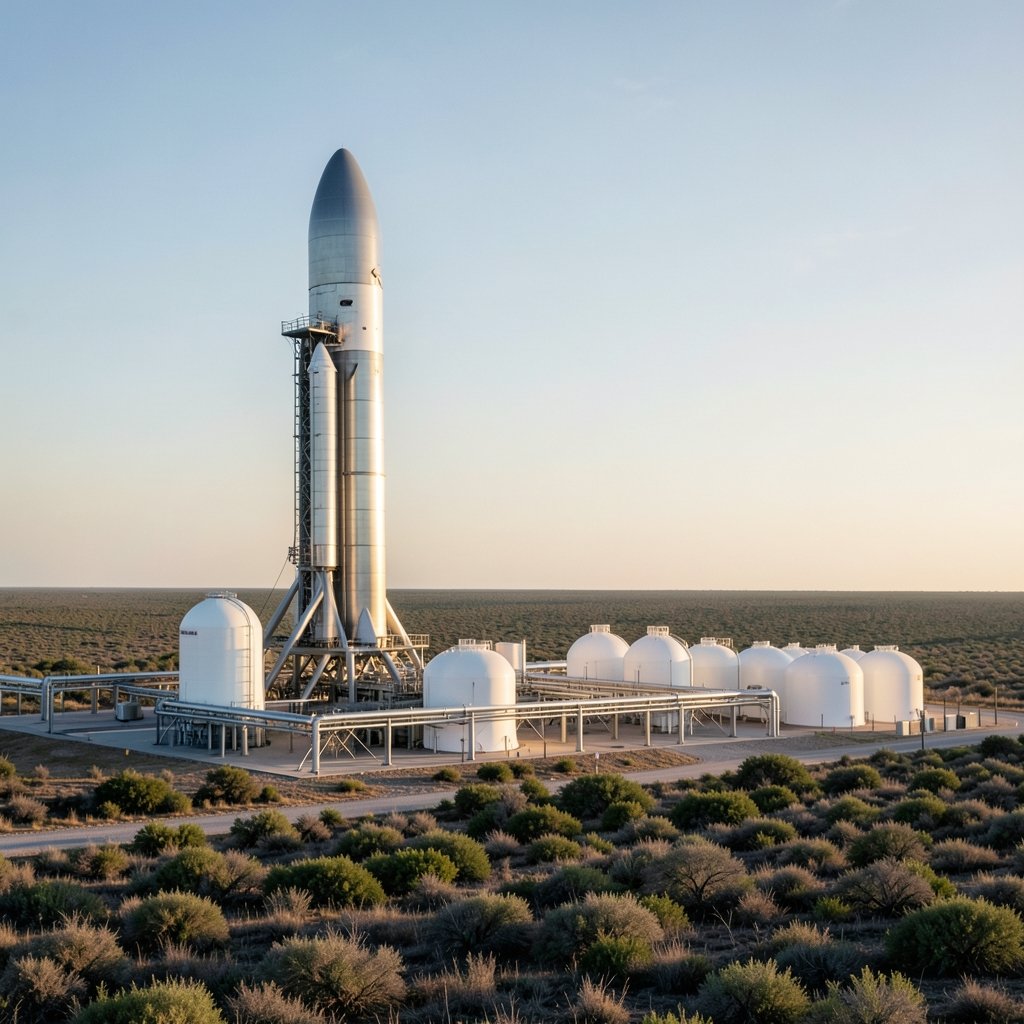
It is press shorthand for a multi-launch campaign, not an official count. The architecture involves one SLS/Orion crew launch plus Starship launches for the lander and its propellant, with orbital refueling before the lunar landing. The exact number of tanker flights has never been fixed publicly because it depends on boil-off rates and depot performance.
Does Artemis III use two landers?
No, not as far as the public record shows. NASA has contracted two providers, SpaceX’s Starship HLS for the first landing and Blue Origin’s Blue Moon as a second provider associated with a later mission. “Two landers” describes the program’s risk-spreading strategy, not the payload of a single flight.
Is the 14-day surface stay confirmed?
It is plausible but unconfirmed. Early concepts mentioned roughly a week on the lunar surface, while later planning discussed longer stays. The official figure is not pinned down in the available record, and surface duration drives consumables, power, and lander volume, so it is a major design decision rather than a detail.
Who is on the Artemis III crew?
The crew has not been announced. NASA named Reid Wiseman, Victor Glover, Christina Koch, and Jeremy Hansen to Artemis II on April 3, 2023. Artemis III’s astronauts remain unnamed in the public record, so any crew list you see circulating should be treated as speculation.
Where should I look for reliable Artemis updates?
Go to primary sources: NASA’s Artemis program pages, the HLS selection announcements from 2021 and 2023, NASA Office of Inspector General reports on Artemis and HLS, and GAO reports on SLS and HLS. These documents contain schedule and launch-count details that secondary summaries routinely drop.