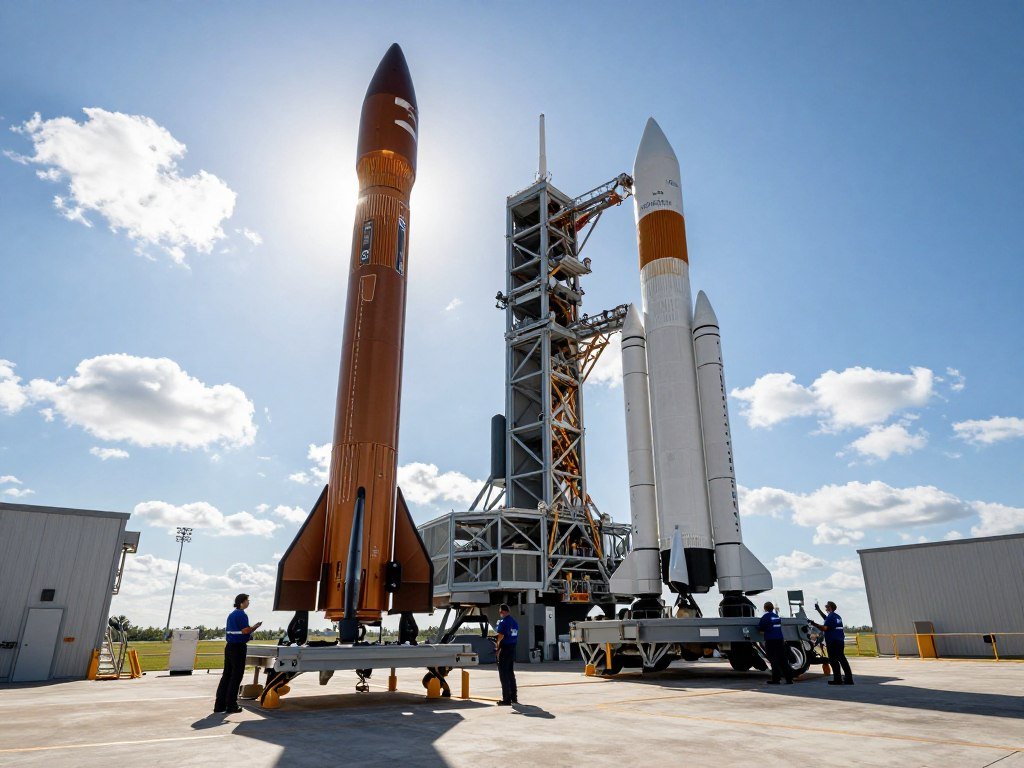
The headline’s trillion-versus-billion contrast is a useful starting point, not a complete verdict on either company. Market capitalization is a public company’s share price multiplied by its outstanding shares. The gap points to two companies with different growth stories, stock histories, and business risks.
A date-specific market value is only one measure of a company, and stock prices can change quickly. A closer comparison also needs to account for revenue, control, launch hardware, and development schedules. Each helps explain what the headline can show and what it leaves out.
The numbers do not describe two businesses on equal terms. Readers should compare the dates and business lines behind the numbers before treating the headline as a like-for-like score.
Key Takeaways
- Market capitalization changes with share prices and measurement dates.
- SpaceX and Rocket Lab report results over different periods.
- Voting power does not equal economic ownership.
- Electron, Falcon 9, Starship, and Neutron serve different roles.
- Connectivity and space systems add business lines beyond launch.
What Does Rocket Lab vs SpaceX 30B vs 2 2T Market Cap 2026 Really Show?
The October readings put SpaceX at about $2.2 trillion on October 9 and about $2.0 trillion on October 20, while Rocket Lab’s October 30 market cap was $32.75 billion. Those readings use different dates, so they do not form a same-day ratio. The dates matter as much as the rounded numbers.
SpaceX’s two market values reflect different closing stock prices, not a fixed company value. Its stock closed at $162.57 on October 9, then $147.79 on October 20. Rocket Lab stock stood at $55.00 on October 30, when its public-market snapshot put its market cap at $32.75 billion.
| Company | Date | Closing stock price | Market value or market cap |
|---|---|---|---|
| SpaceX | October 9, 2026 | $162.57 | About $2.2 trillion |
| SpaceX | October 20, 2026 | $147.79 | About $2.0 trillion |
| Rocket Lab | October 30, 2026 | $55.00 | $32.75 billion |
A market-cap comparison is only as precise as its dates. A changing stock price changes the public value attached to a company.
Why the dates change the comparison
The title’s $30 billion and $2.2 trillion shorthand hides the different dates behind those readings. SpaceX’s two values alone show how a share-price move can shift the market value. Rocket Lab’s October 30 figure is a public-market snapshot, not a permanent valuation.
Share prices can move for many reasons, including new financial results and broader market changes. A stock price also does not show how many shares a company has issued. That is why price alone cannot tell readers which company has the larger market cap.
What market capitalization measures
Market capitalization multiplies the stock price by the number of outstanding shares. It measures the public market value of those shares, not revenue, cash flow, or the cost of buying every part of a business.
Readers comparing company size with stock performance should keep those measures separate. A guide to market capitalization explains how a company’s total share value differs from a stock’s performance over a chosen period. Rocket Lab’s October 30 market snapshot lists the $55.00 stock price and $32.75 billion market cap.

Stock price, market capitalization, and business value answer different questions. Check each company’s measurement date before comparing a stock price or market value.
How Far Apart Are Their Revenue and Loss Profiles?
SpaceX reported $18.67 billion of 2025 revenue, while Rocket Lab’s trailing-12-month revenue was $769.15 million as of October 2026. The reporting windows differ, which limits a direct year-for-year comparison. Both figures show revenue, not profit.
Each company also reported a net loss for its stated period. SpaceX’s net loss was $4.95 billion in 2025. Rocket Lab’s net loss was $165.46 million for the trailing 12 months as of October 2026.

| Metric | SpaceX | Rocket Lab | Reporting period |
|---|---|---|---|
| Revenue | $18.67 billion | $769.15 million | SpaceX: 2025; Rocket Lab: trailing 12 months as of October 2026 |
| Net loss | $4.95 billion | $165.46 million | SpaceX: 2025; Rocket Lab: trailing 12 months as of October 2026 |
| Reporting period | Calendar year 2025 | Trailing 12 months | Rocket Lab period ends as of October 2026 |
SpaceX’s reported 2025 scale
SpaceX’s 2025 revenue gives it a much larger reported scale than Rocket Lab’s trailing figure. Revenue is money earned from business activity before costs and other expenses are deducted. It cannot, by itself, show whether a company made money.
The net-loss row makes that distinction clear. SpaceX reported a $4.95 billion net loss alongside its annual revenue. The loss is a separate measure of financial results, not a subtraction readers should guess from revenue alone.
Rocket Lab’s trailing revenue
Rocket Lab’s trailing-12-month total covers a rolling period rather than one calendar year. That timing can matter when a company grows or changes the mix of work it delivers. It also means the two revenue figures do not cover matching periods.
Revenue and losses can help describe financial scale, but they do not explain every business line or contract. Keep the reporting window beside each figure whenever you compare their financial scale.
Who Controls SpaceX, and What Does Musk Own?
Musk’s voting control is greater than a simple one-share, one-vote structure would suggest. Class B shares carry extra votes: each has 10 votes, while each Class A share has one. That structure gives some shares more say in company decisions.
After the June 2026 offering, Musk held 82.4% of SpaceX’s total voting power. He also held about 91.6% of the outstanding ten-vote Class B stock. Those percentages describe different measures and do not reveal his exact share count.

SpaceX had 13.18 billion Class A and Class B shares outstanding as of July 28, 2026. That total counts both share classes across the company. It does not say how many shares Musk personally held.
- Total voting power: Musk held 82.4% after the June 2026 offering.
- Class B ownership: He held about 91.6% of the outstanding ten-vote shares.
- Outstanding shares: SpaceX had 13.18 billion Class A and Class B shares combined as of July 28, 2026.
The distinction matters because ownership and voting rights are related but not identical. A share count measures shares held; voting power measures the votes those shares can cast. The class of each share affects that second measure.
An ownership and voting-control breakdown also distinguishes shares held outright from awards and options. That difference can change a reported share count without changing the meaning of the voting percentages above.
Readers cannot calculate Musk’s personal share count from voting percentages alone. Treat a voting percentage as a measure of control, not as a standalone measure of economic ownership.
What Can Each Rocket Carry?
Electron’s 300-kilogram low-Earth-orbit design capacity serves a very different payload scale from Starship’s more-than-100-metric-ton design target. The vehicles serve different payload needs: Electron is built for small payloads, while SpaceX designed Starship for far larger loads.
Starship’s stated capacity applies to a fully reusable configuration. SpaceX describes Starship as the spacecraft and Super Heavy as its booster. The two are parts of one system, but they are not interchangeable vehicles.
Electron and Falcon 9 serve different payload scales
Rocket Lab designed Electron to carry up to 300 kilograms to low Earth orbit. That focus supports missions for smaller payloads, including satellites that need a dedicated ride. Falcon 9 also gives SpaceX a launch option between Electron and its larger Starship system.
A launch vehicle’s capacity depends on the mission and orbit, so one capacity figure cannot describe every flight. The key comparison here is the marked difference between Electron’s small-payload design and Starship’s much larger target. A customer’s mission needs shape which capacity matters.
Starship’s planned capacity and dimensions
Starship is 124 meters tall and 9 meters in diameter. Its propellant capacity is 1,600 metric tons. Super Heavy has a propellant capacity of 3,650 metric tons and uses 33 Raptor engines powered by liquid methane and liquid oxygen.
Those figures describe system specifications, not payload mass. Propellant capacity measures how much fuel the components can hold. It is different from the total loaded vehicle weight, which includes the hardware and depends on loading configuration.
The design aims for full reuse, but a design capacity is not the same as a payload flown on a routine service. The Starship system’s stated payload capacity describes a fully reusable configuration, rather than a promise that every mission carries the same load.
Separate payload capacity, propellant capacity, and fully loaded weight when comparing rockets.
How Much Does NASA Pay SpaceX for Launches?
NASA’s Falcon 9 launch awards range from about $69 million for COSI to about $100 million for NEO Surveyor in the examples here. Those are mission awards, while a list price describes a standard commercial offer. Contract scope affects what each amount covers.
The $946 million Crew modification covers three missions and related services, not one launch. NASA set readiness dates in 2027 and 2028 for Crew-15, Crew-16, and Crew-17, with work running through 2030.
| Customer or program | Vehicle or service | Award value | Scope or timing |
|---|---|---|---|
| COSI | Falcon 9 launch | About $69 million | 2024 mission |
| NEO Surveyor | Falcon 9 launch | About $100 million | 2025 mission |
| Dragonfly | Falcon Heavy launch | About $256.6 million | NASA award in November 2024 |
| Crew-15 through Crew-17 | Dragon missions and related services | $946 million | Three missions; readiness dates in 2027 and 2028; work through 2030 |
NASA’s September 2026 modification brought SpaceX’s total Commercial Crew Transportation Capability contract value to $5.92 billion. CNBC reported the three-mission, $946 million contract modification. That total includes the wider contract, not just the latest change.
NASA’s awards show why a single per-launch number can mislead. COSI and NEO Surveyor are Falcon 9 launch awards, while Dragonfly uses Falcon Heavy. Crew contracts cover crewed missions and related work over several years.
The 2026 standard commercial Falcon 9 list price was $74 million. That price is a separate reference point, not a claim that NASA paid the same rate for each mission. A mission award can reflect its own scope and timing.
The Space Force assigned SpaceX five missions for $714 million in October 2025. The order included four Falcon Heavy missions and one Falcon 9 mission. It is another multi-mission award, not a single-launch price.
Compare the scope of the work, not just the dollar amount, before treating two government awards as equivalent launch prices.
What Drives Launch Pricing and Reuse Economics?
A Falcon 9 customer price, SpaceX’s internal cost for a reused booster, and a rideshare rate per kilogram describe three different things. The service purchased matters: customers pay for a launch service, while internal cost estimates describe SpaceX’s side of the business.
An internal cost estimate is not the price charged to a customer. Mission needs and the type of service affect what a customer buys. A dedicated mission and a shared ride do not offer the same arrangement.
Three figures help keep the pricing terms apart:
- Standard list price: Falcon 9’s commercial list price was $74 million in 2026.
- Estimated reused-booster internal cost: SpaceX’s estimated cost to fly a reused Falcon 9 booster was $15 million in 2026.
- Rideshare rate per kilogram: SpaceX’s estimated rate was about $7,000 per kilogram in 2026.
The list price is a commercial price, not an estimate of what it costs SpaceX to fly. The reused-booster cost is an internal estimate, not an offer to customers. Those figures answer different questions about launch economics.
A rideshare rate is a price per kilogram, rather than a price for a dedicated rocket. It lets a customer buy space on a mission carrying other payloads. The final fit depends on whether the schedule and orbit suit that satellite.
The Transporter rideshare rate was $6,500 per kilogram in March 2023. SpaceX’s estimated rate was about $7,000 per kilogram in 2026. Since these rates describe different dates, they are not a same-period price comparison.
Compare like-for-like services and dates before using a launch price as a measure of operating economics.
How Different Are the Two Companies’ Revenue Mixes?
SpaceX and Rocket Lab both sell launch-related services, but their revenue comes from different combinations of businesses. Launch is only part of the picture: SpaceX combines connectivity with launch and spacecraft work, while Rocket Lab also sells space systems.
SpaceX’s Connectivity segment generated $11.39 billion in 2025 revenue and $4.42 billion in operating profit. The segment includes Starlink. SpaceX’s Space segment, which includes launch, Dragon, and Starship, generated $4.09 billion in 2025 revenue.
SpaceX combines connectivity and launch
Starlink gives SpaceX a connectivity business alongside its launch work. Its satellite network supports a service that customers buy beyond a rocket flight. A Starlink satellite deployment shows one way launch activity supports the network, though the launch itself is not the connectivity service.
The Space segment groups several activities, including launch, Dragon, and Starship. Its revenue therefore does not mean every customer bought a launch. The exact product or service matters when readers interpret a segment total.
Rocket Lab combines systems and launch services
Rocket Lab’s FY2025 revenue was $601.8 million. Space systems accounted for 67% of revenue, and launch services accounted for 33%. Its average revenue per Electron launch was $8.5 million in 2025.
Space systems revenue can come from spacecraft hardware and related work, even when a customer’s purchase is not a launch. That is a key difference between launch revenue and the wider business. Rocket Lab had 2,600 employees as of October 2026, an operating detail rather than proof of profit.
Read each company’s launch revenue alongside the other business lines that support its overall results.
Which Rocket Is Further Along in Development?
Starship had reached orbit by Flight 14, while Neutron’s first launch was expected in 2027. That is the clearer flight milestone: Starship had completed orbital flight, while Neutron remained in development.
Rocket Lab expected Neutron’s inaugural launch in 2027, not in its Q4 2026 pad-delivery window. A delivery target for a launch pad and a first flight are separate steps in a rocket program.
Starship has reached an orbital milestone
Starship’s first 13 test flights were suborbital. On September 28, 2026, Flight 14 reached orbit and deployed 26 Starlink V3 satellites. That made Flight 14 a clear change in the program’s flight record.
Reaching orbit and deploying satellites mark a major test event, but they do not make every future mission routine. Test flights can still show where a design needs work. Each milestone answers a different question about the vehicle.
Neutron is still approaching its first flight
Rocket Lab’s October 14, 2026 SEC filing said Neutron’s inaugural launch was expected in 2027. The company targeted pad delivery for Q4 2026. Pad delivery supports launch preparations, but it does not mean Neutron has flown.
In August 2026, Rocket Lab said the 2026 launch window was narrowing. That statement and the later 2027 first-flight expectation describe a schedule under development. A target can shift as work progresses.
The October 2026 filing’s Neutron launch expectation keeps the planned first flight distinct from pad delivery. Treat a test milestone, pad delivery, and an operational launch as separate schedule events.
Where Do Their Launch Markets Overlap?
The companies overlap most when a small-satellite customer chooses between a dedicated Electron flight and a rideshare option. Small satellites are numerous, but that fact alone does not mean Rocket Lab wins those customers.
SpaceX accounted for 83% of spacecraft launched worldwide in 2024. Spacecraft weighing less than 1,200 kilograms made up 97% of the spacecraft launched that year. Those figures count spacecraft, not total launch mass or revenue.
The difference between spacecraft counts and launch mass matters. A launch may carry several small spacecraft, while another carries a larger payload. A count of individual spacecraft cannot show how much mass each mission sent to orbit.
Customer choices can differ even when payloads are similar. Three common situations show where the companies may compete:
- Dedicated small-satellite launch: A customer may value a flight arranged for its own payload and schedule.
- Small satellite rideshare: A customer may share a larger mission with other payloads.
- Larger payload: A customer may need a vehicle designed for a much greater load.
A rideshare gives small satellites another way to reach orbit. It can compete with a dedicated Electron flight, depending on the customer’s mission needs. A large small-satellite market does not automatically turn into Rocket Lab orders.
SpaceX’s 83% share of spacecraft launched worldwide in 2024 also shows why the number of small satellites cannot stand in for market share by revenue. The figures count launched spacecraft, not launch contracts or company income. Different measures describe different kinds of market activity.
Match the customer’s payload and launch preference to the vehicle before treating market size as a share of revenue.
What Does Rocket Lab’s Backlog Commit It to?
Rocket Lab’s $2.36 billion backlog included a launch backlog of more than 90 launches at June 30, 2026. The total backlog is broader than launch work alone, so the full amount should not be read as launch revenue.
Five of the eight launches in Rocket Lab’s largest launch contract depend on Neutron. The contract covers five Neutron launches and three Electron launches, baselined for 2026 through 2029.
A large backlog includes different kinds of missions
A backlog tracks work a company has contracted to deliver in the future. Rocket Lab’s total backlog included many kinds of work, while its launch backlog counted more than 90 launches. These are related measures, but they do not mean the same thing.
Contracted work still requires delivery. A contract does not mean a launch has already taken place or that all expected revenue has been recorded. The schedule matters because customers expect the company to meet its commitments.
Neutron contracts carry schedule exposure
The largest launch contract includes eight missions across two vehicles. Three use Electron, while five rely on Neutron. That split ties much of the contract’s launch schedule to Neutron’s progress.
Baselining the launches for 2026 through 2029 sets an expected period for the work. It does not make every mission completed or guarantee the timeline will remain unchanged. Neutron development and contract delivery are linked operational tasks.
Watch whether the contracted Neutron schedule advances alongside the vehicle’s development milestones.
What Do Iridium and Cursor Mean for the Businesses?
Rocket Lab’s Iridium agreement and SpaceX’s completed Cursor acquisition point toward different kinds of business expansion. One deal is still pending: Rocket Lab agreed to buy Iridium, while SpaceX completed its Cursor acquisition on August 14, 2026.
Rocket Lab’s Iridium deal still needs shareholder and regulatory approvals. The agreement sets a price of $54 per share in cash and stock, with an enterprise value of about $8.0 billion. Closing is expected in mid-2027 if conditions are met.
Rocket Lab completed a $1.94 billion at-the-market share offering in September 2026 and said the acquisition was fully financed. That statement describes the company’s announced financing position, while closing remains subject to approvals.
SpaceX’s Cursor purchase was completed on August 14, 2026. The status is different from Rocket Lab’s agreement because one transaction has closed and the other has not. Their timing and conditions should stay distinct in a business comparison.
A possible Tesla-SpaceX combination is a separate topic from the completed Cursor purchase. A Tesla-SpaceX merger timeline discussion describes speculation, not an announced merger agreement or confirmed timetable.
Four details can help track how these moves affect the companies:
- Iridium approvals and closing: Check whether both conditions are met and the deal closes.
- Rocket Lab financing disclosures: Follow any new statements about the funding plan.
- Integration progress: Watch how the acquired business fits into operations.
- Business priorities: Note any changes to either company’s stated plans.
Keep an announced acquisition separate from a completed one until its closing conditions are met.
Which Company Fits Which Investor Goal?
A reader seeking focused launch and space-systems exposure will find that profile at Rocket Lab, while SpaceX combines launch with connectivity. The business exposure differs, even as both companies pursue growth across space-related markets.
Rocket Lab is the more focused choice for launch and space systems; SpaceX offers a broader mix that includes connectivity. Their Q2 2026 results showed strong year-over-year revenue growth, alongside reported quarterly losses.
SpaceX reported Q2 2026 revenue of $7.81 billion, up 92% year over year, and a net loss of $541 million. Rocket Lab reported Q2 FY2026 revenue of $234.07 million, up 62% year over year, and earnings of negative $49.26 million.
Focused launch and space-systems exposure
Rocket Lab fits a business case centered on launch and space systems. Its revenue mix includes both services, while its developing Neutron program adds a further execution factor. Its quarterly growth does not erase its reported loss.
Investors who prefer a more focused business profile may find that mix easier to assess. They still need to weigh contract delivery, vehicle development, and future results. A focused profile can also mean greater exposure to a narrower set of business lines.
Broader connectivity and technology exposure
SpaceX combines launch work with connectivity through Starlink. That broader mix may fit an investor seeking more than launch exposure. Its 92% year-over-year revenue growth in Q2 2026 came with a quarterly net loss.
Neither growth rate settles the comparison on its own. Rocket Lab’s 62% growth also came with a quarterly loss. Investors can use two distinct decision cases: a focused launch-and-systems profile or a wider mix that includes connectivity.
Choose a business exposure you can explain, then test it against the company’s next reported results and program progress.
A discussion of SpaceX’s Tesla Megapack purchases adds context to its wider technology activity, but those purchases are not SpaceX revenue. Choose the business exposure you can explain, then check its next reported results against the assumptions behind that choice.
Conclusion
The headline gap captures scale, but it does not make Rocket Lab and SpaceX the same kind of investment. The key difference is exposure: one offers a more focused mix of launch and space systems, while the other includes connectivity alongside space work.
A market-cap contrast cannot replace a look at business lines, financial results, or program progress. The next financial updates and vehicle milestones can show whether each company’s plans are moving as expected. Recheck each company’s latest filings and stated program milestones before acting on an outdated comparison.
FAQ
How many shares does Elon Musk own in SpaceX?
The voting percentages do not give Musk’s exact share count. After the June 2026 offering, he held about 91.6% of the outstanding Class B shares and 82.4% of total voting power. Class B shares carry ten votes each, so the voting-power figure reflects share class as well as ownership. It should not be used as a direct count of his shares.
How much bigger is SpaceX than Rocket Lab?
SpaceX’s market value was about $2.0 trillion on October 20, 2026, while Rocket Lab’s market capitalization was $32.75 billion on October 30. Those dates do not match, so the comparison is approximate rather than a same-day ratio. Market values also change as stock prices move, which can shift the gap without a change in the companies’ underlying operations.
Is SpaceX really worth 2t?
SpaceX’s market value was about $2.2 trillion on October 9, 2026, and about $2.0 trillion on October 20. Both are dated public-market readings, not fixed values. Market capitalization changes with the share price and the number of outstanding shares. The two readings show why a rounded headline figure needs a measurement date attached.
Is SpaceX actually cheaper than NASA?
No, a company valuation and a launch price are different measures. SpaceX’s market value describes the public value of its shares, while a launch award pays for mission work. Falcon 9’s standard commercial list price was $74 million in 2026, but that figure is not a comparison with NASA’s budget or the value of SpaceX itself.
Does NASA get more funding than SpaceX?
NASA receives federal appropriations, while SpaceX earns revenue and receives payments for contracted work. Those amounts describe different things and should not be treated as equivalent budgets. A NASA contract award is payment for a defined service or mission, not SpaceX’s full revenue. A fair comparison needs the same type of financial measure and matching periods.
How much does NASA pay SpaceX per launch?
Falcon 9’s 2026 commercial list price was $74 million. NASA awarded about $69 million for COSI and about $100 million for NEO Surveyor, but each award covers its own mission scope. The $946 million Crew-15 through Crew-17 modification covers three missions and related services, so it is not a price for one launch.
How heavy is a fully loaded SpaceX rocket?
Starship has a propellant capacity of 1,600 metric tons, while Super Heavy has a propellant capacity of 3,650 metric tons. Those amounts describe propellant, not the total weight of a loaded vehicle. Total weight also depends on the vehicle’s own mass and its loading configuration. The two propellant capacities belong to separate parts of the launch system.



