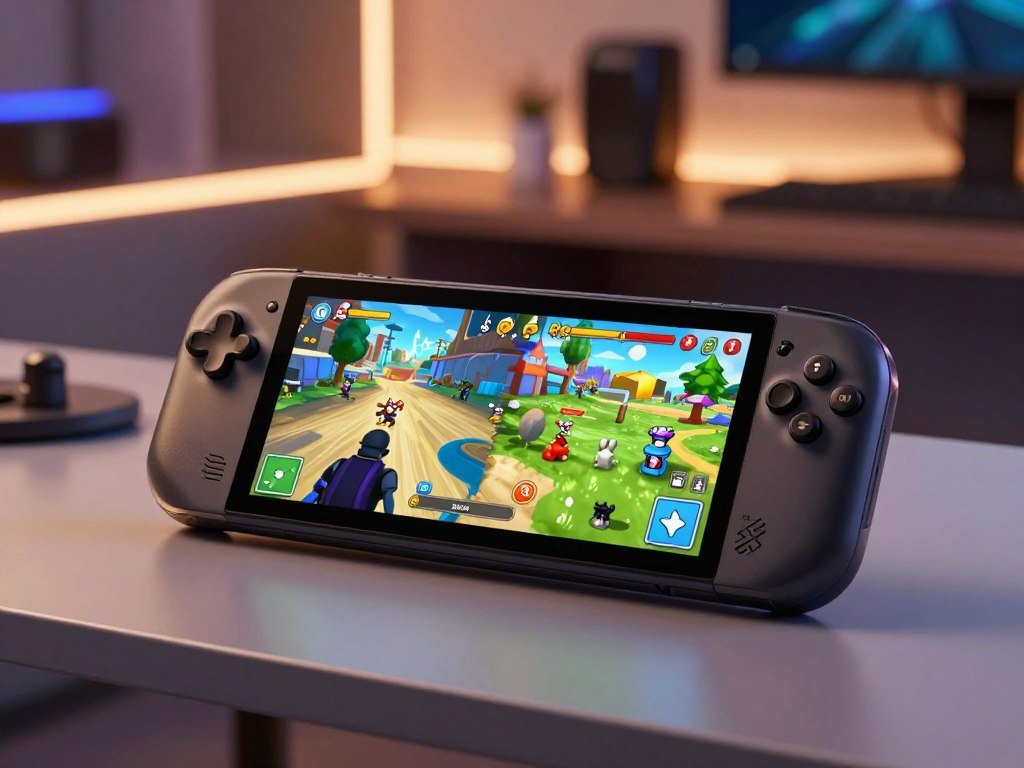
If you want a clamshell built around two screens rather than a single display with workarounds, the RG DDS is designed for that use. Dual-screen emulation means displaying a game’s two screen areas on separate panels at the same time. That layout can make older touch-driven games feel closer to their original form.
This buyer’s guide weighs the design, stated specifications, preorder details, and value. It also separates confirmed hardware facts from hands-on performance evidence, which matters when choosing a device for specific games. Specs can describe the hardware, but they cannot prove how every game runs.
Key Takeaways
- The clamshell design keeps two game views visible together.
- Both screens support touch input, and the device includes a stylus.
- Independent game-by-game testing was not available in October 2026 coverage.
- The earlier RG DS costs less but has more limited reviewed performance.
- Check retail testing for your must-play games before ordering.
Treat the RG DDS as a promising specialist device, not a proven fit for every game library.
What Is the RG DDS, and Who Is It For?
The RG DDS is Anbernic’s clamshell handheld for players who want two game screens visible together. It is the company’s Android dual-screen model, made for people who enjoy nostalgic, touch-driven games. Its layout is the point: you can keep both game views on separate panels instead of shrinking or rearranging them on one display.
Anbernic introduced the model on October 9, 2026, as a nod to the Nintendo DS and Nintendo 3DS. The RG DDS is an Anbernic device, not an official Nintendo product. Its form may feel familiar, but it does not carry Nintendo’s software library or branding.
Buy the RG DDS for its two-screen approach, not as a replacement for every modern gaming device.
Nintendo ended production of the 3DS family on September 16, 2020. By March 31, 2020, that family had sold 75.94 million hardware units and 384.07 million software units. Those figures help explain why a dual-screen handheld still has an audience years after the original system left production.
A dual-screen handheld can suit you if you want both views visible during play, especially in games that use the lower screen for menus or touch input. The format can also help when you revisit games you first played on a Nintendo DS or 3DS. It is less compelling if you mainly want a general-purpose console for recent games or a large single-screen image.
The retro handheld market includes many small devices that copy older shapes or screen styles. The RG DDS takes a more focused route by making two panels central to its design. Its strongest reason to exist is the dual-screen layout, not a claim that it replaces every modern gaming device.
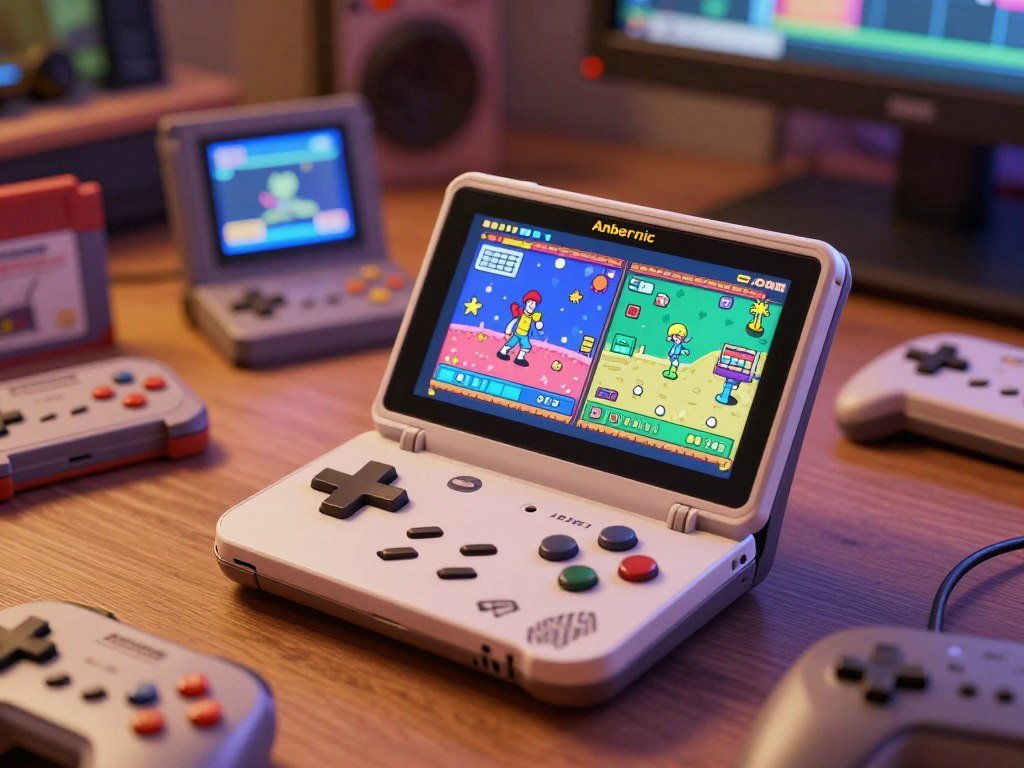
Do the Two Screens Match the Nintendo 3DS Layout?
The RG DDS pairs a taller 4.7-inch top panel with a smaller 4-inch bottom touchscreen. The panels differ by design, so they are not two matching displays. Both screens have touch input and 300 pixels per inch.
The top screen uses a 5:3 aspect ratio, while the bottom screen uses a 4:3 aspect ratio. Aspect ratio describes a screen’s width compared with its height. This split gives the top display a wider shape and keeps the bottom screen closer to a traditional square game view.
| Panel | Size | Resolution | Aspect ratio | Brightness |
|---|---|---|---|---|
| Top display | 4.7 inches | 1200×720 | 5:3 | 500 nits |
| Bottom touchscreen | 4 inches | 960×720 | 4:3 | 500 nits |
| Pixel density | Both | 300 pixels per inch | Both panels | Both |
| Touch support | Both | Touch input | Both panels | Both |

The top and bottom panels have different proportions
The RG DDS uses IPS displays, a type of LCD panel. Its top resolution is 1200×720, while the bottom screen runs at 960×720. The 5:3 aspect ratio makes the top panel wider than the lower 4:3 panel, so each view has a distinct shape.
That difference matters when a game places a map, status screen, or control buttons on the bottom screen. The panels do not simply split one large image in half. Instead, the hardware gives each game area its own space, which can keep both views readable during play.
Touch input and 3D expectations
The touch surfaces and built-in extendable stylus suit games that rely on taps or drawing. A stylus can feel more precise than a finger for small controls, though the value depends on the games you play. The layout follows a 3DS-style arrangement, but that does not mean it copies every feature of Nintendo’s hardware.
The RG DDS does not support glasses-free 3D. Its two screens show separate game areas, while glasses-free 3D creates depth on one screen without special glasses. For a closer look at its listed RG DDS screen and hardware details, keep that distinction in mind. If a game depends on glasses-free 3D rather than two-screen play, this layout does not reproduce that effect.
Anbernic RG DDS Dual Screen 3DS Handheld 2026: What Can It Emulate?
The Snapdragon G2 Gen 2 gives the RG DDS a modern eight-core platform, but the chip name alone cannot guarantee smooth play in a particular game. Game-by-game evidence matters, especially for demanding systems. Independent RG DDS compatibility testing had not been published in October 2026 launch coverage.
The confirmed platform is Qualcomm’s Snapdragon G2 Gen 2, model SG6275P, built on a 4 nm process. Its eight-core CPU has one Kryo Gold Plus core up to 2.8 GHz, four Kryo Gold cores up to 2.57 GHz, and three Kryo Silver cores up to 1.9 GHz. The GPU is Qualcomm Adreno A22.

What the Snapdragon platform establishes
These parts describe the chipset, but they do not show how an emulator handles each game. Performance also depends on software settings, cooling, and the game’s workload. A technical label or manufacturing process cannot replace a test of actual play.
The same caution applies when comparing platform rumors elsewhere. A chip-based hardware comparison can help explain why a processor name alone says little about game results. Promotional footage may show a short or selected scene, not a full play session across a library.
Match the game’s demands to the evidence
Before choosing the RG DDS for a particular title, look for tests that cover the parts of play most likely to challenge the device:
- Titles that require both screens at once.
- Games that rely on bottom-screen touch input.
- Demanding 3D titles that need retail-unit frame-pacing tests.
Early reports and promotional demonstrations are not substitutes for verified compatibility. A brief clip can leave out slowdowns, setup steps, or problems that appear later in a game. The term Nintendo 3DS also covers many titles with different demands, so one successful test would not prove that every game runs well.
The Anbernic RG DDS dual-screen 3DS handheld 2026 review question cannot be settled by specifications alone. Qualcomm Snapdragon Gen platform details establish what hardware is inside, not how each emulator performs. If a specific demanding title is the reason you would buy, wait for a test of that title on a retail unit.
Which Specs Matter Beyond the Chip?
The most useful extras are the internal fan, a 6,000 mAh battery and support for charging up to 27 W. Those features shape daily use, though they do not settle game compatibility. Active cooling means a fan helps remove heat during sustained workloads.
The Anbernic RG DDS dual-screen 3DS handheld 2026 specs also include Android 16, Wi-Fi 6, and Bluetooth 5.4. The device can send video to an external display at up to 1080p. That can help when you want a larger view on a monitor or TV.
Battery and active cooling
A 6,000 mAh battery gives the handheld a sizable power reserve on paper. Actual play time depends on the game, screen use, and settings. The listed charging support reaches 27 W, but that number describes the charging limit, not a guaranteed charge time.
The internal fan adds active cooling by moving heat away during longer workloads. Cooling can help a device manage heat, but it does not establish a game’s frame rate. A game still needs to be tested on the finished hardware to show how it performs over time.
Android, wireless connections and external video
Android 16 provides the software base, while Wi-Fi 6 and Bluetooth 5.4 handle wireless connections. The device also includes dual speakers, a 3.5 mm headphone jack, vibration feedback, and a six-axis gyroscope. These are useful extras for sound, motion input, and everyday handling.
External video output can suit a monitor or TV when you want to share a session or use a larger display. Before connecting a screen, check that your display and cable support the needed video connection. A portable monitor connection guide can help you compare display inputs and power needs. Consider external-display output a convenience for a monitor or TV, not a substitute for the clamshell’s two-panel layout.
How Much Does the RG DDS Cost, and When Does It Ship?
The RG DDS starts at $299.99, while the higher-memory configuration is listed at $364.99. Those are the listed prices, separate from temporary preorder offers. Gradual shipping is scheduled to begin December 10, 2026.
The base model pairs 8 GB of RAM with 128 GB of internal storage. The higher-end model has 12 GB of RAM and 256 GB of storage. Both versions support TF card expansion and run Android 16.
| Item | Base model | Higher-end model |
|---|---|---|
| Listed price | $299.99 | $364.99 |
| RAM | 8 GB | 12 GB |
| Internal storage | 128 GB | 256 GB |
| TF card expansion | Up to 2 TB | Up to 2 TB |
| Operating system | Android 16 | Android 16 |
The Anbernic RG DDS dual-screen 3DS handheld 2026 price is $299.99 for the 8 GB/128 GB version and $364.99 for the 12 GB/256 GB version. The added cost buys more memory and internal storage, not a different screen layout. Match the tier to the apps and files you expect to keep on the device.
Preorders opened October 16, 2026. Anbernic’s listed release plan says shipping is scheduled to begin gradually on December 10, 2026. A scheduled start means orders begin moving out over time; it does not promise that every preorder arrives on that date.
Make room in your budget for a TF card if your game files need more space than the built-in storage allows. A preorder and shipping overview also distinguishes the listed prices from temporary preorder discounts. Choose the higher tier only if its extra RAM and storage suit your actual use.
How Does It Compare With the RG DS?
The RG DS is the cheaper, less powerful Anbernic dual-screen option, while the RG DDS is positioned as the newer performance tier. The lower price comes with clear limits. The RG DS was listed at $94.99 in the United States in 2026, with a regular price of $99.99.
The older model has two 4-inch IPS touchscreens, each at 640×480, with OCA full lamination and capacitive-stylus support. Its processor and reviewed game results show why two screens alone do not make it suitable for every system.
| RG DS attribute | RG DS specification or result | Buyer relevance |
|---|---|---|
| Processor | Rockchip RK3568, quad-core Cortex-A55 up to 2.0 GHz; ARM G52 2EE GPU | 3DS emulation exceeds its capability |
| Memory and storage | 3 GB RAM; 32 GB storage | Less room for apps and files |
| Software and expansion | Android 14 or 64-bit Linux; TF card up to 2 TB | Two software choices and expandable storage |
| Battery and connections | 4,000 mAh; stated 6-hour life; 2.4/5 GHz Wi-Fi; Bluetooth 4.2 | Includes stereo speakers, 3.5 mm audio, gyroscope, vibration, Hall switch |
| Reviewed emulation range | NES through GBA and PS1 full speed; N64 playable with variation | Many PSP and Dreamcast games need tuning |
Reviewed NES, SNES, Genesis, Game Boy through GBA, and PS1 games ran at full speed. N64 was playable with game-by-game variation. Many PSP and Dreamcast games ran, though heavier titles needed tuning.
Most Nintendo DS games ran well at native resolution without upscaling. Default DraStic played most DS games but not DSi games, while melonDS did not run well. GameCube, PS2, and 3DS emulation exceeded the RK3568’s capability.
The RG DS for Nintendo 3DS games is not a good fit for 3DS emulation. If you are comparing its results with another device, a guide to DS and 3DS emulators explains why the systems need separate emulation and testing. For a buyer focused on 3DS emulation, do not mistake the RG DS’s dual screens for enough processing power.
What Software and Firmware Should Buyers Know About?
RG DS Android V1.18 adds Google services and lets apps use both screens. That update is for the RG DS, not the RG DDS. Installing V1.18 erases user data, so back up personal files first.
Anbernic’s system-update page listed RG DS firmware V1.18 and RG DS Android firmware V1.15 in 2026. The names matter: V1.18 refers to the Android update for the earlier RG DS. It does not change the RG DDS operating system.
What V1.18 adds to the RG DS
The update adds Google Mobile Services, including the Google Play Store. It also lets apps display across both screens, which can help when an app benefits from the dual-panel layout. These changes apply to RG DS Android and should not be confused with software for another model.
Before updating, use this short checklist:
- Back up personal data.
- Confirm the device model and current firmware version.
- Check how updated apps behave after installation.
Back up before installing an update
Because installation erases user data, a backup is essential. Save important files somewhere outside the handheld before starting. Then make sure the update matches the device and software version you own.
After installation, test the apps you use most and check whether they show across both screens as expected. An update can change app behavior, so a quick check helps catch issues before you rely on it. Do not start the V1.18 installation until personal data is backed up.
How Does It Compare With Other Dual-Screen Handhelds?
The meaningful alternative is not just another chip, but whether you need two screens at all. That choice sets the form: a two-panel clamshell, a lower-cost Anbernic route, or a single-screen device. A shared chipset does not prove equal real-world performance.
The Ayaneo Pocket DS is another dual-screen option, with a reported starting price of about $579. Retroid’s Pocket G2 uses the same Snapdragon G2 Gen 2 platform as the RG DDS, but has a single-screen form.
Choose a lower-cost dual-screen route
The RG DS offers a lower-cost way into Anbernic’s dual-screen lineup, but its reviewed results set limits for demanding systems. It may suit you if the games you care about fit its tested range. A cheaper device is only a good value when its limits do not block the games you want.
That tradeoff is common across handhelds: controls, screen shape, battery life, and software can matter as much as the name on a chip. A handheld comparison of the Legion Go S and Steam Deck offers another example of how buyers weigh screen size, comfort, and game support.
Pay more for a competing dual-screen device
The Ayaneo Pocket DS gives you another two-screen clamshell to compare, but its reported starting price is about $579. Reported third-party prices are not the same as Anbernic’s listed prices, and they do not prove equal performance.
The Retroid Pocket G2 provides a useful platform reference because it shares the RG DDS chipset. Its single-screen form still changes how you see two-screen games. Cooling, software, and the device’s shape can all affect real-world results, so shared silicon alone cannot settle the comparison.
If two-screen play is essential, compare dual-screen devices first and treat single-screen hardware as a different compromise.
What Should You Check Before Ordering?
Before ordering, match the device’s physical controls and two-screen layout to the games you actually intend to play. Start with your game list, not the spec sheet. Check touch needs, storage plans, and the exact model listing before you choose.
The built-in extendable stylus can suit games with small touch targets, while the two touch surfaces keep both game areas visible. If you are planning a large mobile library, consider each title’s controls, connection needs, and storage use. A mobile game guide by play style can help you think through those needs, though it does not test RG DDS compatibility.
Use this four-item checklist before you place an order:
- Confirm that your games use two-screen play, not glasses-free 3D.
- Consider whether the built-in stylus and touch surfaces suit your games.
- Plan storage with TF card expansion up to 2 TB in mind.
- Choose from Basalt Black, Glacier White, and Phantom Blue based on the available listing.
A TF card can give you room for more files, but it cannot fix a game that an emulator cannot run well. Storage space and game performance are separate concerns. Keep that difference in mind when choosing between built-in capacity and expandable storage.
A large storage card cannot resolve an emulator compatibility or performance problem.
Color availability can depend on the listing you see, so choose from the colors offered for your selected model. If exact compatibility matters more than being first to own the hardware, make your decision after checking title-specific retail testing.
Conclusion
The RG DDS makes the most sense when its two-screen format is a priority, not merely a novelty. Its newer platform and clamshell design make it the more ambitious Anbernic choice for players who want two game views together.
The less expensive RG DS can suit buyers whose needs fit its more limited reviewed performance. It is not the right shortcut to 3DS play simply because it has two screens.
Write down the three games that matter most to you, then check their compatibility on the model you plan to buy. Check your must-play games against retail testing before you commit.
FAQ
How much does each Anbernic RG DDS model cost?
The listed prices are $299.99 for the 8 GB RAM and 128 GB storage model, and $364.99 for the 12 GB RAM and 256 GB storage model. Both versions run Android 16 and support TF card expansion up to 2 TB. The higher tier adds memory and built-in storage, so choose it based on how much room your apps and files need.
When is RG DDS shipping scheduled to begin?
RG DDS shipping is scheduled to begin gradually on December 10, 2026. That date marks the planned start of shipments, not a promise that every preorder will arrive that day. Preorders opened October 16, 2026. If timing matters for a gift or trip, allow for the gradual shipping schedule rather than treating the start date as a delivery date.
Can the RG DDS play Nintendo 3DS games?
The RG DDS is designed around a two-screen layout that suits Nintendo 3DS-style games, but that does not confirm smooth play in every title. Its chipset gives a hardware baseline, not a game-by-game result. Check retail-unit testing for the games you care about, especially demanding 3D titles or games that rely on touch input.
Does the RG DDS support glasses-free 3D?
No glasses-free 3D support is indicated for the RG DDS. The device has two displays that show separate game areas at the same time, which is different from creating a 3D depth effect on one screen. Its dual-screen layout can suit many games designed for two views, but it does not reproduce the glasses-free 3D effect of the Nintendo 3DS.
Can I install Google Play on the RG DDS with the RG DS V1.18 update?
No, the RG DS V1.18 update is for RG DS Android, not the RG DDS. V1.18 adds Google Mobile Services, including the Google Play Store, and lets apps use both screens on the RG DS. Installing it erases user data, so back up personal files first. Do not treat the update as software for the newer model.
Can I connect the RG DDS to a TV or monitor?
Yes, the RG DDS supports external video output at up to 1080p. That lets you send the picture to a compatible TV or monitor when you want a larger view. Check that your display, cable, and connection support video input from the handheld. External output changes where you view the game, but it does not replace the device’s two-panel layout.
How much storage can I add to the RG DDS?
The RG DDS supports TF card expansion up to 2 TB. That extra space can help you keep more games and files on the device, while the two models also include different amounts of internal storage. Added storage does not improve emulator speed or make an unsupported game compatible, so treat capacity and game performance as separate buying questions.



