
A rural broadband update can mark a major milestone for a town while still leaving each household with one practical question: can this address order service? Kanturk’s fibre update gives Cork residents useful context on rural connectivity, but an area rollout does not settle the status of every property.
Fibre-to-the-Home (FTTH) is a fibre-optic line that reaches the building itself rather than ending at a roadside cabinet. That can support homes, farms, and businesses, yet National Broadband Ireland (NBI) does not sell service directly to customers. You order through a retail service provider when your premises is ready.
Use the address checker for the status of a specific property, not a townwide headline.
Key Takeaways
- FTTH brings a fibre line to the building.
- An area update does not confirm every address.
- A premises is a serviceable building or location.
- NBI operates the network; retail providers sell service.
- Use an Eircode lookup to check one property.
- Ordering service and becoming connected are separate steps.
Cork NBP Fibre Kanturk 3890 Premises 2026: What Changed?
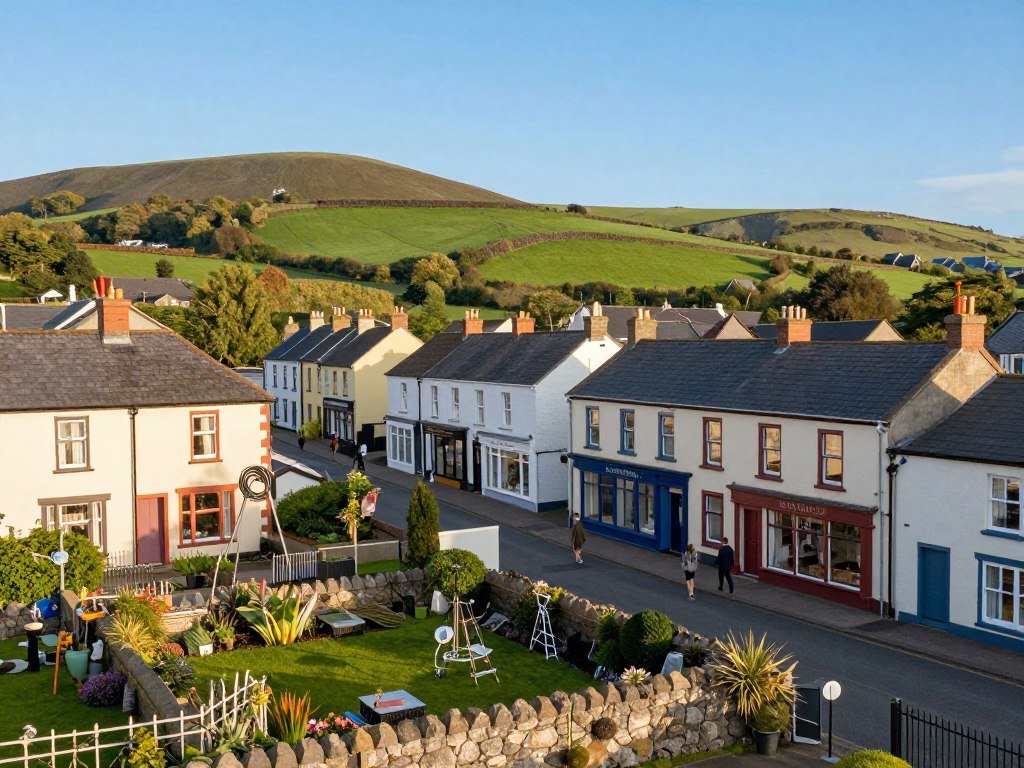
On July 24, 2026, 4,148 homes and businesses across Kanturk and nearby Greenane and Castlemagner could order or pre-order NBI fibre. The update marks a new service stage for those locations, rather than a count of residents or active customers.
The 4,148 figure counts premises, not people or completed connections. A premises is a property counted for network service, such as a home, farm, or business site. One premises may house several people, while one person may use more than one location.
Being able to order or pre-order does not mean a premises already has fibre service. A customer must place an order before the property becomes a connection.
“Could order or pre-order” describes eligibility at the time of the update. It does not show how many customers took up service, how many installations were complete, or whether every listed property had an active line.
The named places sit within the wider Kanturk deployment area, but status still belongs to an individual address. The same townland can include properties at different stages because network work and address records apply to specific premises.
For a home, the practical next step is to check its Eircode rather than assume a nearby connection confirms its own status. A farm or business should use the same property-level check before planning around fibre availability.
A premises counted as eligible still needs a customer order before it becomes a connection.
Why Did the Kanturk Build Start With 3,890 Premises?
The 3,890 figure marks a construction-stage footprint announced on July 14, 2023, after Survey and Design had been completed. It describes a dated project stage, not a current count of connected homes or businesses.
Construction starting does not mean each address can order service. Survey and Design happen before physical construction. The survey checks the area and proposed routes, while design work sets out how the network could serve the premises.
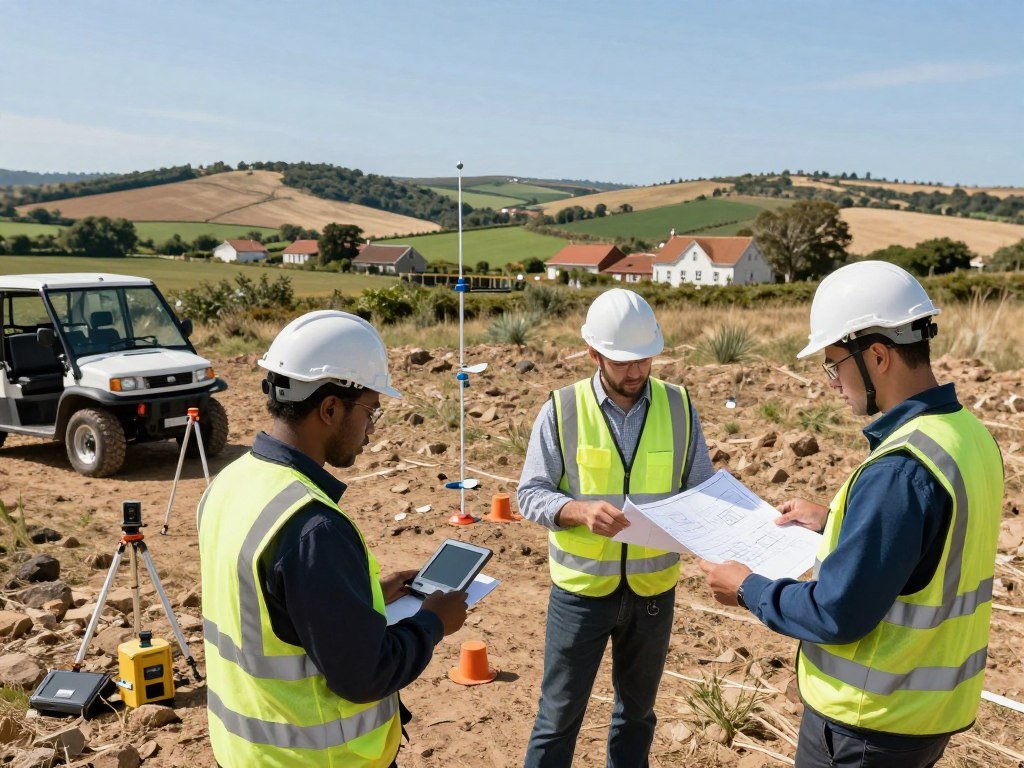
After those steps, the build team can begin work on the planned infrastructure. That work may bring the network closer to a property, but the property must reach the right stage before an order is available.
The 3,890 figure therefore records the construction footprint linked to the 2023 announcement. It should not be read as a present-day availability total, a number of customer orders, or a measure of completed connections.
A rollout has several stages, and each figure makes sense only beside its date and stage. A construction count tells you where a build began; an availability count tells you where customers could order or pre-order at a later point.
That distinction matters when you compare updates published years apart. A changed total does not, by itself, explain why the footprint changed, so avoid guessing from the numbers alone.
Read rollout figures with their date and project stage attached.
How Far Has County Cork’s NBP Fibre Rollout Reached?
Cork’s rollout totals show a clear difference between premises that can order and premises already connected. The snapshots show availability and take-up rising over time, but those measures describe different parts of the rollout.
Available premises are not the same as completed connections. Availability means a property could order or pre-order, while a connection records service that has been made. The numbers below reflect separate dates, not one live count.
Cork availability and connections over time
| Snapshot | Cork premises available to order or pre-order | Cork connections |
|---|---|---|
| July 2023 | 21,937 | 5,642 |
| July 24, 2026 | 75,506 | 22,101 |
| October 22, 2026 | Almost 78,500 could avail of a high-speed connection | 24,746 |
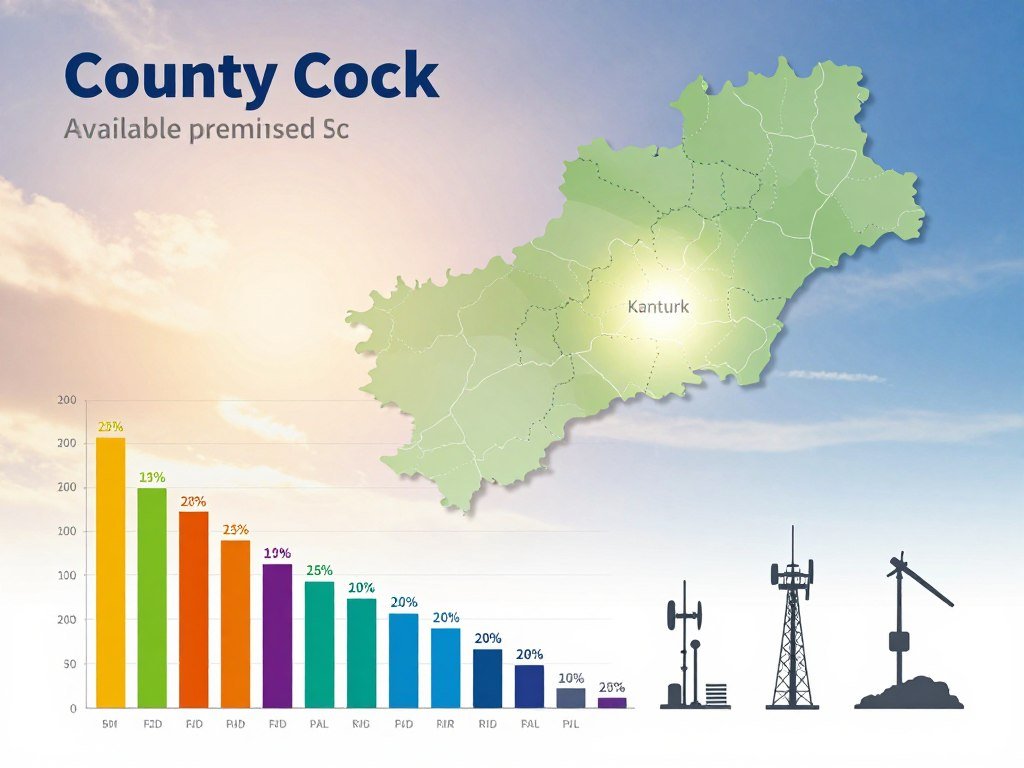
The October 22, 2026, snapshot says almost 78,500 Cork premises could avail of a high-speed connection. That wording describes availability, not the number of connected properties.
What the county totals do and do not measure
County Cork received an allocation of €314 million under the National Broadband Plan. This gives the rollout a county-level investment context, but it is not a per-household amount or a price paid by each customer.
Connections show take-up after service becomes available. They do not tell you whether a particular home has ordered, when a nearby line was installed, or what package its residents chose.
For your own property, a county figure is useful background, not an address result. Keep the date beside every county figure when comparing rollout progress.
What Does the NBP’s 500 Mbps Fibre Specification Mean?
The 500 Mbps figure is the NBP’s minimum broadband specification for premises in the Intervention Area, not a Wi-Fi test result for every device. It sets a service standard for the network serving homes, businesses, farms, and schools.
The minimum specification and your device’s Wi-Fi speed measure different things. Cork’s NBI rollout area includes 83,000 premises, and the NBP network is designed to support speeds up to 10 Gbps.

A service specification describes what the broadband service is built to support. A speed test measures the path to one device, and that result can change with the router, the device, and whether you use Wi-Fi or a wired connection.
Measured results in the Intervention Area also show how performance changed over time. Median download speed rose from 11.60 Mbps in 2019 to 156.99 Mbps over the year to mid-2026.
Median upload speed rose from 4.67 Mbps to 49.48 Mbps over the same period. Ookla’s rural broadband speed analysis describes this change alongside the rollout of fibre service.
Those medians describe a group of connections, not the result for every home. Your device may have an older network card, or your router may sit far from the room where you test.
A VPN can also affect a speed test because traffic may travel through a different server and route. Tests can differ by provider, server location, device, and operating system, as shown in this VPN service speed comparison.
For a laptop without an Ethernet port, a USB-C hub may add one; this USB-C hub buying guide compares hub types for MacBook Pro users. Use a wired connection when you want to distinguish a broadband-line result from a weak Wi-Fi signal.
How Can You Check If Your Address Is Ready?
Start with the Eircode for the exact property, since nearby homes can have different rollout statuses. NBI’s premises checker shows address-level information, including estimated completion dates where available.
An estimated completion date is not an appointment for installation. It is a planning estimate for the premises, so it does not book an engineer or confirm a customer order.
- Enter the Eircode in NBI’s checker.
- Read the displayed premises status.
- Note any estimated completion date.
- Sign up for NBI email alerts.
NBI’s site lets residents check an individual premises and sign up for email updates on rollout progress. Save the status and date shown, since an update can change as work moves through the area.
The government High Speed Broadband Map serves a different purpose. It lets you search by address or Eircode and view intervention and commercial broadband areas.
That map can help you see which type of rollout area includes a location, while NBI’s checker focuses on its premises status. Use both if you want area context as well as a property-specific update.
Save the Eircode result and revisit it when an alert or estimated date changes.
What Happens During an NBI Fibre Installation?
NBI’s five phases run from surveying and design through construction, a customer order and the final connection. The sequence includes customer action, not just work on the network.
A typical installation may take from one hour to up to two days. The layout of the property and the work needed can affect the visit length.
The five rollout phases
- Surveying checks the area and proposed network routes.
- Design sets out how the network can reach the premises.
- Build adds the network infrastructure.
- Ordering a connection begins the customer’s service request.
- Connection completes the link to the premises.
The first three phases prepare and build the network. Ordering and connection follow when the premises can take service and a customer chooses to proceed.
Work inside the premises
During a typical visit, an engineer may drill a hole roughly 10 mm wide to bring the fibre cable into the building. The cable then connects to the modem supplied by the retail broadband provider.
The exact work depends on where the cable enters and where the modem will sit. A straightforward route may take less time than a job that needs extra work around the building.
Before the visit, decide which indoor spot can work for the modem and keep the route to it clear. Leave the installation area accessible so the engineer can reach the cable entry point and modem location.
Will the Fibre Cable Come Overhead or Underground?
The route depends on nearby poles, the suitability of an overhead line and whether usable underground ducting is available. The engineer can use an overhead or underground path to reach the premises.
A nearby pole may serve the property, but overhead service is not always suitable. If no pole is close, NBI may install one when an overhead connection works for the site.
When an overhead route is used
An overhead line may run from an existing telegraph pole near the building. If the property lacks a nearby pole, a new one may be part of the route, provided overhead work suits the location.
When an underground route is suitable
An underground cable may be used when an overhead connection is unsuitable or suitable ducting is available. If a duct is blocked, the engineer may need to unblock it as part of the work.
| Route | When it may be used | Indoor connection |
|---|---|---|
| Existing overhead pole | A nearby pole can serve the property | Cable enters the premises |
| New pole and overhead cable | No nearby pole is available and overhead service is suitable | Cable enters the premises |
| Underground cable | Overhead is unsuitable or suitable ducting is available | Inside-wall network unit connects to provider modem |
With an underground connection, a small network unit sits on the inside wall. That unit connects to the retail provider’s modem, giving the service a route into the home.
Ask which route is planned for your property before deciding where equipment should sit.
Who Do Customers Order NBI Fibre Broadband From?
NBI builds and operates the wholesale network, while retail service providers sell service to customers. NBI is not a direct seller of fibre broadband to end users.
Customers choose a retail service provider to order a package. More than 50 retail providers were available on the NBI network as of July 24, 2026.
| Organization type | Role | Where the customer orders |
|---|---|---|
| NBI | Wholesale network operator | Customers do not order directly from NBI |
| Retail service provider | Sells service to end users | Customers compare and order a package from a provider |
A wholesale operator runs the underlying network that retail providers use to offer broadband. Your provider handles the service package and the customer relationship.
Package prices depend on the retail provider and package. Check the package details, contract terms, and service features offered by each provider before deciding.
Provider choices can change over time, so the count of available retailers belongs to its July 2026 date. Compare the available retail packages against the household’s actual needs before placing an order.
What Does the National Broadband Plan Cover Beyond Kanturk?
Kanturk is one local part of a national plan designed to reach rural premises outside commercial high-speed broadband plans. The National Broadband Plan (NBP) Intervention Area covers places where commercial operators do not provide, or plan to provide, high-speed broadband.
The Intervention Area includes homes, farms, businesses, and schools. National progress figures track premises passed and connected, while a separate measure records how much of the network has been built.
Who and what the Intervention Area includes
The government lists over 65,000 farms, 44,000 non-farm businesses, and 679 schools within the Intervention Area. These are groups and institutions within the wider footprint, not counts of people.
| Date or group | Count | Measure |
|---|---|---|
| January 31, 2026 | 451,433 passed; 164,708 connected; 82% built | Premises and network progress |
| July 2026 | Over 504,000 passed; over 183,000 connected; 89% passed | 89% of approximately 566,000 premises |
| October 22, 2026 | Over 537,000 passed; over 195,000 connected | Premises progress; 36% average take-up |
| Intervention Area groups | Over 65,000 farms; 44,000 non-farm businesses; 679 schools | Included groups and schools |
National rollout progress and its end-of-2026 target
At the end of the NBI contract year on January 31, 2026, 451,433 premises had been passed and 164,708 connected. The network was 82% built at that point.
In July 2026, over 504,000 premises had been passed, or 89% of the approximately 566,000-premises Intervention Area. More than 183,000 were connected, with average take-up at 36.
Areas where service had been available longer had take-up above 60%. By October 22, 2026, over 537,000 premises had been passed and over 195,000 connected, with average take-up still at 36%.
The main infrastructure build was scheduled to finish by the end of 2026. NBI estimated that the programme would make high-speed fibre available to approximately 1.1 million people across rural Ireland.
The NBP’s national reach and local address status answer different questions. Treat each progress percentage as a dated snapshot, not a promise about one address.
How Can You Compare Fibre With Mobile Coverage?
Check the mobile signal at the same address or Eircode before treating a 4G or 5G router as a reliable alternative. ComReg’s map estimates outdoor mobile coverage for an address or Eircode.
A predicted outdoor category does not guarantee indoor signal or show a measured broadband result. The map covers predicted 2G, 3G, 4G, and 5G coverage for 10 providers.
Check predicted mobile signal by address
Use the map’s address search to check the location you want to serve. The listed providers include An Post Mobile, Clear Mobile, Eir, GoMo, Lycamobile, Tesco Mobile, Three, Virgin Media, and Vodafone.
Those names are examples from the map, not a complete list of mobile brands. The map is updated periodically, so its results may change as coverage data changes.
Read the signal category carefully
ComReg rates predicted signal as very good, good, fair, fringe, or no coverage. Each label summarizes expected outdoor reception rather than the signal inside your walls.
A building’s materials, layout, and distance from a mobile site can affect indoor reception. A strong outdoor estimate can still leave a weak signal in a room where you need service.
Mobile broadband also relies on wireless coverage, while fibre reaches the building through a wired line. For a rural building, verify indoor reception as well as the predicted outdoor category.
What Can Farms and Businesses Use Rural Fibre For?
Rural fibre can support farm operations and community services that need dependable access to online systems. Better connectivity can help with daily tasks beyond home streaming.
Farm work, learning, health services, and remote jobs can all use reliable broadband. The National Broadband Plan names these kinds of activities as uses supported by better connectivity.
- Farm livestock or equipment monitoring can help you check remote activity.
- E-learning can connect students with online lessons and resources.
- E-health initiatives can support access to online health services.
- Remote work and digital business tasks can link rural workers with customers and colleagues.
These uses depend on more than one household’s connection. A Broadband Connection Point can give a community a public access option before a home connection is ready.
There are 283 publicly accessible Broadband Connection Points operational. They can provide a place to use online services while a household waits for its own service or needs another access point.
For a farm, reliable monitoring may reduce the need for repeated trips to check equipment or livestock. A small business may also handle online orders, records, and remote meetings with fewer connection interruptions.
Consider which daily task loses the most time when the current connection is unreliable.
How Large Is the Physical NBP Fibre Build?
The NBP is a country-scale infrastructure project, not just a cable run along one village road. It spans 96% of Ireland’s land mass and requires a large physical network.
The anticipated network includes 140,000 km of fibre cable, over 1.5 million poles, and over 15,000 km of underground ducts. These are planned whole-network totals, not measurements of completed work.
Planned network scale
At the end of its contract year on January 31, 2026, NBI had laid 63,064 km of fibre cable. That completed-build figure is different from the anticipated total for the full network.
Why poles and ducts matter
Fibre cable carries data between network points and premises. Poles support overhead lines, while underground ducts carry cable below ground.
Existing poles and ducts can be reused where they are suitable. Reuse lets the build rely on infrastructure already in place, while new work fills gaps in the planned network.
The government’s overview of the National Broadband Plan describes the planned cable, pole, and duct scale. Each part has a physical job, even when customers see only the final service inside a building.
Read planned network totals separately from completed-build measurements.
How Can a Household Get More From a Fibre Connection?
A fibre connection can reach the building quickly while Wi-Fi still struggles to reach a back room or outbuilding. Your home network shapes how that service works from room to room.
Fibre speed alone cannot fix weak Wi-Fi or outdated devices. Router placement, walls, and the device you use can all affect the speed you experience.
- Place the router in a central, open location.
- Use Ethernet for fixed, high-demand devices where practical.
- Consider mesh access points for larger homes or outbuildings.
- Secure the network by changing default credentials.
Ethernet gives a compatible device a wired connection to the router. It can suit a desktop computer or work setup that stays in one place.
A laptop without an Ethernet port may need a suitable adapter or hub. A hub can add Ethernet, though devices connected through it share its bandwidth.
Mesh access points can extend Wi-Fi coverage in a larger home. They may help reach a distant room, but the best placement depends on where the existing signal remains strong.
A VPN can protect traffic in transit, but it does not secure every account or device. Speed can also change with the network, server distance, device, and protocol, as discussed in this VPN speed and privacy comparison.
Test the rooms where people work or study before deciding whether extra access points are needed.
Conclusion
Kanturk’s fibre milestone matters most when a household can confirm its own address and choose a service that fits. An area’s eligibility and a home’s active connection are separate stages.
Check your Eircode to see whether the premises can order or pre-order. If it is ready, compare retail service providers and their package details before choosing.
For rural homes, farms, and businesses, the useful next step is specific: Check the Eircode for your property, then compare providers when ordering is available.
FAQ
What does “premises” mean in the Kanturk rollout figures?
“Premises” means a serviceable building or location, not a count of residents. A home, farm, or business can each count as one premises, even if several people use it. The term helps track where the network can offer service. It does not show how many people live or work there, or whether anyone has ordered broadband.
Why are the Kanturk figures 3,890 and 4,148?
The 3,890 figure describes the construction footprint announced in 2023, while 4,148 is the eligible total reported in July 2026. The figures refer to different dates and project stages, so they are not competing counts of connected customers. The first marks the planned construction footprint after Survey and Design; the later figure describes premises that could order or pre-order.
Does an eligible address mean it is already connected?
No. An eligible address can order or pre-order service, but that status does not mean a customer has completed an order or received a connection. The property must move through the customer order and connection stages. Check the premises status for your own address, since an area update cannot confirm what has happened at a specific building.
Can I choose my broadband provider on the NBI network?
Yes. NBI operates the wholesale network, and customers order service from retail service providers that use it. More than 50 providers were available on the network as of July 24, 2026. Compare package features, prices, and contract details before choosing, because each retail provider sets its own offers and terms.
How long can an NBI fibre installation take?
A typical NBI fibre installation can take from one hour to as long as two days. The time depends on the layout of the premises and the work required for the connection. An engineer may need to bring cable into the building and connect it to the provider’s modem. Keep the planned work area accessible during the visit.
How can I check mobile signal at my home address?
Use ComReg’s outdoor mobile coverage map and search by your home address or Eircode. It predicts coverage categories for mobile networks, but it does not guarantee indoor reception or give a measured broadband speed. Walls and building layout can affect signal inside a rural home. Check actual indoor reception before relying on a mobile router.



