
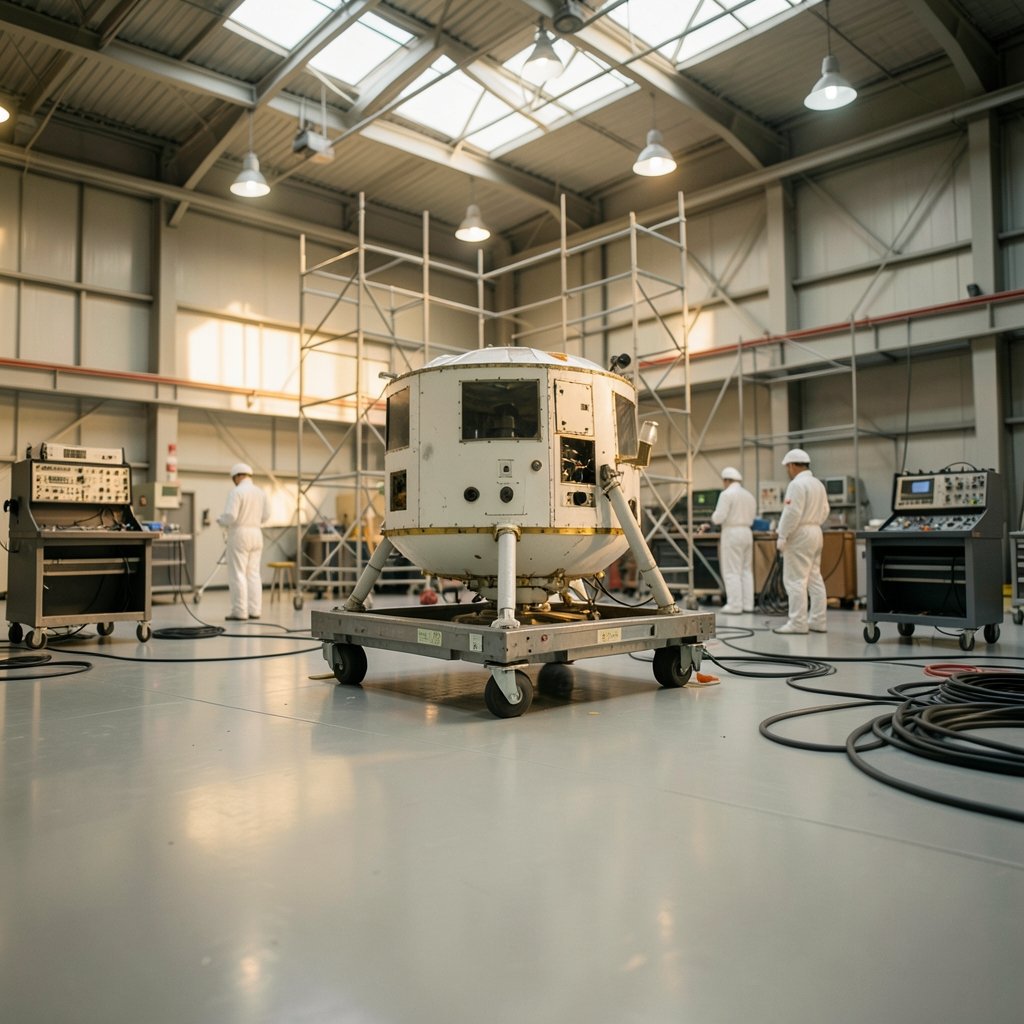
Did NASA ever plan to build a Moon base within two years of an Apollo landing? It’s a question that resurfaces whenever lunar policy makes headlines, and the honest answer is more interesting than the myth. The Apollo program never included a lunar base. It was a series of short surface visits, not a settlement project. The agency’s current lunar effort is Artemis, not Apollo, and its long-term surface architecture is measured in decades and budget cycles, not a two-year sprint.
This article separates the historical record from the modern hype, explains why “two years” keeps appearing in Moon-base stories, and shows what to actually check before believing a timeline. Anyone tracking space policy, hardware bets, or even consumer tech news knows how fast unverified claims travel. The same discipline that helps you spot a shaky gadget rumor applies to lunar timelines.
What Apollo Actually Was, and What It Was Not
Apollo was a Cold War sprint to put humans on the Moon and bring them home safely. It succeeded at that goal. It never aimed at a permanent base.
The program ran from 1961 to 1972. Apollo 11 landed in July 1969. Apollo 17, the last crewed landing, touched down in December 1972. Between those bookends, twelve people walked on the lunar surface across six landings. Each mission lasted days. Crews collected samples, ran experiments, and left. No habitat was built. No outpost was staffed.
That distinction matters because a base requires a different kind of program: heavy cargo landers, power systems that survive the two-week lunar night, radiation shielding, and resupply chains. Apollo had none of that infrastructure. It had a rocket, a capsule, a lander, and a tight mission clock.
Why the “two years” idea persists
The myth likely comes from a blend of sources. Apollo-era planners did study lunar outposts in the 1960s, and those concept papers exist in NASA’s history archives. Later proposals, including the Space Exploration Initiative announced in 1989 and the Constellation program in the 2000s, revived base concepts before being cancelled or reshaped. Each revival left behind documents that look, at a glance, like official commitments.
There’s also a simpler reason. “Two years” is a compelling headline. It converts a multi-decade architecture into a countdown. Readers click. The problem is that no official NASA plan commits to a crewed Moon base within two years of 2026.
Artemis Is Not Apollo, and Its Pace Reflects That
NASA’s current lunar program is Artemis. Its stated aim is to return crews to the Moon and eventually establish a sustained surface presence. That is a fundamentally harder goal than Apollo’s flags-and-footprints approach, and the schedule reflects it.
Artemis is built around the Space Launch System, the Orion capsule, and a human landing system procured commercially. The program has slipped repeatedly, which is normal for first-of-a-kind hardware but frustrating for anyone watching the calendar. Independent watchdogs, including NASA’s Office of Inspector General, have documented cost growth and schedule risk across Artemis elements. (Artemis)
A sustained presence needs more than a landing. It needs:
| Requirement | Apollo status | Artemis-era status |
|---|---|---|
| Crewed lander | Built and flown | In development via commercial partners |
| Surface habitat | Not built | In study and early design |
| Power through lunar night | Not solved | Active technology work |
| Cargo resupply chain | Not needed | Required for a base |
| Surface mobility | Short rover trips | Unpressurized and pressurized rover plans |
Read that table again. Apollo checked one box. A base needs all five. That gap is the real story behind any “two years” claim.
Why Lunar Timelines Slip: The Practical Mechanics
People who follow space policy learn to read timelines the way engineers read stress tests. Here’s what actually drives slippage, and how to spot it yourself.
The budget cycle is the real clock
NASA does not fund itself. Congress appropriates money annually, and a program’s pace tracks its appropriation, not its ambition. A base needs sustained funding across many budget cycles. Any plan that ignores appropriations is a wish, not a schedule.
Fixed-price contracts change the risk math
Modern NASA leans on fixed-price contracts for landers and services. That structure can control costs, but it also means a partner’s technical problems become schedule problems with less cushion. When a lander slips, the landing slips.
Technology readiness levels are unforgiving
A component at a low technology readiness level cannot be scheduled like a finished part. Life support that closes the air and water loop, dust mitigation, and night-surviving power systems all sit on the critical path. Skipping readiness work to hit a date is how programs fail later and cost more.
Common mistakes readers make
- Treating a concept study as a commitment. Concept papers explore options. They do not fund them.
- Confusing a landing date with a base date. One crewed landing is a milestone, not an outpost.
- Trusting a single headline. Check the primary document and the date on it.
- Assuming international partners move at NASA’s pace. They have their own budgets and approvals.
What actually works is boring and reliable: read the agency’s own architecture documents, check the inspector general’s reports, and look at the budget request line items. If the money isn’t there across multiple years, the base isn’t either.
The Broader Pattern: Hardware Bets and Delayed Promises
Lunar bases are not the only place where ambitious timelines meet reality. The technology world runs on the same dynamic, and the pattern is worth recognizing because it sharpens your judgment everywhere.
Consider how long some flagship products have run behind their announced dates. The Tesla Roadster’s nine-year delay against EV rivals is a clean example of a hyped date colliding with engineering and priority shifts. The company’s broader strategy, spanning the robotaxi, Semi, and Roadster as three hardware bets, shows how a single firm can spread resources thin across competing programs. NASA faces the same constraint at a much larger scale.
Corporate leadership churn adds another variable. When Xbox COO Helen Chiang left Microsoft after 21 years, it was a reminder that institutional knowledge walks out the door with people. NASA’s lunar programs depend on experienced engineers and managers the same way. Workforce continuity is an underrated schedule factor.
Consumer enthusiasm can also distort expectations. The Dubai collector who assembled 53 iPhones including two iPhone Duos shows how passion for hardware creates its own narratives. Space fans do the same with Moon bases. Enthusiasm is fine. It just isn’t evidence.
What a Credible Moon Base Plan Would Include
If you want to evaluate any future claim about a lunar base, run it through this checklist. It’s the same test analysts use, and it filters out most noise.
- A named program with a budget line. Look for the appropriation, not the press release.
- A cargo lander manifest. A base needs supplies before it needs people.
- A power architecture. Surviving the lunar night is non-negotiable.
- A habitat design with a tested prototype. Paper habitats don’t count.
- An inspector general or GAO assessment. Independent review is the best signal of real progress.
- A dated architecture document. Check whether the date is current.
If a claim fails three or more of these, treat it as speculation. That standard is stricter than most headlines, and that’s the point.
How to Read Lunar News Without Getting Fooled
The practical habits are simple. First, find the primary source. NASA publishes its architecture plans, and the agency’s history office maintains Apollo records. Second, check the date on any document you find, because old concept studies circulate endlessly. Third, look for the word “concept” or “study” in the title. Those words mean the work is exploratory.
There’s a legal dimension too. Regulatory fights shape what platforms and companies can promise. The Apple Supreme Court case over the 27 percent App Store fee shows how a court ruling can reset an entire business model overnight. Space policy has similar fault lines, from launch licensing to spectrum allocation. A base plan that ignores the legal environment is incomplete.
Even adjacent consumer news offers useful calibration. Rumors about a Nintendo Switch 2 Lite and a Samsung 8-layer LPU plus chip spread fast because they’re plausible and exciting. Lunar base rumors travel the same way. Plausibility is not confirmation.
And when you’re evaluating a big purchase or a big promise, timing matters. The same discipline that helps you scan Black Friday car deals for the best offers and prices applies to space timelines: compare the advertised date against the real constraints, and don’t let urgency override the evidence.
The Honest Bottom Line on 2026 and Beyond
So where does that leave the question? Apollo had urgency because the goal was narrow and the stakes were geopolitical. A Moon base has different stakes and a much longer horizon. No verified NASA plan commits to a crewed base within two years of 2026. The agency’s Artemis architecture points toward a sustained presence, but the schedule depends on appropriations, technology readiness, and partner performance.
That doesn’t make the goal fake. It makes it hard. The most useful thing a reader can do is hold the line between ambition and evidence. When a headline promises a base in two years, ask for the budget line, the cargo manifest, and the independent review. If they’re missing, you’ve found a story, not a schedule.
FAQ
Did Apollo ever plan a Moon base?
No. Apollo was designed as a series of short crewed surface visits, not a settlement program. It ran from 1961 to 1972, with Apollo 11 landing in July 1969 and Apollo 17 closing out crewed landings in December 1972. Lunar outpost concepts were studied in the 1960s, but they were never funded or built as part of Apollo. (Apollo program)
Is NASA building a Moon base within two years of 2026?
No verified NASA plan commits to a crewed Moon base on that timeline. NASA’s current lunar effort is Artemis, which aims to return crews to the Moon and eventually support a sustained surface presence. That architecture depends on annual appropriations, technology readiness, and commercial partner performance, all of which stretch the schedule well beyond a two-year window.
Why do Moon base timelines keep slipping?
Three reasons dominate. First, NASA’s pace tracks congressional appropriations, not ambition. Second, fixed-price contracts shift technical risk onto schedules with less cushion. Third, key technologies like night-surviving power and closed-loop life support remain on the critical path. Independent reviews by NASA’s Office of Inspector General have repeatedly flagged cost growth and schedule risk in Artemis elements.
What is the difference between Artemis and Apollo?
Apollo was a Cold War sprint to land humans on the Moon and return them safely. Artemis aims at a sustained presence, which requires cargo landers, surface habitats, power systems, and resupply chains that Apollo never needed. Apollo checked one box on the base checklist. Artemis has to check all of them.
How can I tell if a Moon base claim is credible?
Look for six things: a named program with a budget line, a cargo lander manifest, a power architecture, a tested habitat prototype, an independent inspector general or GAO assessment, and a current dated architecture document. If a claim fails three or more of these tests, treat it as speculation rather than a schedule.
Where should I check primary sources?
Start with NASA’s own Artemis architecture documents and budget materials, the NASA Office of Inspector General reports on Artemis, and the NASA History Office records on Apollo. Check the date on every document you find, because older concept studies circulate widely and are easily mistaken for current commitments.



