
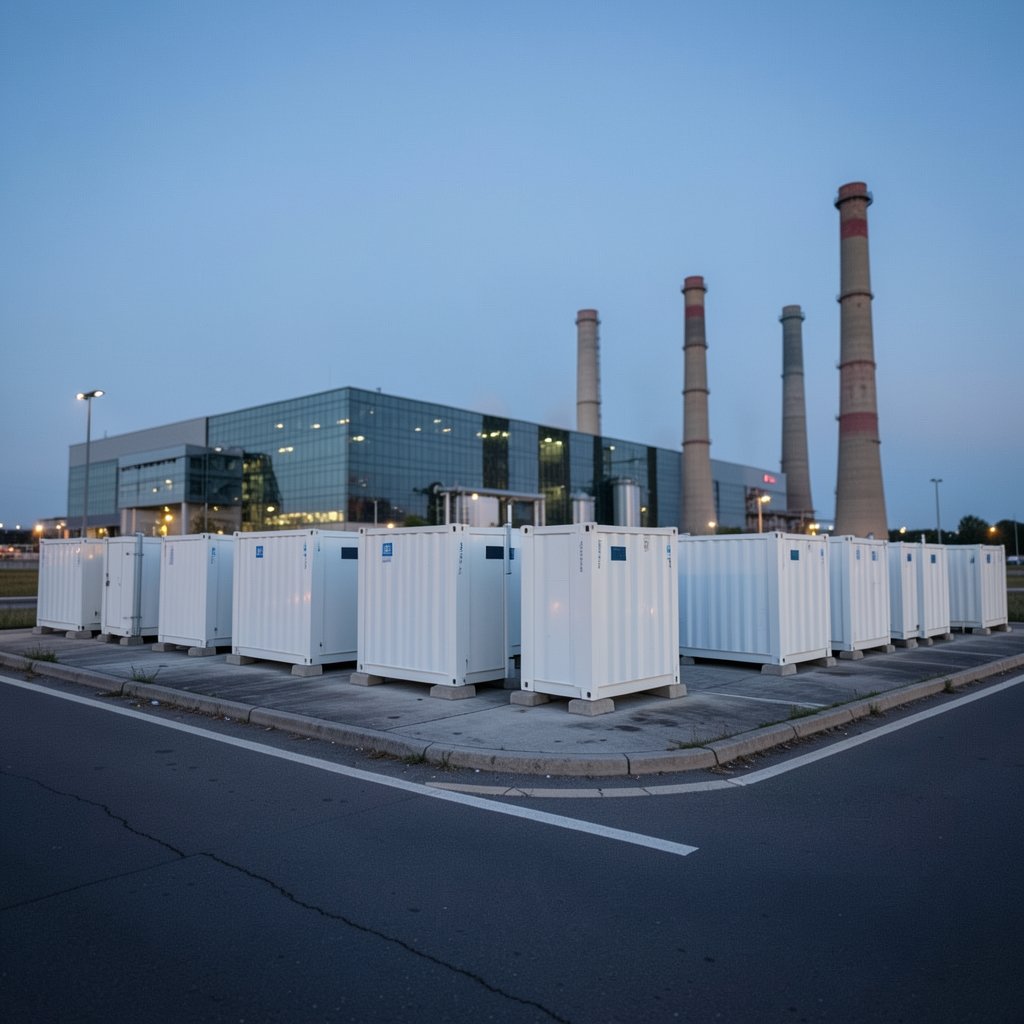
What if the biggest story in energy investing this year isn’t about oil, solar panels, or wind turbines, but about the batteries quietly filling warehouses next to server farms? That’s the question driving a lot of attention toward the link between AI data centers, battery storage, and the exchange-traded funds (ETFs) that track this space. A headline figure keeps circulating: 216 GWh. It sounds enormous, and it is. But what does it actually mean, and should it change how anyone thinks about investing in the AI power boom? (Batteries)
This article breaks down the forces behind the hype, separates durable trends from noise, and explains what to watch before chasing any “surge” narrative.
Why AI Data Centers Suddenly Need Batteries
For years, data centers relied on diesel generators and lead-acid backup systems that sat idle most of the year. They were insurance, not assets. AI changed the math.
Training and running large models creates power demand that spikes fast and stays high. Grid operators see this as a strain. Utilities face interconnection queues that can stretch for years. In that environment, a battery isn’t just backup. It becomes a tool for smoothing load, shifting demand, and staying online when the grid wobbles.
The U.S. Energy Information Administration has documented rapid growth in utility-scale battery storage capacity in its annual battery storage reports, though exact 2025 and 2026 figures should always be checked directly on eia.gov. The direction is clear even if the precise numbers move: batteries are moving from the margins to the center of the power system.
There’s also a regulatory angle. The SEC requires ETFs to disclose holdings and performance in prospectuses and periodic filings, and issuer fact sheets carry explicit “as of” dates. That matters because a lot of the “surge” talk online cites figures with no date attached. Without a date, a number is just a rumor with good manners.
The 216 GWh Number: What It Represents and What It Doesn’t
Here’s where readers need to slow down. 216 GWh is a capacity figure, not a revenue figure, not a profit figure, and not a guarantee of returns. Gigawatt-hours measure energy storage capacity over time. A battery ETF’s price depends on dozens of other things: interest rates, company earnings, commodity prices, and investor sentiment.
A few honest caveats:
- The 216 GWh figure and its connection to a specific 2026 ETF event could not be independently verified for this article. Treat any single number as a starting point for research, not a conclusion.
- Battery storage capacity growth and ETF performance are related but not the same thing. A fund can hold companies that benefit from storage growth and still fall if broader markets decline.
- “Surge” language is often retroactive. By the time a headline calls something a surge, much of the move may already be priced in.
The practical takeaway: use capacity numbers to understand the scale of a trend, and use fund filings to understand the investment. Mixing the two is how people end up buying at the top of a story.
What’s Actually Driving Battery Demand Around AI
Strip away the marketing and four real forces remain.
Grid Congestion and Interconnection Delays
New data centers need power fast. Grid connections don’t arrive fast. Batteries let operators store cheap off-peak electricity and discharge it when demand peaks, which reduces the need for new transmission capacity in the short term.
Reliability and Uptime Economics
For a hyperscale operator, an hour of downtime can cost more than a year of battery maintenance. Lithium-ion systems respond in milliseconds, far faster than diesel generators spinning up. That speed has real value.
Renewable Integration
Solar and wind are cheap but intermittent. Pairing them with storage makes them dispatchable. Many AI campus proposals now bundle renewables plus batteries as a single package to satisfy corporate sustainability pledges.
Policy and Tax Incentives
Storage has benefited from investment tax credits and state-level programs. These policies shift over time, which is exactly why investors should read fund prospectuses rather than rely on headlines. The SEC’s EDGAR system is the authoritative place to find those filings, including holdings and performance disclosures with as-of dates.
How Battery ETFs Fit Into the AI Power Trade
A battery ETF typically holds a basket of companies across the storage value chain: cell manufacturers, inverter makers, mining firms, and utilities with storage exposure. That diversification cuts single-company risk but doesn’t eliminate sector risk. If lithium prices collapse or a major manufacturer stumbles, the whole fund feels it.
A rough comparison helps clarify the trade-offs:
| Approach | What It Captures | Main Risk |
|---|---|---|
| Battery-focused ETF | Broad storage value chain | Sector concentration, commodity swings |
| Broad clean-energy ETF | Solar, wind, storage, utilities | Diluted exposure to storage specifically |
| Individual battery stocks | Highest upside potential | Company-specific blowups |
| Utility stocks | Regulated, steadier returns | Slow growth, rate sensitivity |
None of these is “correct.” The right choice depends on how much volatility an investor can stomach and how long they plan to hold.
For readers trying to understand the underlying infrastructure, a plain-language explainer on what an AI data center actually is is a useful starting point before diving into fund research.
The Environmental Question Nobody Should Skip
Battery storage is often framed as unambiguously green. The reality is more nuanced. Mining lithium, cobalt, and nickel has real environmental and human costs. Battery manufacturing is energy-intensive. Disposal and recycling infrastructure is still maturing.
That doesn’t make storage bad. It makes it complicated. Anyone weighing the environmental impact of AI data centers should look at the full lifecycle, not the tailpipe alone. The same skepticism applies to the ETF narrative: a fund labeled “clean” still holds companies with supply chains, emissions, and controversies.
Practical Tips for Evaluating the Hype
Here’s what actually works when a number like 216 GWh lands in your feed.
- Find the primary source. Search for the original report, not the tweet about the report. Look for a date and a methodology.
- Check the fund’s fact sheet. Issuer sites publish performance and holdings with as-of dates. Compare at least two dates to see the trend.
- Separate capacity from revenue. Gigawatt-hours tell you about physical buildout. Earnings tell you about business results. They diverge constantly.
- Watch interest rates. Battery and clean-energy funds are rate-sensitive because many holdings are capital-intensive growth companies.
- Read the risks section. Every prospectus has one. It’s boring and it’s the most useful page in the document.
Common mistakes people make: chasing a headline after the move has happened, confusing a thematic fund with a diversified portfolio, and ignoring fees. A fund with a 0.75% expense ratio quietly eats returns over a decade.
What the Broader AI Power Story Looks Like
Battery storage is one thread in a much larger web. The AI buildout is straining grids from Virginia to Ireland to India. Some projects face local resistance, as coverage of the Google data center backlash in India shows. Others raise wildlife and land-use questions, as seen in reporting on the Google data center in Finland and its wolf habitat concerns. (Data center)
On the supply side, equipment is tight. Reporting on how the Tesla Megapack is almost sold out through 2027 captures the bottleneck: demand for grid-scale storage is outpacing manufacturing capacity. That scarcity supports pricing power for suppliers, which is part of why battery-themed funds attract attention.
But bottlenecks cut both ways. They can boost margins for incumbents and simultaneously delay projects, raise costs for data center operators, and push timelines out. An investor who buys the bottleneck story without checking which companies actually hold the order backlog is guessing.
Data privacy and AI governance also intersect here. As companies build out AI infrastructure, scrutiny of how data is handled grows, reflected in coverage of AI data safeguards in products like Gmail and Photos. Regulatory pressure can slow deployments and change demand forecasts.
Security risks matter too. High-profile breaches, such as the reported EY breach affecting Goldman Sachs and Man Group data, remind investors that digital infrastructure carries operational risk that no battery can back up.
How to Think About 2026 Specifically
Forecasts for 2026 should be read as scenarios, not prophecies. The storage buildout depends on interest rates, permitting timelines, manufacturing capacity, and the pace of AI capital spending. Any one of those can shift the picture.
A balanced stance looks like this: acknowledge that electrification and AI are durable, multi-year trends; accept that specific capacity figures and fund returns will vary widely from forecast; and size any thematic position so that a 30% drawdown wouldn’t force a panic sale.
The most useful habit is boring. Read the filing. Check the date. Compare the number to last year’s number. Ask who benefits and who pays. That routine beats any headline, including one with 216 GWh in it.
Conclusion
The connection between AI data centers, battery storage, and ETF interest is real, but it’s messier than a single number suggests. 216 GWh is a useful signal of scale, not a buy recommendation. The underlying forces, grid congestion, reliability economics, renewable integration, and policy support, are genuine and likely to persist. The investment vehicles that track them carry real risk, real fees, and real volatility.
Readers who want to act on this story should start with primary documents, not social posts. They should separate physical buildout from financial performance. And they should remember that every surge headline is written after the fact. The disciplined approach, checking sources, reading prospectuses, and sizing positions carefully, is unglamorous. It’s also the only one that survives contact with a real market.
FAQ
What does 216 GWh mean in the battery storage context?
GWh stands for gigawatt-hours, a measure of energy storage capacity. It describes how much energy a fleet of batteries can hold and discharge over time. It is a physical buildout figure, not a revenue or profit number, so it should not be read as a direct indicator of fund performance.
Is a battery ETF the same as investing in AI data centers?
No. A battery ETF typically holds companies across the storage supply chain, including manufacturers, miners, and utilities. Some of those companies benefit from AI data center demand, but the fund is not a pure AI play. Its returns depend on many factors beyond data center construction.
Why are AI data centers suddenly using so much battery storage?
AI workloads create large, fast-changing power demand. Batteries help smooth that load, provide instant backup, and reduce reliance on grid connections that can take years to secure. They also support sustainability goals by pairing with renewable generation.
Can I verify the 216 GWh figure myself?
Yes, and you should. Start with the U.S. Energy Information Administration’s battery storage reports on eia.gov, then check fund prospectuses and fact sheets filed through SEC EDGAR. Always look for an explicit as-of date, since undated figures are impossible to evaluate.
What are the biggest risks in battery-themed ETFs?
Sector concentration, commodity price swings, interest rate sensitivity, and company-specific failures are the main risks. Many holdings are capital-intensive growth companies, which tend to fall sharply when rates rise. Fees also erode returns over long holding periods.
Should long-term investors ignore the surge narrative entirely?
Not entirely, but they should discount it. The underlying trends in electrification and AI infrastructure are durable. The specific headline numbers and short-term price moves are not reliable guides. A diversified approach with careful position sizing tends to serve long-term investors better than chasing momentum.