
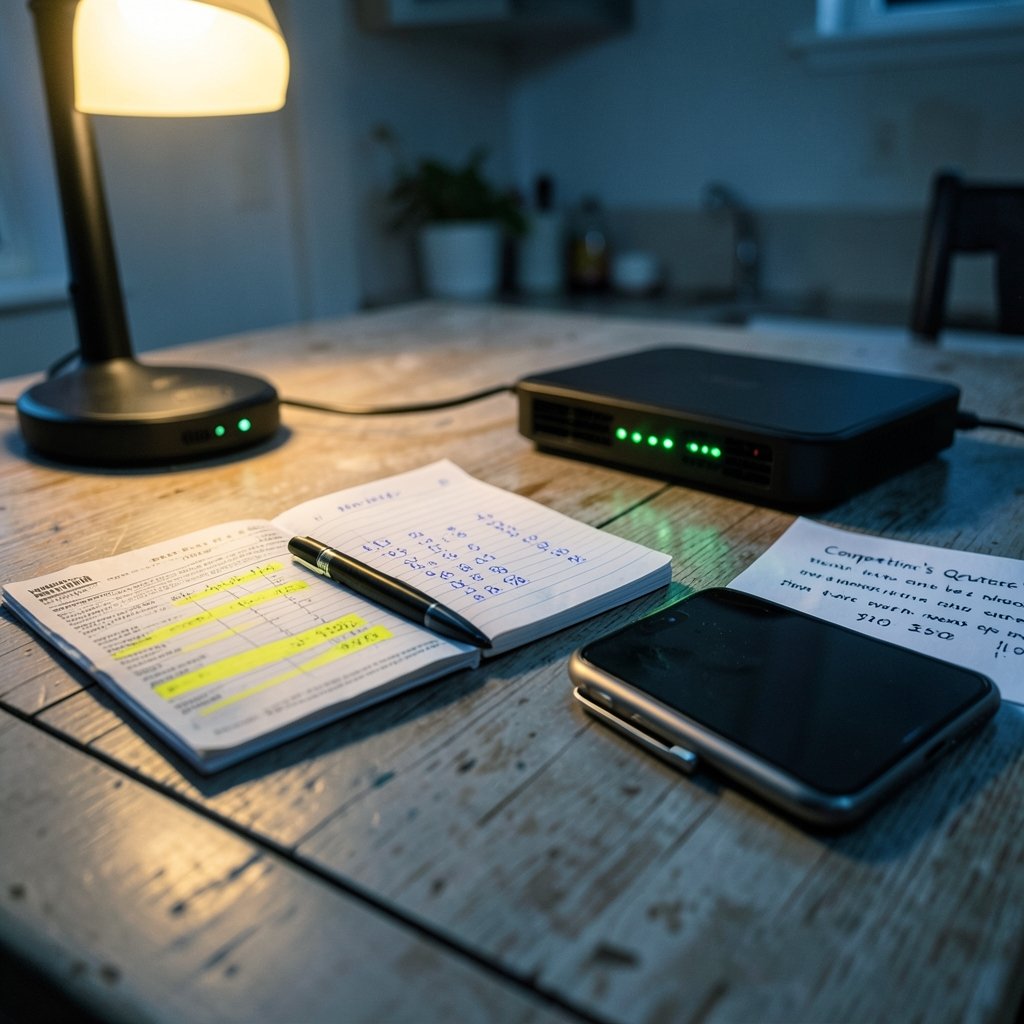
The average American household spends roughly $60 to $70 a month on internet service, yet two neighbors on the same street can pay wildly different prices for the exact same speed. That gap has almost nothing to do with technology and almost everything to do with negotiation. Providers count on customers who renew quietly, never compare offers, and never ask for a better rate. The people who do ask often shave $20 to $40 off their monthly bill within a single phone call. (Negotiation)
This guide walks through the tactics that actually work, the mistakes that quietly cost people money, and the scripts that turn a routine customer service call into real savings.
Why Internet Bills Creep Upward
Most internet plans start with a promotional rate that lasts 12 to 24 months. When that window closes, the price jumps to the provider’s standard rate, sometimes by 40 percent or more. Customers rarely receive a dramatic warning; the increase simply appears on a statement.
There is a second layer to the problem. Providers bundle equipment rental fees, installation charges, and “network recovery” surcharges into the total, so the advertised price and the actual bill rarely match. Regulators have pushed for clearer disclosure. In recent years, the FCC required larger providers to publish broadband consumer labels that resemble nutrition labels, spelling out introductory prices, contract terms, and fees. Checking those labels before a call gives a customer concrete numbers to argue with. (Consumer Guides)
Understanding the pricing structure matters because negotiation is really about leverage. A provider will lower a bill when the cost of losing a customer exceeds the cost of a discount. Everything in this article builds toward creating that calculation.
Know Your Numbers Before You Dial

Walking into a negotiation unprepared is the single most common mistake. Front-line agents can sense uncertainty, and a vague request like “can you lower my bill?” rarely produces a real offer.
Before calling, gather four things:
- Your current monthly total, including every fee, not just the advertised rate.
- Your promotional end date, which tells you when the standard rate kicked in.
- Your actual speed tier, since downgrading one level is sometimes easier than negotiating a discount.
- Competitor offers at your exact address, with prices and speeds written down.
That last item is the heavy artillery. Most markets have at least two providers, and a written quote from a rival changes the tone of the conversation immediately. The FCC’s National Broadband Map lets households check which providers serve their address, which is useful when a customer suspects they have more options than they realized.
It also helps to know what kind of connection you have. Fiber customers usually have more leverage than cable customers, who in turn have more than DSL or satellite subscribers, simply because fiber markets tend to be more competitive. If you are weighing speed against price, a guide to the best internet for gaming can help you decide whether a cheaper tier would actually serve your household’s needs.
The Retention Department Is Where Deals Live
The first person who answers the phone is trained to handle billing questions, not to save accounts. The real authority sits in the retention or loyalty department, sometimes called customer solutions or cancellations. These teams have discretion to apply credits, extend promotional rates, or match competitor pricing, and they are measured on how many customers they keep.
The path there is simple: ask directly. “I’d like to speak with the retention department about my bill” works far better than hinting. If the agent resists, mention that you are considering canceling, which usually triggers a transfer.
Once connected, state the situation plainly and let silence do some work. A script like this is effective:
“I’ve been a customer for four years and I’ve always paid on time. My bill just went from $55 to $85, and a competitor is offering the same speed for $50. I’d rather stay, but I need the bill closer to what I was paying. What can you do?”
Notice what the script does. It establishes loyalty, references a real competitor price, states a specific target, and signals a willingness to leave without being hostile. Agents respond to specifics.
What Actually Works in Practice
Experience from thousands of these calls points to a handful of tactics that consistently move the needle, and a few that backfire.
Asking for the promotional rate by name. Agents can often re-enroll a customer in the new-customer promotion. It costs the provider less than acquiring a replacement customer.
Threatening to cancel, but only if you mean it. Empty threats get detected quickly. If the agent calls your bluff and you fold, the account gets flagged and future calls get harder.
Negotiating fees instead of the headline price. Equipment rental fees, often $5 to $15 a month, are frequently waivable. So are one-time installation charges. Buying your own compatible modem or router can eliminate the rental fee permanently.
Timing the call well. Calling early in the month, before quotas tighten, and avoiding Monday mornings tends to produce better outcomes. Weekday afternoons are the sweet spot.
Escalating politely. If a front-line agent says no, ask for a supervisor. If a supervisor says no, ask when the next promotional cycle begins and request a note on the account. Records matter on the next call.
What backfires? Yelling, demanding, and citing vague claims like “my friend pays less” without evidence. So does accepting the first offer, which is almost never the best one available.
Compare Before You Commit
A discount is only a discount if the total cost drops. The table below shows how offers that look similar can differ once fees and contract terms are added back in.
| Factor | Offer A | Offer B |
|---|---|---|
| Advertised monthly price | $45 | $55 |
| Equipment rental | $12/month | Included |
| Autopay discount | None | $5/month |
| Contract term | 24 months | None |
| Early termination fee | $180 | $0 |
| Effective monthly cost | $57 | $50 |
The cheaper headline price loses once the rental fee and the lock-in are counted. This is why customers should always ask three questions: What is the total monthly cost including fees? Is there a contract, and what does breaking it cost? Does autopay or paperless billing reduce the price?
Many providers offer a $5 to $10 monthly discount for autopay, and it is usually the easiest savings available. It is also worth asking whether a new promotional rate requires a term commitment, because a two-year contract can trap a customer who later moves or switches.
When to Walk Away
Negotiation has a floor. If the best available offer still exceeds a competitor’s price by a meaningful margin, switching is the rational move. The good news is that switching has never been easier; many providers handle the transfer, and some cover early termination fees from the old provider.
Before canceling, confirm the final bill, return any rented equipment, and get a confirmation number for the cancellation. Keep records of every conversation, including dates, agent names, and promised amounts. Disputes are far easier to resolve with documentation.
There is a broader point here about privacy and security. Switching providers is a good moment to review what personal data you share and how accounts are protected. A primer on what internet privacy means and how to protect it is worth reading before handing over new account details, and households that handle sensitive work online should pair a cheaper plan with solid protection, such as the best internet security software available.
Common Mistakes That Cost Money
A few patterns show up again and again among customers who fail to get a discount.
- Calling without a competitor quote. The single biggest predictor of failure.
- Accepting the first offer. Agents expect a counter. Ask for more.
- Forgetting the promo end date. Set a calendar reminder for two weeks before it expires.
- Ignoring the equipment fee. It is often the easiest line item to remove.
- Not asking about low-income or loyalty programs. Many providers run their own discounted tiers, separate from federal programs, and they are rarely advertised.
The federal Affordable Connectivity Program, which once subsidized broadband for low-income households, ended in 2024 after its funding ran out. Some providers stepped in with their own low-cost plans, but availability varies widely, so it is worth asking directly rather than assuming.
Building Leverage Over Time
The strongest negotiating position comes from being a customer the provider wants to keep. Paying on time, staying past the promotional period, and bundling services all help. So does knowing the market: households that check competitor pricing every six months tend to keep their bills lower year after year.
It also pays to understand where the industry is heading. Broadband pricing is increasingly shaped by competition from fixed wireless and satellite options, and providers are investing heavily in network upgrades. Industry analysis of the McKinsey AI value curve and its $2.52 trillion cost-risk picture illustrates how much capital is flowing into infrastructure, which in turn shapes how aggressively providers compete for subscribers. When competition intensifies, discounts get easier to obtain.
For households that want to lock in the best combination of speed and price, comparing plans carefully before calling is half the battle. A roundup of the best internet security options in Australia shows how plan choice and protection decisions often overlap, and customers juggling multiple services may find value in reviewing broader internet security guidance alongside their plan comparison.
A Step-by-Step Negotiation Checklist
Here is the sequence that works, in order:
- Pull your latest bill and note the total, fees, and promo end date.
- Check competitor offers at your address and write down two quotes.
- Call during a weekday afternoon and ask for retention.
- State your loyalty, the competitor quote, and a specific target price.
- Ask about waiving equipment fees and applying autopay discounts.
- If refused, ask for a supervisor and repeat the request.
- Get the agreed price, term, and confirmation number in writing.
- Set a reminder to renegotiate before the new promo expires.
Most calls resolve within 20 to 30 minutes. The savings, compounded over a year, often exceed $300.
Conclusion
Negotiating a lower internet bill is less about charm and more about preparation. Providers price on inertia, and customers who break that inertia with competitor quotes, specific targets, and a calm request for retention get better rates. The tactics are not complicated: know your numbers, ask for the right department, negotiate the fees as well as the headline price, and be genuinely willing to walk away.
The customers who save the most are the ones who treat the bill as a recurring negotiation rather than a fixed cost. A 20-minute call every year or two, timed around promotional cycles, is one of the highest-return habits a household can build. The provider’s retention team exists for exactly this conversation; the only thing standing between most customers and a lower bill is the decision to pick up the phone.
Frequently Asked Questions
How much can I realistically save by negotiating my internet bill?
Most successful negotiations produce savings of $15 to $40 a month, depending on the market and the provider. Households that combine a promotional rate with waived equipment fees and an autopay discount often land at the higher end. Savings compound over a year, so a single call can be worth several hundred dollars.
Is it better to call or chat online to negotiate?
Phone calls generally work better because agents can transfer you directly to retention and apply credits in real time. Chat can work for simple requests like removing a fee, but complex negotiations tend to stall. If you do use chat, save the transcript and ask for a confirmation number.
Will asking for a discount hurt my account or credit?
No. Requesting a lower rate or speaking with retention has no effect on your credit score. The only credit-related risk comes from missing payments or canceling a service with an outstanding balance. Negotiating politely is a normal, expected interaction.
What if my provider refuses to lower my bill?
Ask for a supervisor, then ask when the next promotional cycle begins and request a note on your account. If the final offer still exceeds a competitor’s price, switching is usually the better move. Many providers cover early termination fees, and the transfer process is typically handled for you.
Do I need to threaten to cancel to get a discount?
Not always, but it helps to be genuinely willing to leave. Agents respond to credible alternatives, so having a competitor quote in hand matters more than the threat itself. Empty threats are detected quickly and can make future negotiations harder.
How often should I renegotiate my internet bill?
Check your bill and competitor pricing every six to twelve months, and always two weeks before a promotional rate expires. Providers rarely alert customers when a promo ends, so a calendar reminder is the simplest way to avoid paying the standard rate for months without noticing.



