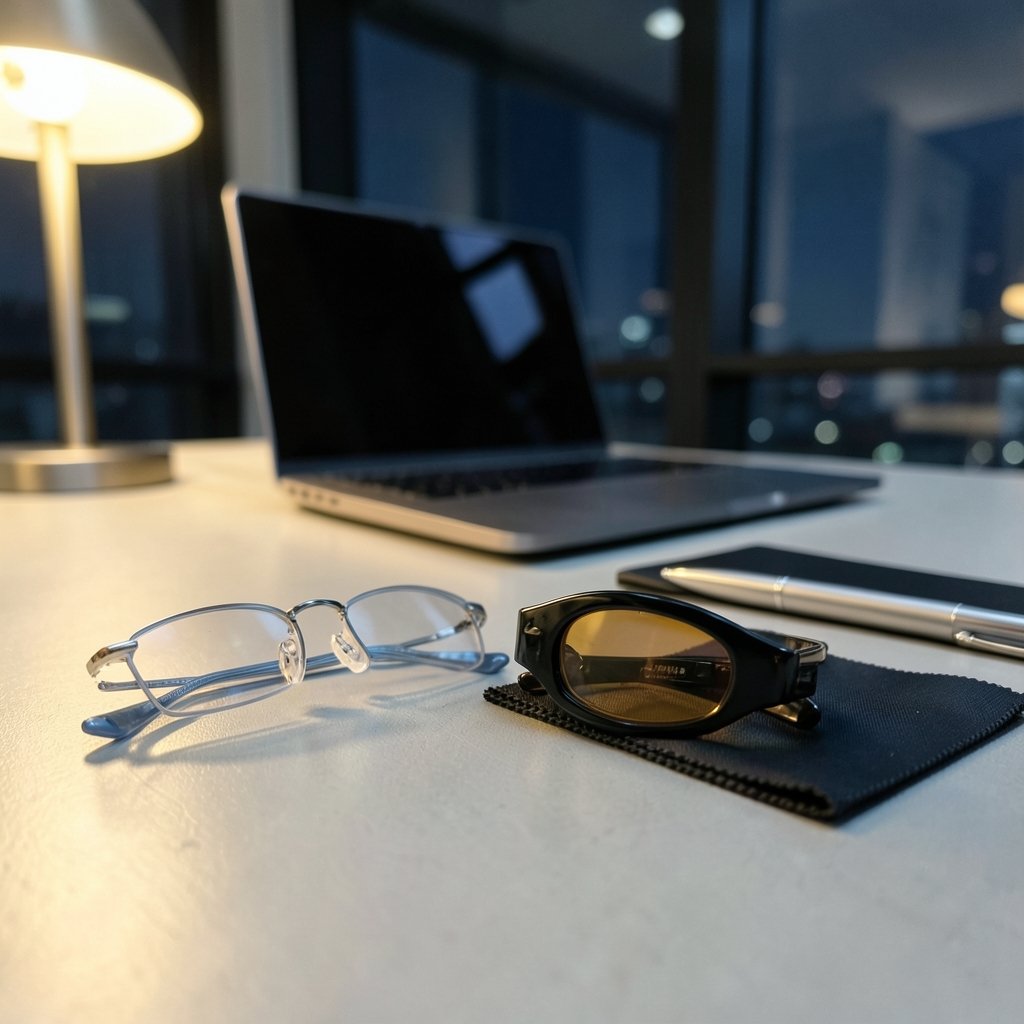
Quick Answer: Do blue light glasses actually work?
It depends on what you expect them to do. For everyday screen-related eye strain, the best available evidence suggests blue light glasses make little or no meaningful difference, and simple habits like regular breaks and better lighting usually help more.
They may offer a modest benefit for evening screen use and sleep timing, though the clinical evidence there is weak and far from settled. Lightly tinted computer lenses and heavily amber-tinted glasses are also very different products, so results from one type do not automatically apply to the other.
Before buying, compare lens tint and category, whether the lenses are prescription or plano, coating and anti-reflective options, return policy, price, and whether the seller makes specific health claims.
A Big Number That Changes How You Read the Marketing
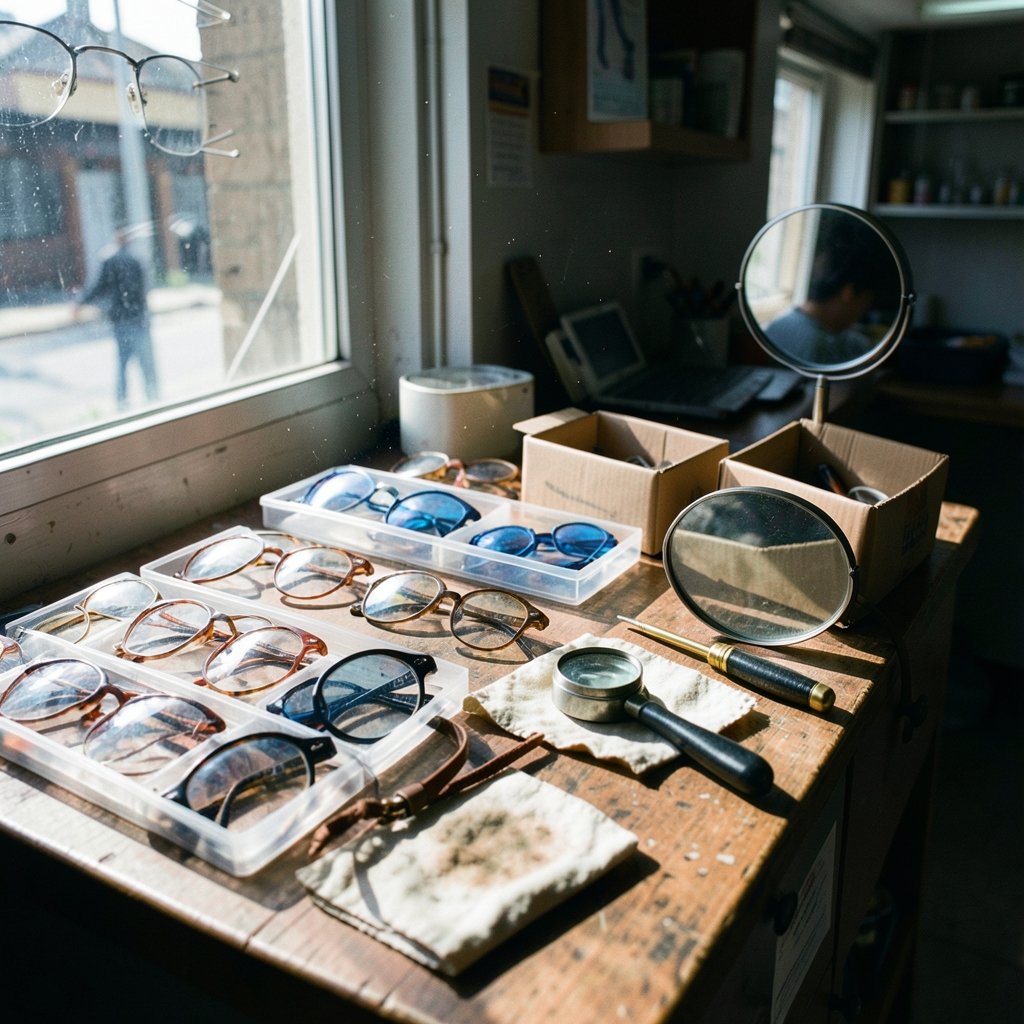
Search for blue light glasses and you will meet a familiar claim: screens emit blue light, blue light harms eyes, so buy these lenses. It sounds tidy. The problem is that the tidy version skips the part where researchers actually tested the question.
In August 2023, a systematic review of 17 randomized controlled trials involving 619 participants looked at whether blue-light-filtering spectacle lenses reduce visual fatigue from computer use. The conclusion was sobering for anyone expecting a miracle: the lenses may have little or no short-term effect on visual fatigue, and the evidence on sleep and macular health was uncertain. You can read the full review in the Cochrane Library. (Computer Vision Syndrome)
That single finding does not make the glasses useless. It does mean the marketing has run well ahead of the science. And once you understand why the evidence is mixed, the whole category starts to make more sense.
What Blue Light Actually Is, and Why Screens Get Blamed
Blue light is simply the short-wavelength end of the visible spectrum. The sun is by far the biggest source you will ever encounter. A bright screen in a dim room feels intense, but the light energy reaching your eye from a monitor is a small fraction of what a walk outside on a cloudy day delivers.
So why the blame? Two reasons keep the story alive.
First, short-wavelength light is scattered more easily in the eye, which can make fine text feel slightly softer. Second, and more importantly, evening exposure to blue light can suppress melatonin and shift circadian timing. That second effect is real and has been measured in laboratory conditions, though the size of the effect depends heavily on intensity, duration, and timing. If you want the underlying mechanics of how displays produce and blend light, a plain-language explainer on how AI image generation works is a surprisingly good primer on pixels, channels, and color.
The leap from “blue light affects circadian rhythm” to “blue light glasses will fix your tired eyes” is where things get shaky. Those are two different claims, and they deserve two different verdicts.
The Eye Strain Question: What the Evidence Says
The American Academy of Ophthalmology has been direct on this point: there is no evidence that blue light from screens damages eyes, and blue-light glasses are unlikely to help eye strain. The academy’s guidance instead points toward the 20-20-20 rule and regular breaks. Their position is summarized on the AAO’s blue light page.
The College of Optometrists in the UK reached a similar place, stating that there is no strong evidence that blue-light-blocking lenses reduce eye strain from screens and that blue light from digital devices is unlikely to damage the eye. Their announcement is worth reading in full on the College of Optometrists site.
Here is the practical translation. Most screen-related discomfort is not a blue light problem. It is a blinking problem, a focusing problem, and a posture problem. People blink less when staring at a screen, the eyes hold a fixed near focus for long stretches, and the surrounding lighting is often badly mismatched to the screen brightness. None of those causes are addressed by a lens tint.
| Complaint | Likely main cause | Do lenses help? |
|---|---|---|
| Tired, dry eyes after work | Reduced blinking, sustained near focus | Unlikely to be the fix |
| Headaches by late afternoon | Posture, glare, uncorrected vision | Sometimes, if prescription is wrong |
| Trouble falling asleep | Evening light exposure, timing | Possibly modest help |
| Blurry distance vision | Refractive error | Only if lenses are prescription |
| Color-sensitive work looks off | Tint altering color perception | Can make it worse |
The Sleep Question: Where the Case Is Stronger but Unproven
This is the part of the debate where blue light glasses get their most defensible hearing. Evening light exposure genuinely can delay sleep timing, and filtering short wavelengths in the hours before bed is a plausible way to reduce that effect.
Plausible is not the same as proven. The same Cochrane review rated the sleep evidence as very low certainty, which means the studies were too few, too short, or too inconsistent to support a firm conclusion. Anyone who tells you the sleep benefit is settled is overselling it.
What actually works in practice, according to clinicians who treat sleep and eye complaints, is usually unglamorous: dim the room, lower the screen brightness, stop scrolling an hour before bed, and keep a consistent sleep schedule. Glasses are a supplement to those habits, not a substitute. Think of them as a small dial you can turn, not a switch that fixes the room.
Not All Blue Light Glasses Are the Same Product
One of the most common mistakes is treating “blue light glasses” as a single category. It is not. The range runs from lightly tinted lenses with a barely visible warm cast to deeply amber-tinted glasses that block a large share of short-wavelength light. Evidence from one type does not transfer to another, and a study of heavy amber lenses tells you almost nothing about the clear-looking pair sold at a checkout counter. (Are Computer Glasses Worth It?)
There is also a real trade-off nobody mentions in the ads: filtering short-wavelength light shifts how colors appear. Studies of blue-blocking lenses have reported altered color discrimination. For a graphic designer, a photographer, or anyone matching paint samples, that matters. If your work depends on accurate color, a strong tint can cost you more than it saves.
A second practical point: many cheap blue light glasses are non-prescription. If your actual problem is mild uncorrected refractive error or an outdated prescription, a tinted plano lens will not fix it. An eye exam will. The same logic applies to other everyday tech questions where the visible symptom hides a different cause, much like understanding what an IP address is and how it works reveals that “slow internet” is often a routing issue rather than a bandwidth one.
What Actually Helps Eye Strain More Than Lenses
If the goal is comfort at the end of a workday, the interventions with the best support are behavioral and environmental.
- Follow the 20-20-20 rule: every 20 minutes, look at something 20 feet away for 20 seconds.
- Match room lighting to screen brightness so your pupils are not constantly adjusting.
- Position the screen just below eye level and about an arm’s length away.
- Blink deliberately. It sounds silly and it works.
- Get a proper eye exam before blaming your monitor.
- Reduce evening brightness rather than relying on a tint.
These steps cost nothing and address the actual mechanisms behind most discomfort. In practice, people who try them often find they no longer need the glasses at all, which is an outcome no eyewear brand is eager to advertise.
Who Might Reasonably Try Them Anyway
A balanced read of the evidence leaves room for sensible use. Someone who works late into the evening, has already fixed their lighting and posture, and notices that bright screens leave them wired at midnight might find lightly tinted lenses a reasonable experiment. The same goes for someone who genuinely feels less fatigued with a mild tint, as long as they understand that the effect may be partly placebo.
Placebo is not nothing, by the way. If a pair of glasses reminds you to take breaks, that reminder has value. The mistake is paying a premium for a health claim that the research does not support, then skipping the free habits that do.
The Regulatory Blind Spot Worth Knowing
In the United States, non-prescription blue light glasses are generally marketed as eyewear rather than medical devices, which means efficacy claims are not pre-approved by regulators. That is not a scandal; it is a structural gap. It explains why packaging can promise relief from digital eye strain while the clinical evidence remains thin. The US Food and Drug Administration publishes general context on how medical devices are classified, which helps clarify why eyewear often falls outside that framework.
The practical takeaway is to read claims the way you would read any unregulated marketing: look for specifics, be wary of dramatic percentages, and check the return policy before you commit. If a seller offers a 30-day return window, the experiment costs you postage rather than the full price.
How This Fits Into a Wider Pattern
The blue light story is a textbook example of a real mechanism being stretched into an oversized product claim. A genuine laboratory finding about melatonin becomes a shelf full of lenses promising to save your eyes. The same pattern shows up across technology marketing, where a real technical detail gets inflated into a cure-all. Anyone who has tried to separate genuine capability from hype around what an AI agent is and how it works will recognize the shape of the argument immediately.
The defense is the same every time: ask what was actually measured, in whom, for how long, and against what comparison. For blue light glasses, the honest answer is that the measured benefits are small, short-term, and inconsistent, while the free alternatives are well supported.
Conclusion
Do blue light glasses actually work? For the claim printed on most boxes, the answer is largely no. The best available review found little or no short-term effect on visual fatigue, and major eye health bodies see no evidence that screen blue light damages eyes. For evening light exposure and sleep timing, the mechanism is real but the clinical proof for lenses remains weak and uncertain.
That does not make the glasses a scam. It makes them a modest, optional tool with a narrow use case, best paired with habits that cost nothing: breaks, blinking, sensible lighting, and a current prescription. Buy them if you like them, keep the receipt, and do not expect them to do the work that only better habits can. The most effective blue light filter ever made is still the off switch, applied an hour before bed.
FAQ
Do blue light glasses help with headaches?
Sometimes, but usually not because of the blue light. Headaches during screen work often trace back to posture, glare, dehydration, or an uncorrected vision problem. If a tinted lens happens to reduce glare or remind you to take breaks, you may feel better. If headaches persist, an eye exam is a better next step than a new pair of glasses.
Are blue light glasses safe to wear all day?
For most people, yes. Lightly tinted lenses are generally well tolerated, and the main reported downside is altered color perception. Heavily amber lenses can make colors look noticeably wrong, which is inconvenient for design work and can be a problem for anyone who needs accurate color judgment. If you drive at night, check how the tint affects your vision before relying on it.
Do blue light glasses help you sleep better?
The evidence is weak. Evening short-wavelength light can suppress melatonin and delay circadian timing, so filtering it is plausible. But the clinical studies on lenses are limited and rated very low certainty, so no firm conclusion is possible. Dimming screens and keeping a consistent bedtime have stronger support than any lens.
Is dark mode as good as blue light glasses?
Dark mode reduces overall light output, which can feel more comfortable in a dim room, but it does not selectively remove short wavelengths the way a tint does. Neither approach addresses blinking or focus fatigue. Use whichever feels comfortable, and treat both as small adjustments rather than solutions.
Why do some eye doctors still recommend them?
Recommendations vary because patient experiences vary. Some clinicians find that a mild tint helps certain people relax, or that the purchase prompts better screen habits. Others point to the lack of evidence and steer patients toward breaks and lighting changes first. Both positions can be reasonable depending on the individual.
Can blue light glasses replace prescription glasses?
No. Blue light filtering is a coating or tint, not a correction for refractive error. If you need vision correction, you need a prescription, and you can often add a blue light filter to prescription lenses. Wearing tinted plano lenses when you actually need correction will not solve the underlying problem.