Open world games are now the most expensive bets in the industry. A single big-budget release can cost well over $200 million to build and market, and studios routinely spend five to seven years on one map. That pressure shows up in the games themselves: bigger worlds, longer runtimes, and a lot more risk-aversion. So when players search for the best open world games of 2026, the real question is not “which map is biggest” but “which world respects your time.” This guide breaks down the year’s standout open-world releases, the ones to approach with caution, and the practical habits that separate a great 80 hours from a wasted one.
What “Best” Actually Means in 2026
The open world label has stretched to cover everything from dense urban sandboxes to procedurally generated planets. That makes ranking useless without criteria. Three things matter most right now:
Traversal quality. A world is only as good as the act of moving through it. If getting from one objective to another feels like a chore by hour ten, the map is too big for its own good.
Density versus emptiness. Modern design has mostly abandoned the “icon carpet” approach, where every square meter holds a collectible. The better 2026 releases favor fewer points of interest, each with a clear purpose, spaced so discovery still feels earned.
Systemic freedom. The strongest open worlds let systems collide. Fire spreads, weather changes patrol routes, NPC schedules create emergent moments. Games built on rigid scripting age badly; games built on interacting systems stay interesting.
A useful rule of thumb: a great open world gives you at least one story you couldn’t have planned. If every memorable moment came from a cutscene, the world is a backdrop, not a sandbox.
The Contenders Worth Your Time
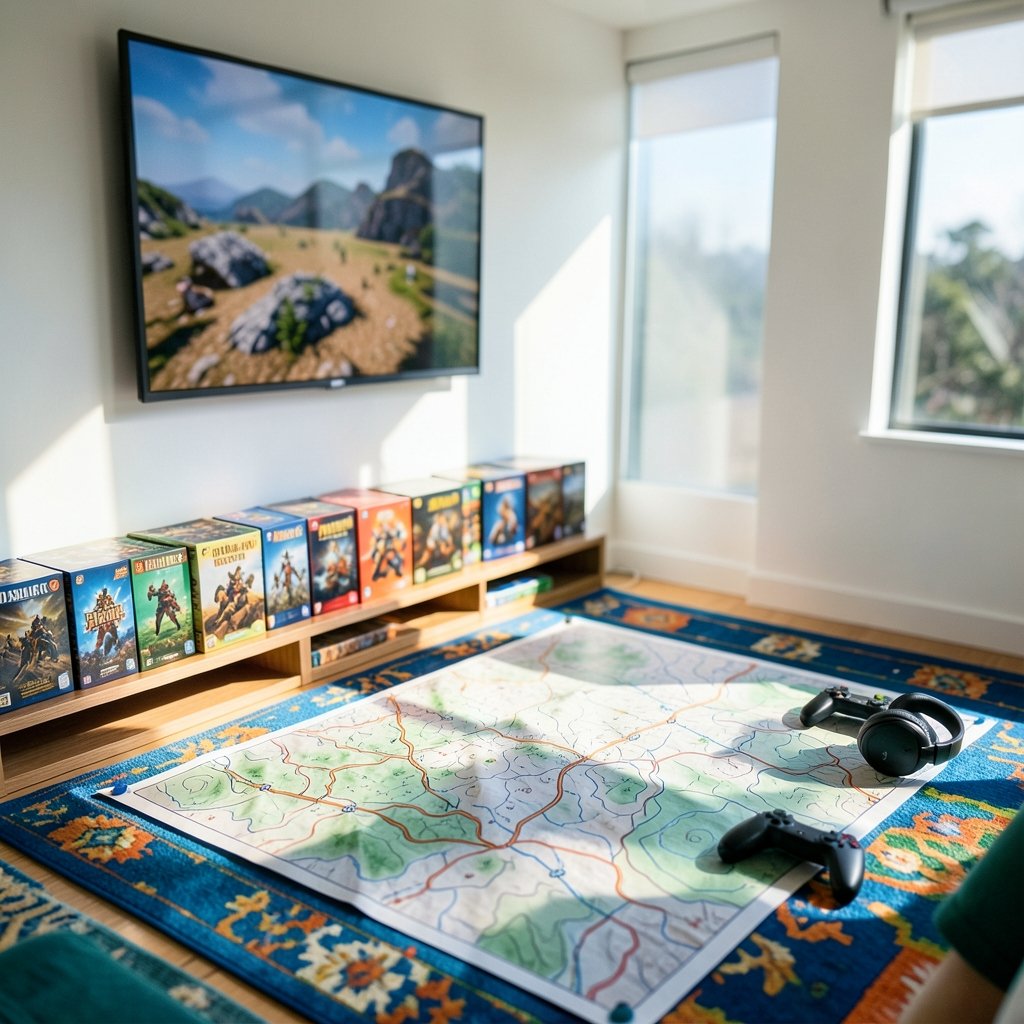
Release calendars for any given year are volatile. Titles slip, get pulled forward, and arrive in early access long before they’re “finished.” The list below reflects the shape of the 2026 lineup as it stands, with the caveat that dates move. For a running view of what’s still on the way, keep an eye on games coming out in 2026 rather than trusting a single announcement.
Big-Budget Sandboxes
The tentpole releases of the year follow a familiar pattern: enormous maps, cinematic presentation, and 60-plus hour main paths. What separates the good ones from the forgettable ones is restraint. The best entries in this tier trim the checklist busywork and let side content breathe. They also tend to offer real build variety, so two players can approach the same outpost in completely different ways.
Watch for these red flags in marketing: “the biggest map we’ve ever made,” “over 200 hours of content,” and “hundreds of activities.” Size claims are cheap. What matters is how many of those hours are actually good.
Survival and Crafting Worlds
Survival-flavored open worlds had a strong run into 2026, largely because they solve the density problem by making the player the content. Resource loops, base building, and environmental hazards generate stories without scripted quests. The trade-off is a rough first few hours. New players often quit before the loop clicks.
The practical fix: pick one resource goal and ignore everything else for the first session. Players who try to optimize every system at once burn out fast. Survival games reward focus, not thoroughness.
Racing and Driving Sandboxes
Driving-focused open worlds remain the most underrated category. They solve traversal by making movement itself the reward. A well-tuned handling model turns a simple delivery run into the best part of your evening. If you want the broader picture, the best open world games for pc roundup covers how the PC versions of these titles compare on performance and mod support, which matters a lot for driving games with active modding scenes. (Open world)
A Comparison at a Glance
| Category | Typical playtime | Best for | Main risk |
|---|---|---|---|
| Big-budget action sandbox | 50–80 hours | Cinematic story plus freeform combat | Checklist fatigue |
| Survival and crafting | 100+ hours | Self-directed goals, base building | Brutal opening hours |
| Driving and racing sandbox | 25–40 hours | Short sessions, skill expression | Thin story content |
| Urban crime sandbox | 40–60 hours | Systemic chaos, replayability | Repetitive mission design |
| Fantasy RPG open world | 80–120 hours | Deep builds, exploration | Pacing collapses mid-game |
Treat playtime as a warning as much as a selling point. A 120-hour game with 40 hours of filler is worse than a tight 30-hour one.
The 2026 Scene Beyond Consoles
The definition of “open world” is shifting with the hardware. Handheld PCs and high-end phones now run worlds that would have required a desktop a few years ago. That has changed what players expect from portable sessions, and the best mobile games 2026 coverage shows how far streaming and native ports have come. Cloud saves make it realistic to chip away at a 90-hour campaign in 20-minute chunks.
There’s a catch. Open worlds are the worst genre for interrupted play. Long load times, complex quest states, and “where was I?” confusion hit hard when sessions are short. Two habits help:
- End every session at a clear objective. Fast travel to a hub, sell junk inventory, and log out facing your next goal.
- Keep a written note of your current build or plan. A single line like “saving for the second-tier rifle” prevents hours of drift.
The broader video games 2026 outlook suggests this portability trend only accelerates, especially as more releases ship with cross-progression from day one.
What Actually Works in Practice
Experience with these games surfaces a few lessons that marketing never mentions.
Ignore the completion percentage. Open world games are designed to make you feel behind. The counter is a lie of omission: it counts collectibles you were never meant to find. Players who chase 100% on a 100-hour map routinely report burnout, not satisfaction.
Turn off the minimap for one session. It sounds like a stunt, but it’s the fastest way to find out whether a world is actually well designed. If you can navigate by landmarks, the environment has real structure. If you’re lost within minutes, the map is doing all the work.
Do the side content that has a name. Named characters with their own arcs are usually where the writing budget went. Generic “clear the camp” markers are not. This one filter cuts most open-world filler instantly.
Check performance before you commit. Frame pacing and load times vary wildly between platforms. A game that reviews well on one system can stutter badly on another, and patches in the first month often change the picture entirely.
Don’t buy at launch unless you’re certain. Open world games ship with the most bugs of any genre because they have the most systems interacting. Waiting two or three patches is not cynicism; it’s basic consumer sense.
Common Mistakes That Ruin the Experience
The most frequent mistake is treating an open world like a to-do list. Players open the map, see 47 icons, and start clearing them in order. That’s the fastest route to hating a game you’d otherwise love.
The second mistake is refusing to fast travel. Some purists insist on walking everywhere. In practice, traversal is fun until it isn’t, and the moment it stops being fun you should use the tools the game gave you. There’s no prize for tedium.
The third is build paralysis. Modern open worlds layer skill trees, crafting, faction reputations, and gear rarity on top of each other. New players freeze. The fix is to pick one playstyle in the first hour and commit. You can respec later in most of these games, and even when you can’t, a focused build almost always beats a scattered one.
Finally, players routinely ignore accessibility and difficulty settings. Many 2026 releases let you tune combat difficulty, puzzle hints, and navigation assistance separately. Using them isn’t cheating; it’s calibrating the experience to the time you actually have.
Where the Industry Is Heading
Two forces are shaping the next wave. The first is cost. With budgets this large, publishers are increasingly risk-averse, which is why so many 2026 releases are sequels, remakes, or established franchises. The second is regional expansion. Markets outside North America and Europe are driving growth, and regulatory decisions there shape what gets made. China’s approval process, for instance, gates which titles reach a massive player base, and the recent news that China approves 215 games, 6 foreign, in 2026 illustrates how slowly international titles enter that market. That affects release timing and, sometimes, which games get made at all.
A parallel debate concerns openness in technology more broadly. Policy proposals around open-weight models and cross-border competition, such as the Manhattan Institute safe harbor proposal on open weights and China, hint at how governments are thinking about openness in digital products generally. Game worlds are a small part of that picture, but the same tension between control and openness runs through both.
For players, the takeaway is simple: the new video games 2026 slate is deep, but it rewards patience over hype. Wait for performance reports. Read reviews from players who finished the game rather than from those who stopped after ten hours.
How to Pick Your Next World
If you’re choosing right now, work backward from your available time rather than from review scores. (IGN Wikis)
| Time per week | Best fit | Avoid |
|---|---|---|
| Under 5 hours | Driving sandbox, shorter action games | 100-hour RPGs |
| 5–10 hours | Urban sandbox, focused action | Survival with heavy grinding |
| 10–20 hours | Fantasy RPG, big-budget sandbox | Nothing, really |
| 20+ hours | Anything, including survival | Games you don’t actually enjoy |
The last row is the important one. Plenty of people with unlimited gaming time still bounce off open worlds because they picked a game for its reputation instead of its rhythm. A slow, contemplative exploration game is a terrible fit for someone who wants constant combat, and vice versa.
One more practical tip: watch fifteen minutes of unedited gameplay, not a trailer. Trailers are cut to hide traversal time, loading screens, and menu depth. Raw footage shows you what the game actually feels like on a Tuesday night.
Conclusion
The best open world games of 2026 are not the ones with the largest maps or the longest runtimes. They’re the ones where moving through the world stays interesting, where side content earns its place, and where the systems give you stories you couldn’t have scripted. The year’s lineup offers real variety across survival, driving, urban, and fantasy sandboxes, and the portability trend means more of them fit into smaller slices of time than ever before.
The winning strategy is unglamorous: pick based on the hours you actually have, ignore completion percentages, filter side content by whether it has a name attached, and wait for the first round of patches before buying. Do that, and you’ll spend your year in worlds worth remembering rather than maps worth resenting.
FAQ
What is the best open world game of 2026?
There’s no single answer, because “best” depends on what you want from a world. Big-budget action sandboxes lead on presentation and cinematic storytelling, survival games lead on player-driven freedom, and driving sandboxes lead on moment-to-moment feel. Match the category to your available time before comparing individual titles.
Are open world games too big now?
Many are, yes. Map size has grown faster than the content needed to fill it, which is why so many players report burnout around the 30-hour mark. The better 2026 releases counter this with denser, more purposeful design rather than sheer scale. A smaller world with distinct locations usually beats a vast one with repeated outposts.
How long does a typical open world game take to finish?
Main-story playtimes in 2026 range from roughly 25 hours for driving-focused games to over 100 hours for large fantasy RPGs. Completionist runs can double those numbers. Treat the advertised playtime as a guide to commitment level, not a measure of quality.
Should I wait before buying a new open world release?
For most players, yes. Open worlds ship with more bugs than other genres because so many systems interact at once. Waiting for two or three patches typically means better performance, fewer crashes, and often a discount. Only buy at launch if you’re confident in the specific platform’s track record.
Do I need to play earlier games before a 2026 sequel?
Usually not. Most open world sequels are written to be accessible to newcomers, with recap options or soft reboots of the story. What you might miss is mechanical context: returning players already understand the crafting or combat systems, so new players should expect a steeper first few hours.
Is it worth playing open world games on a handheld or phone?
It can be, with adjustments. Cloud saves and cross-progression make long campaigns manageable in short sessions, but open worlds suffer more than other genres from interrupted play. End each session at a clear objective and keep a note of your current plan so you don’t lose an hour reorienting.