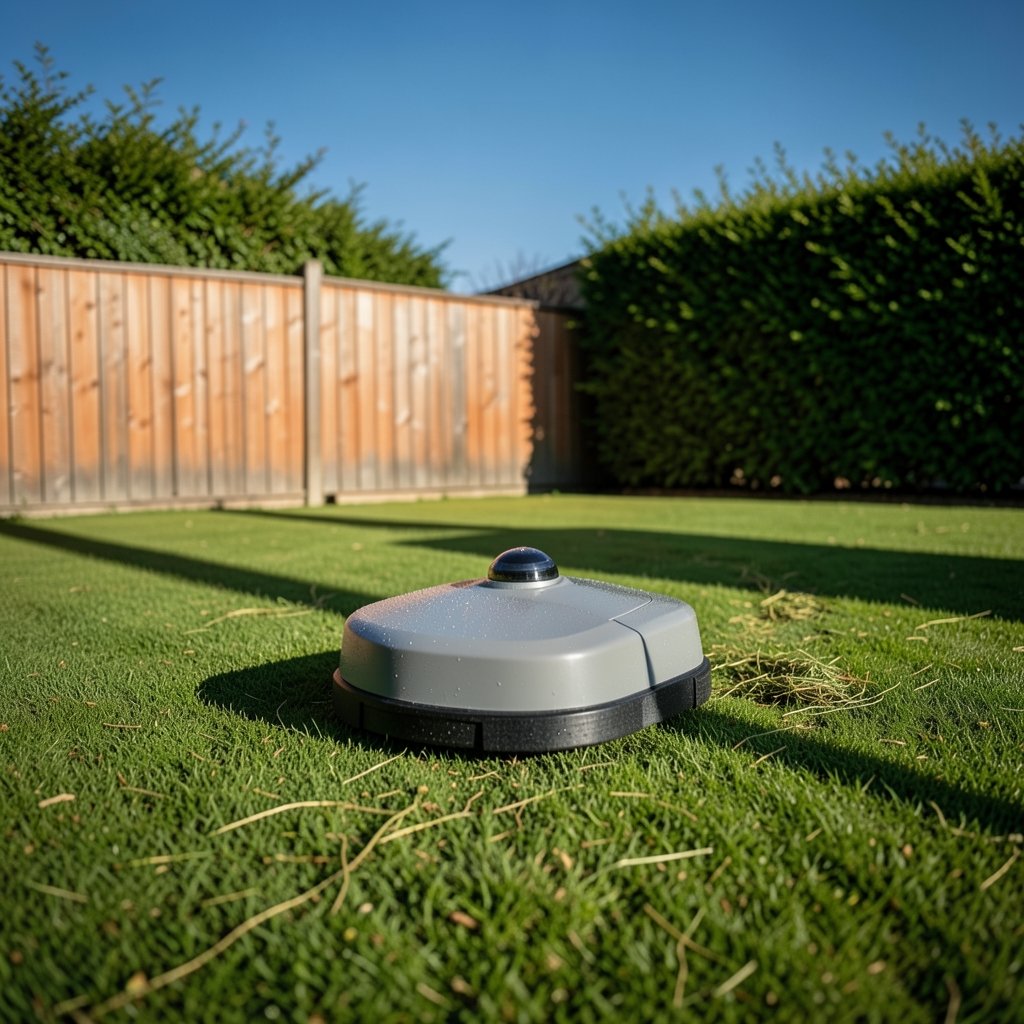
A robot mower used to mean one thing: a weekend spent burying hundreds of meters of boundary wire around your lawn, only to watch a machine bump into a tree and give up. That era is quietly ending. Wire-free mowers that navigate by satellite positioning and onboard vision have moved from novelty to mainstream, and 2026 is the year the category genuinely splits in two. If you are shopping now, the choice is less about brand loyalty and more about one question: does your yard suit satellite navigation, or does it need a wire?
Why 2026 Is a Different Buying Year
The biggest shift is RTK-GPS navigation. RTK stands for real-time kinematic, a technique that corrects satellite signals down to centimeter-level accuracy using a fixed reference station. Instead of following a buried wire, the mower knows its position on a virtual map. You define zones in an app, and the machine cuts them in neat stripes.
This matters practically. Installation drops from a full day to roughly an hour. You can reshape a lawn in software rather than digging. And because the mower follows planned routes instead of random bump-and-turn patterns, the cut looks more even and the machine spends less time wandering.
The catch is equally real. RTK needs a clear view of the sky. Dense tree canopy, tall hedges, or a house casting a hard shadow can degrade the fix. Most 2026 systems pair RTK with vision cameras and inertial sensors so the mower keeps working when the satellite signal weakens, but performance under cover still varies widely between models.
The Two Families: Wire vs. Wire-Free
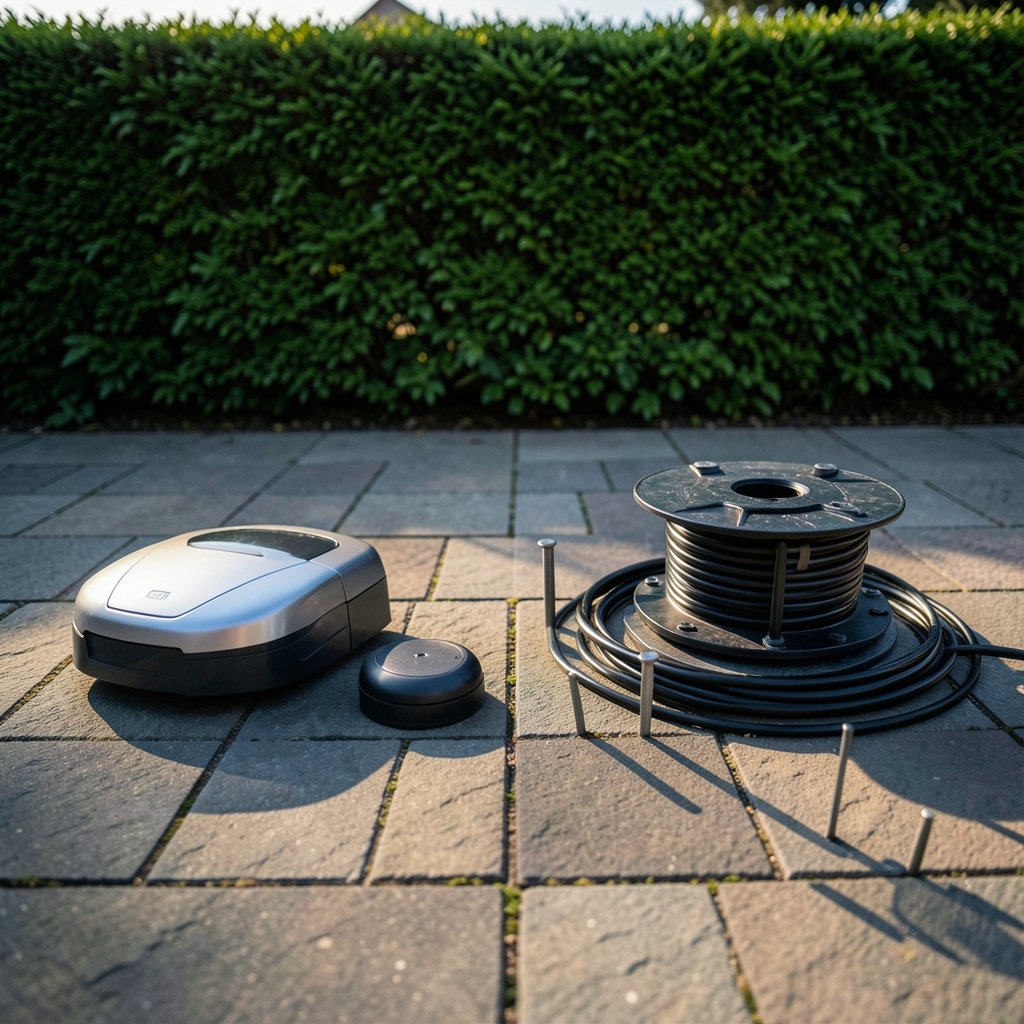
Before comparing specific machines, it helps to understand the structural difference. Almost every buying mistake traces back to picking the wrong family for the property.
| Feature | Boundary-wire mowers | Wire-free (RTK/vision) mowers |
|---|---|---|
| Installation | Half day to full day, physical digging | Under an hour, app-based mapping |
| Navigation | Random or systematic within wire loop | Planned routes on a virtual map |
| Performance under trees | Unaffected by canopy | Can degrade without vision backup |
| Lawn changes | Requires re-laying wire | Redraw zones in the app |
| Best for | Complex, shaded, multi-zone yards | Open, simple, sunlit lawns |
| Typical cost | Lower | Higher |
The honest guidance: if your lawn is boxed in by mature trees or split into narrow strips separated by fences, a well-built wire model remains the more reliable tool. If you have an open garden with a single main lawn, wire-free is now the better experience and the better long-term value, because you are not paying for installation labor or a professional wire run.
What Actually Separates a Good Mower From a Bad One
Spec sheets are noisy. After filtering out marketing language, five factors decide whether you will love or resent the machine.
Navigation reliability versus navigation type
Two mowers can both claim RTK and behave completely differently. The difference is the fallback system: how gracefully the machine handles a lost signal. Good systems slow down, use vision to stay inside the boundary, and resume the planned route. Poor systems stop dead and wait for you to intervene. Look for reviews that specifically test under trees and near walls, as well as on open grass.
Cutting height range and deck quality
A range of roughly 20 to 60 millimeters covers most lawn types. Fine fescue and warm-season grasses want different heights, and a mower that only adjusts in coarse steps limits you. The deck matters too: floating decks that follow ground contours produce a far more even finish on uneven lawns than rigid ones.
Slope handling
Manufacturers quote maximum slope in percentages, and those numbers are usually optimistic in wet conditions. A mower rated for 35 percent may struggle on a damp 25 percent bank. If your garden has a steep section, treat the quoted figure as a dry-weather best case and check independent slope tests.
App and software updates
A robot mower is a software product as much as a hardware one. Brands that ship regular firmware updates fix navigation bugs and add features over time. Brands that do not leave you with the machine you bought on day one. Check whether the app has a track record of updates, and whether core functions like zone scheduling work without a subscription.
Service and parts
Blades, batteries, and wheel motors wear out. A cheap mower with no parts availability becomes e-waste in three seasons. Before buying, confirm that replacement blades and batteries are stocked locally and that there is a service path in your country.
Practical Setup Tips That Save Frustration
Most complaints about robot mowers trace back to setup, not hardware. A few habits make an enormous difference.
- Map on a dry, clear day. Satellite-based mapping done in rain or under heavy cloud produces a sloppy virtual boundary that you will fight all season.
- Leave a margin around obstacles. Define zones slightly inside flower beds and tree rings. Mowers that clip edges repeatedly damage trunks and chew through bedding plants.
- Set the cutting schedule for growth, not convenience. During peak growth, daily short cuts beat weekly long ones. The “little and often” principle is what makes robotic mowing look good.
- Keep the dock shaded and level. Charging contacts corrode faster in full sun and standing water, and a sloped dock causes docking failures.
- Update firmware before the first full season. Launch software is rarely the best version.
A common mistake is buying the largest area rating you can afford. Area ratings assume ideal conditions. A mower rated for 1,000 square meters may only manage 600 in a lawn with obstacles and narrow passages. Size up, not down, if your garden is complex.
Where the Category Is Heading
The broader hardware world is converging on the same pattern: devices that used to be dumb are becoming software platforms. Tesla’s public positioning around robotaxi, Semi, and Roadster shows how aggressively hardware firms now sell a stack of software and sensors rather than a single product, as covered in this look at Tesla’s three hardware bets for 2026. Robot mowers are following the same curve, with vision models and fleet-style app management arriving from the same supplier ecosystem.
That convergence has a safety dimension too. Autonomous machines operating in gardens where children and pets play need robust obstacle detection, and the industry is still learning how to handle edge cases. The debate around self-driving incidents and trapped passengers in robotaxis is a useful reminder that “autonomous” always needs a fail-safe, whether the vehicle weighs two tons or twenty kilograms.
Timing Your Purchase
Robot mowers are seasonal products, and prices move with the calendar. Spring is peak demand, when discounts are thinnest and stock is tight. Late autumn and winter clearance windows often deliver the steepest markdowns on outgoing models, in the same way that Black Friday car deals reward buyers who shop the calendar rather than the showroom. If you can wait, buying an outgoing model in the off-season is one of the most reliable ways to save 20 to 30 percent on a machine that was flagship hardware six months earlier.
The trade-off is firmware. An outgoing model may stop receiving updates sooner, so weigh the discount against how long you plan to keep the mower. (U.S. Environmental Protection Agency)
How to Shortlist Without Getting Lost
A structured shortlist beats endless spec comparison. Work through it in this order.
- Measure the actual lawn area, excluding beds, paths, and buildings.
- Note the slope on the steepest section using a phone level app.
- Count shaded zones and estimate hours of direct sun.
- Decide wire vs. wire-free based on steps 1 to 3.
- Check parts availability for two or three shortlisted brands in your country.
- Read one independent long-term test, ideally covering a full season.
That last point matters more than any single specification. A mower that performs well in a two-week review can reveal navigation drift, blade wear, or app bugs after three months. Long-term testing is where the real differences surface, and it is the same principle that makes sustained coverage of products like the best phones of 2026 more useful than launch-day hands-ons.
Common Mistakes to Avoid
Buying on area rating alone is the most frequent error. The second is assuming wire-free means zero maintenance; the dock still needs cleaning, blades still need replacing, and the app still needs attention. The third is ignoring the lawn itself. A robot mower cannot fix a bumpy, mossy, or poorly drained lawn. It will simply cut the weeds more evenly. Invest in lawn health first, and the mower’s results improve automatically. (Robotic lawn mower)
Finally, do not overlook the boundary between convenience and repairability. A machine with a sealed battery and no local service network is a gamble. Ask the retailer directly: where do I get blades in two years, and who fixes this if the drive motor fails?
Conclusion
The best robot lawn mower in 2026 is not the one with the longest feature list. It is the one whose navigation suits your garden’s geometry, whose parts you can actually buy, and whose software gets maintained. Wire-free RTK models have earned their place on open, sunlit lawns and now deliver the smoothest experience for most buyers. Boundary-wire machines remain the pragmatic choice for shaded, complex, or multi-zone gardens where satellite fixes falter. Get the family right, size up on area rating, map carefully on a dry day, and buy in the off-season if you can. Do that, and the mower quietly disappears into the background of your weekends, which is exactly the point.
Frequently Asked Questions
Do robot lawn mowers work under trees?
Partly. RTK-based wire-free mowers rely on satellite signals, and dense canopy can weaken the fix. Most 2026 models add vision cameras as a backup, which helps considerably, but performance under heavy cover still varies by brand. If a large share of your lawn sits in deep shade, a boundary-wire model is the safer choice.
How much maintenance does a robot mower need?
Less than a push mower, but not zero. Expect to clean the charging contacts and underside every few weeks, replace blades roughly every one to two months during the growing season, and check the dock for debris. Batteries typically last several seasons before needing replacement.
Can a robot mower handle a sloped lawn?
Many can, but quoted slope ratings are usually measured in dry conditions. Treat the manufacturer’s maximum as a best case and expect real-world performance to drop on wet grass. For banks steeper than about 25 percent, check independent slope tests rather than trusting the spec sheet.
Is a wire-free robot mower worth the extra cost?
For an open, simple lawn, usually yes. Installation drops from most of a day to about an hour, and reshaping zones happens in the app rather than with a spade. For shaded or highly fragmented gardens, the premium buys less benefit and a wired model may be the better value.
How often should a robot mower run?
Daily during peak growth is ideal. Short, frequent cuts produce a healthier lawn and a cleaner finish than weekly long cuts, because clippings stay small enough to break down naturally. Reduce frequency in dry or slow-growth periods to save energy and blade wear.
When is the cheapest time to buy a robot lawn mower?
Late autumn and winter, when retailers clear outgoing models ahead of the spring selling season. Discounts of 20 to 30 percent are common on previous-generation hardware. Weigh that saving against a potentially shorter window of future firmware updates before deciding.