

Industry surveys have repeatedly found that a large share of cloud spending goes to capacity nobody actually uses. In 2020, a widely cited forecast projected that organizations would waste roughly 30% of cloud spend through 2024 on idle or oversized resources. That number gets quoted as if it were measured yesterday, which is one reason cloud waste keeps surviving budget reviews: everyone agrees it exists, and almost nobody can point to where it lives.
This guide is about finding it, fixing it, and keeping it fixed. No vendor pitch, no magic dashboard. Just the mechanics that actually move the bill.
What cloud waste really is (and what it isn’t)
Cloud waste is spend that produces no business value. That definition matters because it separates waste from expensive but justified usage. A machine learning cluster running at 90% utilization is not waste, even if the invoice makes finance wince. A forgotten staging database from a 2023 proof of concept absolutely is.
Most waste falls into a handful of buckets:
| Waste type | Typical cause | Where it hides |
|---|---|---|
| Idle resources | Forgotten test, dev, or PoC environments | Non-production accounts |
| Oversized resources | “Pick the big instance, we’ll tune later” | Compute, databases, caches |
| Orphaned storage | Snapshots, volumes, and buckets with no owner | Object storage, block storage |
| Always-on workloads | Batch jobs running 24/7 for a 2-hour task | Scheduling and autoscaling gaps |
| Unattached networking | Idle load balancers, unused IPs, stale NAT gateways | Network line items |
| Untagged spend | No cost allocation metadata | Everything, eventually |
The last row is the quiet killer. If a resource has no owner tag, no team will defend it and no team will delete it. It simply persists.
Why waste persists even when everyone knows about it
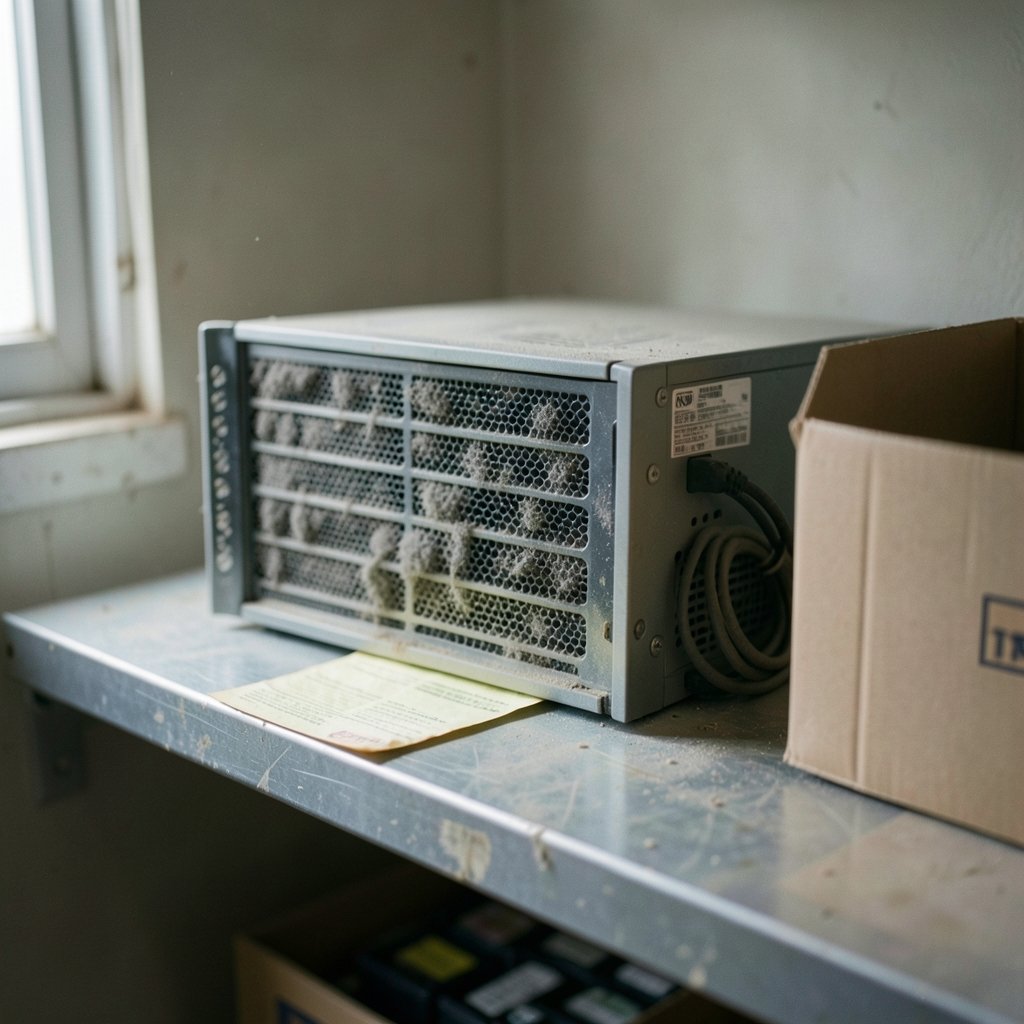
Waste is rarely a technical failure. It is an organizational one wearing a technical costume.
Nobody owns the bill at the resource level. Finance owns the invoice. Engineering owns the infrastructure. The gap between them is where a $4,000-per-month analytics cluster sits untouched for eleven months.
Deletion feels riskier than spending. A senior engineer who deletes the wrong volume faces an incident review. A senior engineer who leaves it running faces nothing. Until that asymmetry flips, waste wins.
Environments multiply faster than policies. A team spins up a second staging environment for a migration, then a third for a customer demo. Each one is reasonable. Together they triple non-production spend.
Optimization is nobody’s full-time job. Cost work gets assigned to whoever has slack, which means it gets done in the week before the quarterly review and then forgotten.
The fix is not a tool. It is a cadence: recurring, boring, scheduled work with a named owner. Tools make the cadence cheap. They don’t create it.
Start with visibility, not cuts
The instinct after a bad invoice is to start terminating things. Resist it. Cutting blind produces outages, and one outage poisons the whole cost program for a year.
Instead, spend the first two weeks on attribution. Tag everything with at minimum: owner, environment, cost center, and service. Enforce the tags at provisioning time through infrastructure-as-code policy, not through a spreadsheet audit afterward. If a resource can’t be created without tags, untagged spend stops being a category.
Once tagging works, build three views:
- Spend by environment. Production versus everything else. Non-production is usually the fastest win.
- Spend by service, trended weekly. Sudden jumps are easier to investigate than slow drift.
- Idle and orphaned inventory. Unattached volumes, unused IPs, snapshots older than the retention policy, load balancers with zero healthy targets.
That third view is where most teams find their first real money. It is also the least politically sensitive, because deleting an unattached volume breaks nothing.
Rightsizing without breaking production
Rightsizing is the practice of matching resource size to actual demand. It sounds trivial and is consistently one of the largest savings levers, because default provisioning is almost always generous.
The practical approach:
- Collect at least 14 days of utilization data, ideally 30. Weekly and monthly cycles hide in short windows.
- Look at the 95th percentile, not the average. Averages flatter oversized machines.
- Check CPU, memory, and disk. Many instances are CPU-idle and memory-bound; downsizing them causes swapping and user complaints.
- Change one dimension at a time. Resize compute before touching storage tiers.
- Roll back fast. Keep the previous configuration in version control so reversal is a one-line change.
Cloud providers ship native helpers here. AWS offers Cost Explorer rightsizing recommendations and Compute Optimizer; Azure surfaces cost recommendations through Azure Advisor; Google Cloud provides rightsizing and idle-VM recommendations through its recommender services. They are decent starting points and consistently conservative. Treat them as a candidate list, not a verdict, and verify against your own telemetry before acting.
A common mistake: rightsizing only the big instances. The long tail of small, forgotten instances often costs more in aggregate, and nobody looks at it because each line item is $40.
Scheduling and autoscaling: the cheapest savings you’ll ever book
If a non-production environment only needs to exist from 8 a.m. to 7 p.m. on weekdays, running it 168 hours a week is a choice, not a requirement. Shutting down dev and staging outside working hours typically removes 60% or more of their runtime hours with near-zero engineering effort.
For production, the lever is autoscaling with sane floors and ceilings. Most autoscaling setups fail in one of two ways: the minimum is set too high (so it never scales down), or the scaling metric is wrong (CPU-based scaling on a memory-bound service does nothing). Fix the metric first.
Batch and scheduled workloads deserve special attention. A nightly data pipeline that runs for two hours on a machine billed for twenty-four is a 92% waste rate on that line item. Containerized batch jobs with proper scheduling eliminate it.
Containers and Kubernetes: where waste compounds
Kubernetes concentrates waste because it multiplies small inefficiencies across many pods. Resource requests set too high reserve capacity that no workload uses; requests set too low cause throttling and eviction. Neither shows up clearly on a cloud bill, which is why Kubernetes waste is so persistent.
The FinOps Foundation publishes guidance specifically for this problem, and it is worth reading before building anything custom. The core practices are unglamorous: set requests from observed usage, use horizontal pod autoscaling where the workload allows, and reclaim capacity from nodes that are consistently undercommitted.
For teams running mixed cloud estates, the comparison dynamics matter too. Cost profiles differ meaningfully between providers depending on instance families, committed-use discounts, and egress pricing, which is why a straight provider comparison rarely produces a clean answer. The same logic applies when weighing where data physically lives: cloud storage vs local storage key differences shape both the bill and the latency profile, and teams that ignore the distinction often pay for storage tiers they never needed.
Commitment planning: discounts without the trap
Reserved instances, savings plans, and committed-use discounts can cut compute costs by 30–70%. They are also the most common source of new waste, because teams commit to capacity based on today’s footprint and then migrate workloads elsewhere.
The rule that works: commit only to a baseline you are confident will run for the full term, and cover the rest with on-demand or spot. A useful heuristic is to commit to the floor of your last six months of steady-state usage, not the average. If the baseline is uncertain, commit less. An under-committed estate pays a premium; an over-committed one pays for nothing at all. (Sustainable Materials Management)
Spot and preemptible capacity handles the variable layer, provided workloads can tolerate interruption. Batch processing, CI runners, and stateless workers are natural fits. Stateful databases are not.
Build a cadence that survives contact with reality
Optimization programs die when they depend on heroics. What survives is a rhythm:
- Weekly: review the top ten cost increases and the idle inventory report. Fifteen minutes.
- Monthly: rightsizing pass on the top twenty resources by spend. Assign owners, set deadlines.
- Quarterly: commitment review, architecture check for services that have outgrown their design, and a fresh look at storage lifecycle policies.
- Continuously: automated cleanup of resources that fail tagging or exceed an age threshold, with a notification before deletion.
Two practical guardrails make this stick. First, publish savings publicly and route a portion back to the team that found them; nothing motivates like a visible win. Second, make deletion safe by default: soft-delete windows, snapshot-before-terminate policies, and clear rollback paths. Safety is what makes aggression possible.
It also helps to remember that waste has an environmental cost alongside the financial one. Idle capacity draws power and produces emissions for no output. The Green Software Foundation publishes a Software Carbon Intensity specification that gives teams a way to reason about emissions per unit of work, which turns “we should turn that off” into a measurable claim rather than a vague instinct.
Common mistakes that quietly undo progress
Optimizing once and declaring victory. Cloud estates drift. A rightsized fleet in January is an oversized one by June.
Chasing the biggest line item only. The top resource is usually already watched. Waste lives in the middle of the distribution.
Ignoring data transfer. Egress and cross-zone traffic are invisible until they aren’t. A service that looks cheap on compute can be expensive on network.
Buying a platform before fixing ownership. Cost tools surface problems. They don’t assign them.
Penalizing teams for spend spikes without context. This teaches teams to hide spend, not reduce it.
For anyone still working out the fundamentals of how usage translates into billing, a primer on what cloud storage is and how it works covers the mechanics that make lifecycle policies and storage-class decisions legible. And when the question turns to which provider’s pricing model fits a given workload, a structured cloud storage services comparison is more useful than a features list. (Cloud computing)
Conclusion
Cloud waste reduction is less about clever tooling and more about making ownership unavoidable. Tag everything, look at utilization instead of assumptions, schedule what doesn’t need to run around the clock, and commit only to baselines you trust. None of that is novel. All of it requires a cadence with a named owner and a safe path to deletion.
The teams that win at this treat cost as an engineering metric, reviewed as routinely as latency or error rate. The teams that lose run a cleanup project every eighteen months, celebrate the savings, and watch them evaporate by the next fiscal quarter.
Frequently asked questions
How much cloud spend is typically wasted?
Estimates vary widely by source, definition, and workload type, and older figures are often quoted as if current. The most defensible position is that waste is material in most organizations and concentrated in a few predictable places: non-production environments, orphaned storage, oversized instances, and always-on batch jobs. Measure your own estate rather than anchoring to an industry percentage.
What is the fastest cloud waste reduction win?
Shutting down non-production environments outside working hours. It requires little engineering effort, carries minimal risk, and typically removes more than half of dev and staging runtime hours. Cleaning up unattached storage volumes and stale snapshots is usually the second-fastest win.
Does rightsizing risk breaking production?
It can, which is why the process matters more than the tool. Use at least two weeks of utilization data, check memory and disk alongside CPU, change one dimension at a time, and keep the previous configuration versioned so rollback is trivial. Native recommender tools are a reasonable starting point but should be validated against your own telemetry.
Are reserved instances and savings plans always a good deal?
No. They reduce rates substantially but convert flexible spend into a fixed obligation. If workloads migrate, get consolidated, or shrink, over-commitment creates a new category of waste. Commit to a conservative baseline you expect to run for the full term and cover variable demand with on-demand or spot capacity.
How do I stop waste from coming back?
Make tagging mandatory at provisioning time, publish a weekly idle-inventory report, assign a named owner to every optimization action, and give teams a safe deletion path with snapshot and soft-delete windows. Waste returns whenever ownership lapses, so the cadence matters more than any single cleanup.
Does reducing cloud waste have environmental benefits?
Yes. Idle and oversized capacity consumes electricity and generates emissions without producing useful output. Frameworks that measure emissions per unit of work make the environmental case measurable, which often strengthens the financial argument inside engineering organizations.



