A good home setup can be a quick route to a morning latte or a hobby built around dialing in each shot. The best home espresso machine for you depends on the drinks you want, the effort you enjoy, and the space you have.
Home espresso can mean learning a hands-on routine, from preparing the coffee to steaming milk. It can also mean pressing a button for a mostly automated drink. These picks cover different budgets, skill levels, milk routines, and counter space needs.
Some people want one dependable cup before work. Others like testing a new coffee and adjusting each shot until it tastes right. A machine that fits your routine makes those daily choices easier.
Key Takeaways
- Choose a hands-on or push-button routine before comparing machines.
- The Bambino Plus suits compact, beginner-friendly espresso making.
- The Barista Express combines a grinder and machine in one unit.
- The Bosch 800 Series makes a broad range of drinks automatically.
- Measure your counter and cup clearance before you decide.
The right pick is the one whose daily workflow you will actually enjoy using.
How to Choose the Best Home Espresso Machine for Your Routine
For most new home users, the simplest useful starting point is deciding whether you want to make espresso yourself or have the machine handle most steps. Your usual drinks and willingness to practice narrow the options quickly.
Espresso is typically brewed at about 6-9 bars and around 200°F. A PID controller uses proportional, integral, and derivative adjustments to keep brewing water near a chosen target temperature. That temperature control can help make shots more repeatable.
Match the machine to the drinks you make
Straight espresso puts the focus on the shot, so hands-on control may matter more than milk tools. If you mostly make lattes, look for a workflow that makes milk steaming easier. A push-button machine suits households that want drinks with little daily effort.
The Breville Bambino Plus, Barista Express, MiiCoffee Apex V2, and Bosch 800 Series fit different combinations of control and convenience. Their differences matter most when they match what you already drink, rather than a feature list that looks impressive.
Set your preferred level of control
Choose how much of the process you want to handle. A semi-automatic machine asks you to prepare the portafilter and manage the shot. A super-automatic machine takes on more steps, with less room to change each extraction.
Use this short checklist before comparing espresso machines:
- Drink type: Do you mostly make straight espresso, milk drinks, or both?
- Hands-on work: Will you grind and tamp coffee for each drink?
- Counter space: How much width and depth can the machine use?
The best home espresso machine in 2025 is still chosen by matching it to your routine, not by chasing one universal winner. A simple table can help turn that choice into a shortlist.
| Priority | Suggested pick | Reason to shortlist |
|---|---|---|
| Beginner-friendly control | Bambino Plus | Compact hands-on brewing with easier milk steaming |
| Built-in grinder | Barista Express | Grinding and brewing share one appliance |
| Assisted dosing | Barista Express Impress | Help with dosing and tamping |
| Guided touchscreen routine | Barista Touch | Guided drink choices and custom profiles |
| Pressure adjustment | MiiCoffee Apex V2 | External pressure adjustment for hands-on users |
For home espresso, the useful question is whether those controls suit your day, not whether a machine has the most features. Choose the setup you can see yourself repeating on an ordinary weekday.
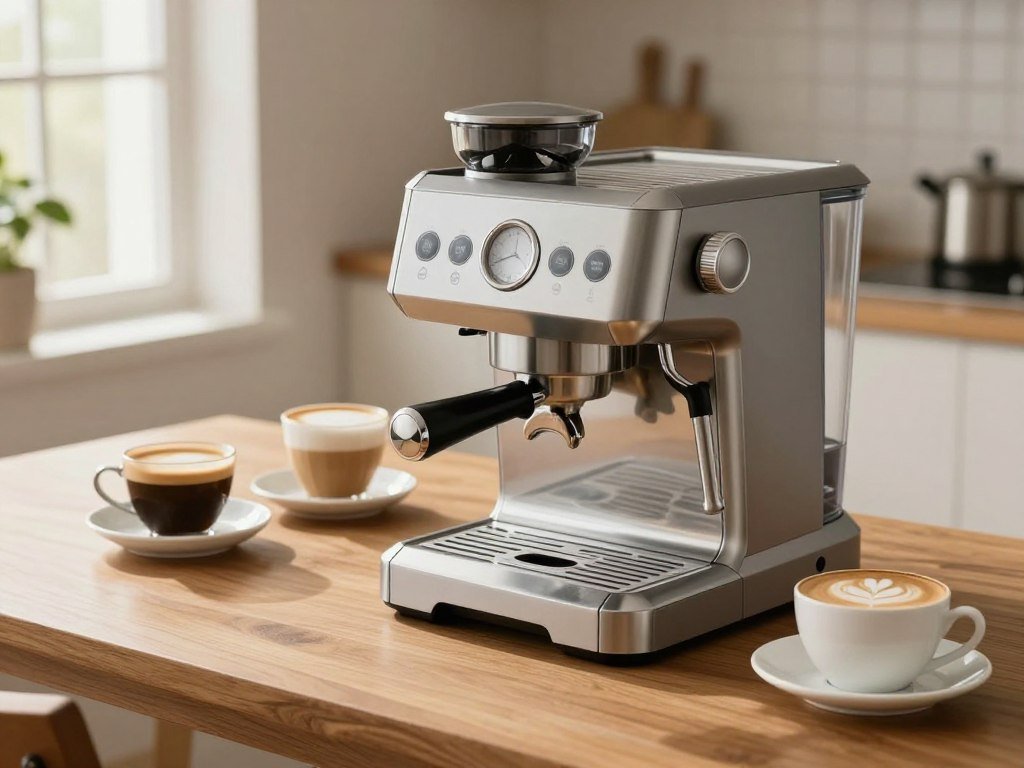
Semi-Automatic or Super-Automatic: Which Fits Your Routine?
A semi-automatic machine suits someone who wants to handle the puck and shot, while a super-automatic suits someone who wants the machine to do more of that work. Your preferred effort is the main difference.
Semi-automatic users grind, tamp, and lock in a portafilter; super-automatic machines do those steps inside the machine. Super-automatic models often froth milk, too, though they generally allow less shot customization.
Choose semi-automatic for hands-on control
A semi-automatic machine gives you a direct role in preparing each shot. You fill and tamp the portafilter, then lock it into the group head. The shot is yours to adjust through your routine and settings.
Commercial portafilters commonly measure 58 mm, though home machines may use other sizes. The size affects which baskets and accessories fit, so check compatibility before adding tools to your setup.
Choose super-automatic for push-button convenience
A super-automatic grinds, tamps, and brews at a button press. Some models also prepare milk drinks automatically. That cuts down the steps, but leaves you with fewer ways to shape each shot.
A manual lever machine asks for still more direct input. You create the brewing pressure yourself, aiming for about 9 bars. The Flair 58 is one example, with an electronically heated brew head and a 58 mm portafilter.
| Machine type | User input | Control | Likely fit |
|---|---|---|---|
| Semi-automatic | Grind, tamp, lock in portafilter | High shot control | Users who enjoy the process |
| Super-automatic | Select a drink and press a button | Less shot customization | Fast daily drinks |
| Manual lever | Prepare coffee and create pressure | Direct pressure input | Hands-on enthusiasts |
Ask yourself these three routine questions before choosing among espresso machines:
- Who usually makes the drinks?
- How many adjustments do you want to make?
- Do several drinks need to be ready quickly?
If you enjoy changing grind and dose, keep the hands-on steps rather than paying for automation you will not use.
Which Espresso Machine Is Best for Beginners?
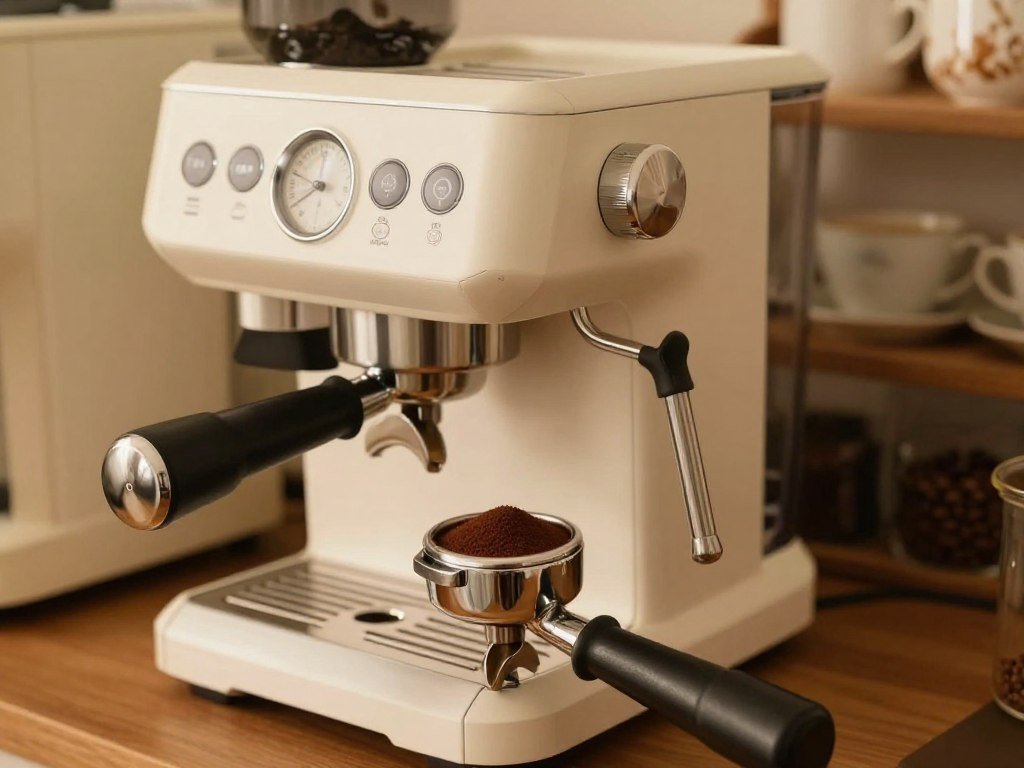
For a beginner who wants to learn espresso without waiting through a long warm-up, the Breville Bambino Plus is the easiest starting pick in this lineup. Its compact size and simple milk routine lower the early learning curve.
The Bambino Plus reaches brewing temperature in about 3 seconds and has automatic hands-free milk steaming. Its built-in PID thermometer, preinfusion, and [9-bar brewing pressure](https://example.com) support more repeatable shots.
The machine uses preinfusion to wet the coffee before full extraction begins. That can help you learn how small changes affect the shot. A fast start also makes it easier to fit practice into a busy morning.
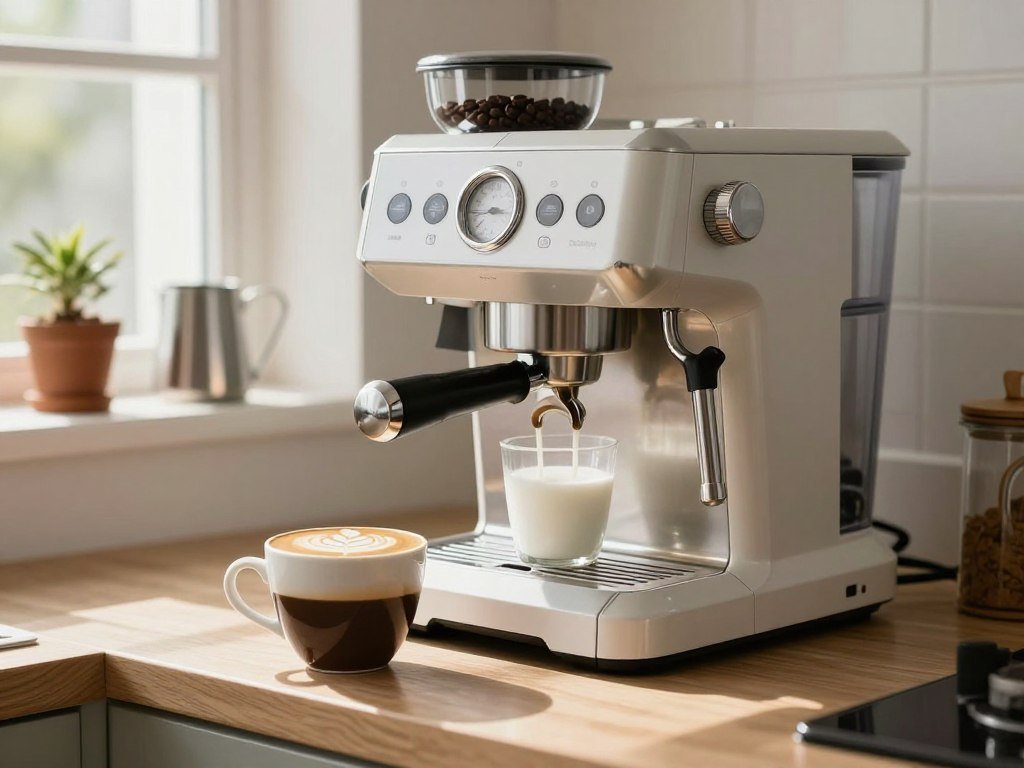
The automatic steam wand reduces the need to learn pitcher position and steam control right away. You still choose the milk and cup, but the machine handles much of the texturing work.
The Bambino Plus includes single-wall and double-wall filter baskets. A single-wall basket gives you room to learn extraction, but it needs a consistent, espresso-fine grind. A double-wall basket is more forgiving when your grind is less exact.
For someone seeking the best espresso machine for beginners, this is the pick when compact size, fast startup, and simpler milk steaming matter more than a built-in grinder. Its semi-automatic workflow still lets you learn the basics of preparing a shot.
Use the single-wall basket once your grinder can produce a consistent espresso-fine dose.
Does the Barista Express Make a Good All-in-One Setup?
If you want to grind and brew on one counter appliance, the Breville Barista Express is the clearest all-in-one pick. Its integrated grinder saves space compared with separate appliances.
The 2026 listings showed prices of $699 at Breville and $694 on Amazon. Those are prices listed in 2026, not permanent prices.
The integrated precision conical burr grinder has 16 grind settings and dose control. It feeds ground coffee into a 54 mm stainless-steel portafilter. Both single-wall and dual-wall baskets come with the machine.

Low-pressure preinfusion leads into 9-bar extraction from a 15-bar Italian pump. The Thermocoil system uses PID temperature control to deliver water at 200°F. Current models also offer adjustable brew temperature and a 9-bar OPV, a valve that limits brewing pressure.
A pressure gauge lets you watch the shot as it brews. The machine also has a three-way solenoid valve, a manual steam wand with a single-hole tip, and a hot-water spout for other drinks.
The Barista Express measures 15.9 × 13.1 × 12.4 inches, width × depth × height. Its 2-liter water tank and roughly 30-second heat-up time suit a regular home routine, though the larger footprint needs room.
The built-in grinder saves a separate appliance, but makes grinder replacement or servicing less convenient. Measure the available counter depth as well as the width before settling on this larger all-in-one layout.
Is the Barista Express Impress Easier to Use?
The Barista Express Impress is the better fit when you want a built-in grinder but would like help making dosing and tamping more consistent. Its added assistance targets two steps that can frustrate new users.
It has 25 grind settings, assisted tamping, and smart dosing that adjusts the dose based on the previous shot. Those features can make preparation feel less fussy, especially while you learn a repeatable routine.
The 25 settings let you change how fine the coffee is ground. Assisted tamping helps press the coffee into the basket in a consistent way. Smart dosing uses the prior shot as a guide when setting the next dose.
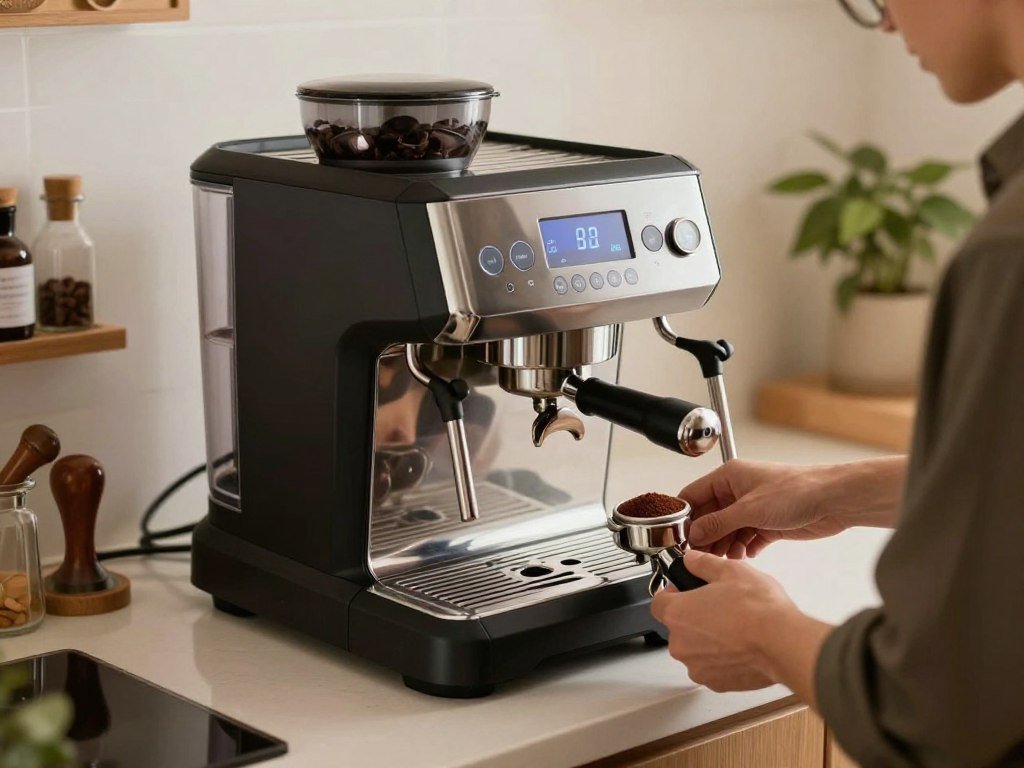
Those tools do not decide whether the beans suit your taste. You still choose the coffee, adjust the grind, and judge the shot by its flow and flavor. A shot that runs too quickly may need a finer grind.
The Impress keeps you involved without asking you to manage every detail alone. That can suit a new user who wants a guided routine but still plans to learn what changes improve the cup.
A more hands-on user may prefer to dose and tamp without assistance. The extra support is useful only if it solves a step you want help with, rather than adding a feature you ignore.
Expect to make grind adjustments as the beans and shot results change, even with assisted dosing.
Who Should Choose the Barista Touch?
The Barista Touch suits a household that wants guided drink preparation and repeatable milk texturing without giving up a semi-automatic workflow. Its touchscreen routine helps different users make familiar drinks.
The machine offers five pre-programmed café drinks and eight customizable user profiles. In 2026, it received a 9.0 out of 10 rating, a dated rating rather than a promise of results for every home.
The screen guides you through drink choices and gives regular users a way to save preferences. Five preset café drinks make common orders easy to reach. The eight profiles let household members keep their own settings.
A ThermoJet heater reaches brewing temperature in 3 seconds. That quick start helps when several people want drinks at different times. The automatic steam wand also makes milk texturing easier to repeat.
The machine still follows a semi-automatic workflow, so you retain a role in preparing espresso. Its screen and automatic steaming guide parts of the routine rather than making every choice for you.
This style is most useful when several people will use the profiles and appreciate a familiar screen. If one person makes every drink the same way, the extra guided options may matter less.
Check that each regular user will benefit from the profiles before choosing this more guided style.
Is the Barista Pro Right for Fast Manual Brewing?
Choose the Barista Pro if you want a fast-starting integrated-grinder machine but would rather steam milk yourself. Its quick heat-up pairs with a more hands-on finish.
The ThermoJet heater reaches brewing temperature in 3 seconds, and the machine has an LCD extraction display. The screen gives you visual feedback while a shot runs.
That display can help you watch the extraction and notice how grind or dose changes affect the shot. It does not make those decisions for you, so you still need to read the result and adjust your routine.
The manual steam wand gives you direct control over milk texture. You position the pitcher and guide the steaming process yourself. With practice, you can shape milk for different drinks and pouring styles.
The Barista Touch takes a different approach with its automatic steam wand. The Pro asks for more practice and gives you more direct input. Neither style is the right fit for every milk routine.
A manual wand makes sense if you want to learn steaming as part of making coffee. If you mainly want predictable milk with fewer steps, automatic steaming may fit better.
Pick manual steaming only if you are willing to practice pitcher position and milk texture.
Does the MiiCoffee Apex V2 Suit Hands-On Control?
The MiiCoffee Apex V2 is the strongest fit for a hands-on user who wants direct control over brew temperature, preinfusion, and pressure. Its adjustments invite testing rather than a one-button routine.
The external over-pressure valve can be set to 9 bars or lower settings around 6-7 bars. That lets you experiment with pressure as part of dialing in a shot.
Its adjustable PID temperature control lets you choose a brewing temperature. Adjustable preinfusion gives you another way to change how water first meets the coffee. These settings suit users who want to compare shot results.
The machine has a 58 mm portafilter, a dedicated stainless-steel brewing boiler, and a thermoblock for steaming. The separate brewing and steaming components suit a more involved home espresso setup.
Reported warm-up time is around 7 to 10 minutes. That is longer than the quick-start options in this lineup, so the morning routine needs room for it.
Small changes in temperature, preinfusion, and pressure can affect the shot. The Apex V2 makes those changes accessible, but you will need to keep track of what you adjust and how the coffee responds.
Allow for its 7-10-minute warm-up in the morning routine.
Could the Lelit Mara X Be the Right Prosumer Machine?
For a home barista who values controlled espresso and milk drinks more than instant startup, the Lelit Mara X is a credible prosumer choice. Its substantial design suits a more involved home setup.
The Mara X uses one heat-exchanger boiler for separate brewing and steaming paths. That setup can brew and steam almost at the same time while relying on one boiler.
A heat exchanger lets you make espresso and prepare milk with less waiting between steps. The Mara X offers temperature selections of 197°F, 201°F, and 205°F, giving you set options for brewing.
From cold, the machine takes about 18 minutes to heat. Returning from sleep mode takes around 10 minutes. Plan for that wait if your morning routine depends on a first drink soon after waking.
At 41 pounds, the Mara X is a heavy machine to move. Its weight and warm-up time make it a different kind of choice from a quick-start appliance.
For a professional espresso machine for the home, the Mara X fits someone seeking a more substantial, involved setup. It can also suit a reader looking for the best professional espresso machine for the home without needing a commercial machine.
Use the sleep-mode option when a shorter return-to-brew wait suits your routine.
Is the Bosch 800 Series the Best Push-Button Option?
The Bosch 800 Series is the pick for households that want a wide menu of push-button drinks instead of learning each extraction step. Its drink range makes variety easy to share.
It offers 20 pre-programmed drinks and app choices that bring the available total to 36. The machine grinds, brews, and prepares drinks automatically.
That menu includes familiar milk drinks and less common choices such as a cortado. The range can suit a household where people order different drinks but want the same simple routine.
Automatic preparation cuts down the work between choosing a drink and picking up a cup. You can make drinks without grinding or tamping each dose yourself.
The tradeoff is less control over dialing in espresso. A super-automatic machine gives you convenience, but it does not invite the same hands-on shot adjustments as a semi-automatic model.
Think about whether the drink menu will get regular use. A long list matters less if everyone in the home orders the same one or two drinks.
Choose this route if getting a consistent drink quickly matters more than fine-tuning every shot.
Is the De’Longhi Stilosa a Sensible Starter?
The De’Longhi Stilosa can suit a beginner who wants a basic semi-automatic routine and is comfortable with its simpler milk tools. Its simple setup keeps the process familiar.
The U.S. model has a Panarello-style steam wand and no solenoid valve, so pressure remains after brewing. Wait before removing the portafilter to reduce the chance of a messy release.
The wand helps with milk steaming, but its texture may be less suited to latte art than milk from a manual steam wand. That matters if you want to practice detailed pouring, not just make a milk drink.
The Stilosa provides a basic way to learn espresso preparation at home. You still need to manage the coffee, the shot, and the timing of portafilter removal.
Give the machine time after brewing rather than unlocking the portafilter right away. That small pause can help avoid a forceful or untidy release from the basket.
Let pressure settle before unlocking the portafilter.
What Boiler Type Works Best for Your Milk-Drink Routine?
For frequent back-to-back cappuccinos, choose a heat exchanger or dual boiler; for occasional milk drinks, a single boiler can be enough. How often you steam matters more than the machine label.
A single boiler must change temperature between brewing and steaming. It usually works for one or two drinks when you can wait between those steps.
Single boiler for occasional milk drinks
A single-boiler machine uses one boiler for brewing and steaming. After brewing espresso, it must shift to a hotter temperature for steam. That wait is manageable when you make milk drinks now and then.
If you prepare one cappuccino at a time, the pause may not disrupt your routine. It becomes more noticeable when several people are waiting for drinks in a row.
Heat exchanger or dual boiler for back-to-back drinks
A heat exchanger has one boiler with separate brewing and steaming paths. It can brew and steam nearly simultaneously. A dual-boiler machine uses separate boilers for brewing and steaming, so each task has its own boiler.
For the best home cappuccino machine, choose a heat exchanger or dual boiler if you often make several drinks in a row. A single boiler fits occasional cappuccinos when waiting between brewing and steaming is acceptable.
| Boiler type | Boiler layout | Milk-drink workflow | Best-fit routine |
|---|---|---|---|
| Single boiler | One boiler for brewing and steaming | Wait between temperature changes | One or two occasional drinks |
| Heat exchanger | One boiler, separate brew and steam paths | Nearly simultaneous brewing and steaming | Frequent drinks made in a row |
| Dual boiler | Separate brewing and steaming boilers | Brewing and steaming at once | Back-to-back milk drinks |
Base the boiler choice on the longest drink-making stretch you expect to handle at one time.
Do You Need an Integrated Grinder?
A built-in grinder is worth considering when one appliance and one simple workflow matter more than choosing each component separately. Convenience takes space, but it can reduce setup clutter.
Espresso grounds must be fine enough to build brewing pressure, and small grind changes help you dial in shot flow. If a grinder cannot grind fine enough, water may run through the coffee too quickly.
When a built-in grinder earns its counter space
An integrated grinder can make the move from whole beans to a prepared portafilter feel direct. You have fewer separate items to place on the counter, and the grinder sits beside the brewing parts.
Consider this four-point check before choosing an integrated setup:
- Espresso-fine capability: Can the grinder make grounds fine enough for espresso?
- Adjustment increments: Are changes small enough to help dial in shot flow?
- Clearing or repair: Can you clear or service the grinder with ease?
- Total counter space: Does one appliance fit better than two?
When a separate grinder is the better investment
A separate burr grinder can give you more choice in size, settings, and service. If the grinder needs clearing or repair, you can work on it apart from the machine.
That flexibility has a space cost. Two appliances need room for their bases and for the steps you take while grinding and brewing.
The right choice depends on what you want to replace later and how much counter space you can spare. A built-in unit keeps the routine together, while a separate grinder keeps the parts independent.
Reserve part of the setup budget for a capable grinder, even if the machine itself includes one.
How Much Counter Space and Cup Clearance Do You Need?
Measure the counter and the space above it before choosing a machine, then check whether your usual cup fits beneath the group head. Fit includes access, not just the machine’s footprint.
The Bambino Plus has 5 inches of cup clearance, while the Lelit Mara X has 4.5 inches. That difference can affect whether your travel mug or scale fits under the group head.
Machine size also includes width, depth, and height. The Barista Express measures 15.9 × 13.1 × 12.4 inches, width × depth × height, so check the counter and cabinet space together.
A cup that fits without a scale may not fit when you place the scale beneath it. Try the setup with the cup you use most, especially if it is tall or wide.
Use this four-item fit checklist before placing an order:
- Counter width: Does the machine fit beside nearby appliances?
- Counter depth: Is there room for the full base and your workflow?
- Cabinet clearance: Can the machine sit below upper cabinets?
- Water tank access: Can you remove and refill the tank?
Leave enough access to refill the tank without moving the machine every morning.
How Should You Make Your Final Shortlist?
If you want a compact first setup, shortlist the Bambino Plus; if you want an all-in-one grinder, shortlist the Barista Express. Start with your routine, then compare the details that could change your choice.
Five models cover five different priorities: beginner-friendly control, integrated grinding, assisted dosing, guided drinks, and adjustable extraction. Use the checks below to see which one fits.
| Your priority | Shortlist | Check before buying |
|---|---|---|
| Beginner-friendly control | Breville Bambino Plus | Willingness to learn manual steaming |
| Integrated grinding | Breville Barista Express | Counter fit for the grinder and machine |
| Assisted dosing | Breville Barista Express Impress | Willingness to adjust grind despite assistance |
| Guided drinks | Breville Barista Touch | Preference for automated milk texturing |
| Adjustable extraction | MiiCoffee Apex V2 | Interest in hands-on pressure control |
Before buying, make sure these five parts of the setup fit your home:
- Drink style: Which coffee drinks will you make most often?
- Desired effort: How much work should each drink take?
- Grinder plan: Will you use an integrated or separate grinder?
- Milk workflow: Do you want to steam milk by hand?
- Measured space: Does the machine fit the counter and cabinets?
Price and features matter, but daily quality depends on a workflow you will use. Before ordering, confirm that the machine’s daily workflow and measured footprint both fit your kitchen.
Conclusion
The best choice is the machine that fits both the drinks you make and the effort you want to spend making them. The Bambino Plus gives a beginner compact, approachable control without a long startup wait.
If you value automation or deeper shot control, choose a machine that puts that preference first. A setup that matches your routine is more useful than features you rarely touch.
Measure your counter, write down your usual drink order, and choose the pick that fits both.
FAQ
Can I make espresso with pre-ground coffee?
Yes, a pressurized basket can work with pre-ground coffee. It helps create resistance even when the grind is not tailored to your machine. A single-wall basket depends more on the coffee itself, so it works best with a grinder that can make espresso-fine adjustments. If shots run too quickly, grind size may be part of the problem.
Does a 15-bar pump mean better espresso?
No, a 15-bar pump rating does not mean better espresso. Espresso is typically brewed around 6-9 bars, so brewing pressure control matters more than a higher advertised pump rating. The pump’s maximum rating and the pressure used during extraction are not the same measure. Focus on how the machine manages pressure during brewing.
How often should I descale a home espresso machine?
Follow your machine manual and adjust for water hardness and how often you brew. Harder water can lead to scale sooner, while lighter use may mean less frequent descaling. Use the cleaning steps and products the maker recommends. A fixed schedule does not suit every home because water quality and daily use differ.
Can an automatic steam wand make milk suitable for latte art?
Yes, an automatic steam wand can make textured milk that works for some latte art. It offers convenient results, while a manual wand gives you more direct control over texture and pouring. The final milk still depends on the drink setting and how you pour. If shaping fine patterns matters to you, practice with manual steaming.
Do I need a separate grinder if my machine has one built in?
No, you do not need a separate grinder when your machine has one built in. An integrated grinder keeps the setup together and can make the daily routine simple. A separate burr grinder may offer more control over grind settings and can be easier to clear or service. Your counter space and plans for future repairs can guide the choice.
Should I choose a single boiler or a dual boiler for cappuccinos?
A single boiler suits occasional cappuccinos if you can wait between brewing and steaming. A dual boiler supports back-to-back drinks with separate boilers for brewing and steaming. The single-boiler routine involves a temperature change, while the dual-boiler layout can handle both tasks at once. Choose based on how many milk drinks you make in one stretch.