
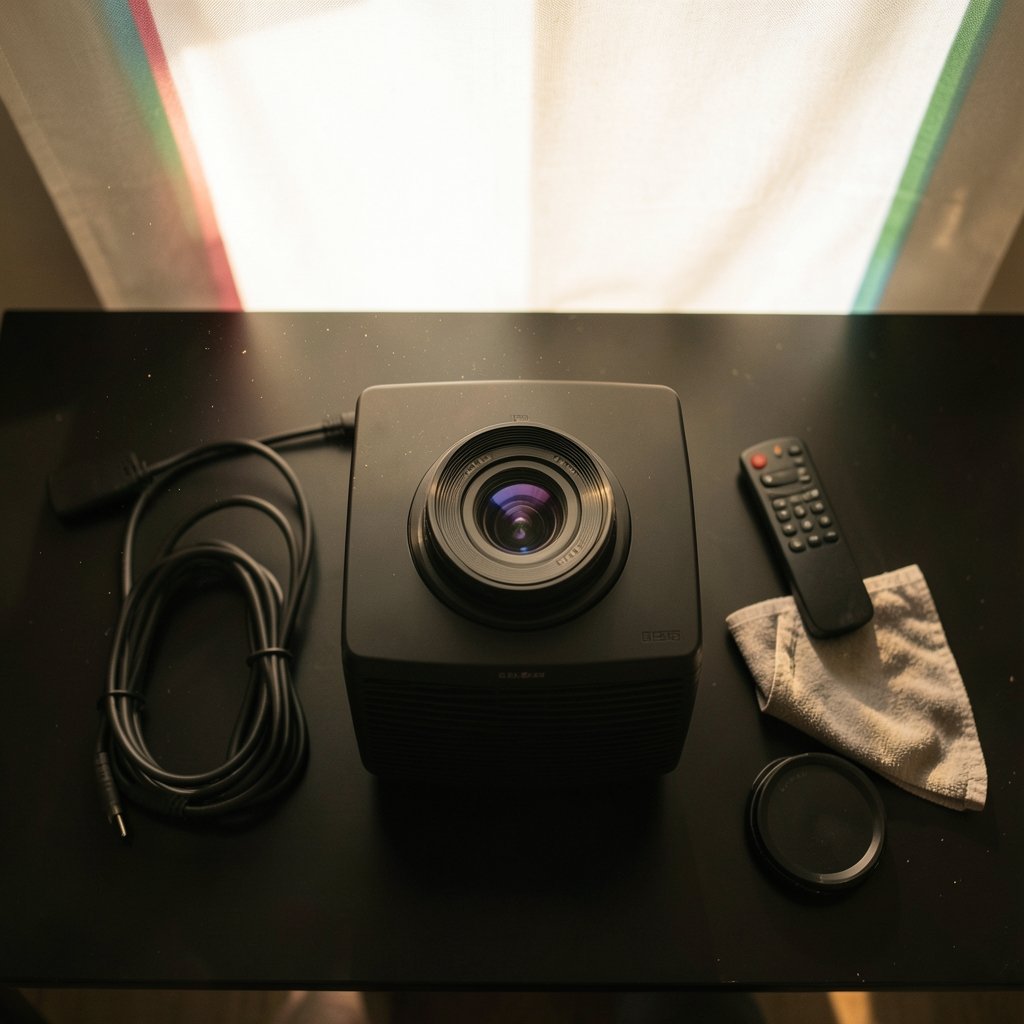
Have you ever watched a movie on a projector and noticed quick flashes of red, green, and blue around moving objects, especially when you blink or dart your eyes across the screen? That strange flicker of color is called the rainbow effect, and it is one of the most talked-about quirks in home theater. Some people spot it instantly. Others never see it at all, even after years of watching. So what exactly is happening, and does it mean you should avoid certain projectors? Let’s break it down in plain language.
What Is the Rainbow Effect?
The rainbow effect, sometimes called color breakup, is a visual artifact that appears on some projectors. Viewers describe it as brief bands or flashes of red, green, and blue that show up around bright objects, fast-moving scenes, or high-contrast edges. It is most noticeable when the eye moves quickly across the image, such as when scanning subtitles or following a flying object.
It is not a defect in the projector’s hardware. It is a side effect of how a specific display technology creates color. The effect gets its nickname because the separated colors can look like a faint rainbow trail, though most people see short, isolated flashes rather than a full arc of color.
Why Only Some Projectors Show It
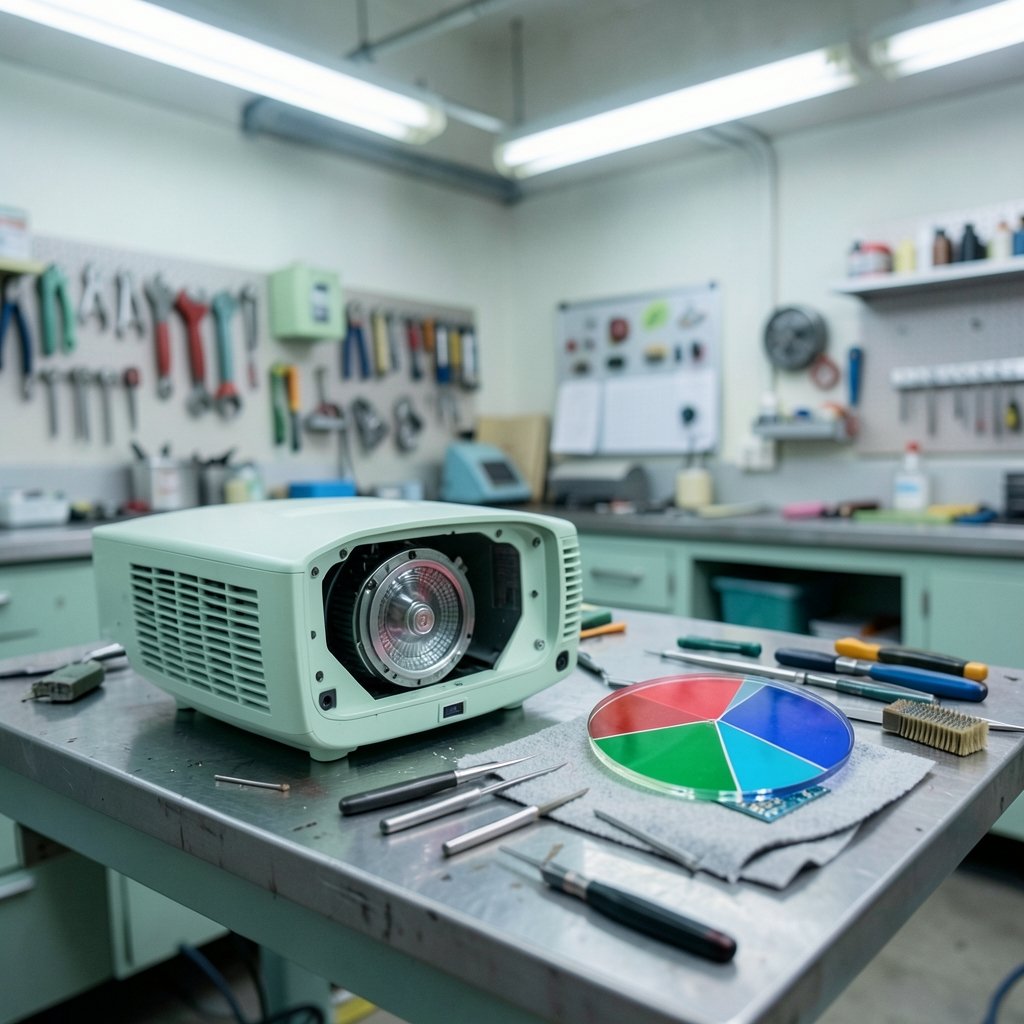
The rainbow effect is tied almost entirely to single-chip DLP projectors. DLP stands for Digital Light Processing, a technology developed by Texas Instruments. According to Wikipedia’s overview of DLP technology, a DLP projector uses a chip covered in tiny mirrors that tilt on and off thousands of times per second to direct light toward the screen. (DLP chip technology overview)
In a single-chip DLP design, there is only one mirror chip. That means the projector can only show one color at a time. To create a full-color image, it spins a color wheel in front of the lamp or light source. The wheel is divided into segments of red, green, and blue (and sometimes white or other colors). As it spins, the chip rapidly switches between color frames, and the human brain blends them into a single image.
This is the same trick your eyes play when you spin a color wheel toy. The colors blur together because they change faster than your visual system can track. Most of the time, the illusion works perfectly. The rainbow effect appears when that illusion briefly breaks.
The Science Behind Color Breakup
The rainbow effect happens because of a mismatch between the projector’s frame rate and the way your eyes move. When your gaze is fixed on one spot, the color frames blend smoothly. But when your eyes saccade — jump quickly from one point to another — the color frames land on different parts of your retina in sequence. Your brain briefly registers them as separate colors instead of a blended image.
This is why the effect often shows up during fast camera pans, action scenes, or when you read scrolling text. It is also why some viewers notice it more when they are tired or when the room is dark. The effect is not constant. It comes and goes depending on the content and on how your eyes are moving.
Why Some People See It and Others Don’t
Sensitivity to the rainbow effect varies a lot from person to person. Researchers have found that individual differences in visual processing, eye movement patterns, and even screen size and viewing distance all play a role. Some viewers are highly sensitive and see color flashes constantly. Others have never noticed it, even on the same projector.
A useful comparison is motion sickness. Two people can ride the same roller coaster, and one feels fine while the other feels queasy. The stimulus is identical, but the response is personal. The same logic applies here. If you are shopping for a projector, the only reliable test is to watch one in person with content you know well.
Which Projectors Are Affected
Not every projector shows the rainbow effect. The table below shows which display types are affected and which are not.
| Projector Type | Rainbow Effect Risk | Why |
|---|---|---|
| Single-chip DLP | High | Uses a spinning color wheel with sequential colors |
| 3-chip DLP | None | Dedicated chip for each primary color |
| LCD | None | Three separate color panels |
| LCoS (liquid crystal on silicon) | None | Three panels, no sequential color |
| Laser phosphor DLP | Varies | Depends on wheel design and color sequencing |
The key takeaway is simple. If a projector uses a single chip and a color wheel, the rainbow effect is possible. If it uses three separate color paths, the effect cannot occur because all colors reach the screen at the same time. (Bioware closure three statements mass effect future 2026)
How Manufacturers Reduce the Effect
Projector makers know the rainbow effect is a common complaint, so they have developed several ways to reduce it. These design choices matter more than most spec-sheet numbers.
Faster Color Wheel Speeds
The most common fix is a faster-spinning color wheel. A wheel spinning at 2x speed shows each color twice as often per frame, and a 4x or 6x wheel goes even further. Faster rotation means the color frames are closer together in time, which makes it harder for the eye to separate them. Many modern home theater DLP projectors use 4x or higher wheels for this reason.
More Color Wheel Segments
Adding more segments to the wheel is another approach. A wheel with six segments (red, green, blue, red, green, blue) cycles through the colors more times per rotation than a three-segment wheel. Some designs add a clear or white segment to boost brightness, but that can make the rainbow effect more visible in some cases. It is a trade-off between brightness and color purity.
Higher Refresh Rates and Frame Interpolation
Higher refresh rates help because the projector can display more color frames per second. Some projectors also use frame interpolation, which creates extra frames between the original ones. This smooths motion and can reduce the visibility of color breakup during fast scenes, though it can also introduce a “soap opera effect” that some viewers dislike.
Laser and LED Light Sources
Newer DLP projectors sometimes use laser or LED light sources instead of traditional lamps. These can be modulated faster, and some designs use multiple light sources to reduce reliance on a spinning wheel. The results vary by model, so the technology name alone does not guarantee a rainbow-free image.
Practical Tips: What Actually Works
If you already own a DLP projector and the rainbow effect bothers you, there are a few practical steps worth trying. These come from common home theater troubleshooting rather than any single product.
- Reduce brightness. A dimmer image often makes color breakup less noticeable, especially in a dark room.
- Move your seating position. Sitting farther from the screen or slightly off-axis can change how your eyes track the image.
- Adjust the color wheel setting. Some projectors let you choose a slower or faster wheel mode. Test both and see which looks better to you.
- Try different content. Animated films and bright sports broadcasts tend to trigger the effect more than dark, slow-paced dramas.
- Use a bias light. A small amount of ambient light behind the screen can reduce the contrast that makes color flashes stand out.
One common mistake is buying a projector based only on online reviews. A reviewer who is insensitive to the rainbow effect may call a projector “perfect,” while a sensitive viewer would find it unwatchable. Always demo before you buy, or buy from a retailer with a generous return policy.
Does the Rainbow Effect Cause Eye Strain?
Many people worry that seeing color flashes means the projector is harming their eyes. There is no evidence that the rainbow effect causes permanent damage. However, some sensitive viewers report eye fatigue or mild headaches after long viewing sessions, likely because their eyes are working harder to blend the color frames.
If you notice discomfort, take breaks, lower the brightness, or consider a projector type that does not use sequential color. The effect is a comfort issue, not a health hazard.
DLP vs. Other Technologies: A Quick Comparison
Choosing a projector often comes down to trade-offs. DLP projectors are known for sharp images, high contrast, and compact designs. LCD and LCoS projectors avoid the rainbow effect entirely but may have other quirks, such as lower contrast or larger chassis sizes.
| Feature | Single-Chip DLP | LCD / LCoS |
|---|---|---|
| Rainbow effect | Possible | None |
| Contrast | Generally strong | Varies by model |
| Sharpness | Very sharp | Sharp |
| Size and weight | Compact | Larger |
| Price range | Wide | Wide |
For buyers who are sensitive to color breakup, a 3-chip DLP or an LCD/LCoS projector is the safer choice. For everyone else, single-chip DLP remains a popular option because of its price-to-performance ratio. If you are also weighing cloud and tech ecosystem decisions in your setup, understanding how platforms handle privacy and infrastructure helps; the debate around Apple private cloud compute and Google cloud in 2026 is a good example of how quickly technology choices evolve.
Common Myths About the Rainbow Effect
A few myths keep circulating in forums, so it is worth clearing them up.
Myth: All DLP projectors show the rainbow effect. Not true. Three-chip DLP projectors do not use sequential color, so they cannot produce the effect.
Myth: The rainbow effect means the projector is broken. It is a normal characteristic of single-chip DLP design, not a fault.
Myth: You can train your eyes to stop seeing it. Some viewers do adapt over time, but there is no reliable method, and sensitivity varies widely.
Myth: Higher price always means no rainbow effect. Price does not guarantee a rainbow-free image. A premium single-chip DLP can still show color breakup, while a budget LCD model will not.
When to Choose a Different Projector Type
If you have tested a DLP projector and the rainbow effect ruins the experience, it is worth looking at alternatives. LCD projectors use three separate panels, one for each primary color, so all colors reach the screen at once. LCoS projectors work similarly. Neither can produce color breakup because there is no sequential color to break up.
The trade-off is that these projectors may cost more for the same brightness, or they may be bulkier. Still, for a viewer who is highly sensitive, the comfort is often worth it. The same logic applies to other big purchases where small details matter; just as home renovation costs can surprise buyers who overlook hidden expenses, projector shopping rewards people who check the details that reviews often skip.
Conclusion
The rainbow effect is a real, well-documented artifact of single-chip DLP projection, and it is neither a defect nor a sign of poor quality. It happens because the projector creates color one frame at a time, and your eyes occasionally catch the sequence before your brain blends it. Some viewers see it constantly, while others never notice it. The best defense is a fast color wheel, a higher segment count, and, above all, a hands-on demo before you buy. If you are sensitive to color breakup, an LCD, LCoS, or 3-chip DLP projector will sidestep the issue entirely. If you are not, single-chip DLP remains one of the best values in home theater.
Frequently Asked Questions
What exactly is the projector rainbow effect?
It is a visual artifact where brief flashes of red, green, and blue appear on screen, usually around bright or fast-moving objects. It happens on single-chip DLP projectors because they show colors one at a time using a spinning color wheel, and the eye sometimes catches the sequence before the brain blends it.
Do all DLP projectors have the rainbow effect?
No. Only single-chip DLP projectors that use sequential color are affected. Three-chip DLP projectors have a dedicated chip for each primary color, so all colors reach the screen at once and the effect cannot occur.
Can I stop seeing the rainbow effect?
Some viewers adapt over time, but there is no guaranteed method. Practical steps include lowering brightness, changing your seating position, trying different color wheel settings, and adding a small bias light behind the screen. If none of these work, switching to an LCD or LCoS projector is the most reliable fix.
Is the rainbow effect bad for my eyes?
There is no evidence that it causes permanent harm. Some sensitive viewers report eye fatigue or mild headaches after long sessions, likely because their eyes work harder to blend the color frames. Taking breaks and reducing brightness usually helps.
Why do some people see it and others don’t?
Sensitivity depends on individual visual processing, eye movement patterns, screen size, and viewing distance. Two people can watch the same projector and have completely different experiences, which is why a personal demo matters more than any review.
Does a faster color wheel eliminate the rainbow effect?
A faster wheel reduces visibility but rarely eliminates it completely for highly sensitive viewers. Wheels spinning at 4x or 6x speed, or wheels with more color segments, make the effect much harder to notice. For a guaranteed rainbow-free image, choose a projector without sequential color.



