
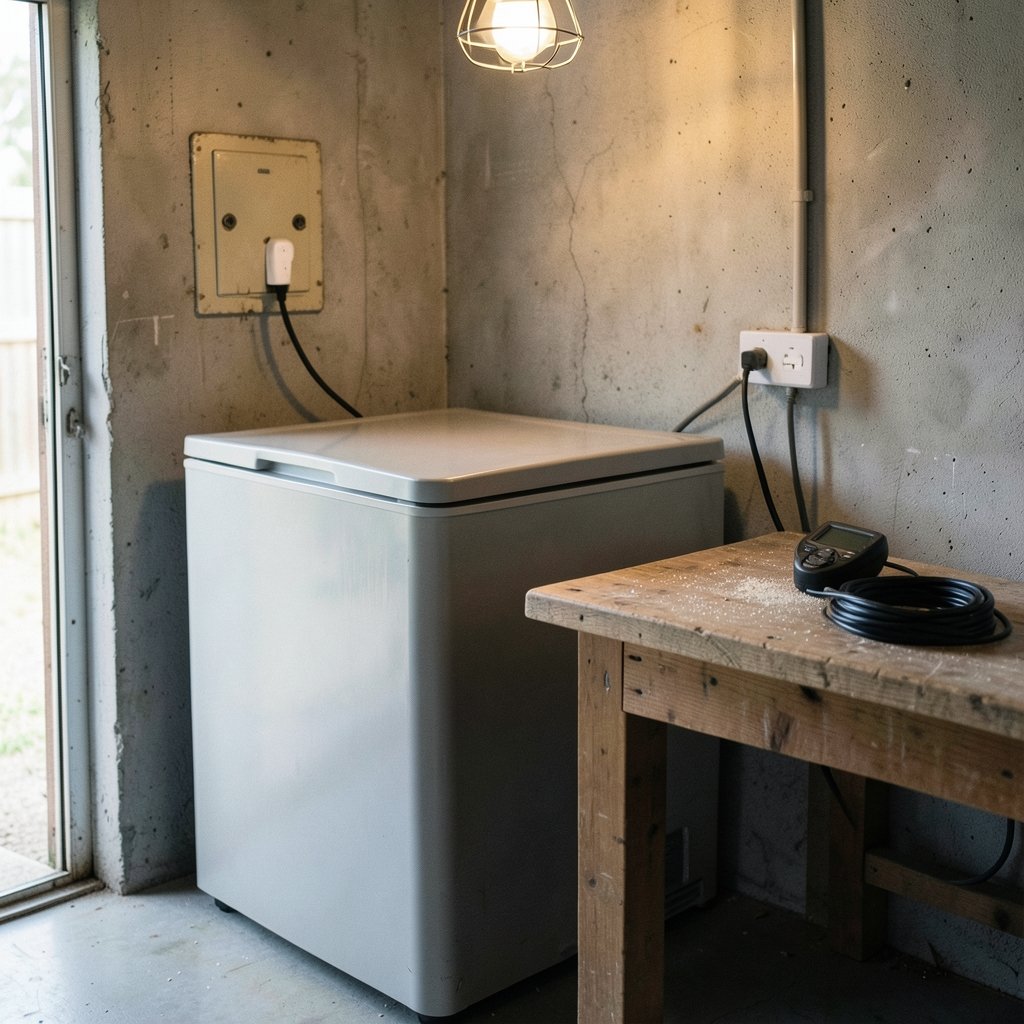
Can a $20 smart plug really tell you what your refrigerator costs to run? That question sits at the heart of a quiet problem in the smart home world. Millions of people now use smart plugs to track energy use, cut bills, and spot power-hungry appliances. Yet the numbers on the app screen are rarely as precise as they look. Understanding smart plug energy monitoring accuracy means knowing where those watts come from, when they drift, and when you should trust them anyway.
Why smart plugs report energy at all
A smart plug is, at its core, a relay with a brain. The brain is a small microcontroller, usually paired with a Wi-Fi or Zigbee radio. Somewhere between the wall socket and your lamp sits a metering chip. That chip samples voltage and current many times per second and turns those samples into watts, kilowatt-hours, and sometimes apparent power.
The appeal is obvious. You plug in a device, open an app, and watch the numbers move. No electrician, no clamp meter, no rewiring. For anyone building out a connected home, it is one of the cheapest ways to get real data. If you are just starting, a guide to the best smart home devices for beginners will show how plugs fit alongside hubs and sensors.
But cheap data is not the same as accurate data. The gap between what a plug reports and what a calibrated lab meter would show is where the real story lives.
The hardware behind the number
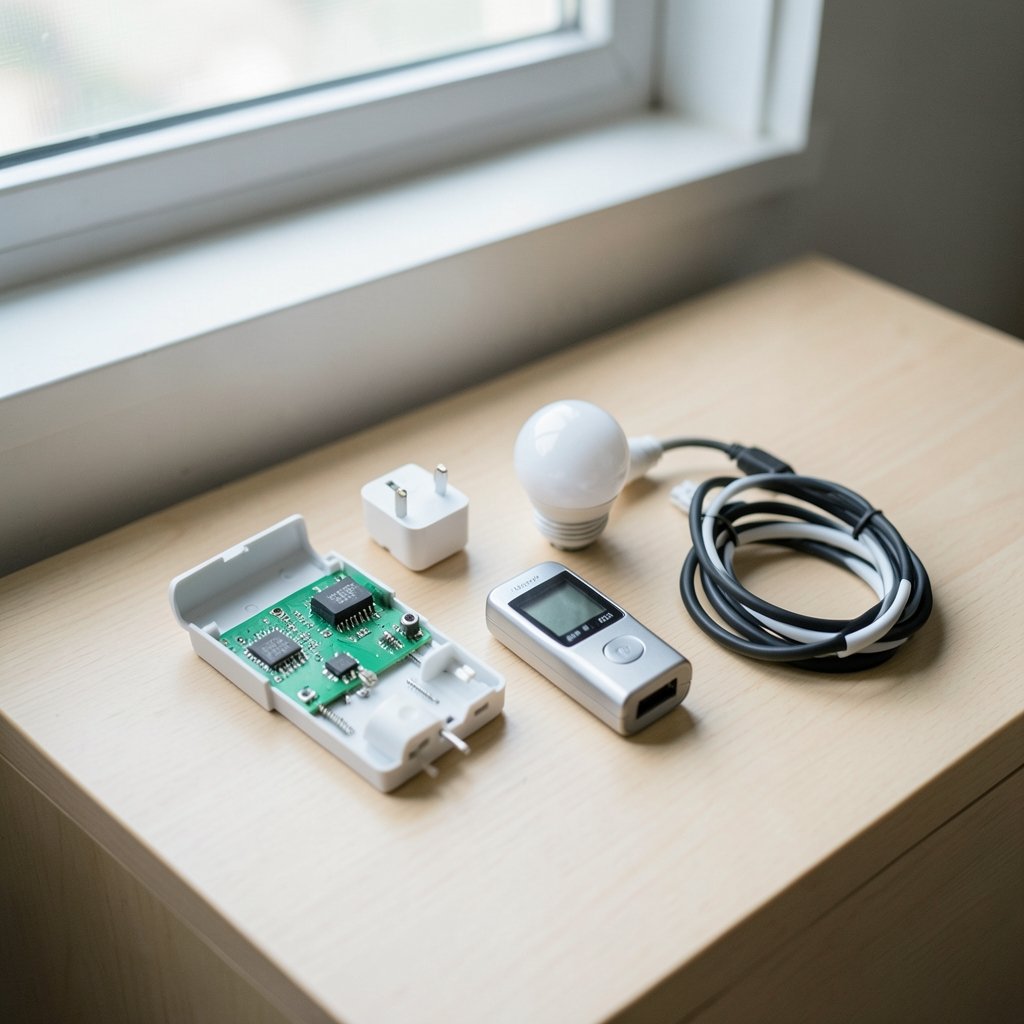
Most consumer smart plugs use low-cost energy-metering integrated circuits. These chips are genuinely capable. Under good conditions, a well-designed plug can land within a few percent of a reference meter. That is fine for spotting a space heater that draws 1,500 watts.
The trouble starts at the edges of the measurement range. Three factors dominate:
- Load size. Below roughly 5 to 10 watts, many plugs become unreliable or simply report zero. Standby power measurements are especially shaky.
- Power factor. Plugs that report real power in watts can diverge sharply from apparent power in volt-amperes when the load is a motor, an LED driver, or a switch-mode supply. Not every plug is clear about which figure it shows.
- Calibration and firmware. Sampling intervals, averaging, and rounding inside the app can all distort the raw reading before you ever see it.
A plug is not a revenue-grade meter. Equipment built to official electricity metering standards, such as the IEC 62053 family maintained by the International Electrotechnical Commission, is tested and certified to defined accuracy classes. Consumer plugs almost never carry that certification. They are convenience tools, not billing instruments. (Electricity meter)
Where accuracy holds up and where it breaks
The practical picture is more encouraging than the caveats suggest, as long as you match the tool to the job.
| Measurement scenario | Typical accuracy | Verdict |
|---|---|---|
| High-draw resistive load (heater, kettle) | Within a few percent | Reliable |
| Mid-range electronics (TV, desktop PC) | Small to moderate error | Good for trends |
| LED bulbs and small chargers | Often poor, sometimes zero | Unreliable |
| Standby and vampire draw | Frequently understated | Treat with caution |
| Motor loads (fridge, fan, pump) | Depends on power factor handling | Check the spec |
The pattern is clear. The bigger and simpler the load, the more you can trust the reading. The smaller and more complex the load, the more skepticism you need.
This matters because the devices people most want to measure, like refrigerators and always-on electronics, are exactly the ones that cycle on and off and draw modest power most of the time. A fridge compressor pulls a few hundred watts when running, then drops to a handful of watts. A plug that misses the low end will undercount the total.
Real power versus apparent power
Here is a distinction that trips up almost everyone. Real power, measured in watts, is the energy that actually does work. Apparent power, measured in volt-amperes, is the product of voltage and current regardless of phase. For a pure resistive load like a kettle, the two are identical. For a motor or an LED driver, they can differ by a wide margin.
Some plugs report watts. Some report volt-amperes. Some report something in between without saying so. If you compare two plugs on the same appliance and get different numbers, power factor handling is often the reason.
The fix is straightforward. Check the product documentation for what the plug actually measures. If it only lists “power” without units, assume nothing. This is the kind of detail that separates a useful monitoring plug from a decorative one, and it is worth weighing when you compare options like the best smart thermostats to save energy, which face similar questions about how their savings claims are calculated. (Weights and Measures)
What independent testing tends to find
Vendor spec sheets often claim accuracy of around one to two percent. Independent testers usually find something less flattering, especially at low loads. The discrepancy is rarely a lie. It is a difference in test conditions. A spec sheet figure may reflect a mid-range resistive load at a stable room temperature. Real homes serve up cycling loads, harmonics, and temperature swings.
The lesson is not that plugs are useless. It is that the headline accuracy number describes a best case. When you read a claim, ask what load, what power factor, and what temperature it was measured at. If the answer is missing, discount the number.
How to sanity-check your own readings
You do not need a lab to get a feel for whether a plug is trustworthy. A few practical habits go a long way.
- Test against a known load. Plug in an incandescent bulb or a resistive heater with a printed wattage. Compare the plug’s reading to the label. A close match builds confidence.
- Watch the low end. Plug in a phone charger with nothing attached. If the plug reports a steady figure that never changes, its low-load resolution is coarse.
- Compare two plugs. Put two different models on the same appliance for a day. A large gap tells you at least one is off.
- Check the units. Confirm whether the app shows watts or volt-amperes before drawing conclusions.
- Look at totals over time. Daily and weekly kilowatt-hour totals smooth out sampling noise and are usually more meaningful than instant readings.
A common mistake is trusting a single instantaneous reading. Another is assuming a plug that reads zero on a tiny load is broken. It may simply be below its measurement floor.
Firmware, apps, and the cloud layer
Even a well-calibrated plug can mislead once its data leaves the device. Many plugs sample internally at a high rate but upload averaged values to the cloud every few seconds or minutes. The app then rounds and displays those averages. None of this is disclosed in most product pages.
This matters for anyone building automations. If a plug reports power every 30 seconds, an automation triggered by a brief spike may never fire. The data is fine for monthly totals and poor for catching short events.
Integration platforms have sprung up partly to solve this. Local hubs and open protocols let you pull raw values at the device’s own sampling rate. If precise logging matters, a hub-based setup beats a cloud-only app. Devices like the Home Center Lite show how a central controller can collect and expose sensor data more transparently than a vendor app.
Accuracy in the wider smart home
Energy monitoring rarely lives alone. Plugs feed dashboards, voice assistants, and routines. A plug that reports slightly off numbers is still useful as a trigger: turn off the iron when power drops to zero, or alert when the washing machine finishes. For those jobs, precision is irrelevant and presence of a signal is everything.
Where accuracy genuinely pays off is in cost tracking and efficiency hunting. If you want to know whether an old freezer is worth replacing, a plug’s weekly total is a reasonable guide. If you want to bill a tenant or claim a tax deduction, it is not.
The same logic applies across the connected home. A smart lock does not need laboratory precision to be secure, and a smart speaker does not need perfect audio measurement to be useful. Each device earns trust by being good enough for its actual job. Energy plugs deserve the same realistic framing.
Common mistakes that wreck your data
A few habits quietly undermine monitoring accuracy, and they are easy to fix.
- Measuring the wrong thing. A plug measures what is downstream of it. A power strip feeding five devices gives you the sum, not the breakdown.
- Ignoring standby. Many plugs miss or undercount standby draw, so always-on devices look cheaper than they are.
- Comparing across seasons. A fridge uses more in summer. Short tests in different months are not comparable.
- Forgetting the plug’s own draw. The plug itself consumes a small amount of power. It is minor, but it exists.
- Trusting one reading. Instantaneous watts bounce around. Averages over hours tell the real story.
When a plug is the right tool, and when it is not
Smart plugs shine for big, obvious loads and long-term trends. They are excellent for answering “roughly how much does this cost me?” They are weak for precise, low-level, or legally meaningful measurements.
If you need higher confidence, options exist. A dedicated energy monitor that clamps onto your panel gives whole-home data with better accuracy. A plug-in meter designed for testing can outperform a smart plug at low loads. For most households, though, a decent smart plug plus sensible skepticism is enough.
The technology keeps improving. Metering chips are getting cheaper and better, and more plugs now disclose their sampling behavior. The direction of travel is toward more transparent data. Until then, the smartest approach is to treat plug readings as a good estimate, not gospel.
The same applies when you look at the broader market for connected gear, from the best smartphones in 2026 to the best monitor for a PS5. Specs describe a best case. Real-world performance depends on how you use the thing.
Conclusion
Smart plug energy monitoring accuracy is good enough to change behavior and rarely good enough to settle a bill. The numbers are real measurements, produced by real chips, but they come with conditions. High-draw resistive loads read reliably. Tiny loads, motors, and standby draw are where plugs stumble. Power factor and undisclosed firmware averaging add further uncertainty.
The practical answer is not to distrust smart plugs. It is to use them for what they do well. Track trends, compare appliances over weeks, and let the data guide decisions. When a reading looks suspicious, test it against a known load or a second plug. Treat every watt on the screen as an informed estimate, and the humble smart plug becomes one of the most useful tools in the connected home.
Frequently Asked Questions
How accurate are smart plugs for measuring energy?
Most consumer smart plugs land within a few percent of a reference meter on high-draw resistive loads like heaters and kettles. Accuracy drops sharply at low loads, with many plugs unreliable below roughly 5 to 10 watts. They are not revenue-grade meters and are rarely certified to formal metering standards.
Why does my smart plug show zero for a small device?
Many plugs have a measurement floor. Below a certain current, the metering chip cannot resolve the load and reports zero or a flat figure. Phone chargers, LED nightlights, and standby modes often fall below that floor. This is a hardware limit, not a fault.
Do smart plugs measure watts or volt-amperes?
It depends on the model. Some report real power in watts, some report apparent power in volt-amperes, and some do not say. For resistive loads the two are nearly identical. For motors and electronics they can differ widely, so check the documentation before comparing readings.
Can I trust a smart plug to calculate my electricity bill?
For a rough estimate, yes. For anything official, no. Plug readings can drift at low loads and may miss standby draw, so totals can be understated. Use them to spot trends and compare appliances, not to calculate exact charges.
Why do two smart plugs give different readings on the same appliance?
Differences usually come from power factor handling, sampling rate, calibration, and how each app averages and rounds data. A gap of a few percent is normal. A large gap means at least one plug handles the load poorly, often because the appliance is a motor or a switch-mode supply.
Does firmware or the app affect accuracy?
Yes. A plug may sample internally at a high rate but upload averaged values to the cloud every few seconds or minutes. The app then rounds those averages. This is fine for daily totals but can hide short spikes, which matters if you rely on power changes to trigger automations.



