
Does a balanced headphone cable really reveal hidden sound quality, or is it the most oversold upgrade in personal audio? On any headphone forum, some people swear a 4.4 mm plug changed their favorite pair, while others call it marketing. Both camps have a point; the answer lies in unglamorous engineering details about voltage, grounding, and noise. (Audio Engineering Society)
This guide breaks down the balanced vs unbalanced debate without the hype. It covers what each connection actually does, where the real benefits live, which mistakes burn out amplifiers, and how to decide whether the upgrade is worth your money.
What an Unbalanced Output Actually Does
An unbalanced connection is the setup most people already own. It uses a single signal conductor per channel plus a shared return path, usually called ground. Think of a standard 3.5 mm or 6.35 mm plug: tip, ring, and sleeve carry left, right, and a common ground that both channels share.
That shared ground is cheap, simple, and works beautifully for most listening. The catch is that the return path is a compromise. Both channels dump their current into the same conductor, and any noise riding on that ground gets added to the signal. In short cable runs with well-designed gear, these effects are tiny. In long runs, electrically noisy environments, or amplifiers with sloppy grounding, they become audible as hiss, hum, or a slightly smeared stereo image.
Here is the practical takeaway: an unbalanced output is not “broken.” It is a design trade-off that favors simplicity and compatibility, and it is what the overwhelming majority of headphones and source devices are built around.
What a Balanced Output Actually Does
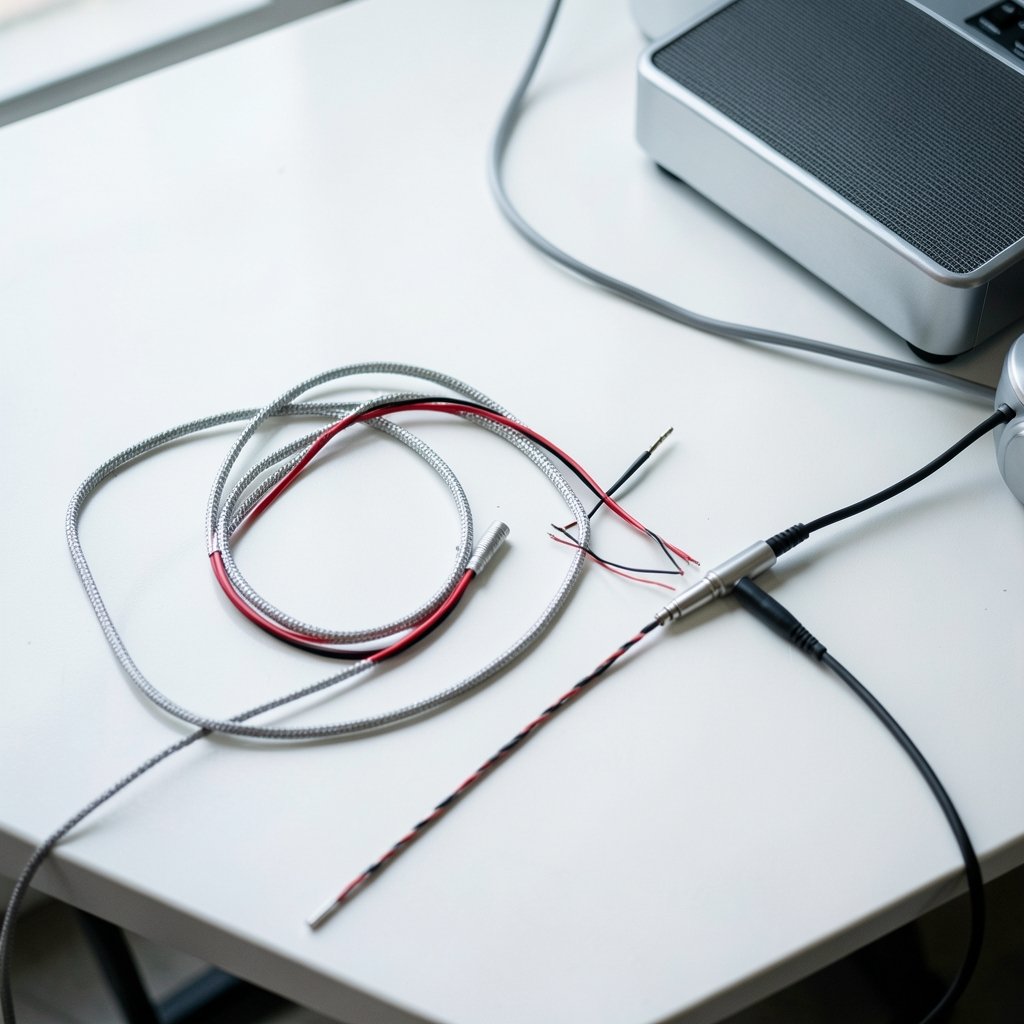
A balanced connection splits the job differently. Each channel gets two signal conductors carrying equal but opposite (differential) signals, plus a shield or ground. The receiving circuit subtracts one signal from the other. Because noise and interference hit both conductors equally, the subtraction cancels most of it. Engineers call this common-mode rejection, and it is the core reason balanced wiring exists in professional audio. (Balanced audio)
For headphones specifically, there is a second effect that matters more day to day. A balanced headphone output typically drives each channel with two amplifier sections working in opposite phase. That arrangement can roughly double the voltage swing available, which translates to more output level into demanding loads. The exact gain depends on the amplifier’s topology and power supply, so treat the often-quoted “6 dB more headroom” as a rough ceiling rather than a guarantee.
A third benefit is channel separation. Because each channel has its own return path, the shared-ground crosstalk of unbalanced wiring largely disappears. Whether you can hear that difference depends on your headphones, your ears, and how much crosstalk the original design had in the first place.
Balanced vs Unbalanced: Side-by-Side Comparison
| Factor | Unbalanced | Balanced |
|---|---|---|
| Typical connectors | 3.5 mm, 6.35 mm TRS | 4-pin XLR, 4.4 mm Pentaconn, 2.5 mm TRRS |
| Conductors per channel | One signal plus shared ground | Two differential signals plus shield |
| Noise rejection | Relies on shielding and short runs | Strong common-mode rejection |
| Output voltage | Baseline for the amp design | Often roughly double, topology dependent |
| Channel crosstalk | Shared return can raise it | Separate returns per channel |
| Compatibility | Nearly universal | Requires matching amp and cable |
| Cost | Lower | Higher for cables, amps, and adapters |
The table makes the trade-off clear. Balanced wins on engineering metrics, but it demands matched gear on both ends. Plug a balanced cable into an unbalanced jack through a careless adapter and you can short amplifier outputs together, which is a genuine way to damage equipment.
Where the Real Benefits Show Up
Balanced output earns its keep in specific situations, and it is worth being honest about which ones.
Hard-to-drive headphones. High-impedance dynamic models and low-sensitivity planar magnetic headphones often need voltage the unbalanced output cannot supply cleanly. A balanced output can push them louder with less strain, and less strain usually means less distortion at the top of the volume range.
Long cable runs and noisy rooms. If your amplifier sits across the room from your listening chair, or your desk is crowded with monitors, chargers, and USB hubs, differential wiring does real work. This is the scenario where balanced audio was born, in studios and live sound, and it remains the strongest argument for the format.
Channel separation at high volume. Listeners who crank the volume on sensitive headphones may notice the stereo image tighten slightly with balanced wiring. It is subtle. Anyone claiming a night-and-day transformation is describing expectation bias more than physics.
Not much else. If you own easy-to-drive headphones, sit close to your amp, and hear no noise floor, balanced output will probably change very little. A clean unbalanced design beats a mediocre balanced one every time. That principle applies across audio gear, which is why roundups of the best headphone amps for audiophiles tend to weigh circuit quality over connector count.
The Mistakes That Actually Cost People Money
A few recurring errors show up again and again in balanced audio discussions.
- Assuming balanced always sounds better. It is a topology, not a quality badge. A well-engineered single-ended amp can outperform a budget balanced one.
- Buying a balanced cable before a better source. Cables are the last few percent. The amplifier and headphone pairing decide most of what you hear.
- Using the wrong adapter. Converting a balanced headphone cable to a single-ended plug can tie amplifier outputs together. Check the manufacturer’s documentation before improvising.
- Ignoring the noise floor. Balanced output helps most when noise is audible. If your current setup is silent, the upgrade has little to fix.
- Chasing loudness instead of control. More voltage is useful only if the headphones need it. Otherwise you are paying for headroom you never touch.
Budget-minded listeners often get more satisfaction from spending on the headphone itself. If money is tight, a strong pair of budget headphones paired with a clean unbalanced amp will beat a mediocre headphone on a fancy balanced chain almost every time.
Connector Types You Will Encounter
The consumer market has settled on a few balanced formats, and knowing them saves confusion.
4-pin XLR is the professional standard for balanced headphone output. It is bulky, locking, and common on desktop amplifiers.
4.4 mm Pentaconn is the modern consumer favorite, a five-pole design small enough for portable players and durable enough for daily use.
2.5 mm TRRS was the first mainstream portable balanced format. It works, but the plug is fragile, and many users have switched to 4.4 mm for that reason.
Dual 3-pin XLR appears on some high-end desktop amps, splitting left and right into separate cables. It is excellent electrically and inconvenient ergonomically.
Each format carries the same differential signal. The differences are size, durability, and which amplifiers support them, so match your cable to your amp rather than the other way around.
How to Decide If Balanced Is Worth It
The decision comes down to a short checklist, and it is worth running through honestly.
First, ask whether your headphones are hard to drive. High impedance or low sensitivity is the clearest signal that extra voltage will help. Second, ask whether you hear noise now. A silent background means balanced wiring has little to fix. Third, ask whether your amplifier even offers a balanced output, and whether it is a true differential design rather than a single-ended circuit with a different jack. Fourth, budget for the cable and any adapters, because balanced upgrades rarely stop at one component.
If most answers point toward “no,” spend the money elsewhere. A better DAC, improved earpads, or simply a more comfortable pair of headphones will deliver more audible change. Portable listeners juggling calls and music should also weigh practicality: balanced cables are thicker and less friendly on the move, which is why guides to the best earbuds for phone calls and meetings rarely dwell on connector topology at all.
What the Measurements Say
Careful measurement tells a consistent story. When an amplifier’s unbalanced output already has inaudible noise and distortion, adding a balanced output changes numbers, not experiences. Crosstalk might drop from barely audible to even less audible. Output voltage might rise, but if you never approach clipping on the unbalanced output, the extra headroom sits unused.
Where measurements do favor balanced designs is in difficult loads and noisy environments. Driving a low-sensitivity planar magnetic headphone to live-volume levels from a small unbalanced amp often pushes the circuit toward its limits, and distortion rises accordingly. The same headphone on a balanced output has more room to breathe. That is a real, measurable difference, and it is the honest case for the format.
The marketing claims that go further, that balanced wiring reveals detail or “opens up” a headphone, do not survive scrutiny. If noise and crosstalk were already below audibility, there is nothing left for the balanced connection to remove.
Matching Balanced Gear to Your Setup
Getting balanced right is mostly about matching. The amplifier must have a genuine balanced output, the cable must be wired for that connector, and the headphone must be compatible with the amplifier’s power delivery. Mixing brands is fine as long as the specifications line up.
Desktop listeners with demanding headphones should prioritize a true differential amplifier with a 4-pin XLR or 4.4 mm output. Portable listeners should treat 4.4 mm as the default and avoid 2.5 mm unless their player requires it. Anyone comparing phones and audio gear across ecosystems will find the same principle applies: specification matching beats brand loyalty, a theme that runs through comparisons like iPhone 18 vs Galaxy S26: which phone should you buy today.
One more practical note: keep your unbalanced gear. A good single-ended output remains the most versatile option for sharing headphones, testing new gear, and traveling light. Balanced is an addition, not a replacement.
Conclusion
Balanced headphone output is real engineering with real benefits, but those benefits are situational. It offers stronger common-mode noise rejection, lower crosstalk, and often more voltage swing, all of which matter most with hard-to-drive headphones, long cable runs, and electrically noisy rooms. For easy-to-drive headphones in a quiet setup, the audible difference is usually small, and sometimes nonexistent.
The smart approach is to buy the best amplifier and headphone pairing your budget allows, then add balanced output if your specific gear and environment call for it. Treat claims of universal transformation with skepticism, verify that your amplifier is genuinely differential, and never improvise adapters that could short outputs together. Do that, and balanced audio becomes a useful tool rather than an expensive ritual.
Frequently Asked Questions
Does balanced output always sound better than unbalanced?
No. Balanced output can reduce noise and crosstalk and increase available voltage, but if the unbalanced output is already clean and loud enough, the difference may be inaudible. Circuit quality matters far more than connector type.
Can I use a balanced headphone cable with an unbalanced amplifier?
Only with the correct adapter, and often not at all. Many balanced cables, when adapted to a single-ended jack, can short amplifier outputs together and cause damage. Check the manufacturer’s documentation before trying it.
What is the difference between 4.4 mm Pentaconn and 4-pin XLR?
Both carry a balanced signal. 4-pin XLR is a larger locking connector common on desktop amplifiers, while 4.4 mm Pentaconn is smaller and designed for portable players. Choose based on what your amplifier accepts.
Do I need balanced output for high-impedance headphones?
It helps. High-impedance and low-sensitivity headphones often need more voltage than an unbalanced output can deliver cleanly, so a balanced output can provide extra headroom with lower strain on the amplifier.
Is a balanced cable worth buying before a better amplifier?
Usually not. The amplifier and headphone pairing shapes the sound far more than the cable. Upgrade the source or the headphone first, then consider balanced wiring if noise or headroom is genuinely an issue.
Why does balanced wiring reject noise so well?
It sends two equal but opposite signals and subtracts them at the receiving end. Interference hits both conductors equally, so the subtraction cancels it. This common-mode rejection is why balanced connections dominate professional audio.



