
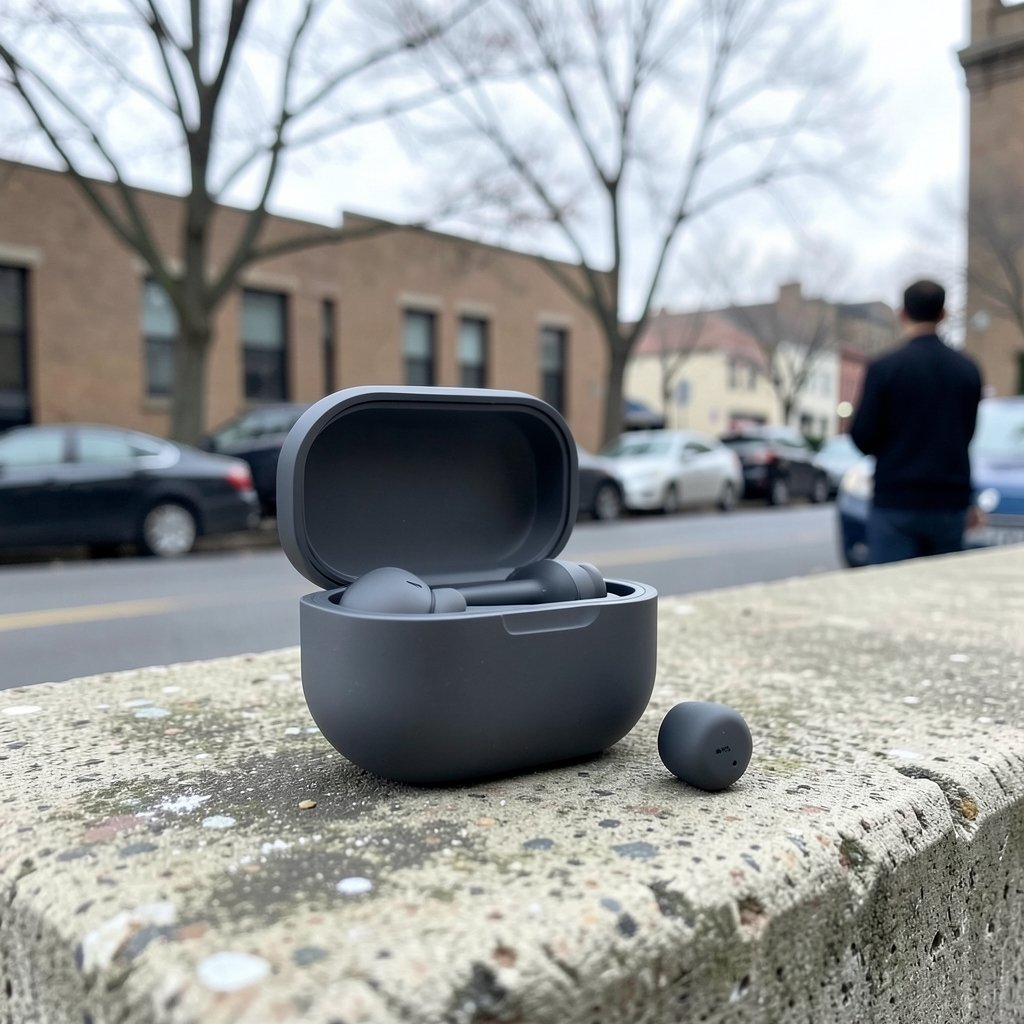
What if the sweet spot for wireless earbuds was never at the top of the price ladder? In 2024, the best wireless earbuds under 200 dollars proved that point again and again. You could get real noise cancelling, a stable connection, and battery life that survives a workday without crossing into flagship territory. The catch is that “under $200” is a crowded, fast-moving shelf, and a lot of advice floating around is either stale or written by someone who never wore the buds on a commute.
This guide walks through what actually mattered in 2024, which features earned their price, and where buyers routinely overspend or underspend. It also flags the parts of the market that shifted after 2024, so the advice stays useful rather than frozen in time.
Why $200 Was the Real Ceiling in 2024
The $200 line was not arbitrary. In 2024, the flagship tier (Apple’s AirPods Pro, Sony’s WF-1000XM5, Bose’s QuietComfort Ultra Earbuds) generally sat above it, while a deep middle tier sat comfortably below. That middle tier is where most people should have been shopping.
The reason is simple: the features that matter most day to day stopped being premium exclusives. Active noise cancellation, multipoint Bluetooth, and decent water resistance all showed up well under $200 during 2023 and 2024. What you gave up at the ceiling was usually refinement, not capability: slightly better microphones, more polished tuning, or a nicer case. (Bluetooth)
Anyone who assumed “cheaper means worse” in 2024 was leaving real value on the table. The trick was knowing which specs to check and which marketing numbers to ignore.
The Features That Actually Earned Your Money

Noise Cancelling That Works on a Bus, Beyond the Chart
ANC is the single biggest differentiator in this price band. The technology works by sampling outside sound and generating an opposite signal to cancel it, which is why cheap implementations often feel like a faint pressure change rather than real quiet. The general principle is well documented in explainers on active noise control, and it helps to understand that ANC is most effective on steady low-frequency noise like engines and air conditioning, not on sudden voices. (Bluetooth Technology Overview)
In practice, mid-tier ANC in 2024 handled plane cabins and office hum well. It struggled with wind and clatter. If your commute is a noisy train, ANC was worth prioritizing. If you mostly listen in a quiet room, it was the first feature to cut.
Codecs: Where the Fine Print Lives
Codec support is the most misunderstood spec under $200. AAC is the default for most phones and works fine. SBC is the universal fallback. LDAC, Sony’s higher-bitrate codec, appeared on some sub-$200 models but not all, and it only helps if your phone supports it too. The LDAC codec entry explains the trade-offs between bitrate, stability, and battery drain better than any spec sheet.
The practical rule: don’t buy for a codec you can’t use. If your phone doesn’t support LDAC, paying extra for it is money spent on a checkbox.
Battery Claims vs. Battery Reality
Marketing battery figures are almost always per-bud numbers without the case, measured at moderate volume with ANC off. Real-world ANC use in 2024 typically fell short of the headline number. A bud rated at eight hours often delivered five to six with noise cancelling engaged.
That gap matters more than the spec itself. A pair rated at six hours with ANC on is more honest than one rated at ten hours that quietly assumes ANC is disabled.
Water Resistance and the IP Rating
IP ratings describe protection against dust and water, and the second digit is the one that matters for sweat and rain. IPX4 was the common standard under $200 in 2024, which handles workouts and light rain but not submersion. The IP Code explainer breaks down what each digit means, which is useful when a listing says “waterproof” without a number.
Multipoint: The Feature You Notice Only When It’s Missing
Multipoint Bluetooth lets buds stay connected to two devices at once, so a call on your laptop interrupts music on your phone. It became common in mid-tier models during 2023 and 2024 but was never universal. If you bounce between a phone and a laptop all day, this feature was worth more than a marginally better driver.
How the 2024 Field Broke Down
The sub-$200 market in 2024 split into three rough camps. The table below summarizes how they compared on the things buyers actually notice.
| Camp | Typical price band | Strengths | Trade-offs |
|---|---|---|---|
| Value ANC champs | $90 to $130 | Real noise cancelling, solid app support | Average mics, plain build |
| Same-brand picks | $130 to $180 | Easy pairing, good fit | Limited codec support, no ANC on some models |
| Near-flagship | $170 to $200 | Better tuning, stronger battery | Prices crept over $200 on sale cycles |
A few models anchored the conversation. Sony’s WF-C700N, launched in 2023 around $120, was widely reviewed as a value pick with usable ANC. Nothing’s Ear (a), launched in 2024 around $99, was covered as a budget standout with ANC at a striking price. Anker’s Soundcore line, including the Space A40 and Liberty 4 NC, was a common sub-$100 ANC recommendation across 2023 and 2024 reviews.
Apple’s third-generation AirPods, listed at $169 at their 2021 launch, were a frequent trap. They sound good and pair instantly with Apple devices, but they lack active noise cancellation entirely. Buyers who wanted ANC had to look at the Pro model, which sat above $200. That distinction tripped up a lot of shoppers who assumed the price implied the feature.
Mistakes That Cost Buyers Money in 2024
The most common error was buying for a spec sheet instead of a use case. Someone who works from home and takes one call a day does not need the best ANC in the band. Someone who flies monthly needs it badly.
The second mistake was trusting a “best of” list without checking its date. Rankings from early 2024 were often obsolete by the end of the year, because firmware updates changed ANC behavior and new models undercut old ones. Review consensus moves fast in this category.
The third mistake was ignoring fit. A bud that doesn’t seal properly loses bass and ANC performance no matter what the price tag says. Foam tips or a different ear-tip size often did more for sound than an upgrade would have.
The fourth was overlooking maintenance. Charging problems are usually contact problems, and a quick clean fixes most of them. If your buds stop charging reliably, a guide to cleaning wireless earbuds charging contacts covers the fix before you assume the battery is dead.
Where the Sub-$200 Market Went After 2024
Honesty matters here: any 2024 price list is a snapshot. Retail pricing shifts with sales cycles, and models get discontinued or replaced. The structural advice holds, though.
The middle of the market kept getting better. Features that were mid-tier in 2024, like multipoint and competent ANC, kept sliding downward in price. That means the $200 ceiling buys more now than it did then, and a 2024 shortlist should be treated as a starting point rather than a final answer.
If you’re shopping today, the same logic applies with updated models. For a current shortlist, a roundup of the best wireless earbuds under 200 in 2026 reflects the newer field, and a guide to the best cheap earbuds under 50 that actually deliver covers the budget end where ANC is usually the first casualty.
Practical Buying Advice That Survives Model Changes
Start with the phone, not the buds. Codec support and brand pairing shape the experience more than most spec differences. Then decide whether ANC is a need or an option. Next, check battery figures with ANC on, if the manufacturer publishes them.
Buy from a retailer with a real return window. Fit is personal, and no review can tell you whether a bud stays put in your ear during a run. Two weeks of real use beats any comparison chart.
Finally, budget for tips. A $10 set of foam tips can transform a $100 pair of buds, and it’s the cheapest upgrade in the category.
Common Problems and Quick Fixes
Even good buds misbehave. Connection drops between devices are usually a pairing-order issue rather than a hardware fault, and a guide on what to do when wireless earbuds keep switching devices walks through the reset sequence.
Case charging failures follow a similar pattern: dirty contacts, a worn cable, or a case that needs a reset. If your case won’t hold a charge, this fix for a wireless earbuds case not holding charge covers the likely causes in order of probability.
Wind noise is the other frequent complaint. It’s a physical problem, not a firmware one, and the approaches that actually reduce it are limited. A breakdown of wireless earbuds wind noise reduction that actually works explains which methods help and which are marketing.
And if you’re weighing over-ear options instead, the best over ear headphones under 200 covers that comparison, while gamers shopping for a display alongside audio can look at the best budget gaming monitors under 200 that actually matter.
Conclusion
The best wireless earbuds under 200 dollars in 2024 were rarely the ones with the longest spec sheet. They were the ones that matched a real use case: ANC for commuters, multipoint for people who juggle devices, water resistance for anyone who sweats, and a secure fit for everyone. The $200 ceiling bought genuine capability that year, and the gap between mid-tier and flagship was narrower than the price difference suggested.
The lesson carries forward. Prices move, models retire, and rankings go stale, but the decision framework doesn’t. Start with your phone, decide whether noise cancelling is essential, check the battery claim against ANC-on reality, and buy somewhere you can return. Do that, and the sub-$200 shelf stops being a compromise and starts being the smartest place to shop.
FAQ
Are $200 earbuds good enough compared with flagship models?
For most people, yes. In 2024, sub-$200 models offered real ANC, multipoint, and solid battery life. Flagships added refinement in microphones, tuning, and case design, but the day-to-day gap was smaller than the price gap suggested.
Do all wireless earbuds under $200 support noise cancelling?
No. ANC was common but not universal in that band. Some well-known models, including Apple’s standard AirPods, lacked it entirely in 2024, so check the product name and spec sheet rather than assuming the price implies the feature.
Is LDAC worth paying extra for under $200?
Only if your phone supports it. LDAC can improve detail on compatible Android devices, but it also drains battery faster and can be less stable at range. If your phone doesn’t support it, the feature adds nothing to your experience.
How much battery life should I expect with ANC on?
Expect noticeably less than the headline figure. Marketing numbers are usually measured with ANC off at moderate volume. A bud rated at eight hours often delivered five to six with noise cancelling engaged, so plan around the lower number.
What does IPX4 actually mean for earbuds?
IPX4 means protection against splashing water from any direction. It handles sweat and light rain but not swimming or submersion. The X means dust protection wasn’t rated, which is common on earbuds.
Why do my earbuds keep switching between my phone and laptop?
This is usually multipoint behavior working as designed, combined with devices competing for the connection. Resetting the pairing order on both devices resolves most cases, and disabling multipoint on one device is a quick workaround.



