

Ever finish a meeting, look at the whiteboard, and realize last month’s budget notes are still faintly visible under today’s agenda? That gray haze is called ghosting, and it’s the clearest sign that a board has been cleaned wrong for months. The good news: almost every whiteboard problem, from smeared ink to stubborn stains, comes down to a handful of fixable habits. This guide walks through what actually works, what quietly destroys board surfaces, and how to bring a neglected whiteboard back to a clean, glossy finish. (Whiteboard)
Why Whiteboards Get Dirty in the First Place
A whiteboard surface is not bare plastic. Most boards carry a thin factory coating that lets dry-erase ink release cleanly. That ink is engineered to sit on top of the surface rather than soak in, because its binder is a waxy, oily resin that stays wet until the solvent evaporates.
Two things break that system down. First, dry-erase markers leave behind a residue of binder and pigment even after the visible ink is wiped away. Over time, that film builds up and traps new ink, which is why old writing starts showing through. Second, the wrong cleaning products strip or scratch the coating, and once the coating is compromised, ink grabs the surface permanently. (Clean projector lens safely without damaging coating)
There’s also a simple mechanical issue people miss: erasers. A felt eraser collects dust, skin oils, and pigment, then redistributes all of it across the board every time it’s used. A dirty eraser can undo a good cleaning in one pass.
The Routine Clean: What to Do After Every Session
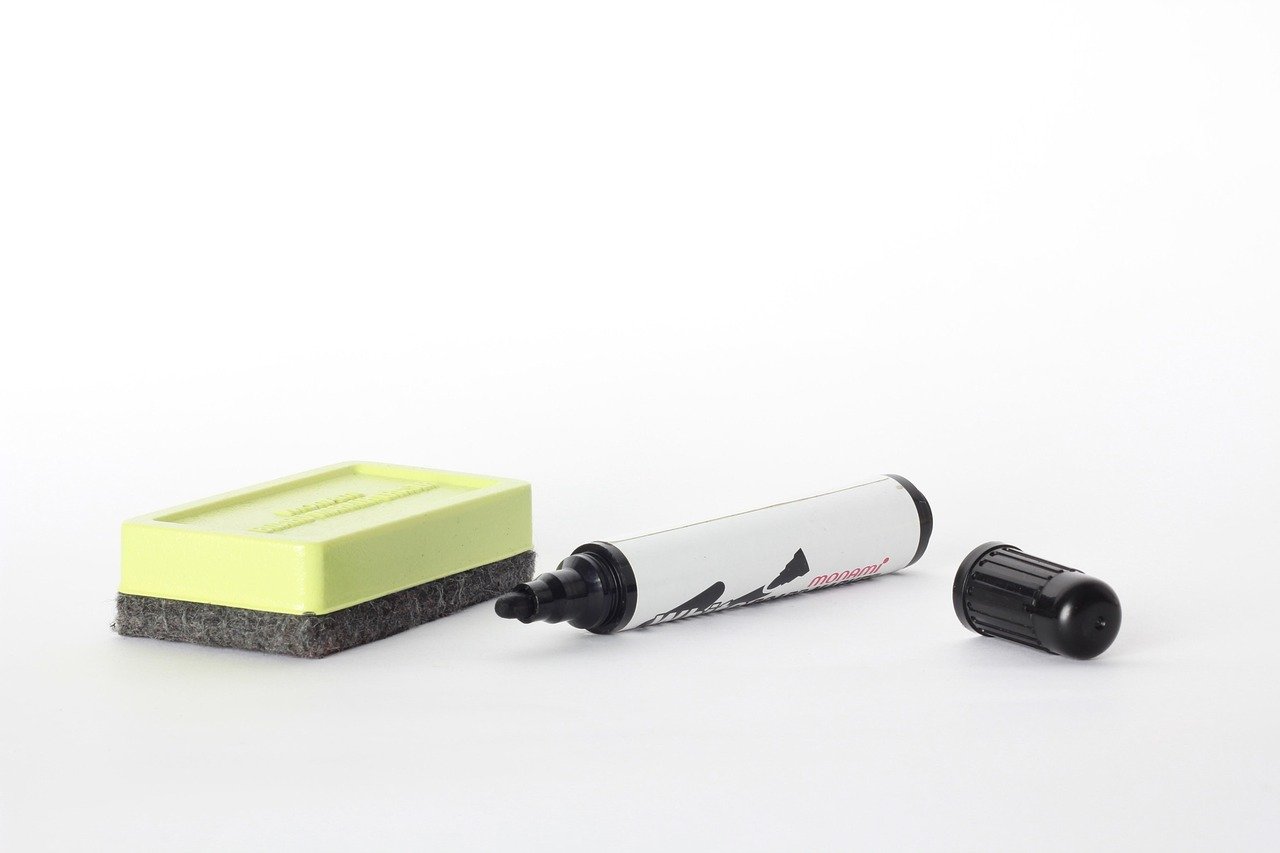
For day-to-day use, less is more. A few disciplined habits keep a board in good shape for years.
- Erase while the ink is fresh. Dry-erase ink comes off most easily within a day or two. Leaving notes up for weeks is the single biggest cause of ghosting.
- Use a clean eraser in straight, overlapping strokes. Press lightly. Scrubbing hard pushes residue into the surface instead of lifting it.
- Wipe with a dry microfiber cloth after erasing to pick up the loose pigment dust the eraser leaves behind.
- Cap markers properly and store them tip-down or flat. A dried-out tip drags and deposits thicker layers of binder.
- Do a weekly damp wipe with a barely damp cloth and a drop of mild soap, then dry immediately. This interrupts residue buildup before it becomes visible.
The weekly wipe is the step most people skip, and it’s the one that matters most over the long run. Think of it as flossing: unglamorous, but it prevents the expensive problem.
Deep Cleaning a Whiteboard: Step by Step
When a board already shows haze, streaks, or stubborn marks, it needs a proper deep clean. Set aside ten minutes and work in a ventilated room. (Set up burp suite 2026 clean https traffic capture)
- Clear the board completely and remove any papers or magnets taped to the surface.
- Dry-erase the whole board first to lift loose ink. Don’t skip this; it reduces how much solvent you’ll need.
- Dampen a microfiber cloth with water and a small amount of mild dish soap. Wring it out until it’s nearly dry. Dripping water is the enemy, because moisture can seep into seams and the frame.
- Wipe in a consistent direction, top to bottom, overlapping each pass. Rinse the cloth or swap to a clean one as it picks up gray residue.
- Tackle stubborn spots individually rather than scrubbing the whole board harder. More on the right products below.
- Dry the surface completely with a clean, dry microfiber cloth. Letting it air-dry invites water spots and streaks.
- Buff lightly with a dry cloth to restore an even sheen.
The Marker-Over-Marker Trick
For a ghosted board, one of the most reliable fixes costs nothing. Take a fresh dry-erase marker and write directly over the stubborn ghost marks, covering them completely. The solvent in the new ink re-wets the old residue. Wipe it away within a few seconds with a dry cloth. Repeat in small sections. This works remarkably well on haze and old shadows, and it avoids putting any harsh chemical on the surface.
Which Cleaners Are Safe, and Which Ruin the Board
Not every cleaner belongs on a whiteboard. The table below sorts the common options by what they do to the surface coating.
| Cleaner | Safe for regular use? | What it does |
|---|---|---|
| Water with a drop of mild dish soap | Yes | Lifts light residue without harming the coating |
| 70% isopropyl alcohol, lightly applied | Yes, occasionally | Dissolves oily binder film; evaporates fast |
| Whiteboard-specific cleaner | Yes | Formulated to clean without leaving a film |
| Glass cleaner with ammonia | No | Can dull and degrade the surface over time |
| Acetone or nail polish remover | No | Aggressive solvent that can melt or cloud the coating |
| Abrasive pads or scouring powder | No | Scratching is permanent and makes ghosting worse |
| Bleach or disinfectant wipes with harsh additives | No | Can strip the finish and leave a sticky residue |
A practical rule: if a product is designed for glass, metal, or disinfecting hospital surfaces, it’s probably too aggressive for a whiteboard. Isopropyl alcohol is the strongest thing most boards should ever see, and even that should be used sparingly and wiped off promptly rather than left to sit.
Common Mistakes That Cause Ghosting and Stains
Most damaged whiteboards got that way through small, repeated errors. Watch for these:
- Spraying cleaner directly onto the board. Liquid runs down, pools at the frame, and can seep behind the surface. Always spray the cloth.
- Using a dirty eraser for months. Clean felt erasers by brushing them out or hand-washing and air-drying them.
- Scrubbing with paper towels. Paper towels are mildly abrasive and leave lint. Microfiber is the right tool.
- Letting ink sit for weeks. The longer ink stays, the more the binder bonds to the coating.
- Writing with permanent markers by accident. Don’t panic and don’t scrub. Trace over the permanent ink with a dry-erase marker, let it sit briefly, and wipe. If that fails, a small amount of isopropyl alcohol on a cloth usually lifts it.
- Cleaning a board that’s still powered on. On interactive displays, always power down first and follow the maker’s guidance.
That last point matters more than people expect, because the same care principles apply to other delicate surfaces with factory coatings. Projector lenses, for instance, share the same logic: gentle cloth, minimal solvent, no scrubbing.
Restoring a Badly Ghosted Whiteboard
A board that’s been neglected for a year needs more than a quick wipe. Work through this escalation ladder, stopping as soon as the surface comes clean.
- Marker-over-marker on the worst patches, as described above.
- Mild soapy water across the whole surface, then dry.
- A dedicated whiteboard cleaner applied to a cloth, worked in small circles over stubborn zones.
- A light pass of 70% isopropyl alcohol on a microfiber cloth, only on the remaining trouble spots.
- A whiteboard restorer or renovating polish, if the coating itself has worn thin. These products leave a fresh sacrificial layer that restores release performance. Follow the label, and give it the full drying time.
If the surface is physically scratched, gouged, or has been cleaned with acetone, no product will fully fix it. At that point the realistic options are a resurfacing film or a new board.
Keeping a Whiteboard Clean Long-Term
Prevention beats restoration every time. A few small investments pay off:
- Keep a spray bottle of whiteboard cleaner and a microfiber cloth within arm’s reach of the board. Convenience drives consistency.
- Replace erasers annually or whenever they feel slick or leave streaks.
- Assign a weekly wipe to one person or add it to a cleaning checklist, so it doesn’t rely on someone noticing the haze.
- Store markers horizontally and rotate old ones out. Faded, dried markers deposit uneven film.
- Never use the board as a bulletin board with tape or adhesives, which leave gummy residue that attracts dust.
The same discipline applies to other equipment that quietly degrades without maintenance. Anyone who keeps a maintenance checklist will recognize the pattern: small, regular attention prevents the big, expensive job later.
How Often Should a Whiteboard Be Cleaned?
A simple schedule covers most situations:
| Use case | Erase | Damp wipe | Deep clean |
|---|---|---|---|
| Home office, light use | After each session | Monthly | Every 6 months |
| Meeting room, daily use | After each meeting | Weekly | Every 2 to 3 months |
| Classroom, heavy use | After each class | Weekly | Monthly |
| Shared workspace, constant use | Daily | 2 to 3 times weekly | Monthly |
Boards in bright sunlight or near heating vents dry out faster and build residue more quickly, so they may need the more frequent end of the range. (EPA Safer Choice)
Conclusion
Cleaning a whiteboard well isn’t about finding a stronger chemical. It’s about three habits: erase while ink is fresh, wipe with a barely damp microfiber cloth every week, and never let an abrasive or aggressive solvent touch the coating. When ghosting does appear, the marker-over-marker trick and a light isopropyl alcohol pass will rescue almost any board. Treat the surface like the precision coating it is, and it will keep releasing ink cleanly for years, which is exactly what a whiteboard is supposed to do.
Frequently Asked Questions
What is the best thing to clean a whiteboard with?
For routine cleaning, a barely damp microfiber cloth with a drop of mild dish soap is ideal. For heavier residue, a dedicated whiteboard cleaner or a small amount of 70% isopropyl alcohol on a cloth works well. Avoid glass cleaners with ammonia, acetone, bleach, and anything abrasive, since these can damage the surface coating and make ghosting worse.
How do you remove permanent marker from a whiteboard?
Write directly over the permanent ink with a fresh dry-erase marker, covering it completely, then wipe within a few seconds with a dry cloth. The solvent in the dry-erase ink re-wets the permanent ink so it lifts away. If any trace remains, apply a little isopropyl alcohol to a microfiber cloth and wipe gently. Never scrub with an abrasive pad.
Why does my whiteboard look dirty even after I erase it?
That haze is ghosting, caused by a buildup of waxy binder residue from dry-erase ink. Erasing alone removes visible pigment but leaves a thin film behind, and new ink catches on it. The fix is a deep clean: wipe the whole board with mild soapy water, dry it fully, then treat remaining patches with the marker-over-marker trick or a light alcohol pass.
Can I use hand sanitizer or disinfectant wipes on a whiteboard?
It’s best to avoid them. Many sanitizers and disinfectant wipes contain additives, fragrances, or high alcohol concentrations that can leave a sticky film or gradually degrade the surface coating. If you need to disinfect a board, check the manufacturer’s guidance first, and use the mildest product that does the job, applied to a cloth rather than sprayed on the board.
How do I stop my whiteboard from ghosting again?
Erase within a day or two of writing, use a clean eraser, and do a weekly damp wipe with mild soapy water followed by a full dry. Replace felt erasers when they feel slick or leave streaks, store markers capped and horizontal, and deep clean every two to three months for a board in daily use. (How to Clean Dehumidifier Coils (2026 Guide))
Is it safe to use alcohol on a whiteboard every day?
Occasional use of 70% isopropyl alcohol is fine for tough spots, but daily use isn’t recommended. Alcohol is a solvent, and repeated exposure can gradually dull or dry out the surface coating. Reserve it for stubborn residue and rely on mild soapy water for routine cleaning instead.



