Quick Answer: How many ounces in a liter?
There are about 33.814 US fluid ounces in one liter. If you are using imperial (UK) fluid ounces, the same liter holds roughly 35.195 fl oz, because the British ounce is slightly smaller. You can use these figures for cooking, label reading, travel packing, or mixing drinks.
The confusion almost always comes from which ounce is meant. US fluid ounces and imperial fluid ounces are different units with different definitions, and dry ounces measure weight rather than volume. A liter is exactly 1,000 milliliters in both cases.
Before you convert, check the ounce type, the country on the label, whether the measure is fluid or weight, and how much rounding your recipe or product allows.
Why the answer changes depending on who is asking
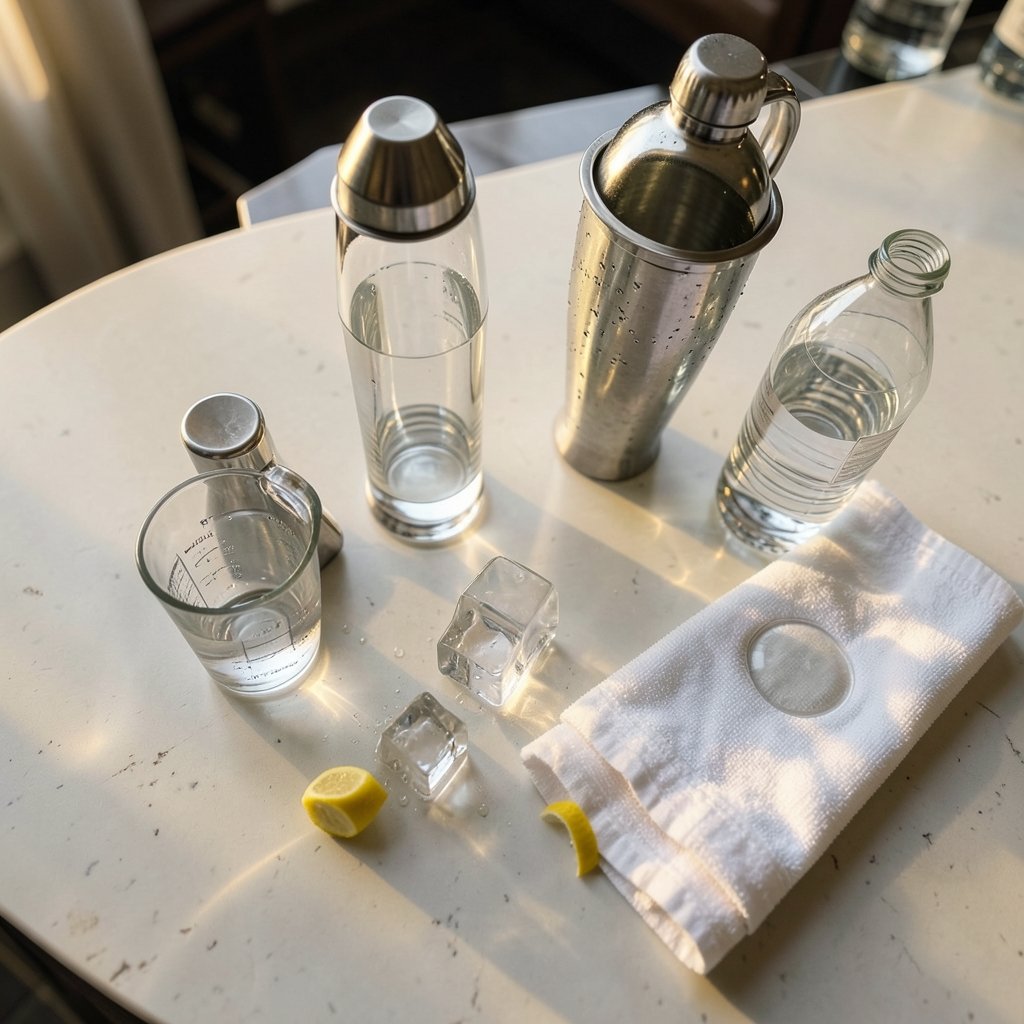
Picture the scene: a home cook in Ohio follows a British recipe that calls for a liter of stock, grabs a measuring cup marked in ounces, and pours in 34. The dish turns out fine. A bartender in London does the reverse and ends up slightly short. Nobody notices, because the gap between the two ounce systems is only about 4 percent. (Home center lite)
That small gap matters in some places and not others. It matters when you scale a recipe twenty times, when you dose medicine, or when you fill a container that has a legal capacity limit. It barely matters when you are eyeballing a marinade.
The number people quote for “ounces in a liter” depends entirely on which ounce they mean. There is no single correct figure without that detail. Once you know the system, the math is simple and exact.
The exact conversion for US fluid ounces
The US fluid ounce is defined as exactly 1/128 of a US gallon. The US gallon, in turn, is legally defined as 231 cubic inches. Those definitions are codified in US weights and measures standards, which set out the official units used in commerce and trade.
Because the international inch has been fixed at exactly 2.54 centimeters since the 1959 agreement among English-speaking nations, the whole chain becomes exact:
| Step | Value |
|---|---|
| 1 US gallon | 231 cubic inches |
| 1 US fluid ounce | 1/128 gallon |
| 1 US fluid ounce in mL | 29.5735295625 mL |
| 1 liter | 1,000 mL |
| 1 liter in US fl oz | 33.8140227 fl oz |
So one liter equals 33.814 US fluid ounces, and that decimal continues because the division does not terminate cleanly. For everyday use, 33.8 is plenty. For rough work, 34 is fine. (Application modernization challenges so many projects stall)
Common US rounding you will see
- 33.8 fl oz: the standard one-decimal figure on conversion charts.
- 33.81 fl oz: used when a little more precision helps.
- 34 fl oz: the friendly round number on nutrition labels and quick-reference cards.
- About 4.2 cups: since one US cup is 8 fluid ounces, a liter is a bit over four cups.
The exact conversion for imperial fluid ounces
The imperial fluid ounce is defined as 1/160 of an imperial gallon, which works out to exactly 28.4130625 milliliters. That makes the imperial ounce about 4 percent smaller than its US cousin.
Divide 1,000 by 28.4130625 and you get 35.195 imperial fluid ounces per liter. Rounded, that is 35.2 fl oz.
| Ounce system | Milliliters per ounce | Ounces in 1 liter |
|---|---|---|
| US fluid ounce | 29.5735 mL | 33.814 |
| Imperial (UK) fluid ounce | 28.4131 mL | 35.195 |
| US nutrition label ounce | 30 mL (rounded) | 33.3 |
That last row deserves attention. US nutrition labels often treat a fluid ounce as a flat 30 mL, which is a regulatory rounding convention rather than a precise definition. It makes label math slightly off from true conversions, which is why a 1-liter bottle sometimes lists 33.8 servings and sometimes 34. (Litre)
Fluid ounces versus ounces of weight
Here is the mistake that trips up more people than any other: fluid ounces measure volume, ounces measure mass. They share a name and nothing else.
A liter of water weighs about 1 kilogram. Convert that to ordinary weight ounces and you get roughly 35.27 ounces. So a liter of water is about 33.8 fluid ounces by volume but about 35.3 ounces by weight. Both statements are true, and neither contradicts the other.
This matters when a recipe lists “8 oz chocolate” (weight) next to “8 fl oz milk” (volume). It also matters when you ship a package or check a baggage allowance, where the limit is weight, not volume.
A practical rule of thumb: if the ingredient is pourable, the ounce is probably fluid. If it is scoopable or solid, it is probably weight. When a recipe is ambiguous, the density of the ingredient decides, and water is the only common kitchen item where the two numbers nearly coincide.
A quick history of why two systems exist
The liter began life in France in 1795 as the volume of one kilogram of pure water at its densest point. It was later redefined more simply as exactly one cubic decimeter, which is what it remains today. That redefinition removed the dependence on water’s density and made the liter a clean geometric unit.
The liter is not an SI base unit. It is classified as a non-SI unit accepted for use alongside the SI, which is why scientists happily write both liters and cubic meters without friction. The cubic meter is the base unit of volume; the liter is the convenient everyday size. (Nintendo switch 2 lite samsung 8lpu plus chip rumor 2026) (NIST Unit Conversion)
The ounce systems evolved separately. Britain and its colonies standardized different gallon sizes, and the US kept the older wine gallon of 231 cubic inches while Britain later adopted the imperial gallon. When the two countries diverged on gallons, they diverged on ounces too, and the gap has persisted for two centuries.
Practical tips that actually work
Label your measuring tools. A cup marked only “oz” is a trap. Write “US fl oz” on it with a permanent marker if you cook from international sources.
Use milliliters as your neutral ground. Almost every country prints milliliters on packaging, and both ounce systems convert cleanly from there. When a recipe is confusing, go metric and stop worrying.
Round in the safe direction for containers. If you are filling a 1-liter bottle from a 34-ounce supply, you will have a hair left over. If you are filling from a 33-ounce supply, you will come up short. Buy the larger size when the margin is thin.
Do not mix systems mid-recipe. Pick ounces or milliliters at the start and stay there. Converting back and forth introduces rounding errors that compound.
Watch for the nutrition-label shortcut. A label that says “1 fl oz = 30 mL” is using a regulatory convention. Do not use it to calibrate a scientific measurement.
Check the country of origin on imported drinks. A British pint is 20 imperial fluid ounces, not 16. A European 500 mL bottle is about 16.9 US fl oz, which is why it looks like a pint but is not one.
Conversions you will actually use
| Volume | US fluid ounces | Imperial fluid ounces |
|---|---|---|
| 250 mL | 8.45 | 8.80 |
| 500 mL | 16.91 | 17.60 |
| 750 mL (wine bottle) | 25.36 | 26.40 |
| 1 L | 33.81 | 35.20 |
| 1.5 L | 50.72 | 52.79 |
| 2 L | 67.63 | 70.39 |
The 750 mL wine bottle is a good sanity check. It holds about 25.4 US fluid ounces, which is roughly four and a half five-ounce glasses. That matches what most people observe when a bottle serves four to five people.
Where the numbers show up in real life
Beverage packaging is the most common place. A two-liter soda bottle holds about 67.6 US fluid ounces, which is why it pours around eight 8-ounce servings. A one-liter water bottle holds about 33.8, which is roughly four cups.
Cooking is the second. European recipes written in liters and deciliters convert cleanly to US cups once you know that one liter is 4.23 US cups. British recipes using pints are trickier, since a UK pint is 20 imperial ounces rather than 16.
Travel and packing bring a third case. Airline liquid limits are usually stated in milliliters, so a 100 mL bottle is about 3.4 US fluid ounces. Knowing that saves you from buying travel bottles you do not need.
Fuel economy and engine sizes use liters almost everywhere, while some markets still quote fluid ounces for small engine fluids. The conversion is the same one, applied to a different context.
Common mistakes and how to avoid them
The single biggest error is treating all ounces as equal. A recipe that says “add 33 ounces of water” could mean 33 US fluid ounces, 33 imperial fluid ounces, or 33 weight ounces, and those are three different amounts. Ask, or convert to milliliters and remove the doubt.
The second is using a kitchen scale for liquids. Scales measure mass, and a cup of honey weighs far more than a cup of water. If a recipe gives a liquid in fluid ounces, use a volume measure.
The third is trusting a single conversion figure across every context. The 33.8 figure is correct for US fluid ounces and wrong for imperial. The 35.2 figure is correct for imperial and wrong for US. Both appear in search results with no label, which is how the confusion spreads.
The fourth is forgetting that rounding accumulates. If you convert a large batch by rounding each ingredient, the errors add up. Convert the total, then divide.
Conclusion
One liter is 33.814 US fluid ounces or 35.195 imperial fluid ounces, and those two numbers are both right depending on which ounce you mean. The US ounce is tied to a 231-cubic-inch gallon, the imperial ounce to a larger British gallon, and the liter sits at exactly 1,000 milliliters in the middle of both systems.
For everyday cooking, 33.8 is the number to remember. For British recipes and imported drinks, use 35.2. For anything where precision matters, switch to milliliters and leave the ounce question behind entirely. The math is simple once the units are clear, and the only real risk is assuming there is just one kind of ounce.
Frequently asked questions
Is 32 ounces the same as 1 liter?
No. One liter is about 33.8 US fluid ounces, so 32 ounces is roughly 0.95 liters. The gap is small but real, and it grows when you scale a recipe. A 32-ounce bottle is about 946 milliliters, not a full liter.
How many 8-ounce glasses are in a liter?
A liter holds about 4.2 eight-ounce glasses. That is why the common advice to drink eight glasses a day works out to roughly two liters. If you use a 16-ounce bottle, you need a little over two of them to reach a liter.
Is a liter bigger than a quart?
Yes, slightly. A US liquid quart is 32 fluid ounces, or about 946 milliliters, while a liter is 1,000 milliliters. The difference is about 54 milliliters, or just under two fluid ounces. A liter is roughly 1.06 US quarts.
How many ounces are in a liter of water by weight?
A liter of water weighs about 1 kilogram, which is roughly 35.27 ounces of mass. That is a weight measurement, not a volume one. The same liter is about 33.8 fluid ounces by volume, and both figures are correct for their respective measures.
Why do some sources say 35 ounces per liter?
Those sources are using imperial fluid ounces, which are smaller than US fluid ounces. One liter equals about 35.2 imperial fluid ounces. If a chart does not say which ounce it uses, check the country of origin before trusting the number.
How do I convert liters to ounces quickly without a calculator?
Multiply the number of liters by 34 for a fast US estimate, then subtract a small amount if you need precision. For imperial, multiply by 35. For most cooking and shopping decisions, the rough figure is close enough, and you can always drop to milliliters for exact work.