
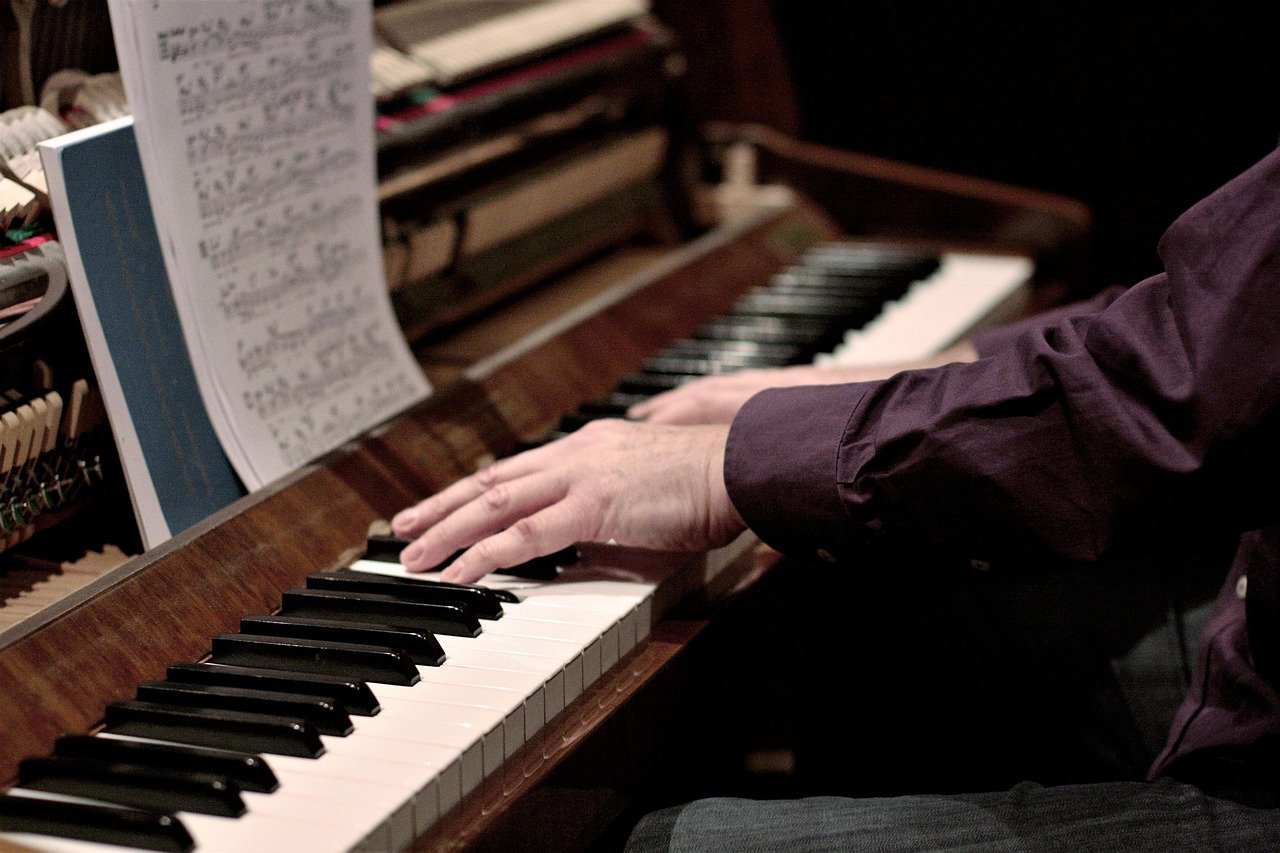
Can you really teach yourself to play piano, or does it take years of formal lessons before anything sounds like music? The honest answer sits somewhere in the middle. Plenty of people learn to play recognizable songs within a few months, but almost nobody gets there by sitting down and hoping. Progress comes from a handful of skills practiced in the right order: knowing the keyboard, reading the notes, building finger control, and drilling the boring stuff that makes the fun stuff possible.
This guide walks through that order step by step. It covers what to buy, how to sit, how to read music without panic, how to practice so that time actually counts, and which mistakes trip up nearly every beginner. No magic shortcuts, just a clear path.
What instrument should a beginner actually start with?
The first decision is acoustic or digital, and it shapes everything that follows. An acoustic upright gives you real strings, real pedals, and a tone that responds to how hard you press. A digital piano with weighted, hammer-action keys gives you silent practice with headphones, a lower price, and no tuning bills.
That weighted action matters more than most beginners realize. Cheap keyboards with springy, unweighted keys feel nothing like a piano, so the finger strength you build does not transfer. Look for 88 keys, weighted action, and a sustain pedal input at minimum. Avoid anything marketed as a toy.
| Feature | Acoustic piano | Digital piano |
|---|---|---|
| Key feel | Real hammers and strings | Weighted action, varies by model |
| Volume control | None (unless silent system) | Headphones and volume knob |
| Maintenance | Tuning once or twice a year | None |
| Cost | Higher, plus moving costs | Lower, portable |
| Pedals | Three, built in | Sustain standard, others vary |
For a small apartment or a shared house, digital usually wins simply because you can practice at 11 p.m. without a complaint. For a family with space and a long-term commitment, an acoustic instrument rewards the investment. Either way, a bench at the right height and decent lighting matter more than the brand on the fallboard.
Get the geography of the keyboard into your head first
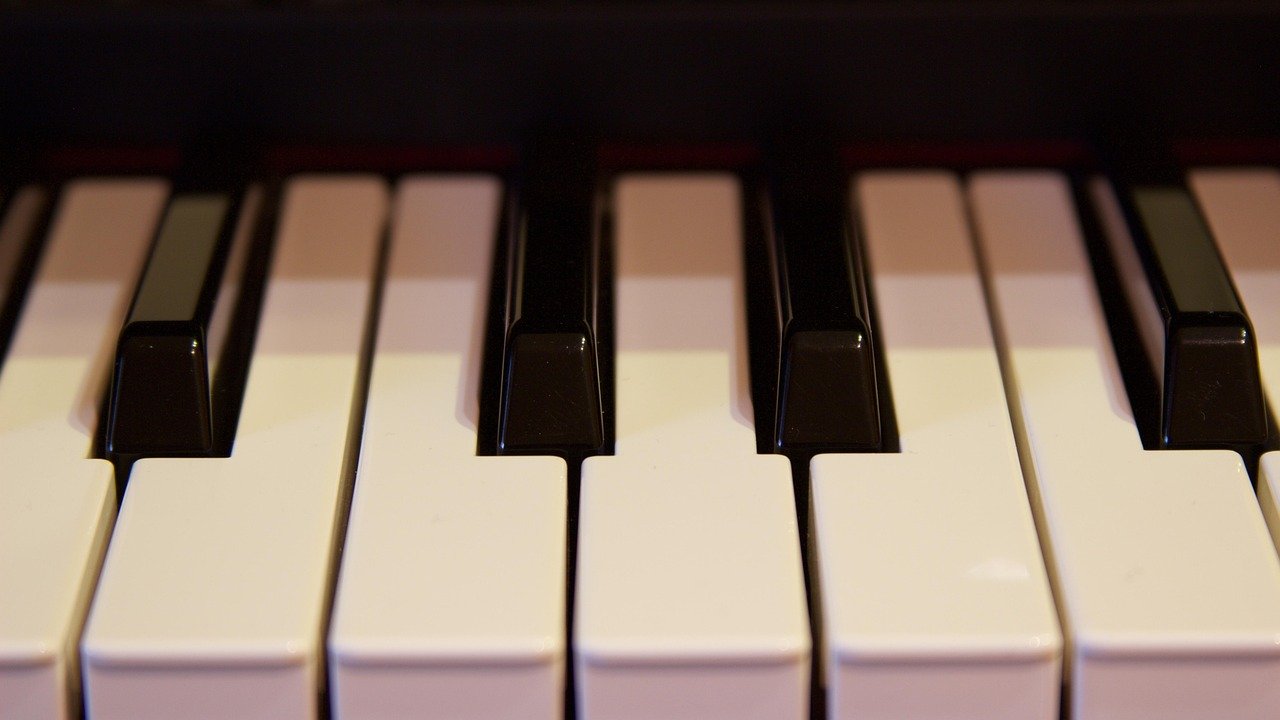
Before reading a single note, learn the layout. A standard modern piano has 88 keys, and the white keys repeat in a fixed pattern of seven letters: C, D, E, F, G, A, B. The pattern became standard in the late 19th century, and the full layout is described in the general overview of the piano as an instrument. (Piano)
The trick is the black keys. They come in groups of two and three. The white key immediately to the left of any group of two black keys is a C. Find one C and you can find every C on the instrument. Middle C, or C4, sits near the center and becomes your home base for the first few weeks.
Spend ten minutes a day on this for a week. Name keys out loud, find all the Cs, then all the Fs, then play a C major scale by ear using only white keys starting on C. That tiny bit of orientation removes most of the confusion that makes notation feel abstract later.
How do you read piano music without getting overwhelmed?
Piano music looks intimidating because it uses two staves joined into one system called the grand staff. The top staff uses a treble clef, which curls around the G line. The bottom staff uses a bass clef, which marks the F line. A full explanation of how these symbols assign pitches to lines and spaces is available in the reference entry on clefs, and it is worth reading once slowly.
The good news: you do not need to read fluently to start. Beginners typically learn a small window of notes around middle C, maybe five above and five below, and play simple pieces entirely within it. Add notes gradually.
A workable order looks like this:
- Learn the treble clef lines and spaces for the notes from middle C up to the next C.
- Learn the bass clef notes from middle C down to the next C below.
- Practice naming notes on flashcards for five minutes daily.
- Play written music in that small range, even if it feels babyish.
Rhythm deserves equal attention. Count out loud, tap the beat on your knee, and clap the rhythm before touching the keys. Most beginners who “can’t play” a piece actually cannot count it.
Posture, hand shape, and the things teachers nag about
Sit tall on the front half of the bench, feet flat, with the forearms roughly level with the keys. Keep the wrists relaxed and slightly above key level, and curve the fingers as though holding a small ball. This is standard teaching practice rather than a formal rule, and teachers genuinely disagree on details, so treat guidance as a starting point rather than gospel.
The most common beginner mistakes are easy to spot:
- Collapsed wrists that drop below the keys and kill finger control.
- Locked shoulders from sitting too close or too tense.
- Flat fingers that slide and miss notes.
- Death grip on the keys, pressing far harder than needed.
A simple check: play a five-finger pattern and see whether your shoulders creep upward. If they do, you are working too hard. Shake out the arms every ten minutes. Repetitive strain and tension problems are real among musicians, and the standard advice is straightforward: warm up, take breaks, and stop when something hurts rather than pushing through.
Scales, chords, and the practice that actually builds technique
Scales and arpeggios are the backbone of technical work. The circle of fifths arranges the twelve major and twelve minor keys by how many sharps or flats they contain, which makes it a practical map for organizing scale practice instead of a random list. The explanation of the circle of fifths shows how each key relates to its neighbors, so you can see why learning C, then G, then D makes sense.
Fingering is where beginners get stuck. The usual path starts with a five-finger position, one finger per adjacent key, then moves to passing the thumb under the hand for scales. Fingering is a convention, not a law, and different editions of the same piece often print different fingerings. Use what the page says, but do not treat it as sacred if your hand size argues otherwise.
Chords let beginners accompany songs quickly. Learn the four-chord family behind a large share of popular music: the I, V, vi, and IV chords in a key. In C major those are C, G, Am, and F. With those four chords, a beginner can accompany dozens of tunes. If you are also choosing gear for gaming or media on a home setup, the same patience applies when configuring a NAS for transcoding versus direct play: matching hardware to the job saves hours of frustration.
A practice routine that fits a real life
Thirty focused minutes beats two distracted hours. A structure that works:
- Five minutes: warm-up, scales, or a five-finger pattern.
- Ten minutes: the hardest two bars of your current piece, slowly, hands separately.
- Ten minutes: review of pieces you already know, played through without stopping.
- Five minutes: something fun, improvised, or by ear.
Slow practice is not a punishment. Playing a passage at half speed until it is clean, then nudging the tempo up, builds reliable muscle memory. Breaking a piece into short sections works better than grinding from the top every time. The evidence behind specific practice methods comes mostly from pedagogy and cognitive psychology rather than large trials, so treat “best method” claims with mild skepticism and trust your own results.
Sight-reading, the skill of playing unfamiliar music at first glance, deserves its own slot. Practice with short, easy pieces well below your technical level. It feels humbling and it is supposed to. Ten minutes a few times a week pays off for years.
How long until you can play a song you actually like?
Realistically, a motivated beginner practicing thirty minutes a day can play a simple melody with basic chords in four to eight weeks. Comfortable two-hand coordination usually arrives around three to six months. Fluency takes years, and that is fine, because the intermediate stage is where playing becomes genuinely enjoyable.
Graded exam systems offer a useful yardstick even if you never sit an exam. The official ABRSM piano exam information lays out levels from beginner to advanced, and the Trinity grade exam documentation does the same for a different board. Use the repertoire lists as a reading guide for difficulty, not as a verdict on your talent.
Expect a few plateaus. Progress in piano is not linear; it comes in jumps separated by weeks where nothing seems to improve. That is normal, and it is usually a sign that your hands are consolidating a skill before the next leap.
Common beginner mistakes worth avoiding
The same handful of errors show up again and again:
- Playing too fast too soon. Speed is a byproduct of accuracy, not a shortcut to it.
- Skipping hands-separate practice. Each hand needs its own map before they combine.
- Never counting out loud. Rhythm problems hide until you try to play with someone else.
- Ignoring the sustain pedal. It is the third hand. Learn to change it cleanly on chord changes rather than stomping it down and hoping.
- Practicing only the fun parts. The tricky bars need more repetitions than the easy ones, not fewer.
If you also play games on a handheld or PC, you already know the pattern: the settings and habits you build early determine how smooth everything feels later. The same logic shows up in guides like the comparison of the Steam Deck versus the ROG Ally X, where matching the device to your habits beats chasing specs. Piano rewards the same kind of deliberate setup.
Conclusion
Learning piano is less about talent and more about sequence. Get a decent instrument with weighted keys, learn the keyboard layout until it is automatic, read music in a small range before demanding fluency, sit properly, and practice in short, structured blocks that include scales, hard bars, review, and something fun. Add sight-reading a few times a week and protect your hands with breaks.
The first month feels clumsy. The third month feels possible. Somewhere after that, you sit down, play something someone recognizes, and realize the boring repetitions quietly turned into a skill. Start with ten minutes today, not a two-hour session next weekend.
FAQ
How long does it take to learn piano?
With thirty minutes of daily practice, most beginners can play a simple melody with basic chords within four to eight weeks. Two-hand coordination usually feels comfortable after three to six months. Real fluency takes years of steady work, and progress tends to arrive in jumps rather than a straight line.
Can adults learn piano from scratch?
Yes. Adults often progress faster in the early stages because they understand instructions, can read notation, and practice more deliberately. The main obstacle is patience, not age. Hand flexibility improves with consistent, gentle practice, and there is no upper age limit for starting.
Do I need a teacher or can I learn online?
Both routes work. A teacher corrects posture, tension, and rhythm problems before they become habits, which saves months of fixing later. Online courses and apps suit self-directed learners with good discipline. A hybrid approach, with occasional lessons to check technique, is often the most efficient compromise.
How many keys does a beginner piano need?
Look for 88 keys with weighted, hammer-action keys. A 61-key keyboard can work for the first few months, but the missing range limits you quickly and unweighted keys do not build proper finger strength. If budget is tight, a used 88-key digital piano beats a new toy keyboard every time.
Should I learn scales or just play songs?
Do both, and keep scales short. Five to ten minutes of scales or arpeggios warms up the hands and builds the finger independence that songs demand. Learners who skip technique entirely often stall when a piece requires a smooth thumb pass or an even run.
How do I practice when I only have fifteen minutes?
Split it: three minutes of warm-up or scales, seven minutes on the hardest two bars of one piece, and five minutes playing something you enjoy. Short daily sessions beat one long weekend session because repetition spread across days builds memory far more reliably than cramming.



