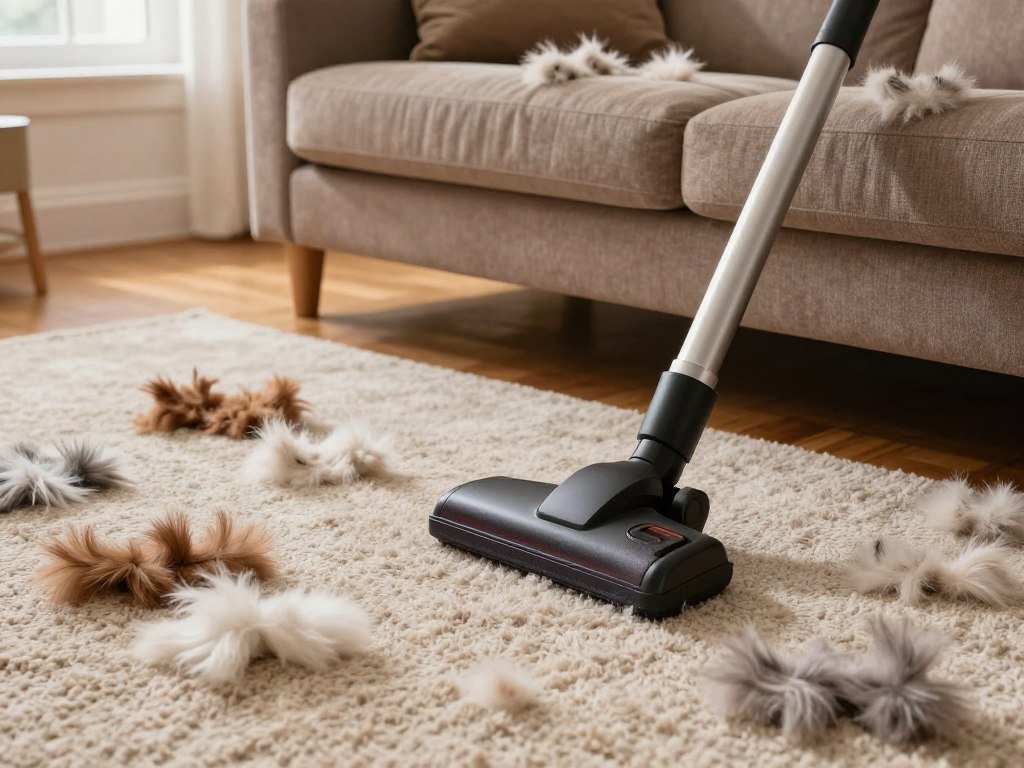
Pet fur on the carpet, hard floors and couch calls for a vacuum that matches the surfaces you clean most. The best vacuums for pet hair can help you handle a cat dog household, but the right format depends on your rooms and routines. A rotating brush agitator is a motor-driven roller that agitates carpet fibers so suction can lift embedded hair. This roundup includes upright and robot options, with picks for regular floor cleaning and above-floor messes. The Shark NV752 Rotator Powered Lift-Away TruePet is a practical starting point for many homes. Choose for the surfaces and spots you clean most often. The right pick should make your regular cleanup easier, not just promise more suction.
Key Takeaways
- Start with the Shark NV752 if you want an upright for floors and furniture.
- Consider a robot for routine pickup when you want less hands-on cleaning.
- Check carpet results, not suction claims alone, when embedded fur is your main problem.
- Test dry litter and loose fur separately on hard floors.
- Compare tools, bin size, and upkeep before choosing a vacuum.
Best Vacuums for Pet Hair
For most homes that need one primary vacuum, start with the Shark NV752 Rotator Powered Lift-Away TruePet. Its Lift-Away feature lets you separate the canister body for cleaning floors and furniture. It is the upright pick for most households because one machine can handle more than floor pickup.
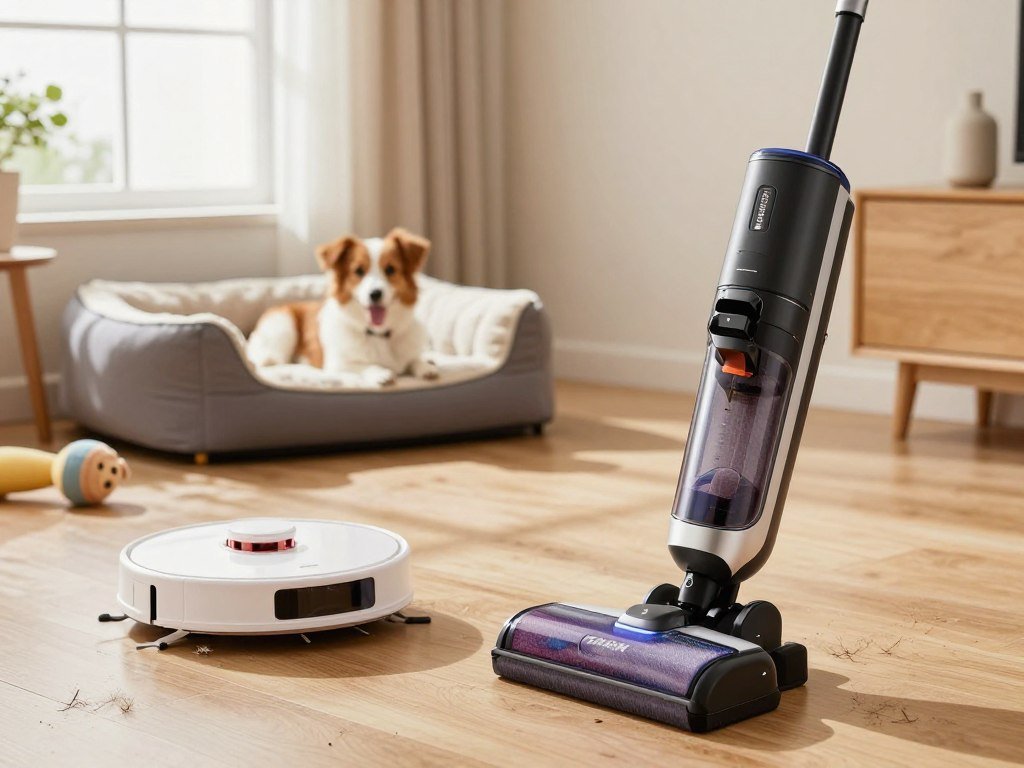
Robot vacuums suit owners who want regular floor cleaning with less hands-on work. The shortlist includes several robots with distinct strengths, from carpet pickup to obstacle handling. These vacuums pet hair shoppers compare are different in both format and purpose, so use the table as a quick filter.
| Model | Format | Best fit | Short reason to shortlist |
|---|---|---|---|
| Shark NV752 Rotator Powered Lift-Away TruePet | Upright | Most households | Lift-Away flexibility |
| Narwal Flow 2 | Robot vacuum and mop | Automated pet-mess cleanup | Combines vacuuming and mopping |
| Dreame L60 Ultra PE | Robot | Carpet and hair pickup | Strong tested carpet and hair results |
| MOVA V70 Ultra Complete | Robot | Homes with obstacles | Obstacle avoidance and carpet pickup |
| Dreame X60 Max Ultra Complete | Robot | Flattened hair on carpet | Strong pickup and high suction |
Among the best vacuums pet owners can shortlist, the Shark is the general-purpose upright choice. The Narwal Flow 2 is a robot vacuum and mop recommended for automated pet-mess cleanup. Robot results vary by task, so compare each machine on the messes your home produces.
Cordless sticks, canister vacuums, and handhelds remain useful formats for different rooms and routines. The best vacuums also need to fit how much effort you want to spend cleaning. A vacuum pet owners carry upstairs may suit a different home than a robot that runs on its own.
These vacuum cleaners cover different needs, rather than offering one winner for every home. Choose the best vacuum by matching the floor plan, furniture, and desired level of hands-on cleaning. Match the shortlist to your floor plan and how much cleaning you want to do yourself.
Which Vacuum Style Suits Your Floors?
The best format is the one that reaches the places your pet actually sheds. For a home with varied surfaces, choose a floorhead suited to carpet and hard flooring, plus a practical way to clean above the floor. Pet-hair testing covered deep-pile carpet, bare floors, furniture, and low-clearance spots.
The best vacuum for pet hair on multiple surfaces needs to handle more than open floor space. Your choice also depends on whether you prefer carrying a vacuum, steering a hose, or letting a robot run. Compare the main formats before weighing individual features.
| Vacuum style | Best suited to | Tradeoff |
|---|---|---|
| Upright | Larger carpeted areas | Heavier to move |
| Canister | Edges and under-furniture reach | Separate body and hose to maneuver |
| Cordless stick | Quick daily cleaning and easier carrying | Runtime depends on power mode |
| Robot | Routine floor pickup | Less control around clutter and thresholds |
An upright can cover a large carpeted room without frequent repositioning, but stairs may feel harder. A canister vacuum lets you guide a lighter hose around furniture, while its body follows behind. The best cordless choice is one you can carry easily and use in the mode your cleanup needs.
Robots can pick up routine floor debris without your hands on the machine. They have less control around clutter, raised thresholds, and tight furniture gaps. Use the table to narrow the format before comparing individual features.
What Removes Pet Hair From Deep Carpet?
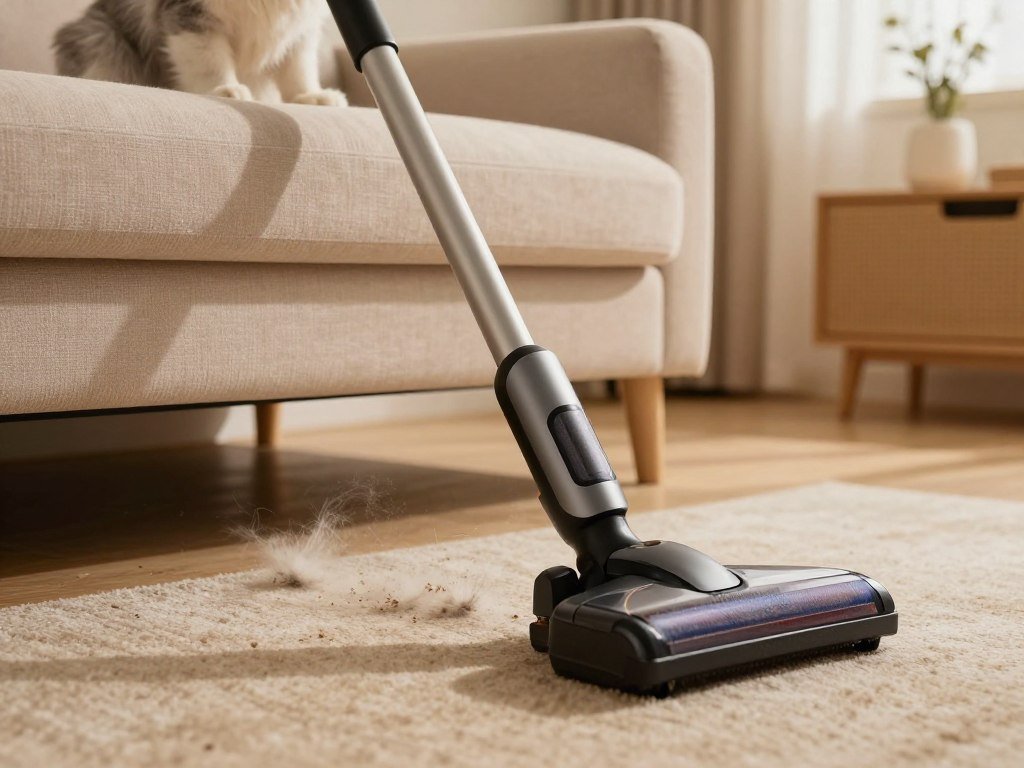
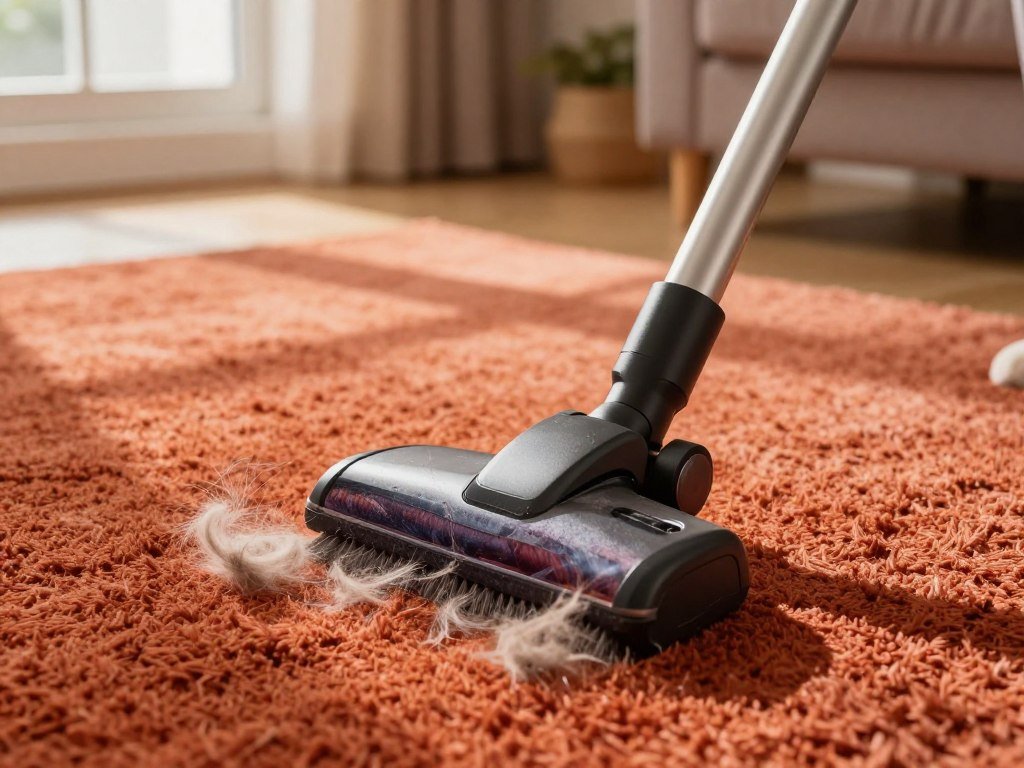
A rotating brush agitator helps loosen hair woven into carpet fibers so suction can lift it. For embedded pet hair, prioritize brush agitation and proven carpet performance over suction claims alone. Deep-pile carpet holds fur below the surface, where a smooth floorhead may not reach it well.
Which Vacuum Is Best for Pet Hair and Carpet?
A carpet-capable upright with a rotating brush agitator is the strongest fit for embedded hair. The Shark NV752 is a general-household upright pick for owners who need carpet cleaning and Lift-Away flexibility. It is a general recommendation, not a Consumer Reports pick.
Even strong vacuums may need repeat passes on a dirty carpet. The best vacuum for pet hair and carpet should show good hair pickup and carpet-cleaning performance, not just a high power claim. Consumer Reports advises buyers to prioritize those performance scores because hair embeds in carpets and upholstery.
What Makes a Vacuum Powerful Enough for Pet Hair?
The most powerful vacuum for pet hair is not always the best fit for your home. Added power can make a machine heavier, while high power can drain a cordless battery faster. Look at how the vacuum cleans in the mode you are likely to use.
Brush agitation matters because it works hair loose before suction carries it away. Two to three passes were needed to remove dirt completely, even with the best vacuums tested. That makes one-pass promises a poor way to judge everyday carpet performance.
What Does Consumer Reports Prioritize?
Consumer Reports prioritizes strong pet-hair scores and carpet-cleaning performance. Its guidance is a useful performance standard, not proof that the Shark NV752 earned its recommendation. Check results for the kind of carpet and hair your household has.
- Choosing on suction claims alone
- Overlooking brush agitation
- Expecting a single pass
- Ignoring carpet-cleaning performance
Expect to make two to three passes when dirt is embedded, even with a strong vacuum.
Which Vacuums Work Best on Hardwood and Litter?
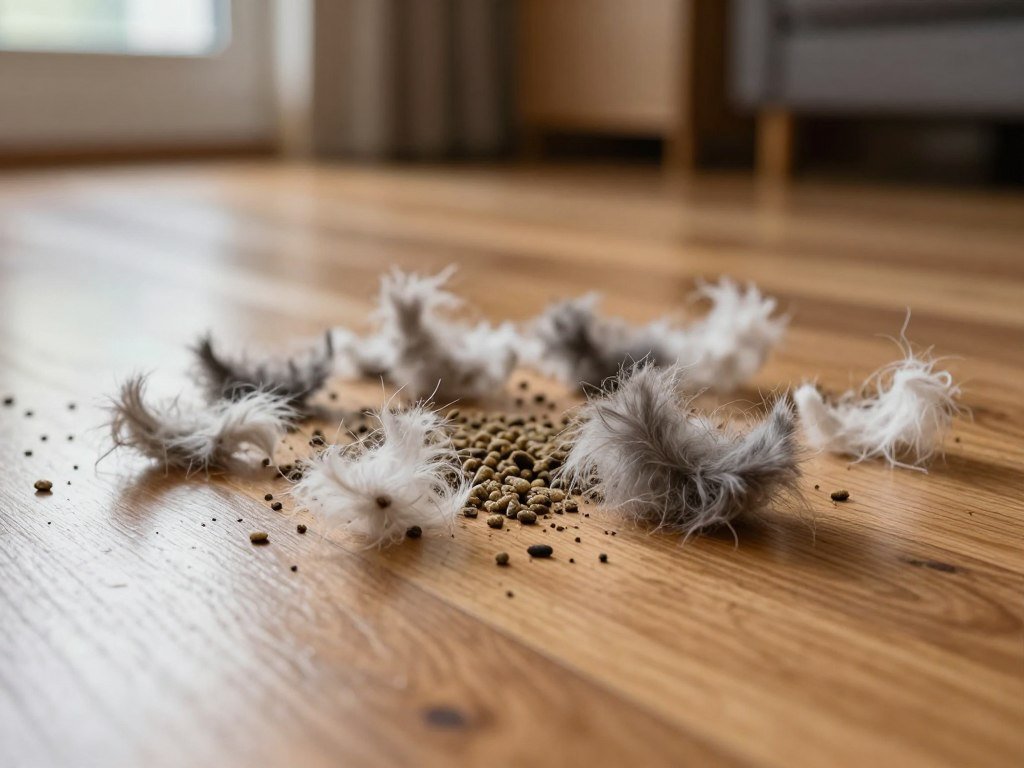
Hard floors make loose fur easy to spot, but a fast-moving brush can scatter light debris. The best vacuum for pet hair on hardwood floors should pick up debris without scattering it. A controllable floorhead and suitable suction can help you guide the machine across loose fur and dust.
Cat litter and pet hair behave differently during pickup, so the best vacuum for cat hair and litter should be checked on both. Dry litter may roll or scatter, while loose fur can cling to the floorhead. Test each mess on its own instead of assuming one setting handles both well.
The Narwal Flow 2 is a robot vacuum and mop recommended for pet-mess cleanup. It combines suction, hot-water mopping, and obstacle avoidance. Its mop can add a wet-cleaning step after dry debris pickup, but it does not replace a test of how well the robot collects litter and fur.
For a cat household, notice whether the floorhead pushes small litter pieces ahead instead of collecting them. Try a low or adjustable setting if the machine scatters debris. Test litter and fur separately before relying on one floor setting for both.
How Can You Clean Pet Hair From Furniture?
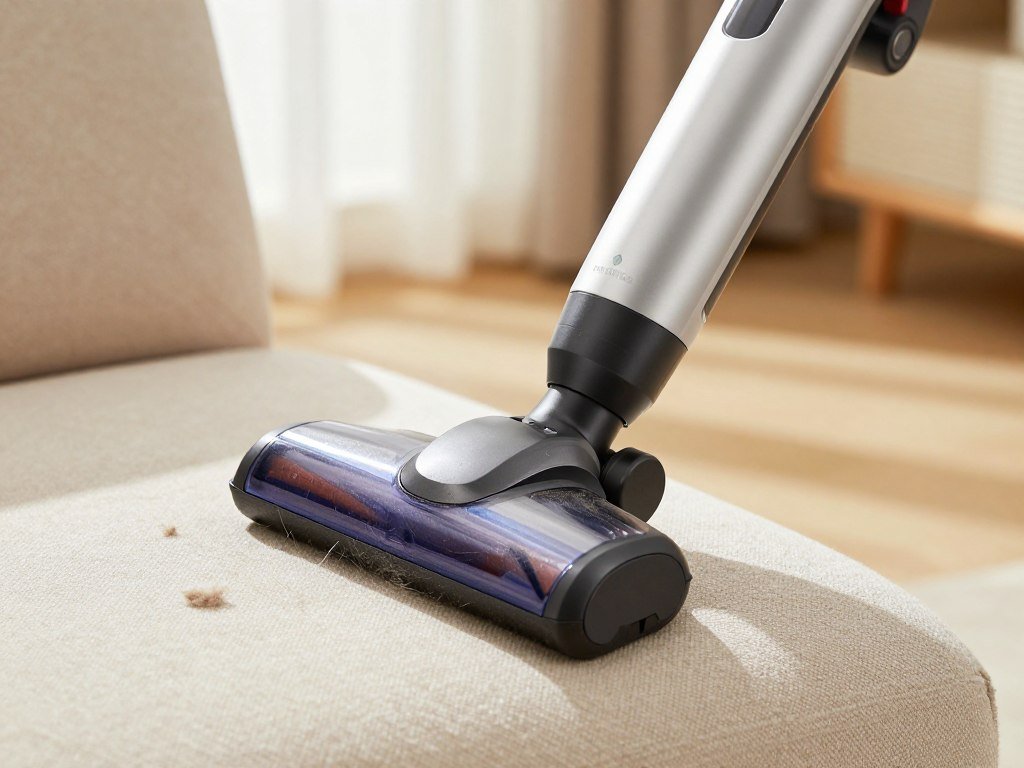
A couch or pet bed needs a tool that can pull fur from fabric without making you wrestle with a full floorhead. A pet hair vacuum for furniture needs a fabric-contact tool that can also reach seams. A handheld option can make quick work of a couch, stairs, or a pet bed.
Handheld vacuums were evaluated on couches covered in dirt and pet hair, so spot-cleaning ability matters. Check whether a tool stays easy to guide across the fabric and reaches the corners where hair gathers. Three attachment styles suit different areas:
- Motorized pet tool: broad fabric areas where fur is pressed into the surface.
- Upholstery tool: general furniture cleaning across seats and cushions.
- Crevice tool: narrow edges, seams, and tight spaces.
An upright with Lift-Away flexibility can separate from its floor setup for above-floor work. The right attachments can also help you clean stairs without carrying the main floorhead over each step. Check how easily the upholstery tool itself can be cleared of trapped fur.
Do Pet Vacuums Need a HEPA Filter?
Choose a true HEPA filter when particle filtration is a priority, not just because the word appears on a box. A true HEPA filter must meet a defined particle-removal standard. In the United States, that standard requires removing 99.97% of particles larger than 0.3 micrometers.
Labels such as HEPA-like, HEPA-type, and 99% do not establish that a filter meets the HEPA standard. Fine dust, pollen, and pet dander may make filtration more important to your household. A hepa filter label alone does not describe how well the whole vacuum contains filtered air.
Think of filtration as a separate feature from fur pickup. A vacuum can collect visible hair well without telling you how it handles fine particles. If air quality matters at home, compare the full filtration system rather than judging a single word on the package.
The HEPA particle-removal rule sets a clear standard, while HEPA-like wording does not. The distinction helps you separate a tested filter designation from a marketing phrase. Verify the filter designation rather than treating HEPA-like wording as equivalent.
Which Robot Vacuums Avoid Hair Wrap?
Robot-vacuum pet-hair results depend on more than whether the machine avoids getting stuck. Compare hair pickup, brush wrap, carpet debris, and obstacle handling as separate results. Brush features that guide hair toward the suction inlet can help limit tangles.
How Do Robot Hair and Tangle Tests Work?
In 2026, pet-hair pickup testing pressed 2 g of 2.5-inch hair into carpet, then ran each robot twice. A separate test used 1 g of seven-inch hair across a 4×8-foot surface. Testers measured the hair left on the main and side brushes.
Guide blades or roller shapes can steer hair toward the suction inlet instead of letting it wind around the brush. These designs matter, but a low-tangle claim does not replace pickup results. Vacuum Wars’ 2026 robot tests report results for both hair pickup and wrap.
Which Robot Results Stand Out?
The Dreame L60 Ultra PE stands out for combined carpet and hair results. It reached 94% in carpet deep cleaning, the second-highest result among nearly 200 robots, and picked up 100% of flattened hair. It recorded 0% brush wrap and avoided 21 of 24 obstacles.
The L60 Ultra PE crossed 19 mm thresholds but failed at 25 mm. It has 30,000 Pa Vormax suction and a HyperStream DuoBrush. These details help explain its results, but suction pressure alone cannot show how well a robot picks up hair.
| Model | Seven-inch test load | Brush-wrap result |
|---|---|---|
| Dreame L60 Ultra PE | 1 g | 0% |
| MOVA V70 Ultra Complete | 1 g | No tangles |
| Dreame L60 Pro Ultra | 1 g | 0% |
The MOVA V70 Ultra Complete removed 94% of flattened hair, avoided 23 of 24 obstacles, and had no tangles. It also removed 92% of embedded sand from carpet. That mix makes it a strong option for obstacle avoidance and carpet debris.
The Dreame X60 Max Ultra Complete picked up 100% of flattened hair and scored 89% in carpet deep cleaning. It avoided 22 of 24 objects and has 35,000 Pa suction with an anti-tangle HyperStream Duo Divide brush. The Dreame L60 Pro Ultra removed 93.5% of embedded pet hair from carpet, compared with an 82% category average, and recorded 0% tangles.
The Narwal Freo 20 has up to 31,000 Pa suction and a DualFlow system designed to resist tangles. Use pickup tests alongside those features when comparing a robot. Check threshold height as well as hair pickup if a robot must cross room transitions.
How Much Capacity and Runtime Do Pet Owners Need?
A cordless vacuum’s usable runtime is best judged in the power mode you will actually use. High-power cleaning can shorten a cordless session, so compare runtime under a similar load. A model’s quoted runtime may describe a lower-power mode rather than the setting you need for pet hair.
What Should You Know About Cordless Runtime?
In 2026, cordless vacuums were charged for 24 hours, then run on high until their batteries died. That test condition measures high-power use without setting a runtime result for every model. Your session also depends on the floorhead, power mode, and amount of debris.
The best cordless vacuum for a quick daily pass may not suit a long whole-home cleaning session. If you use high power on carpet, expect less time between charges than a low-power floor sweep. Match the cordless mode to the room and mess you clean most often.
How Large Should the Vacuum Bin Be?
A bin around 1 liter is an ideal target for pet hair. Smaller bins need more frequent emptying, especially when fur builds up quickly across several rooms. Large amounts of loose hair can fill a bin before the floor looks clean.
Bin capacity matters for both cordless vacuums and full-size machines. A larger bin can reduce interruptions, while a smaller one may be easier to lift and empty. Check whether the bin is easy to reach and whether fur releases cleanly.
Heavy shedding can make a small bin feel full after a short cleanup. Keep an eye on the fill level rather than waiting until hair is tightly packed. Empty the bin before compacted fur reaches the point where it interferes with airflow.
What Drives a Pet Vacuum’s Long-Term Cost?
A low purchase price can be offset by the supplies and replacement parts a vacuum needs over time. Compare the initial price and recurring needs together. The total depends on format, included tools, docking features, and replaceable supplies.
Keep these four ownership costs in view when you compare vacuum cleaners:
- Purchase price
- Replacement bags
- Filters
- Replacement brush rolls or tools
Bagged models need replacement bags, which can make cleanup feel more contained. Bagless models skip bag purchases but still need bin and filter care. Neither design removes the need to check whether key parts can be replaced.
Extra tools and docking features can change a model’s price, as can the vacuum format. A handheld or cordless machine may come with a different set of parts than an upright. Compare the first purchase and recurring supplies together before choosing a model.
How Do You Maintain a Vacuum That Handles Pet Hair?
A brush roll wrapped in fur can make a capable vacuum lose pickup. Clear wound hair before it blocks airflow or reduces suction. A quick check after regular use can stop fur from building into a tight layer around the brush.
Use this four-step routine to keep pet hair from collecting in the vacuum:
- Check the brush roll and clear wrapped hair.
- Empty the bin before it is packed with fur.
- Wash or replace filters only as the model instructions allow.
- Inspect the inlet for clogs after a loss of suction.
Filter care varies by model, so do not assume every filter can be washed. A drop in airflow can also point to a blockage near the inlet. Check the path from the floorhead to the bin when pickup falls.
Regular checks help pet owners spot a problem before fur blocks the brush or inlet. Follow the model instructions before washing a filter, since not every filter is washable.
Conclusion
Start with the rooms and surfaces that collect the most fur, rather than the biggest feature list. The Shark NV752 is a general-household upright starting point for floors and furniture. Choose a robot only after checking your floor transitions and the obstacles around your rooms.
Measure the areas you clean and list the floor types and furniture where fur gathers. Then compare suitable models against those needs, including how much hands-on cleaning you want. Make a short floor-and-furniture checklist and use it to narrow your final choice.
FAQ
How often should I vacuum a room where my pet sheds?
Vacuum high-shedding, high-traffic areas daily or every few days. Fur and tracked-in dirt build up faster where pets sleep, eat, or run through often. Less-used rooms can wait longer if you do not see fur collecting. Adjust the routine when shedding changes, such as during a seasonal coat change, or when guests and muddy paws bring extra debris indoors.
Is a HEPA filter enough for pet allergies?
No, a HEPA filter alone does not tell you how well a vacuum contains filtered air. A true HEPA filter meets the standard of removing 99.97% of particles larger than 0.3 micrometers. The vacuum’s full filtration and containment system also matters. Look for a clear filter designation, and consider how dust may escape when you empty the bin or change supplies.
What is better for allergies, a bagged or bagless vacuum?
A bagged vacuum can contain dust more effectively during disposal, but the bag type alone does not decide allergy performance. Sealed filtration and careful emptying matter too. A bagless model avoids buying replacement bags, yet you must empty its bin without sending dust back into the room. Compare the complete system and how you will handle routine cleanup.
Can I use a vacuum to pick up cat litter from carpet?
Yes, but let damp litter dry first and remove larger pieces by hand. Then test the vacuum on a small carpet area to see whether the floorhead scatters debris or struggles to collect it. Large or wet clumps can stress the floorhead. Use care around delicate carpet and stop if the vacuum makes an unusual sound or loses pickup.
How often should I clean a vacuum brush roll?
Check the brush roll regularly and clear wrapped fur as soon as you see it. Long hair and heavy shedding can make buildup appear faster, so some homes need more frequent checks. Fur wound around the brush can block airflow or reduce pickup. Follow the model’s directions for removing hair, since some brush rolls lift out and others stay in place.
Can a cordless vacuum clean a whole house on one charge?
Yes, some cordless vacuums can clean a whole house on one charge, but the result depends on the model, power mode, floorhead, and cleaning load. High-power use reduces the usable session. Carpet and heavy debris can also require more work than a quick pass on bare floors. Judge the battery against your home’s actual rooms and usual cleaning routine.