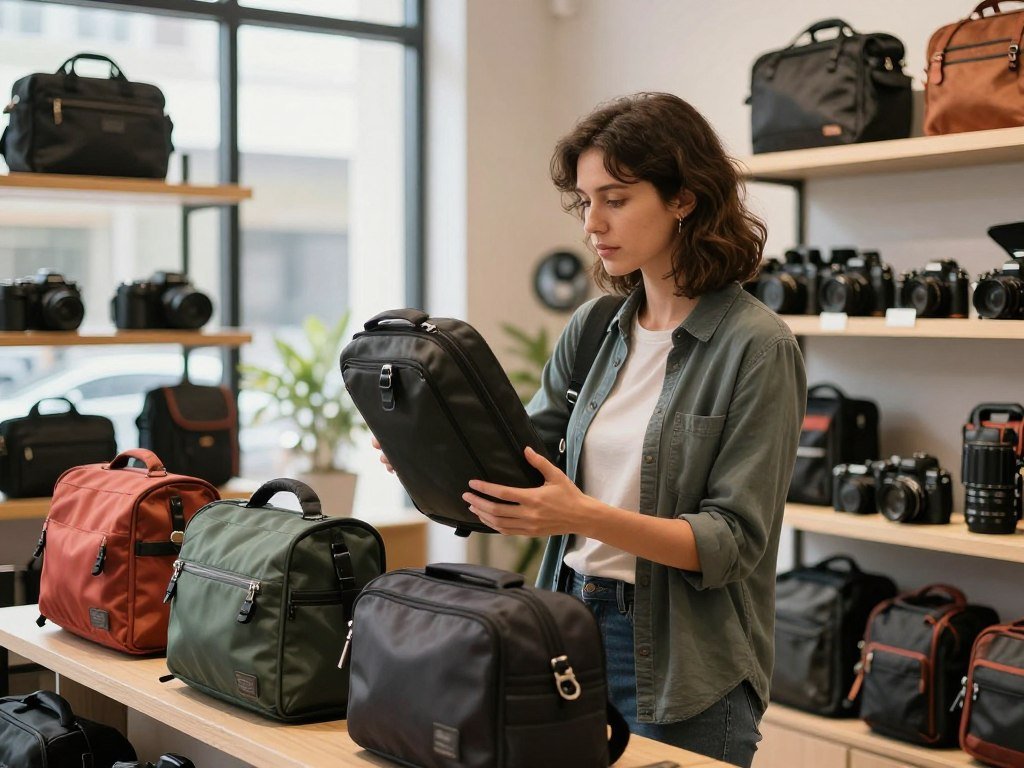
A camera setup is easier to carry when the bag matches the day’s shooting, not just the size of the camera. A street-photography walk calls for different access than a trail day or a long trip. The best camera bags help photographers protect the gear they plan to use without hauling extra weight.
This roundup compares backpacks, camera slings, shoulder bags, and camera cubes for travel, hiking, and everyday use. Each pick suits a different kit and routine, so no single bag will fit every photographer. You’ll find options for quick access, longer carries, and mixed days with camera gear and travel essentials.
Key Takeaways
- Match capacity to your camera body, lenses, and accessories.
- Choose a backpack for heavier loads and longer carries.
- Pick a camera sling when quick access matters most.
- Check compartments, dividers, and device pockets against your actual gear.
- For wet outings, look for a rain cover or weather-resistant materials.
Start by deciding what you need to carry and how long you expect to wear it.
Best Camera Bags for Travel, Hiking, and Daily Use
A compact street-photography kit usually favors quick access, while a heavier kit is easier to carry in a backpack. A camera sling is a crossbody camera bag worn diagonally across the torso, so you can reach gear without taking the bag off. Your camera, lens, and total load should set the carry style.
Think about where you shoot and how often you need to change lenses. Small, light cameras suit a smaller pack, while added lenses and accessories take more space. If you also bring a compact action camera, compare its size and activity needs with these budget action camera options.

When a backpack earns its weight
A backpack generally spreads heavier camera gear across both shoulders, which can feel better on a long walk. It also leaves your hands free for a tripod, map, or water bottle. The extra fabric and padding add bulk, so a large backpack may be more bag than you need for a short city stop.
Use a backpack when you carry several lenses, a second camera body, or personal items alongside your camera. Look for dividers that keep the lens from pressing against other gear. A well-fitted compartment can prevent loose accessories from shifting as you walk.
When a sling or shoulder bag fits better
A sling is built for quick access, and many camera slings commonly range from 7 to 10 liters. That size often suits a camera body and one or two lenses, not every photographer’s full kit. A shoulder bag can work well for short stops when you want to open the top and reach gear at once.
A camera cube makes sense when you want padded camera storage inside a regular travel pack. Weigh these four factors before choosing:
- Camera and lens footprint
- Total carried weight
- Access needs during a shoot
- Exposure to rain
Choose the carry style that stays comfortable with the gear you actually plan to bring.
Which Camera Backpack Is Best for Airline Travel?
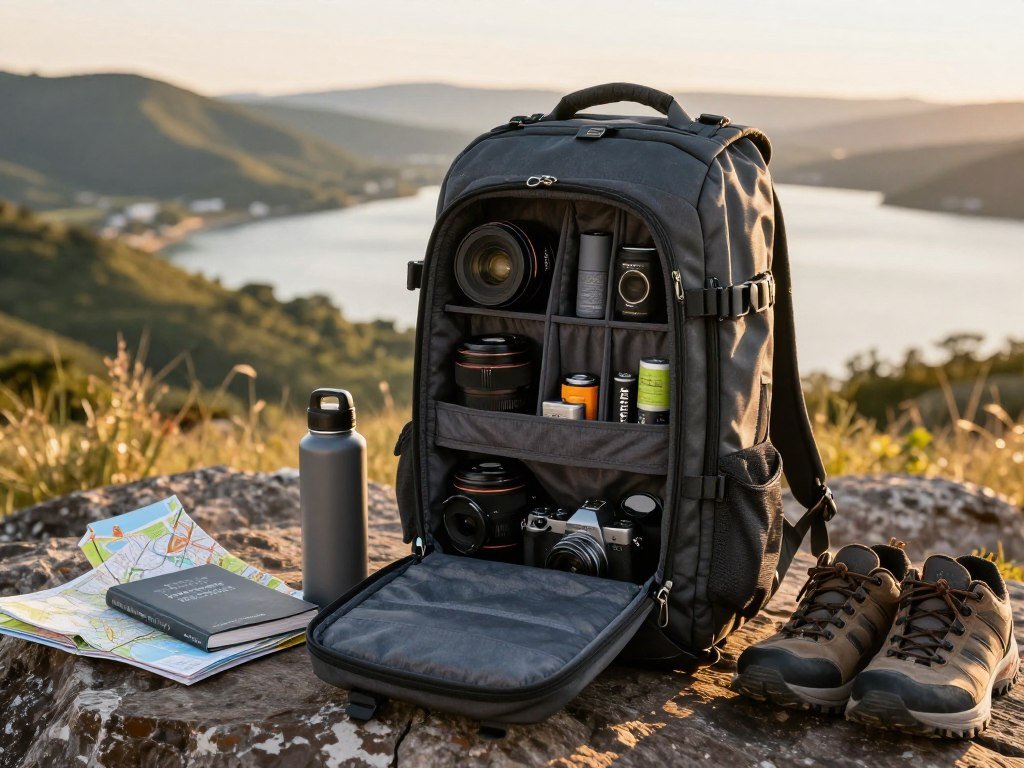
For a flexible airline-oriented camera backpack, start with the Peak Design Everyday Backpack 30L (V2). Its adjustable height, dual side access, and magnetic-latch top flap make it adaptable on a trip. Its height adjusts from 20.4 to 24.5 inches, so check the packed dimensions before flying.
The bag has a laptop sleeve, bottom tripod attachment loops, and a 7/10 water-resistance score. It fits a 16-inch laptop or 12.9-inch tablet, and its weather-resistant nylon offers some protection from light moisture. The dual side-access panels help you reach camera gear without opening the top.
| Model | Capacity | Rain protection | Standout carry feature |
|---|---|---|---|
| Peak Design Everyday Backpack 30L (V2) | 30L | Weather-resistant nylon | Adjustable height and side access |
| Shimoda Explore V2 35 | 35L | Included rain cover | Removable hip belt |
| Lowepro Whistler 450 BP AW II | 36L | Included All Weather Cover | 9/10 water-resistance score |
For international travel, match capacity to the trip’s length and purpose. A city weekend may need room for one camera and a few essentials, while a longer photo trip can call for extra lenses and a laptop. The Shimoda and Lowepro options offer more space than the Peak Design pack, with a hip belt or included cover.
A camera backpack’s listed capacity does not tell you whether it will suit your full itinerary. Include room for the items you will carry each day, not every piece of gear you own. Check the packed bag’s actual dimensions against the airline’s current carry-on rules before departure.
Is a 35-Liter Backpack Enough for a Photo Trip?
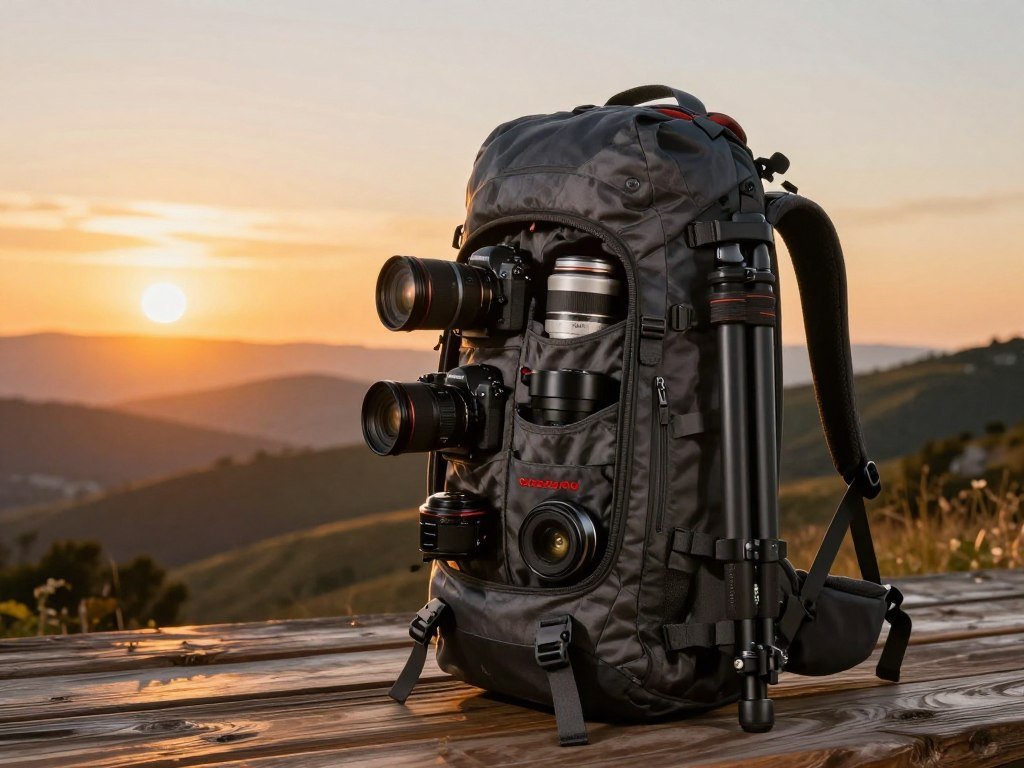
A 35-liter pack can suit a substantial camera kit, especially when its compartments are arranged around photography. The Nomatic McKinnon Camera Pack 35L V2 can carry two camera bodies, three to four lenses, a drone, and a 16-inch laptop. That load makes it a camera-first choice, not a light day bag.
The Nomatic McKinnon Camera Pack 35L V2 is listed at $419.99 for 2026. It has a removable camera cube, a dedicated tripod attachment, and space for the listed camera load. This model is distinct from the Nomatic McKinnon Camera Pack 35L, which expands to 42 liters.
A camera-first setup with room for travel essentials
The expandable McKinnon pack has a trolley sleeve, waterproof zippers, side camera access, and pockets for a laptop and tablet. Those details help when you move between airport travel and a shooting day. Its 42-liter expanded capacity leaves extra room for clothing or other trip items.
Pick a 35-liter pack based on the gear you plan to use, then check how much space remains for personal essentials. A camera-heavy load may fill the compartments before you add clothing. A removable camera cube can also make it easier to separate gear from the rest of your pack.
A roll-top layout for weather-conscious packing
The WANDRD PRVKE uses a roll-top main compartment and side tripod straps. Its roll-top gives the top opening better weather sealing than a side-access bag, but camera access takes longer. That trade makes sense when sealing matters more than reaching the camera quickly.
Think about the trip’s main use:
- Camera-heavy day travel with little clothing
- A photo trip with a laptop and drone
- A trip where quick side access matters more than roll-top sealing
Treat the 42-liter expanded capacity as extra packing room, not a reason to carry equipment you will not use.
Which Backpack Offers the Best Value or Rain Protection?
The Manfrotto PRO Light Backloader Backpack S is the straightforward value pick for a camera-first load. It has a dedicated camera compartment, a fold-out rain protector, and two water-bottle pockets. Its camera compartment leaves limited room for bulky non-camera items.
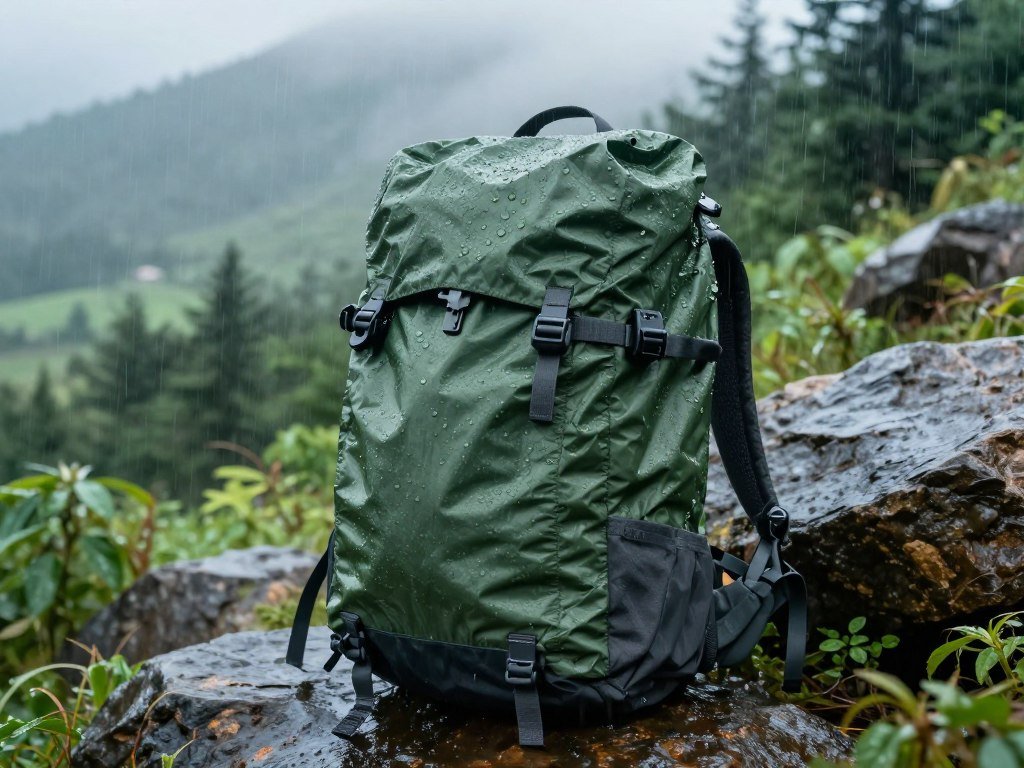
It has an 8/10 water-resistance score, while the Lowepro ProTactic BP 450 AW II also scores 8/10. The Lowepro Whistler 450 BP AW II scores 9/10. Each Lowepro pack includes an All Weather Cover for added protection in wet conditions.
| Model | Water-resistance score | Rain cover or protector | Camera organization |
|---|---|---|---|
| Manfrotto PRO Light Backloader Backpack S | 8/10 | Fold-out rain protector | Dedicated camera compartment |
| Lowepro ProTactic BP 450 AW II | 8/10 | Included All Weather Cover | Camera backpack organization |
| Lowepro Whistler 450 BP AW II | 9/10 | Included All Weather Cover | Camera backpack organization |
A fitted cover adds a layer of protection when rain starts, but it does not make a pack waterproof. Check how the cover fits over a loaded bag and whether it blocks the pockets you need. A simple protector can be useful, yet it still takes room when stored away.
Choose the Manfrotto if camera organization and value matter more than space for a bulky jacket or lunch. The Lowepro models are worth comparing when their included covers match your needs. If rain protection is a priority, check whether the cover is included and practical to deploy before you head out.
Which Camera Backpacks Suit Hiking and Heavy Telephoto Gear?
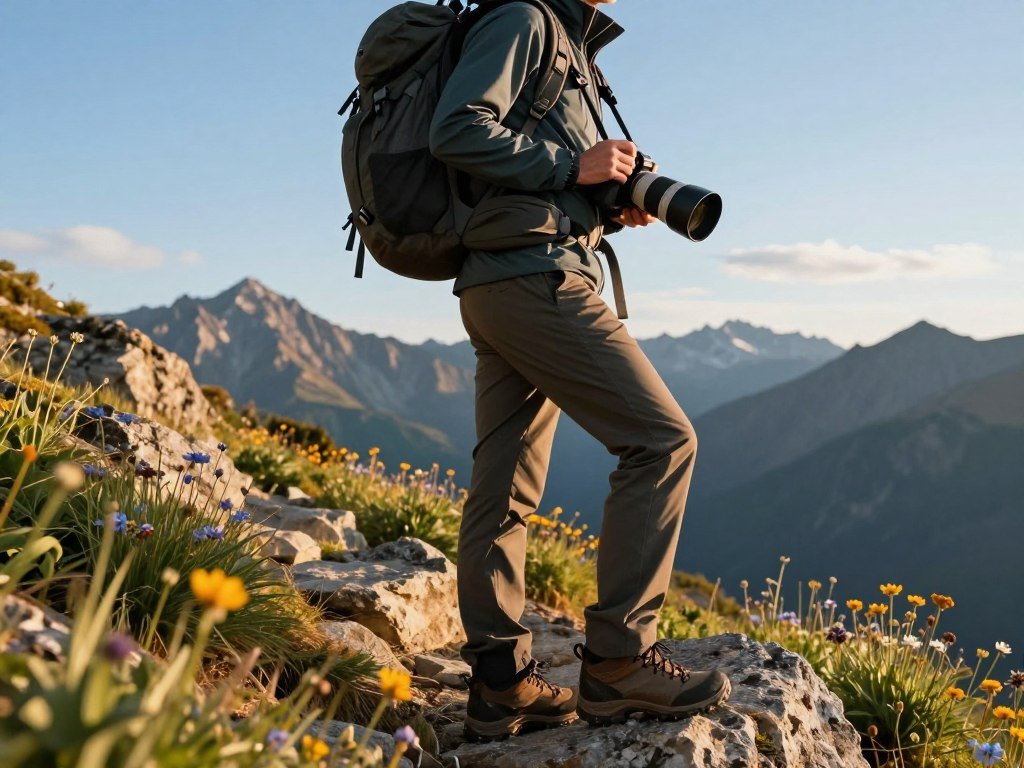
A heavy telephoto kit calls for more than padded compartments; the harness and access pattern matter on the trail. The Shimoda Action X50 v2 uses a modular Core Unit system for heavy telephoto lenses and multiple camera bodies. A removable Core Unit lets you arrange camera gear around the kit you carry.
That modular setup can help keep bodies, long lenses, and smaller accessories in defined spaces. You can choose a Core Unit that suits your equipment instead of relying on one fixed layout. It is a strong match for photographers who carry more than one body or a long lens.
Modular inserts for long lenses and multiple bodies
The Think Tank BackLight family comes in 18-liter, 26-liter, and 36-liter sizes, plus a BackLight Sprint model. The packs aim to carry heavy gear while addressing the limits of backpack access. Compare the opening and compartment layout with your usual camera setup before picking a size.
A modular insert also helps separate camera gear from trail items, but the pack still needs to fit your body. For more trail-specific choices, compare this advice with a camera bag for hiking. Look at the harness, access points, and space for food or spare layers together.
A hiking harness for long days outdoors
The F-Stop Kashmir 2 AIR has a 33-liter capacity and a water-resistant exterior. It does not include a rain cover, so its exterior should not be treated as complete rain protection. Keep that difference in mind when you plan to hike in changeable weather.
Try the pack with the camera body and longest lens inside, plus the other items you expect to carry. A snug fit can feel different once you add water, clothing, and a tripod. Test the fully loaded pack on a short walk before committing to a longer hike.
Which Camera Sling Works for Travel and Active Shooting?
For active travel with a compact kit, the WANDRD ROGUE 9L Sling is the clearest starting point. The 2026 guide names it the best camera sling bag overall. Its five-point strap supports left- or right-side carry and adjusts for a secure fit.
The ROGUE 9L also has an expandable bottom pocket for a small tripod or water bottle. That gives you a place for an item you may need during a walk without crowding the camera compartment. Check that the added item does not press against your camera body.
The WANDRD ROGUE V2 Sling comes in a 6-liter size, with five-point comfort adjustment, an AirMesh back panel, and weather-resistant fabric and zippers. The smaller capacity may suit a compact body and a modest lens setup. The Nomatic X Peter McKinnon Sling 8L has waterproof tarpaulin, waterproof zippers, and a stabilization strap.
The Nomatic 8L fits a camera body with a 24-70mm lens, but it is too small for a DSLR with a 70-200mm lens. Its listed price was $159.99 in 2023, not a current price. Check these details before an active outing:
- Strap stability while walking
- Access while the sling is worn
- Where a tripod or bottle will ride
A camera sling can work well when you need quick access and carry a modest load. The right strap setup depends on your movement and the weight inside. Match the sling to the longest lens you plan to carry, not just the camera body.
What Should You Compare in a Camera Sling Bag?
Capacity alone does not tell you whether a sling will fit your body, lens, and shooting routine. Check the dividers, strap support, and space for a tripod along with the listed size. The bag’s shape matters as much as its liter rating.
The Peak Design Everyday Sling V2 10L has a 400D double poly-coated DWR nylon canvas exterior and weatherproof Ultra Zips. It includes tripod straps and a rear pocket for a 13-inch laptop. The Peak Design Everyday Sling line comes in 3L, 6L, and 10L sizes.
| Model | Capacity | Stabilization strap | Tripod carry |
|---|---|---|---|
| Peak Design Everyday Sling V2 10L | 10L | No | Yes |
| Instinct Pro Camera Sling Bag | 7L | Yes | Yes |
| Moment Rugged Camera Sling | 10L | Yes | Yes |
The Peak Design 10L can fit a DSLR with a 70-200mm lens, or a body with 17-35mm and 24-70mm lenses. The Instinct Pro Camera Sling Bag uses X-Pac VX21 fabric, YKK AquaGuard zippers, and a high-visibility orange interior. Moment’s Rugged Camera Sling 10L has a NorthPak polyester exterior, water-resistant YKK zippers, and a stabilization strap.
The Long Weekend Santa Fe Shoulder Bag fits a compact SLR, an extra lens, and film rolls. It has limited padding and no internal dividers, so it is not suited to DSLRs or large mirrorless cameras. The PGYTECH OneMo Sling and Bellroy Venture Sling 10L (Camera Edition) are other models to compare.
Match the bag’s padding and internal shape to the body and lens you carry most often. A divider that leaves a lens loose can make a roomy sling a poor fit. Before choosing a sling, check how its dividers position the lens and camera when the bag is worn.
Which Small Camera Sling Suits a Compact Setup?
A compact fixed-lens camera can travel comfortably in a smaller sling, while a second lens often justifies more space. The Bellroy Venture Camera Sling 10L is the more flexible choice for a body plus another lens or a second camera. Its movable dividers let you change the layout as your kit changes.
The Bellroy also has weather-resistant fabric and a reversible strap. That setup can suit discreet crossbody carry when you want a camera close without using a large backpack. The 10-liter size leaves room to arrange gear around a small personal load.
The Hex Ranger Mini Sling is better matched to compact cameras such as the Fujifilm X100, a Ricoh, or a point-and-shoot film camera. It does not fit an SLR-style body. Its smaller shape makes sense when you do not need space for several lenses or large accessories.
A stylish camera sling should still protect the equipment you plan to carry. Look at the compartment shape and divider placement, not just the outside profile. If your camera has a fixed lens, a small bag can keep the carry light and simple.
The Bellroy gives you more flexibility if your kit may include a second camera or lens. The Hex Ranger suits a compact body that does not need that extra room. Confirm your camera’s body shape against the bag’s compartment before choosing a mini sling.
When Is a Messenger Bag or Camera Insert a Better Choice?
A messenger bag can make camera access simple when you are moving between short stops. Its shoulder strap keeps gear close, and the main compartment opens without removing the bag. Long stretches with a heavy camera kit can feel less comfortable on one shoulder.
The Billingham Hadley Pro holds 8.5 liters and has a removable insert, but no dedicated laptop pocket. The Tenba DNA 16 Slim Messenger Bag fits a 16-inch laptop and has a removable camera insert. The Tenba BYOB 10 can be carried crossbody or placed inside other luggage.
| Model | Capacity | Laptop fit | Insert use |
|---|---|---|---|
| Billingham Hadley Pro | 8.5L | No dedicated laptop pocket | Removable camera insert |
| Tenba DNA 16 Slim | Not stated | Up to 16-inch laptop | Removable insert |
| Tenba BYOB 10 | 10L | No laptop specification | Standalone crossbody or camera insert |
A messenger bag can suit a day when you need frequent access and carry a moderate amount of gear. Before adding a laptop, check for a separate padded pocket rather than assuming the camera compartment will protect it. The Billingham’s removable insert also lets you use the bag for other items.
A camera insert gives you another option: protect gear inside luggage, then carry the insert separately if it has a strap. The Tenba BYOB 10 is designed for both uses. Choose an insert when you want camera protection inside luggage and a separate carry option at your destination.
Which Camera Bags Work for Nikon Kits?
Nikon shooters should choose by the dimensions of their complete kit, not by the camera brand alone. Check the camera body, longest lens, and accessories you expect to carry together. A model listed for Nikon cameras does not guarantee a fit for every body and lens combination.
Think Tank Photo lists the Airport Essentials and Retrospective 30 V2.0 as camera-bag models for Nikon cameras. Its FocusPoint Crossbody comes in 8-liter and 13-liter sizes, while the Turnstyle is 11 liters. Treat those models as starting points, then compare the compartments with your setup.
Measure the body with the lens attached if that is how you normally carry it. Add room for batteries, cards, and a flash if those items travel in the same compartment. A lens hood can also change the space your camera takes up.
Options to investigate include:
- Think Tank Photo Airport Essentials
- Think Tank Photo Retrospective 30 V2.0
- Think Tank Photo FocusPoint Crossbody 8L
- Think Tank Photo Turnstyle 11L
The FocusPoint also comes in a 13-liter size, which may suit a larger set of accessories. A bag’s name or camera brand listing cannot replace a fit check with your own gear. Test the bag with the longest lens attached if that is how you usually carry the camera.
Can a Sling Work as a Camera Cube Inside a Backpack?
A removable padded sling can keep a camera kit organized in transit and become the day bag once you arrive. The PGYTECH OneMo Sling works as a sling, a camera cube, or with the PGYTECH OnePro Flex camera backpack. Its removable padded strap lets you change how you carry the same protected gear.
The OneMo Sling also has an expansion zipper, giving the camera compartment more room when needed. It fits inside most 30-40-liter backpacks and some 20-30-liter backpacks. Check the shape of your pack’s interior as well as its stated capacity.
Packing a removable sling inside a travel pack
A camera cube separates padded camera storage from clothing and other luggage. The OneMo’s sling strap can come off before you place it in a larger backpack. This makes it easier to keep the strap from catching on other packed items.
Do not assume a backpack’s total capacity guarantees room for a camera cube. The usable interior can be narrower than the outside shape suggests, especially near the top or base. Leave space for any other items that share the main compartment.
Taking the camera cube out at your destination
At your destination, remove the OneMo and wear it as a camera sling. The Peak Design Travel Backpack 45L takes a different approach: it needs a separate camera-cube insert for camera protection. The backpack alone does not serve as a padded camera compartment.
A removable container can help you switch from luggage carry to a day out without repacking every lens. Choose a cube that closes securely and leaves room for the accessories you need. Check the packed cube’s outer dimensions against the backpack’s usable interior before relying on the combination.
Which Compact Backpack Works for Everyday Camera Carry?
An everyday camera backpack should leave enough room for essentials without making the camera compartment awkward to reach. The Lowepro Adventura BP 300 III has a back-access camera compartment, flexible dividers, and a front tripod holder. Its 13-inch laptop pocket and two side mesh pockets add space for daily items.
Back access can help keep the camera compartment away from the ground when you set the pack down. The tripod holder sits on the front, while the side pockets give you places for smaller items. The flexible dividers help adjust the space to your camera and lenses.
The Lowepro Photo Active BP 300 AW includes a rain cover and fits a mirrorless body, two to three lenses, and accessories. Its laptop sleeve is better suited to a tablet than a full workstation laptop. Choose it when the camera load and weather cover matter more than a roomy computer pocket.
The Brevite Jumper Photo Backpack comes in 18L and 22L sizes. Its water-resistance score is 3/10, so it is a consideration for casual use rather than a strong rain choice. Pick the size that fits your daily camera gear without leaving a large, unused compartment.
A compact pack can still feel bulky if its dividers do not suit your camera body. Check the opening and pockets with the accessories you carry every day. Check whether the device pocket fits your actual laptop or tablet, rather than assuming every sleeve is workstation-sized.
Will a Camera Sling Count as a Personal Item?
A 10L sling can fit under some travel setups, but its capacity alone does not guarantee personal-item acceptance. Airlines set their own rules, and acceptance depends on the carrier and the packed bag’s dimensions. Measure the full sling, including anything bulging from its pockets.
The Peak Design Everyday Sling 10L (V2) holds a small computer up to 13 inches or a large tablet. That device space does not mean the bag will fit under every seat. It may not qualify as a personal item on some airlines.
Personal-item fit depends on the airline
Measure the fully packed sling and compare its height, width, and depth with the airline’s current size limit. A soft bag can change shape when full, especially if a lens or water bottle presses against the side. Use the packed dimensions, not an empty bag’s listed size.
Keep in mind that an airline may apply its size rules differently across fare types or routes. Confirm the current limit for your ticket before relying on under-seat storage. The camera sling’s liter count cannot replace that check.
Protecting a laptop or tablet in a sling
A device pocket can help separate a tablet or small computer from camera gear. Check its padding and the space around the device before packing both electronics together. A snug fit can be safer than leaving a computer loose beside a lens.
The Peak Design 10L gives you a device option while keeping camera gear nearby. Leave room for the items you need at your seat, rather than filling every pocket. Keep essential camera gear in the bag only after checking the airline’s current personal-item dimensions.
Which Camera Bag Fits a Hiking-and-City Trip?
A mixed hiking-and-city day favors a pack that can carry essentials outdoors without making camera access cumbersome in town. The Peak Design Outdoor Backpack 45L has rear access, side pockets for tripods, and an adjustable harness. Its 25L version is a smaller option for shorter mixed-use days.
The 45L model offers more room for a longer outing with substantial gear. Terra Shell fabric and rear access suit photographers who want a pack built for outdoor use. The tripod pockets keep a support separate from the main camera compartment.
The WANDRD PRVKE comes in three sizes and has three access points. That layout can help when you move between outdoor and city shooting, since you can reach gear from more than one opening. Compare the size options with the load you expect to carry.
Choose based on the day ahead:
- A longer outdoor trip with substantial gear
- A shorter mixed-use day
- A city day where access speed matters
The 45L Peak Design may suit a longer trip, while the 25L size can keep a shorter day’s load more compact. The PRVKE offers multiple access points and size choices for changing routines. Pick the smallest capacity that fits the full kit you expect to use on that trip.
Conclusion
The best choice is the bag that carries your real kit comfortably and gives you the access your shooting day requires. More features do not help if the pack feels awkward or leaves your main lens poorly placed. Fit and comfort come first.
Lay out the camera body, lenses, and accessories you plan to bring. Compare that exact kit with the bag’s compartment dimensions, then check whether the bag stays comfortable when loaded. Before buying, pack your intended kit and confirm that it fits without forcing the zippers or dividers.
FAQ
How many liters should a camera sling be?
A 7-10L camera sling commonly fits a camera body and one or two lenses. A compact fixed-lens camera may need less space, especially if you carry few accessories. The lens shape and divider layout also affect the fit. Pick a sling that holds your longest lens without pressing it against the bag’s walls or forcing the zipper closed.
Can a camera sling fit a DSLR with a 70-200mm lens?
Yes, the Peak Design Everyday Sling V2 10L can fit a DSLR with a 70-200mm lens. The Nomatic X Peter McKinnon Sling 8L is too small for that combination, though it fits a body with a 24-70mm lens. Check the position of the lens and camera body inside the compartment, since their shape affects how comfortably the sling closes.
Can I use a camera cube as a personal item?
Yes, you can carry a camera cube separately if it has a strap, or pack it inside travel luggage. Airline acceptance depends on the carrier’s rules and the packed cube’s dimensions. Measure it with the camera gear inside, since the contents can change its shape. A cube packed inside a larger bag does not count as a separate personal item.
Do all camera backpacks come with a rain cover?
No, camera backpacks do not all include a rain cover. The Shimoda Explore V2 35 and Lowepro Whistler 450 BP AW II include covers, while the Peak Design Everyday Backpack relies on weather-resistant fabric. A cover adds protection when rain falls, but it does not make every part of a bag waterproof. Check the cover’s fit and storage before a wet trip.
Can a camera sling hold a laptop?
Some camera slings can hold a laptop or tablet, but the pocket size varies by model. The Peak Design Everyday Sling 10L (V2) fits a computer up to 13 inches or a large tablet. Check the device pocket’s size and padding before packing electronics with camera gear. A bag’s total capacity does not show how large its laptop pocket is.
Is a sling comfortable for a full day of photography?
A sling can feel comfortable for a full day when your camera load is small and you value quick access. A backpack generally distributes heavier loads more evenly, which can help during longer carries. Comfort also depends on the strap, bag fit, and how often you walk. Try carrying the packed bag before a full day of shooting.