A first camera can make learning easier without requiring a professional-grade budget. The best camera for beginner photography depends on what you want to shoot, what you can spend, and how simple you want your first setup to feel. A modern entry-level model can teach exposure, focus, and composition, while carefully chosen older gear can teach the same skills.
An exposure preview is a live display of how current exposure settings will affect the image. That view can make settings less abstract as you learn. Interchangeable lenses add creative options, though each new lens adds to your system cost. You can start with one lens and add another when a clear need appears.
Key Takeaways
- The Canon EOS R50 is a strong all-around mirrorless starting point.
- APS-C balances image quality, camera size, and lens choice for many beginners.
- A kit lens can cover early practice without an immediate lens upgrade.
- A used DSLR can lower upfront spending if you check its condition.
- Compare the full kit cost, including a lens and memory card.
- Choose gear for the subjects you want to photograph most.
You do not need every advanced feature to learn well. A camera that feels easy to carry may help you practice more often, while a viewfinder or screen that suits your style can make shooting more comfortable. Keep some budget for the small items that let you use the camera on day one.
Choose a setup that leaves enough money for the lens and memory card you will actually use.
Which Is the Best Camera for Beginner Photography?
For most first-time buyers who want one body for stills and video, the Canon EOS R50 is the best place to start. Its mix of simple controls and broad photo and video ability suits a wide range of new photographers.
The EOS R50 has a 24.2 MP APS-C sensor and a vari-angle touchscreen. That screen can turn toward you or tilt for low and high angles. Its body-and-lens kit gives you a practical way to begin without choosing a separate lens right away.
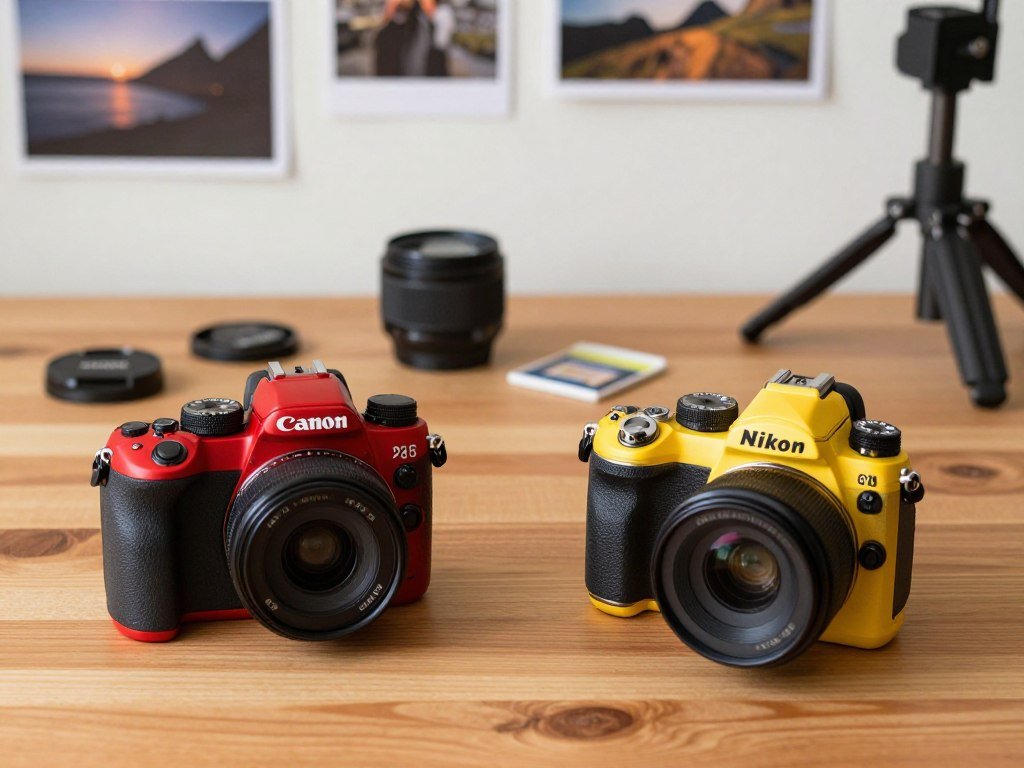
| Model | Sensor | Standout beginner feature |
|---|---|---|
| Canon EOS R50 | 24.2 MP APS-C | Vari-angle touchscreen |
| Canon EOS R100 | 24.1 MP APS-C | Human eye detection |
| Nikon Z50 II | 20.9 MP APS-C | Nine subject-detection types |
| Nikon Z fc | APS-C | Traditional top dials |
The Canon EOS R100 is the more pared-back budget choice. Its 24.1 MP APS-C sensor and human eye-detection autofocus cover useful basics, though its handling is less flexible for video.
The Nikon Z50 II suits buyers who want the Nikon Z system and subject detection for nine types of subjects. Its 20.9 MP APS-C sensor has enough resolution for everyday photos, family events, and travel.
The Nikon Z fc also uses an APS-C sensor, but its traditional top dials put key settings in view. Those controls may feel clear if you like changing settings by hand. The best camera for one beginner may not feel best in another person’s hands.
Compare the screens, grip, and kit lens as well as the camera body. A comfortable camera is easier to bring along, and a useful lens affects image quality more than a spec sheet can show alone. For more starter options, see this comparison of starter camera kits.
Before choosing, compare the body-and-lens kit you will actually carry, not body specifications in isolation.
Mirrorless or DSLR: Which Fits Your Learning Style?
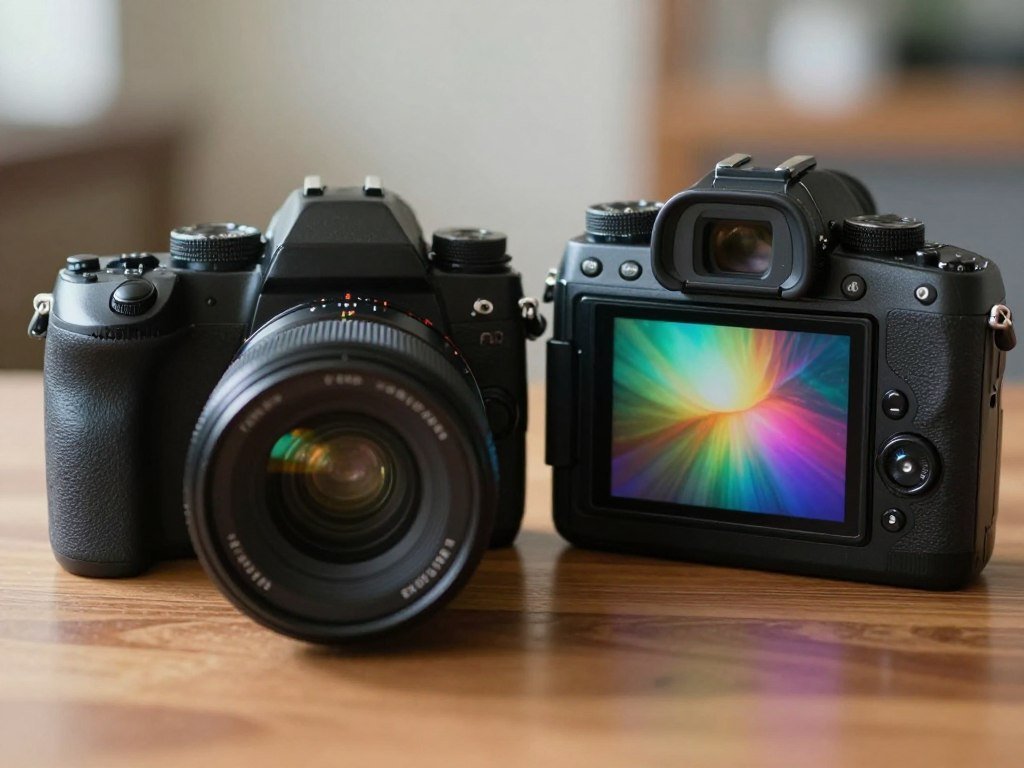
A DSLR gives you a direct optical view, while a mirrorless camera can preview exposure changes as you compose. Choose based on what helps you frame and learn, not on the camera label alone.
A DSLR mirror sends light to an optical through-the-lens viewfinder. A mirrorless camera uses an electronic viewfinder, or EVF, and some models have no viewfinder.
| Feature | DSLR | Mirrorless |
|---|---|---|
| Viewing method | Optical TTL viewfinder | EVF or no viewfinder |
| Outdoor viewing | Clear, lag-free optical view | Electronic preview |
| Size | Generally larger | Usually smaller and lighter |
| Battery life | Generally longer | Generally shorter |
An EVF shows an exposure preview in real time. You can see how exposure settings change brightness before taking a shot, which can make learning more direct.
An optical viewfinder stays clear without screen lag, even in bright outdoor conditions. Some photographers prefer that direct view, especially when following a moving subject. DSLRs also generally offer longer battery life, a useful trait on long outings.
Mirrorless cameras are usually smaller and lighter because they do not need a mirror or optical viewfinder system. Their autofocus often includes face detection, eye autofocus, and subject tracking. Those tools can help you keep a person or pet in focus while you compose.
Neither design makes good photos by itself. Your focus technique, lens, and timing still matter, and both cameras let you learn exposure and composition. Consider which viewfinder feels natural when you hold a camera to your eye.
Choose a DSLR if optical viewing and battery life matter most, and mirrorless if a smaller body and live exposure preview matter more.
What Sensor Size Should a Beginner Choose?
APS-C is the easiest starting point for most beginners because it balances image quality, portability, and system choice. You do not need full frame to make strong images or learn the basics.
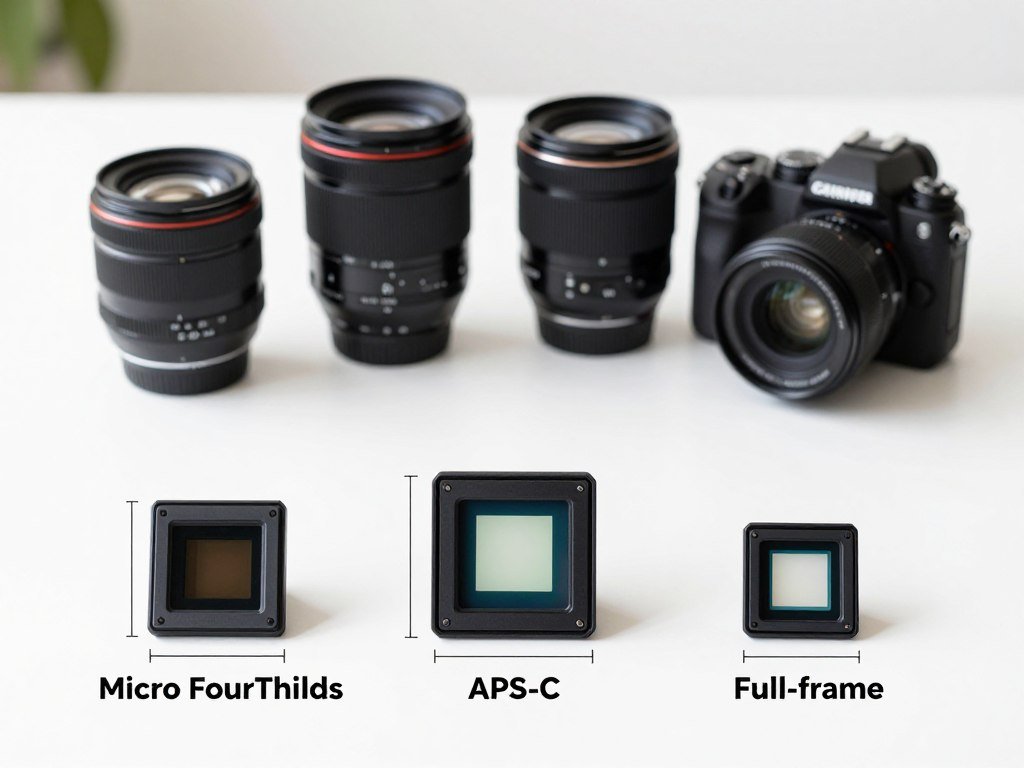
Sensor size affects how a lens frames a scene and how much depth field you can create. A larger sensor can give you more room for shallow depth of field, but the full system often grows in size and cost.
| Format | Approximate sensor size | Approximate crop factor |
|---|---|---|
| Micro Four Thirds | 17.3 x 13 mm | 2x |
| APS-C | Roughly 22-24 x 15-16 mm | 1.5x Nikon DX or 1.6x Canon |
| Full frame | 36 x 24 mm | 1x |
Micro Four Thirds cameras use a sensor about 17.3 x 13 mm. Four Thirds and Micro Four Thirds have an approximately 2x crop factor, while APS-C uses a larger sensor.
Nikon DX cameras use an approximately 1.5x crop factor, and Canon APS-C cameras use approximately 1.6x. Crop factor describes how a lens frames a scene compared with full frame. It does not change the lens itself.
Micro Four Thirds bodies and lenses can make a compact kit for travel or daily use. APS-C offers a strong balance of image quality, camera size, and lens choice. That balance makes it a sensible first format for many people.
Full frame can offer more flexibility in low light and shallow depth of field. Its lenses are often larger and costlier, so the system may ask more of your budget and bag. You gain most when those traits solve a real shooting need.
Move to full frame for a specific low-light or depth-of-field goal, not just because the format sounds more advanced.
How Much Should You Spend on a Camera System?
Set your budget for a working camera-and-lens kit, not for the body alone. A useful starter system includes the camera, a lens, and the basic items you need to save and carry photos.
Budget for the whole starter kit
Before you compare camera prices, write down the parts you need to use the camera. A kit lens can cover early practice, so you do not have to buy a second lens immediately.

- Camera body: the main cost, with features that suit your subjects.
- Everyday kit lens: a useful starting lens for varied scenes.
- Memory card: needed to record photos and video.
- Bag or spare battery: buy these if your outings or camera use call for them.
The body-only price can look tempting, but it does not give you a complete camera kit. Compare the camera body, an everyday lens, and any specialist lens you already know you need.
Check the lens system before buying
Compatible lenses you already own can make it less costly to stay with a camera system. Check the lens mount before changing brands or replacing a camera body, especially if you have invested in several lenses.
Canon EOS R and Nikon Z are current interchangeable-lens systems. Both include APS-C and full-frame cameras, so you can move between formats within each system as your needs change.
Canon replaced the M series with the R series rather than continuing to release M-series cameras and lenses. The Canon M50 Mark II is a 2021 mirrorless camera, and its system path deserves thought before you buy an older body.
That does not make an older camera unusable. It does mean you should weigh its present value against the lenses you may want later. If you own compatible glass already, keeping that system may cost less than starting over.
Leave room for the lens that serves your most frequent subject instead of buying extras before you know what you need.
Is the Canon EOS R50 the Best All-Around Starter?
The Canon EOS R50 is the strongest starter for a buyer who wants an easy-to-grow photo and video system. Its subject-focused autofocus helps you spend less time fighting focus and more time framing the moment.
The camera uses Dual Pixel CMOS AF II. Fast autofocus that finds and tracks a subject can help with family photos, pets, and casual action. You still need to choose a useful focus area and keep the subject within the frame.
The R50 records uncropped 4K/30p video oversampled from 6K. Oversampling uses extra image detail to create the final video, while uncropped footage keeps the full view of the lens.
That video mode suits a beginner who wants to record clips as well as stills. If you expect to film yourself or make frequent videos, a screen that turns toward you can help with framing. The R50 makes a flexible choice for family clips and personal projects.
The electronic shutter can reach up to 15 frames per second. That speed does not guarantee a sharp action shot. Focus must stay on the subject, and shutter speed must be fast enough to limit motion blur.
For a moving pet, try tracking focus and a faster shutter speed before relying on the burst rate alone. A short burst can catch a useful expression, but timing still matters. The camera can help, not make every frame sharp.
The R50 is also a good fit if you want one camera to learn with for more than one kind of shooting. You can start with stills, try video, and add lenses when your subjects call for them.
If video is part of your plan, compare the camera with other cameras suited to vlogging. That can help you judge whether you need a photo-first body or controls designed around filming.
Pick it when you want capable autofocus and video in the same body, rather than a DSLR-style optical finder.
Is the Canon EOS R100 the Right Budget Pick?
Choose the Canon EOS R100 when the lowest-cost route into Canon’s current mirrorless system matters more than advanced video handling. It can teach still photography without making you pay for features you may not use.
The R100 suits someone focused on still photos and basic exposure practice. A bundle with a kit lens gives you a ready setup for learning framing, focus, and exposure without shopping for a separate lens first.
Its fixed screen has no touch controls. That makes the screen less flexible when you shoot above a crowd, near the ground, or from another awkward angle.
The R100 records 4K with a crop and reaches about 24p in NTSC or 25p in PAL. Its 4K autofocus uses contrast detection, which can make focus less suited to video-first use.
For still photos, those limits may not matter much. A new photographer can learn composition and exposure without recording 4K. The R100 is a reasonable choice when the camera will mainly capture still subjects and everyday events.
Its complete kit cost depends on the lens and bundle contents. Check whether a listing includes the kit lens, battery, and charger before comparing it with another offer. A lower body price may not mean a lower cost to start shooting.
If you plan to record yourself often, a fixed screen can become a daily annoyance. The non-touch screen also means you cannot tap to adjust settings or focus on its display.
If you expect to film yourself often or need a screen that turns to face you, choose a body with a vari-angle touchscreen.
Which Nikon Beginner Camera Makes Sense?
For a Nikon beginner who wants one camera for varied photos and video, choose the Z50 II over the more style-led Z fc. The Z50 II is the most versatile beginner pick here, while the Z fc suits buyers who value dial-led handling.
The Z50 II has subject detection for nine types of subjects. That gives you room to try people, animals, and other moving subjects without relying on one basic focus mode. It is the better Nikon camera for varied everyday shooting.
The Z50 II records 4K/30p oversampled from 5.6K. That gives a beginner a detailed video option at a common frame rate. Its 4K/60p mode adds a crop, so the view becomes tighter than at 30p.
That crop matters when you want a wide view in a small room or while holding the camera close. At 30p, you can use the full view without that extra crop. Choose the frame rate that fits the scene you plan to record.
The Nikon Z fc records 4K/30p video and uses traditional top dials. Its controls make settings easy to see at a glance. The body may appeal if you prefer a dial-led camera over a conventional grip.
The Z fc is the better fit for someone drawn to its handling and classic look. The Z50 II is the more practical all-rounder for varied stills and video. Both belong to the Nikon Z system, so lens choices can matter when you compare them.
Try each grip and control layout before deciding if you can. A camera that feels secure in your hands makes it easier to change settings without losing your view of the subject.
Compare the feel of each grip and control layout in person if hands-on handling is a deciding factor.
When Should You Step Up to Full Frame?
Step up to full frame when a clear benefit, such as lens choice, low-light work, or advanced video, justifies the larger system investment. For most beginners, an APS-C camera remains enough until a specific need points elsewhere.
The original Nikon Z5 is an entry to full-frame features among these choices. It has a 24.3 MP full-frame sensor, eye-detection autofocus, and in-body stabilization. Its 4K/30p video has a substantial crop, which limits its appeal for wide video framing.
The Canon EOS R8 has a 24.2 MP full-frame sensor and records uncropped 4K up to 60p. That makes it a better fit if wide 4K/60p video is a priority.
The trade-off is that the R8 has no sensor-shift in-body image stabilization, or IBIS. You rely on compatible lens stabilization or digital movie stabilization. That matters when you shoot handheld video or work at slower shutter speeds.
The Nikon Z6 III targets higher-end hybrid work. Its 24.5 MP partially stacked sensor supports internal 6K/60p N-RAW recording and 4K up to 120p. The 4K/120p mode uses a DX crop.
Those video tools suit demanding projects, but they are more than most new photographers need. In the 2026 update, the Z6 III costs about $2,400, while the Z8 costs $3,800 and the Z9 costs $5,500.
The Nikon Z8 and Z9 are advanced bodies, not required first cameras. The Z9 has an integrated grip, a 45.7 MP full-frame sensor, and 8K video. Its size and feature set make it a specialist choice rather than a simple learning tool.
Compare the full lens and body cost before changing formats. Full frame can help with low light or shallow depth of field, but those benefits need to match your subjects and shooting style.
Treat the Z8 and Z9 as specialist upgrades, not requirements for learning photography.
Are Used DSLRs Still Worth Buying in 2026?
A used DSLR can be the cheapest route into interchangeable-lens photography when you are comfortable buying older equipment. A used Canon or Nikon DSLR can be a cheap learning tool, but condition and lens options affect its value.
What used DSLR value looks like
Used DSLR bodies and lenses can cost less in 2026, though older gear needs careful condition checks. A used Canon Rebel T6 with a lens was around $250 on eBay in the 2026 update. Treat that as one market example, not a fixed price.
The Canon Rebel T6 has an 18-megapixel sensor, while the Rebel T7 has a 24-megapixel sensor. Either can teach still photography, but sensor resolution alone does not decide how good your pictures look.
A used Nikon D5600 is another option for stills. It is no longer made or sold new, though its image quality has been described as comparable to cameras in higher categories.
Older DSLR models and the system trade-off
Most camera companies have essentially stopped developing DSLRs in 2026. Pentax is the exception. The Pentax KF costs $750 with an 18-55mm kit lens, which gives you a new DSLR kit rather than an aging used body.
- Canon Rebel T6: 18-megapixel sensor, often found used with a lens.
- Canon Rebel T7: 24-megapixel sensor in a simple DSLR body.
- Nikon D5600: discontinued, with capable image quality for stills.
- Pentax KF: $750 with an 18-55mm kit lens in the 2026 update.
A low body price is less appealing if the lens you want is hard to find or the camera has worn parts. Older DSLR lenses can still make a useful starter system, but your choices depend on the mount and local availability.
Compare the entire used kit and its condition, not just the headline body price.
Which DSLR Works for Action, Video, or Advanced Photography?
For a beginner DSLR with 4K, the Canon EOS 90D is the clearest fit among these options. Choose an advanced DSLR only when its features match the subjects and work you plan to shoot.
Canon or Nikon for a first DSLR?
Canon and Nikon can both work well for a first DSLR. The better choice depends on compatible lenses and the specific body, not the name on the camera.
The Canon EOS 200D, also called the Rebel SL2, is a simple option for stills and Live View learning. It has a 24-megapixel APS-C sensor, Dual Pixel CMOS autofocus for Live View and movies, and a fully articulated touchscreen.
Its viewfinder autofocus and burst shooting are basic for sports and action. That makes it better for general learning than fast-moving subjects. It does not record 4K video.
Which beginner DSLR records 4K video?
The Canon EOS 90D records uncropped 4K at 25p or 30p. It also has a 32.5-megapixel sensor and shoots at 10 frames per second, which gives it room for both video and action stills.
The Nikon D850 also records uncropped 4K, but it is a more advanced camera. Its tilting touchscreen helps with low or high viewing angles, though its overall feature set reaches beyond what most new photographers need.
When do professional-grade DSLR features matter?
The D850 has a 45.7-megapixel full-frame sensor and 153-point autofocus. It shoots at 7 frames per second, or 9 with an optional battery grip. Those features can help when a job calls for high detail and fast shooting.
The used Nikon D500 costs about $1,000 in the 2026 update. It is a more specialized action option than a basic beginner DSLR, so its value depends on whether you regularly photograph fast subjects.
The Canon EOS 6D Mark II offers a full-frame sensor and a fully articulated touchscreen. Dual Pixel CMOS autofocus supports Live View and movies, but the camera does not record 4K video.
Choose the EOS 90D if 4K matters, the Rebel SL2 for simple stills and Live View, or a more advanced body for a clear work need. The right camera depends on what you will use, not the longest feature list.
Choose advanced DSLR features only when your subjects or workflow will use them regularly.
Which Lenses Should a Beginner Buy First?
Start with the supplied kit lens unless a specific shooting problem gives you a reason to add another lens. A kit lens can teach framing and composition across a useful range without adding an early expense.
Start with the kit lens
An 18-55mm kit lens is a common starter zoom for APS-C DSLRs. A zoom lens changes focal length, so you can frame a scene tighter or wider without changing lenses.
Use the kit lens for everyday practice before deciding what it cannot do. You can learn how distance, framing, and focal length affect the look of your photos. That experience makes a later lens choice more specific.
Add a lens for a specific subject
A prime lens has one fixed focal length, while a zoom covers a range. A 50mm f/1.8 prime is a common choice for portraits and low-light practice.
Its wider aperture gathers more light and can create shallower depth field. That can soften the background and help a portrait subject stand out. It does not choose focus or exposure for you.
- Keep the kit lens for flexible framing and daily practice.
- Try a 50mm f/1.8 for portraits and lower-light scenes.
- Choose another focal length when a repeated subject needs a wider or tighter view.
Aperture affects how much of the scene looks sharp, so focus placement still matters. A shallow depth field can blur the background, but it can also leave part of a face soft if focus misses.
Buy the next lens to solve a repeated limitation, not because a longer gear list seems more professional.
What Should You Check Before Buying Used?
A used camera should pass basic power, focus, and display checks before money changes hands. Test the camera itself and confirm that the sale includes the parts you need to use it.
Test the camera in person
Check these four things before you commit to a used camera. Shutter count can offer a clue to past use, but it cannot promise how long the shutter will last.
- Turn the camera on and off more than once.
- Test autofocus on a nearby subject and a distant one.
- Use Live View to check the display and take an image.
- Inspect the body and battery compartment for visible damage.
Look at the screen while you use Live View, then view the image you took. A display problem may be easier to spot when you check both the camera’s live image and saved file.
Reduce risk when buying online
Services such as MPB and KEH may list camera condition and shutter count, and they may offer a warranty. Local marketplaces and eBay can require more careful checks of the seller and the exact item.
Confirm the camera comes with a battery, charger, memory card, and lens if the listing promises a complete kit. Some bundles also include a case or extra lenses. Make sure your computer can read the card, since some computers need a separate card reader.
JPEG files are ready to view, while RAW files need editing software. If you plan to shoot RAW, check that you have a program that can open those files before your first photo session.
Ask for clear pictures of the camera body, screen, and battery compartment when you cannot inspect it in person. A close look at those areas may reveal damage that a broad product shot hides.
If you cannot verify condition or the included accessories, price the missing pieces and risk before committing.
Which Camera Fits the Way You Shoot?
The best fit changes with the subject: action needs reliable focus, while portraits often benefit more from lens choice and light. Start with what you want to shoot most, then choose the feature that solves a real problem.
Do you mainly shoot people, pets, or action?
Fast-moving subjects need responsive autofocus and a shutter-speed range that can freeze motion. A camera can track a pet, but you still need to follow the movement and choose a fast enough shutter speed.
Still portraits often depend more on lens choice and light. A wider aperture can blur the background, while soft window light can give a face a pleasing look without extra gear.
Do you prioritize video or hands-on controls?
The Nikon Z30 is a hybrid photo and video camera for people who want both kinds of shooting. If you want more manual control from dials, the Fujifilm X-T30 II offers physical controls and film simulations.
The Sony a6000 is an older option with an extensive E-mount lens selection, a 24MP sensor, and Full HD video. It can suit a buyer who wants an affordable older body and room to explore compatible lenses.
- Choose responsive autofocus for pets, people in motion, or sports.
- Choose a dial-led body if direct control matters more than a simple interface.
- Choose a hybrid camera if you expect to make both photos and video.
- Choose a DSLR when its handling or price fits your real needs.
Are you aiming for professional photography?
The Nikon D850 is the stronger DSLR choice here for advanced stills and video features. A professional result still depends on lenses, lighting, and skill as well as the camera body.
Professional work also asks you to deliver consistent files and handle different shooting conditions. A costly body cannot replace practice or good light. Choose gear that supports the work you want to take on.
Write down your two most frequent subjects and prioritize the feature that solves a real problem for both.
Conclusion
If you want one straightforward recommendation, start by comparing the Canon EOS R50 kit with a carefully checked used DSLR that fits your budget. The R50 is the strongest all-around beginner pick, while a used camera can make sense when low upfront spending matters most.
Choose one subject you want to photograph this week. Then compare the body, kit lens, and memory card you need to start, rather than buying extras in advance.
Pick the setup you can afford to practice with now, and take it out to make your first photographs.
FAQ
How many megapixels does a beginner camera need?
A beginner camera with about 20-24 megapixels suits most new photographers. That resolution gives you room to crop and print without making large files the main concern. Lens quality, light, and focus matter just as much. A well-focused photo from a basic camera can look better than a soft image from a higher-resolution model.
Do I need 4K video as a beginner photographer?
No, you do not need 4K video to learn photography. Choose 4K if you plan to crop footage or deliver finished 4K video. Still photography does not require 4K recording, and Full HD can be enough for casual clips shared online. Consider how you will use video before paying extra for a camera feature.
Can I use a DSLR lens on a mirrorless camera?
Often, you can use a DSLR lens on a mirrorless camera with a compatible mount adapter. The adapter and camera must support that lens mount, and autofocus or stabilization may work differently across combinations. Check the exact lens and camera body match before buying an adapter. Some functions may not transfer, even when the lens attaches securely.
Is APS-C good enough for low-light photography?
Yes, APS-C works well for many beginner low-light situations. A wider-aperture lens can gather more light, and steady technique can help prevent blur. You can also raise the camera’s ISO setting, though that may add visible image noise. Full frame can offer more flexibility, but it is not the only way to make clear photos in dim light.
What does a used camera’s shutter count tell me?
A used camera’s shutter count gives a rough clue to how much its mechanical shutter has been used. It does not promise how long the shutter will keep working. Treat the count as one part of your decision, alongside the camera’s condition and how it works. A low count cannot rule out damage, and a higher count does not prove failure is near.
Should I shoot RAW or JPEG as a beginner?
JPEG is ready to view and share, while RAW gives you more editing flexibility. RAW files keep more image data for later changes to brightness, color, and detail, but they need compatible editing software. You can shoot JPEG while learning, or use both formats if your camera allows it. Think about your storage and editing time as well as image quality.