What if the salad you are about to order costs twelve dollars and leaves you hungry an hour later? That is the gamble behind every “salad near me” search. The query sounds simple, but it hides a real decision: do you want a side dish, a full meal, or something in between? Do you want crisp greens and a light vinaigrette, or a loaded bowl with grains, protein, and enough calories to carry you through a long afternoon?
The good news is that finding a good salad nearby is a learnable skill. It comes down to knowing what kind of salad you actually want, reading a menu like someone who has been burned before, and understanding a few practical details about how salad bars and takeout bowls really work. This guide walks through all of it, from search tactics to ordering tricks, so the next time you type those three words into your phone, you end up with a bowl you are glad you bought. (Takeout Food Near Me: Find Good Food Fast in 2026) (Salad)
What “Salad Near Me” Really Means as a Search
When someone searches for salad near me, they are almost never looking for a recipe. They are looking for a place, a distance, and a decision. Search engines understand this and usually respond with a map pack: a handful of nearby restaurants with ratings, hours, and a “directions” button.
That is helpful, but it also flattens the choice. The map shows you what is close, not what is good for your situation. A place two blocks away with a four-star average might be perfect for a quick lunch side salad and terrible for a filling dinner bowl. A spot a ten-minute drive away might have a salad bar with thirty ingredients and a make-your-own option that beats everything in walking distance.
The practical fix is to treat the search as a starting point, not an answer. Use the map to build a shortlist of three or four places, then open each menu and check three things: what proteins are available, whether dressings are made in-house, and whether the portion is described as a side or an entrée. Those three details separate a satisfying meal from a sad plastic clamshell of iceberg.
It also helps to know the broader landscape of quick food searches, since the same habits that make a takeout order go smoothly apply to salads. If you regularly hunt for takeout food near me, you already know the drill: check hours, check reviews for consistency, and order slightly before the rush. (Safe Food Handling)
Match the Salad to the Moment
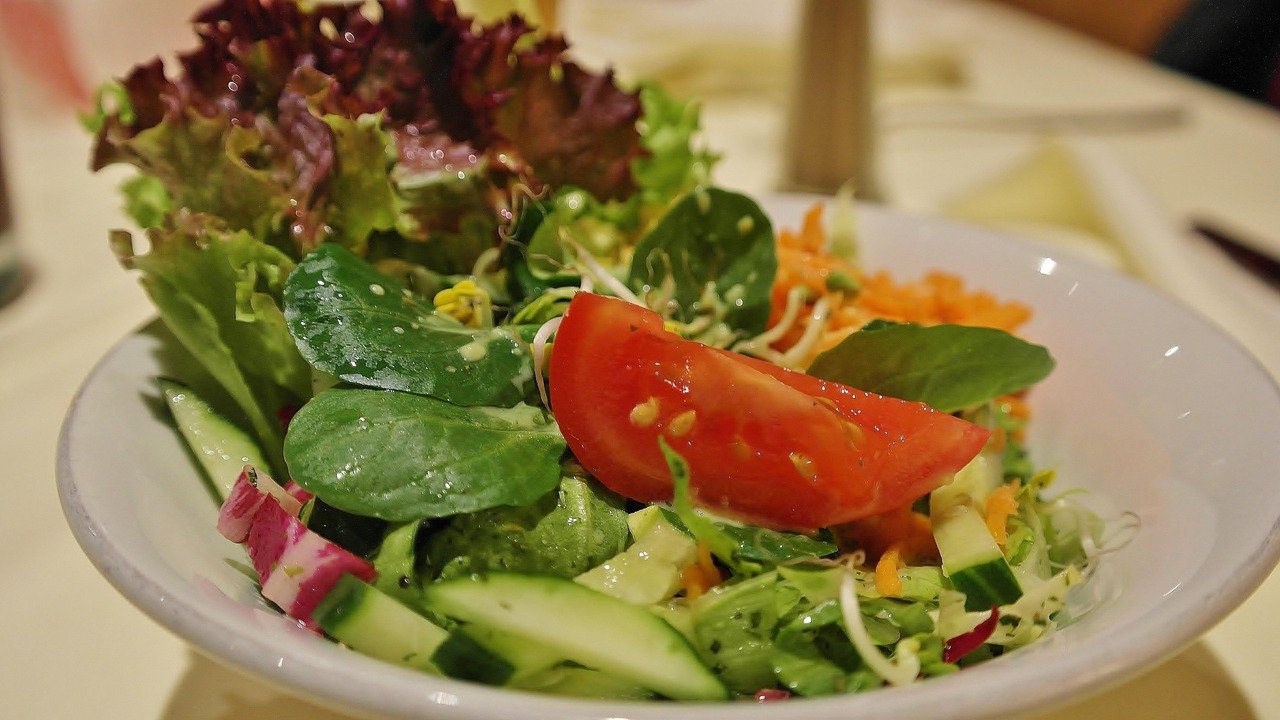
Not every salad need is the same. Before you search, name the job the salad has to do. This single step saves more disappointment than any review site.
| Situation | What to look for | What to avoid |
|---|---|---|
| Quick lunch at a desk | Compact grain or chopped salad with protein | Big leafy bowls that wilt fast |
| Light side for a group meal | Simple greens, one or two toppings | Heavy creamy dressings and croutons |
| Full dinner, no cooking | Bowl with grains, beans, egg, or meat | “Side salad” listings under six dollars |
| Post-workout meal | High protein, beans, nuts, olive oil dressing | Sweet dressings with little protein |
| Sharing at a picnic | Sturdy ingredients that hold up | Delicate greens and watery vegetables |
A salad that fails usually fails because it was the wrong salad for the moment, not because it was badly made. A delicate spring mix is a fine side dish and a poor travel companion. A dense kale and quinoa bowl is a great dinner and overkill next to a sandwich.
If your craving leans toward a specific cuisine rather than a generic bowl, searching by dish works better than searching by category. Someone hunting for a bright, herb-forward lunch might get further with a search for the best Thai food nearby than with a generic salad query, because Thai menus often carry papaya salads, larb, and glass noodle salads that never show up in a “salad” filter.
How to Read a Salad Menu Like a Regular
Menus are marketing documents. They are written to make food sound appealing, and salads are especially prone to flattering language. A few phrases deserve scrutiny.
“Mixed greens” is vague by design. It can mean a fresh, varied blend or whatever bag was cheapest that week. If the rest of the menu is specific about ingredients, the salad probably is too.
“Seasonal” is honest when a restaurant actually changes its menu, and meaningless when it does not. Ask what is in it right now.
“House-made dressing” is usually a good sign. Dressings are cheap to buy in bulk and easy to make fresh, so a kitchen that bothers to make its own tends to care about the details.
“Add protein” is where salad economics live. The base salad is often priced as a loss leader, and the chicken, salmon, or tofu is where the real cost sits. That is fine, but do the math before ordering. A nine-dollar salad plus five dollars of chicken is a fourteen-dollar lunch, and at that point you should expect a genuinely filling portion.
One more practical trick: look at photos, but look at them critically. Customer photos show real portions. Menu photos show styling. If every customer photo shows a small bowl with a mountain of greens and three cherry tomatoes, believe the customers.
Salad Bars, Build-Your-Own, and the Weight Trap
Self-serve salad bars solve the customization problem and create a new one: weight-based pricing. You pile on what looks good, and the scale at the register delivers a number you did not expect.
The mechanics are simple. Most salad bars charge by the pound, and heavy ingredients cost the same per pound as light ones. That means olives, cheese, nuts, and dense proteins are expensive by volume, while lettuce, cucumber, and peppers are cheap. A bowl that is mostly greens with a scoop of chickpeas and a hard-boiled egg costs far less than a bowl built on cheese cubes and marinated artichokes.
Practical habits that work:
- Start with greens to build volume, then add toppings in small amounts.
- Put wet ingredients like tomatoes and pickles at the edge or in a separate cup so the greens do not get soggy.
- Choose oil-based dressings on the side, and add them yourself.
- Weigh your instincts against the scale once. Most people learn their “small” pile is actually a large one.
- If the bar offers a fixed-price container, compare it to the per-pound math before you commit.
Food safety matters here too. Self-serve bars rely on sneeze guards, temperature control, and clean utensils, and they are regulated for exactly that reason. If a bar looks messy, the tongs are sitting in the food, or cold items feel warm, walk away. No salad is worth a stomachache.
Takeout, Delivery, and Keeping Greens Crisp
Salad is one of the hardest foods to deliver well. Heat, moisture, and time all work against it. A dressed salad that sits in a closed container for twenty minutes steams itself into a wilted mess.
The fix is almost always the same: order dressing on the side, and keep wet ingredients separate when the restaurant allows it. Many places will pack components in separate containers if you ask in the order notes. It takes ten seconds and dramatically improves the result.
For delivery specifically, distance matters more than speed. A salad traveling three miles in a hot bag will suffer. A salad traveling half a mile will usually be fine. If you are ordering for a group, consider picking it up yourself, or choose a place close enough that the trip is short.
This is where the practical wisdom from other quick-food searches carries over. The habits that make ordering empanadas de jamón y queso nearby go smoothly, like checking whether a place is set up for takeout and reading recent reviews for consistency, apply just as well to salads. A kitchen that handles takeout well handles it well across the menu.
If you are feeding a crowd and want variety, mixing in a hot item alongside the salad often works better than ordering three salads. A warm empanada or a piece of grilled protein next to a crisp green bowl is a more satisfying plate than a table of cold vegetables.
What Makes a Salad Actually Filling
The most common complaint about salads is that they do not fill you up. That is a design problem, and it is fixable.
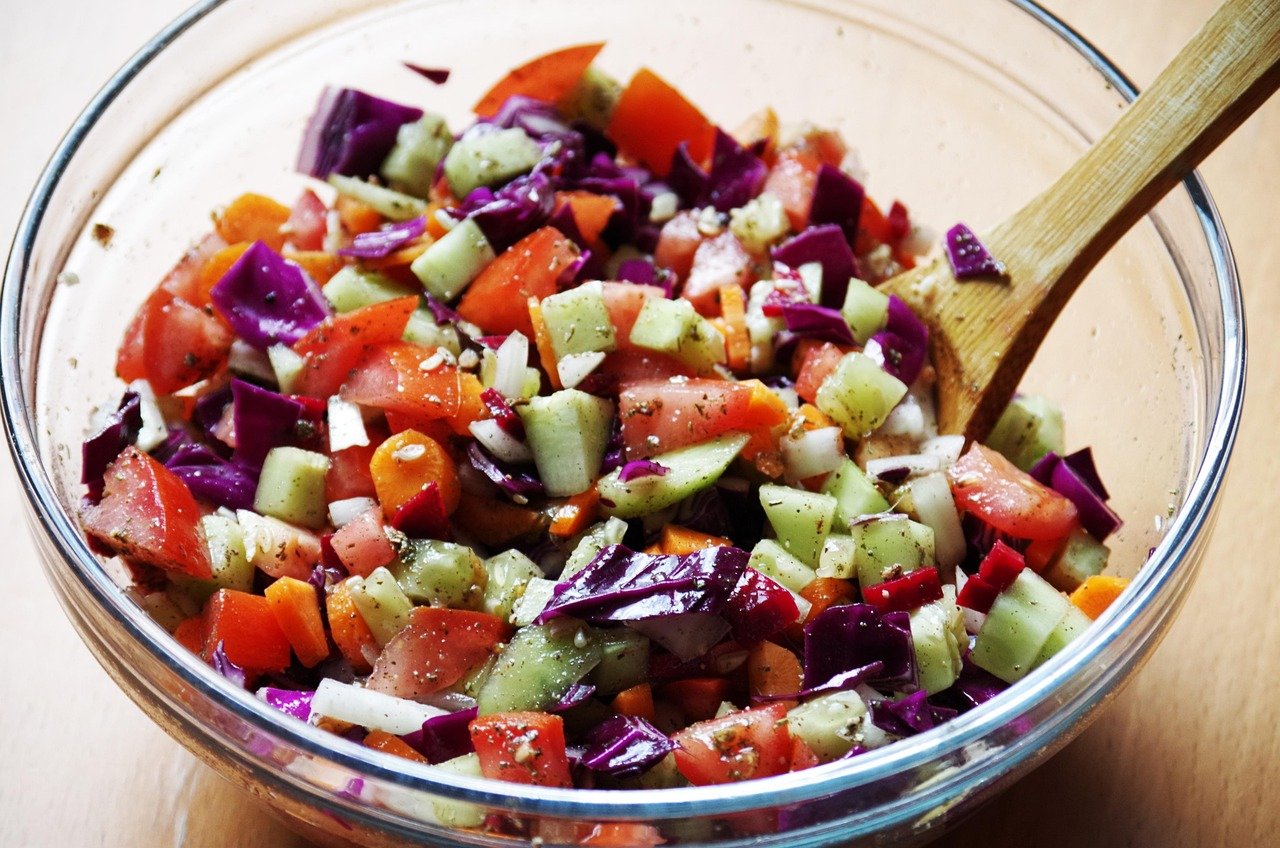
A filling salad usually has four components working together: something bulky and crisp, something dense and chewy, something creamy or rich, and something with acid. Skip one and the salad feels incomplete.
| Component | Job | Examples |
|---|---|---|
| Bulky and crisp | Volume and crunch | Romaine, cabbage, cucumber, carrot |
| Dense and chewy | Satiety and texture | Chickpeas, quinoa, roasted sweet potato, egg |
| Creamy or rich | Satisfaction | Avocado, feta, toasted nuts, tahini |
| Acid and salt | Brightness | Lemon, vinegar, pickled onion, olives |
Protein deserves its own note. A salad with four ounces of chicken, a cup of chickpeas, or two eggs will hold you far longer than the same bowl with a sprinkle of seeds. If you are ordering from a menu, check whether the protein is included or an add-on, and budget for it.
Fiber and fat both slow digestion, which is part of why a well-built salad keeps hunger away. That is also why a bowl of plain iceberg with fat-free dressing leaves you raiding the pantry an hour later. The dressing is not the enemy; a salad with no fat and no protein is just a snack pretending to be a meal.
Building a Short List of Go-To Spots
The people who consistently eat well are not better at searching. They have a short list.
Start by identifying three places within a comfortable radius: one fast and cheap, one reliable sit-down option, and one that is a little special. Save them. Note what each is good at. The cheap spot might have a great side salad and a mediocre entrée bowl. The sit-down place might make the best dressing in town but take forty minutes.
Then expand slowly, one new place at a time, and only when you have a reason. A new salad spot near the office, a recommendation from a coworker, a place that shows up repeatedly in local discussion. Broadening your rotation works the same way as exploring other neighborhood finds, whether that means hunting for the best salads nearby or a weekend search for the best thrift stores in your area: a little local knowledge beats a hundred generic results.
Common mistakes people make when building that list:
- Trusting a single five-star review instead of the overall pattern.
- Ignoring recent reviews, which reflect the current kitchen, not the one from two years ago.
- Assuming a place with “salad” in the name is better than a place that simply makes good salads.
- Never revisiting. Kitchens change, and so do menus.
Conclusion
Searching for salad near me is a small act with a real payoff when you do it with a little intention. Decide what job the salad needs to do, read the menu for specifics rather than adjectives, order dressing on the side, and build a short list of places you trust. The map on your phone will always show you what is close. The difference between a forgettable bowl and a lunch you look forward to is knowing what to look for once you get there.
Frequently Asked Questions
How do I find a good salad place near me?
Search for the category, then filter by what matters to you. Open the menu of each nearby result and check for specific ingredients, house-made dressings, and clear protein options. Recent reviews tell you more about current quality than the overall star rating, and customer photos show real portion sizes.
Why do takeout salads always seem to wilt?
Moisture and trapped heat are the culprits. Dressing soaks into the leaves, and a closed container traps steam. Order dressing on the side, ask for wet ingredients in a separate container, and choose places close enough that the trip is short. Assembling the salad yourself right before eating makes the biggest difference.
Is a salad bar cheaper than ordering off the menu?
It depends on how you build the bowl. Weight-based bars are a bargain when you load up on greens and vegetables, and expensive when you pile on cheese, nuts, and dense proteins. Compare the per-pound price against a fixed-price menu salad before you commit, and remember that a fixed-price container is often the better deal for a big appetite.
What should I add to a salad to make it a full meal?
Aim for a dense protein source plus something rich. Chicken, salmon, tofu, eggs, or beans provide staying power, while avocado, feta, olives, or toasted nuts add satisfaction. Grains like quinoa or farro help too. A salad with only vegetables and a light dressing will rarely hold you until the next meal.
Are salads actually healthy?
They can be, but the label does not guarantee it. A bowl of greens with vegetables, beans, and an olive-oil dressing is a balanced meal. A salad covered in creamy dressing, cheese, croutons, and fried toppings can carry more calories and sodium than a sandwich. The ingredients and the amount of dressing decide the outcome.
How often should I try a new salad spot?
Try one new place at a time and only when you have a reason, such as a recommendation or a menu that looks genuinely different from what you already have. Building a reliable rotation of three or four spots usually beats constant experimentation, and it makes the occasional new find feel like a treat rather than a gamble.