
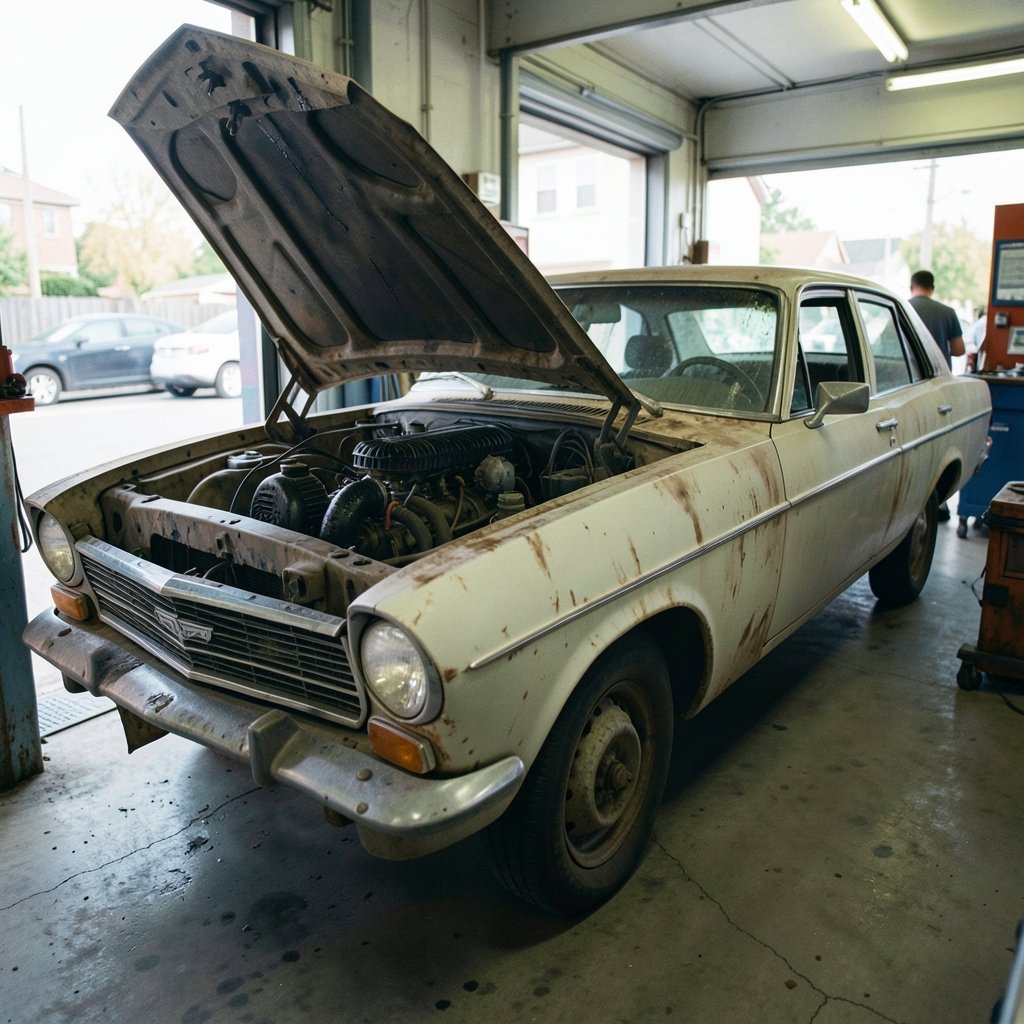
What happens when a turbo starts to fail? Often nothing dramatic at first. A faint whistle turns into a siren. Power fades on hills. A puff of blue smoke appears at startup. Then one day the car feels like it is dragging an anchor, and the driver faces a decision that can cost anywhere from a few hundred to several thousand dollars: repair the turbo charger, rebuild it, or replace it outright.
That decision is where most people get lost. Shops quote wildly different numbers. Forums offer contradictory advice. Some owners buy a cheap replacement online and watch it fail within a year. Others pay for a full new unit when a much smaller repair would have solved the problem. This article walks through how turbochargers fail, what each repair path actually involves, what to check before spending money, and the mistakes that quietly destroy replacement units.
How a Turbocharger Works and Why It Fails
A turbocharger is an exhaust-driven centrifugal compressor. Exhaust gas spins a turbine wheel, which shares a shaft with a compressor wheel on the intake side. The compressor forces more air into the engine, and more air means more fuel can be burned, which means more power from a smaller engine. The principle traces back to Alfred Büchi, whose Swiss patent for exhaust-driven charging dates to the mid-1900s first decade, though sources disagree on whether it was filed in 1905 or granted in 1906.
The key detail for repair decisions is that both wheels spin on a thin film of oil, at very high speed, inside a housing with tolerances measured in fractions of a millimeter. Small turbochargers on modern downsized engines can spin well past 100,000 rpm, with some figures cited above 150,000 rpm depending on the model. At those speeds, the oil film is not a luxury. It is the entire bearing system.
Failures cluster around a few causes:
- Oil starvation or oil coking. Dirty oil, low oil level, or a hot shutdown that bakes oil inside the bearing housing all starve the bearings. Coking from repeated hot shutdowns is widely cited as a leading killer.
- Foreign object damage. Debris from the engine, a failed air filter, or a broken piece of piston ring can strike a wheel spinning at triple-digit thousands of rpm.
- Overspeed. A stuck wastegate, a failed boost control solenoid, or a tuning error can push the shaft past its design limit.
- Worn bearings and seals. Age and heat take their toll, and worn seals let oil into the intake or exhaust.
No single authoritative global statistic on turbo failure rates is easy to pin down, so treat any “X percent of turbos fail” claim with suspicion. The failure modes themselves, however, are well established in workshop practice.
Diagnosing the Problem Before You Spend Anything
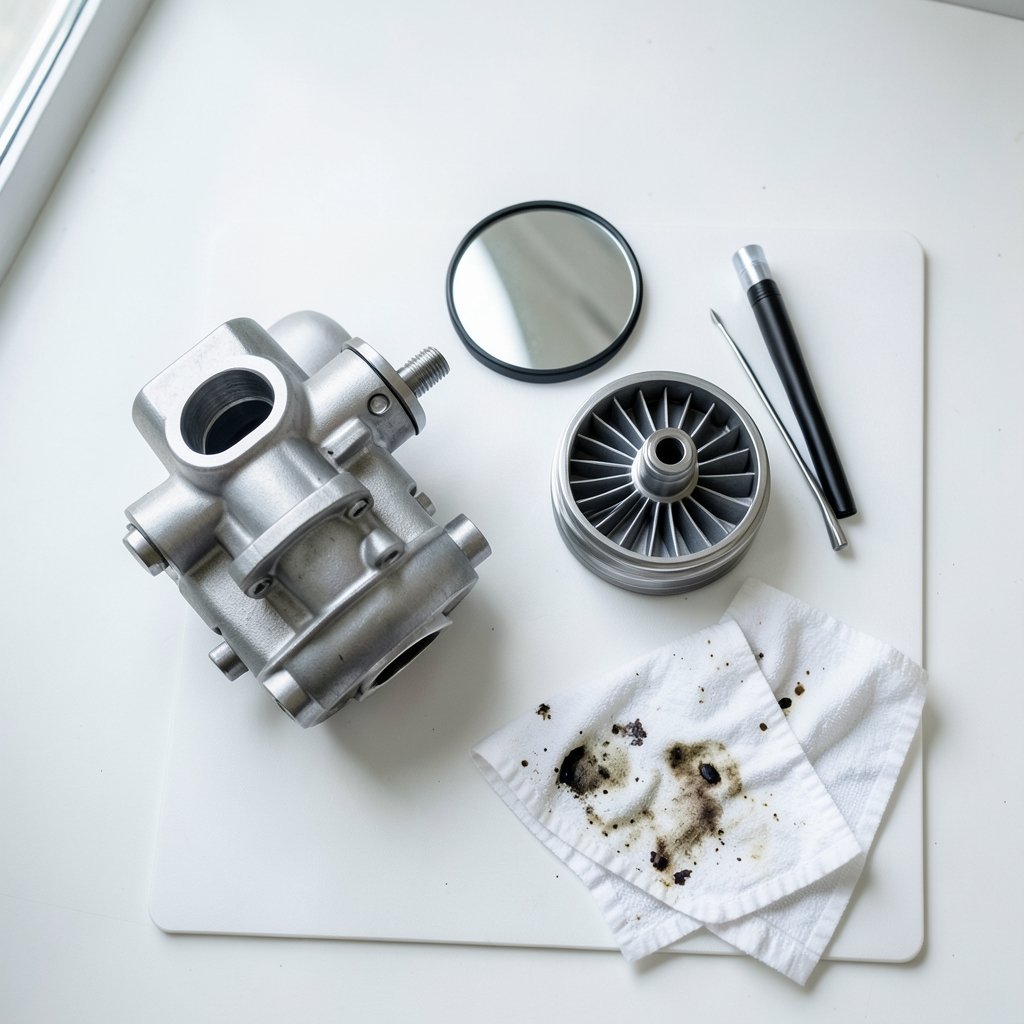
The most expensive mistake in turbo repair is replacing the turbo when the turbo was never the problem. A boost leak, a clogged intercooler, a failing diverter valve, a bad mass airflow sensor, or a restricted exhaust can all mimic turbo failure. So can a worn engine with excessive blow-by pressurizing the crankcase.
A proper diagnosis includes checking boost pressure against specification, inspecting the compressor wheel through the inlet for contact marks or missing fins, checking shaft play by hand (in and out play is worse than slight side-to-side play), and looking for oil in the charge pipes. Blue smoke at idle that clears under load often points to seal wear. Blue smoke under boost can point to crankcase ventilation problems instead.
One practical tip: pull the intake hose and look at the compressor wheel before authorizing any work. A wheel with bent or chipped fins has eaten something. A wheel that looks perfect but has heavy shaft play points to bearings. A clean wheel with no play but no boost usually means the problem lives elsewhere, and the money should go toward finding it.
It is also worth ruling out the simpler electrical and mechanical faults that owners misattribute to the turbo. A phone that will not charge and a boost gauge that will not move have more in common than people think: both reward methodical diagnosis over parts-swapping. The same discipline applies when sorting out wireless charger alignment problems your phone wont charge or chasing a boost fault that turns out to be a five-dollar vacuum line.
The Three Repair Paths Compared
Once the turbo itself is confirmed as the fault, there are three realistic paths. They differ in cost, downtime, and risk.
| Path | What It Involves | Best For | Main Risk |
|---|---|---|---|
| Cartridge (CHRA) replacement | Swap the center housing rotating assembly into the existing housings | Damaged wheels or bearings with intact housings | Debris left in housings or oil lines |
| Full rebuild or remanufacture | Complete strip-down, new bearings, seals, balancing, new or machined housings | Heavily worn or contaminated units | Quality varies widely between rebuilders |
| New or OEM remanufactured unit | Complete replacement from the manufacturer or an OEM supplier | Cracked housings, rare units, warranty-sensitive cars | Highest cost |
Cartridge replacement is the middle path most independent shops prefer. The center housing rotating assembly, often called a CHRA, arrives pre-assembled and balanced. The technician transfers the compressor and turbine housings, which saves money when those castings are still good. The catch is that any debris trapped in the old housings or oil feed line will destroy the new cartridge quickly.
Full rebuilds make sense when housings are scored or cracked. Quality is the wild card. Rebuilt units should be spin-balanced, and the balancing step is where cheap rebuilders cut corners. Standards for turbo remanufacture are not harmonized internationally, so a “remanufactured” label means different things from different sellers.
New or OEM remanufactured units cost the most but carry the strongest warranty and the least installation risk. For a daily driver under warranty, or a vehicle where a second failure would be catastrophic, this is often the rational choice even when it stings.
What a Proper Turbo Replacement Actually Requires
Bolting on a new turbo is the easy part. The work that determines whether it survives is everything around it. Skipping these steps is the single most common reason replacement turbos fail within months.
- Find the root cause of the original failure. If the old turbo died from oil starvation, the oil system needs attention. If it died from debris, find the debris source.
- Replace or thoroughly clean the oil feed line. Coked oil lines are a classic killer. Many manufacturers specify a new feed line with every turbo.
- Flush the intercooler and charge pipes. A failed turbo can shed metal and oil into the intake tract, and that debris will find the new compressor.
- Prime the oil system before first start. Cranking the engine without ignition or fuel until oil pressure builds protects the bearings during the first critical seconds.
- Check and set boost control components. Wastegate actuators, boost solenoids, and sensors should be verified, not assumed good.
- Follow torque specs and use new gaskets and hardware. Hot, vibrating, high-pressure joints do not forgive improvisation.
- Change the oil and filter, and verify oil pressure afterward. Then check for leaks after the first heat cycle.
Safety matters here too. Turbo housings get hot enough to burn skin, and the rotating assembly stores real energy. Repairs require the engine off, a full cool-down, and correct torque values. This is not a job for improvised tools or guesswork.
The same principle of fixing the cause rather than the symptom shows up everywhere in repair work. A motherboard that dies from a failing power supply will kill its replacement too, which is why a careful technician asks when a dead board is worth fixing before ordering parts. Turbo work rewards the same mindset.
Common Mistakes That Kill Replacement Turbos
Plenty of turbos fail twice, and almost always for preventable reasons. Watch for these:
- Reusing the old oil feed line. It looks fine. It usually is not. Replace it.
- Skipping the intercooler flush. Debris hides in the fins and migrates to the new compressor.
- Using the wrong oil or stretching oil change intervals. Turbo bearings live on clean oil with the right viscosity and specification.
- Hot shutdowns after hard driving. Idling for a minute or two before shutdown lets the turbo cool and keeps oil from coking in the bearing housing.
- Cheap no-name units with no balancing documentation. A bargain turbo that fails in eight months is not a bargain.
- Ignoring the tune. A modified engine pushing boost beyond the turbo’s map will shorten its life no matter how good the unit is.
- Neglecting the air filter. A restricted or damaged filter lets grit straight into the compressor.
Owners who want their electronics to last apply the same care: they fix small faults early, whether that means a TOTP clock drift fix when 2FA codes fail or tracking down why a charger behaves oddly. The habit of addressing root causes translates directly to mechanical reliability.
When Repair Is Not Worth It
Sometimes the honest answer is that the vehicle does not justify the repair. A turbo replacement on an older car with a tired engine, a slipping transmission, and rust in the sills may cost more than the car is worth. A cracked turbine housing on a rare unit may push the price toward new-unit territory. A second failure within a short window suggests the root cause was never found, and continuing to throw turbos at the problem is a losing game.
There is also an emissions angle. On modern diesels, a failing turbo can affect particulate and NOx performance, and a faulty unit can fail emissions inspections in many jurisdictions. Local rules change, so owners should confirm current requirements where they live rather than relying on older advice.
Conclusion
Repairing a turbo charger is rarely just a turbo swap. The unit itself is the visible casualty, but the real story usually involves oil quality, debris, heat, or a boost control fault that went unnoticed. The owners who come out ahead are the ones who insist on a proper diagnosis, choose a repair path that matches the condition of the housings, and treat the oil feed line, intercooler, and priming procedure as non-negotiable parts of the job. A turbo replaced with those steps done correctly can last the life of the car. One installed in a hurry, on top of an unfixed root cause, is a countdown timer. Spend the diagnostic hour. Replace the cheap parts around the expensive one. The boost will be back, and it will stay back.
FAQ
How long does a turbo repair take?
A cartridge or full unit replacement typically takes a shop several hours to a full day, depending on access and how much surrounding work is needed. Rebuilds add turnaround time because the unit is usually sent out for machining and balancing. Vehicles with tightly packed engine bays take longer.
Can a failing turbo be repaired without removing it?
Rarely. Some actuator and boost control faults can be fixed in place, but bearing, seal, and wheel damage require removal. Attempting internal repairs on the car is not practical and risks debris entering the engine.
Is it safe to drive with a failing turbo?
It depends on the failure. A slight whistle with normal boost may be drivable for a short time. Blue smoke, heavy oil consumption, or a wheel contacting the housing means stop driving. A turbo that sheds metal can send debris into the engine and turn a moderate repair into a full rebuild.
What causes a turbo to fail right after replacement?
Almost always an unfixed root cause: a clogged oil feed line, debris left in the intercooler, unprimed oil at first start, or a boost control fault that caused the original failure. Replacement turbos that fail early are usually victims of installation shortcuts, not defective parts.
How much does turbo repair cost?
Costs vary enormously by vehicle, region, and repair path. A cartridge swap is generally the least expensive full repair, a rebuild sits in the middle, and a new OEM unit is the most expensive. Diagnosis, oil line replacement, and intercooler cleaning add to any path. Get itemized quotes rather than a single lump figure.
Can I prevent turbo failure?
Largely, yes. Use the specified oil and change it on schedule, replace the air filter, let the engine idle briefly after hard driving before shutdown, and fix boost and oil pressure faults promptly. Most turbo failures trace back to oil condition, heat, or debris, and all three are manageable with routine care.



