
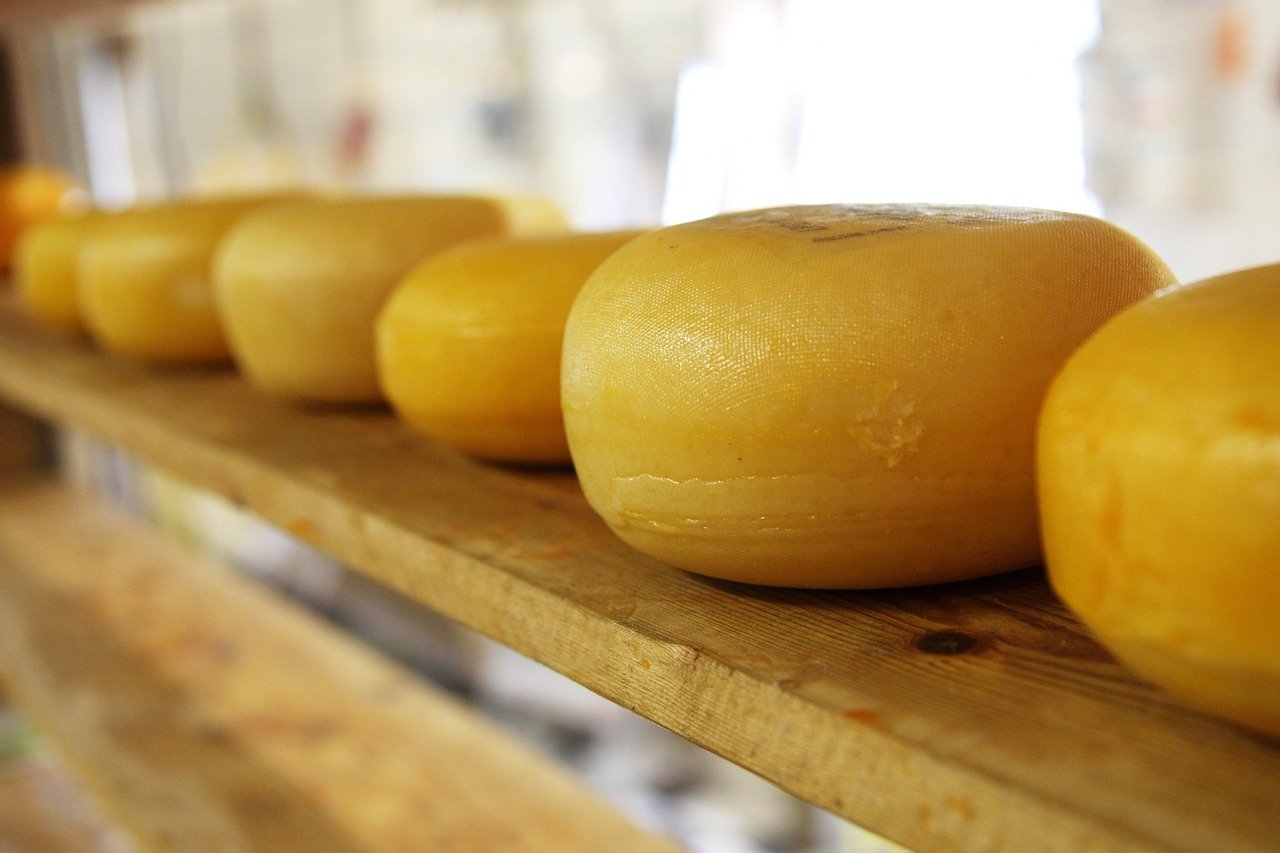
What do you picture when someone says “cheese wheel”? A giant golden disc rolling down a grassy hill? A rustic round of Brie on a wooden board? A 40-kilogram cylinder of Parmigiano-Reggiano being cracked open with a knife? All three are correct, and that is exactly why the term confuses so many shoppers. The phrase has no single official definition. It describes a shape, a size category, and a whole set of cheesemaking traditions depending on where you stand.
This guide sorts out the real meanings, the practical details that matter when you buy or serve one, and the mistakes that trip up home cooks. By the end, a cheese wheel will be a known quantity rather than a vague, romantic idea.
What Actually Counts as a Cheese Wheel?
In everyday English, a cheese wheel is a whole, uncut cylindrical cheese. The term is descriptive, not a protected name, so nobody owns it and nobody enforces it. That flexibility explains the confusion. A small round of Camembert and a massive wheel of Comté both qualify, even though they share almost nothing else.
Size is where things get interesting. In British cheesemaking tradition, a “wheel” tends to mean a large cylindrical cheese, while a “truckle” is a smaller cylindrical one, often a cloth-bound Cheddar. This usage is not standardized, though, and producers use the words loosely. Some British makers call a 20-kilogram cylinder a wheel and a 5-kilogram one a truckle; others swap the terms freely. If a label matters to you, check the weight rather than trusting the word.
A large wheel is a preservation technique as much as a style choice. A thick cylinder of hard cheese loses moisture slowly, so it can age for a long time without the interior drying out. This is why the largest wheels in the world tend to be aged cheeses: Parmigiano-Reggiano, Grana Padano, Comté, Beaufort, and aged Gouda. Soft wheels exist too, but they are usually small and sold young.
The Famous Wheels and What They Weigh
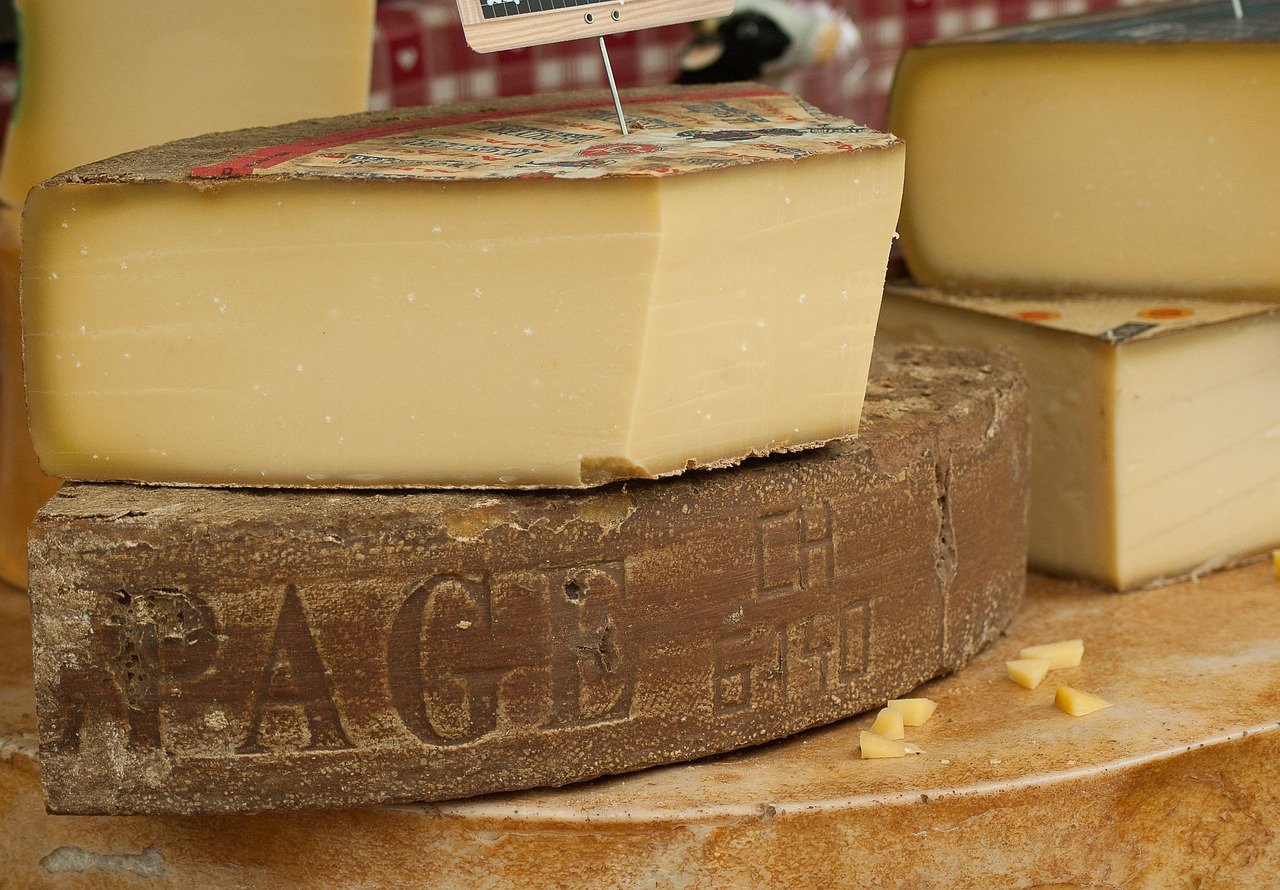
The most recognizable cheese wheel in the world is the Parmigiano-Reggiano forma. Official production rules specify a cylindrical shape roughly 35 to 45 cm in diameter and 20 to 26 cm high, weighing about 30 to 40 kg. That is a serious piece of dairy. Watching a cheese monger open one with a special almond-shaped knife is a genuine spectacle, and the ritual exists for a reason: the wheel’s structure is tested by the way it splits.
Comté, from the Jura mountains of France, is made in large wheels called meules, typically weighing about 35 to 45 kg and aged in caves. Beaufort follows a similar pattern. These are not novelty sizes. The wheel format is written into the rules that govern how these cheeses are made and protected.
Many of these large-wheel cheeses carry EU geographical indication protection, either PDO (protected designation of origin) or PGI (protected geographical indication). The framework dates from EU Regulation 1151/2012, in force since 2013. In plain terms, a cheese labeled Parmigiano-Reggiano must be made in a defined area under defined rules. The wheel shape is part of that identity, not an accident.
| Cheese | Typical wheel weight | Texture | Common use |
|---|---|---|---|
| Parmigiano-Reggiano | 30 to 40 kg | Hard, granular, crumbly | Grating, shaving, snacking |
| Comté | 35 to 45 kg | Firm, supple, slightly sweet | Melting, fondue, boards |
| Grana Padano | 24 to 40 kg | Hard, milder than Parmigiano | Grating, cooking |
| Aged Gouda | 10 to 20 kg | Dense, caramel-like | Snacking, pairing |
| Brie or Camembert | 0.25 to 3 kg | Soft, bloomy rind | Baking, boards |
Weights vary by producer and by the specific specification in force, so treat the table as a guide rather than a guarantee.
Soft Wheels: The Other End of the Spectrum
In the United States, “cheese wheel” often means something much smaller: a wheel of Brie or Camembert, or a large display wheel of American-style cheese used for cutting at a deli counter. The soft, bloomy-rind wheel has become the default party centerpiece, and for good reason. A whole Brie bakes beautifully, cuts into wedges that look generous, and needs no special equipment.
Soft wheels carry a real food-safety consideration, though. Large wheels are frequently cut and wrapped for retail, and cross-contamination is a genuine concern. Soft mould-ripened wheels present particular listeria risks, especially for pregnant people and people with weakened immune systems. Public-health guidance generally advises these groups to avoid soft mould-ripened cheeses unless they are thoroughly cooked. If you are serving a crowd and unsure about a guest’s health status, a baked Brie or a hard aged cheese is the safer bet.
How to Buy a Cheese Wheel Without Wasting Money
Buying a whole wheel is a commitment. A 40-kilogram Parmigiano is not a casual purchase, and even a 2-kilogram Brie is a lot of cheese for a household of two. Here is what actually works in practice.
Match the wheel to the occasion. A whole soft wheel for a party makes sense. A whole hard wheel for home use almost never does unless you are splitting it with friends or running a restaurant. Ask the counter to cut a wedge from a larger wheel instead. You get the same cheese with none of the storage problem.
Look at the rind. On a natural-rind wheel, the surface should be intact, dry, and free of cracks, weepy patches, or fuzzy spots that are not supposed to be there. A little surface mold on a natural rind is normal and often brushed away; a wheel that smells of ammonia or looks slimy is not.
Ask when it was cut. Pre-cut wedges degrade fast. If the shop cannot tell you when the wheel was opened, assume it has been sitting a while. Whole small wheels are usually the freshest option because the rind protects the paste until the moment of cutting.
Check the weight against the price. Large-wheel cheeses are priced by weight, and a wheel that seems cheap may simply be younger or smaller. Age drives flavor and cost more than size does.
Buy from a shop that turns its stock. High-volume counters open wheels frequently, which means fresher cuts. A wheel that has been on display for weeks under plastic is a poor buy no matter how good the cheese was on day one.
Cutting and Storing a Wheel: The Practical Bits
Cutting a wheel correctly is not fussiness. It protects texture and keeps the cheese from drying out.
- Start from the center for soft wheels. Cut wedges like a pie so each piece gets an equal share of rind and paste. Cutting across a soft wheel leaves exposed surfaces that dry out fast.
- Cut hard wheels into wedges from the center outward. For a large hard wheel, score the top, then work around it in sections rather than trying to slice straight through.
- Use a wire or a long knife for soft cheese. A wire cutter gives clean edges and avoids dragging the paste.
- Wrap the cut face tightly. Press plastic wrap or wax paper directly against the exposed paste, then wrap the whole piece. Air is the enemy.
- Store hard wheels cool and dry. The refrigerator works, but let the cheese come to room temperature before serving so the fat softens and the flavor opens up.
- Keep soft wheels cold and short-term. A cut Brie lasts only a few days in the fridge before the rind turns ammoniated.
A common mistake is wrapping a cut wheel in foil and leaving it in the fridge for a month. Foil traps moisture, encourages surface mold, and does nothing to stop the cheese from drying at the cut face. Wax paper or cheese paper with a tight inner wrap works far better.
If you are building a cheese board and want the pieces to look intentional, cut a mix of shapes: wedges from a hard wheel, rounds from a soft one, and a few shards for texture. The visual variety reads as abundance, and guests take smaller, more balanced portions.
The Cheese Wheel in Culture and Competition
The most famous cheese wheel in the world may be the one that gets chased down a hill in Gloucestershire. The Cooper’s Hill Cheese-Rolling and Wake at Brockworth uses a round Double Gloucester cheese, and the event is traditionally held on the Spring Bank Holiday Monday in late May. Competitors hurl themselves down a steep slope after the wheel, which reaches speeds no human can match. The winner is whoever gets to the bottom first, and the cheese is usually the prize. The exact origin of the tradition is uncertain, which only adds to its charm.
The phrase also shows up figuratively. People talk about “a big cheese” to mean an important person, and folklore and nursery rhymes are full of cheese imagery, though the famous “the cheese stands alone” line from “The Farmer in the Dell” refers to a piece of cheese, not a wheel. Idiom usage is informal and inconsistent, so do not read too much into it.
For anyone who loves the mechanical side of kitchen gear as much as the dairy side, the same obsession with getting the details right shows up elsewhere. A stuck wheel on a robot vacuum is a small problem with a clear fix, much like a badly wrapped cheese wheel: robot vacuum wheel stuck error it happens fix it fast. And if you are shopping for a plant-based alternative to serve alongside a cheese board, the same principle applies: best vegan cheese pick one that actually melts rather than one that turns to rubber. Enthusiasts who compare specs before buying anything tend to do the same with gaming hardware, which is why a guide to the best racing wheels 2026 actually matters before you buy reads a lot like cheese buying advice: know the size, know the use case, and do not trust the label alone.
Common Mistakes People Make
The biggest error is assuming “wheel” means “small round cheese.” It does not. A wheel can weigh 40 kilograms or 250 grams, and the word tells you nothing about texture, age, or milk type.
The second mistake is buying a whole wheel for a small household. Hard wheels keep well, but a whole one is a lot of cheese to get through before the cut face dries out. Split it or buy a wedge.
The third is storing cut cheese badly. Plastic wrap pressed tight against the paste is fine for a few days; a loose bag in the fridge door is not. Cheese needs to breathe slightly but not dry out, which is why cheese paper exists.
The fourth is serving cold cheese. A hard wheel straight from the fridge tastes like nothing. Give it 30 to 60 minutes on the counter and the difference is dramatic.
The fifth is ignoring food-safety guidance for soft mould-ripened wheels. If you are pregnant or immunocompromised, cook soft cheese thoroughly or choose a hard aged wheel instead.
Conclusion
A cheese wheel is less a single thing than a family of things: a 40-kilogram Parmigiano forma, a cave-aged Comté meule, a party-sized Brie, a Double Gloucester tumbling down a hill. The word describes a shape and a tradition, not a fixed product. Once you know the size ranges, the protection rules behind the famous names, and the practical rules for cutting and storing, buying one stops being intimidating. Match the wheel to the occasion, buy from a shop that moves its stock, wrap the cut face tightly, and let the cheese warm up before serving. Do that, and the wheel earns its place at the center of the table.
Frequently Asked Questions
What is a cheese wheel?
A cheese wheel is a whole, uncut cylindrical cheese. The term is descriptive rather than official, so it covers everything from a small round of Brie to a 40-kilogram wheel of Parmigiano-Reggiano or Comté.
How much does a cheese wheel weigh?
It depends entirely on the type. Parmigiano-Reggiano wheels typically weigh about 30 to 40 kg, Comté wheels about 35 to 45 kg, and soft wheels like Brie or Camembert usually range from 0.25 to 3 kg. Small truckles can weigh just a few kilograms.
What is the difference between a cheese wheel and a truckle?
In British tradition, a wheel is generally a large cylindrical cheese and a truckle is a smaller one, often cloth-bound Cheddar. The usage is not standardized, though, and producers use the terms loosely, so check the weight rather than the label.
Can you eat the rind of a cheese wheel?
On most natural-rind cheeses, yes. The rind is edible, though some people trim it for texture or flavor reasons. On cloth-bound or waxed wheels, the coating itself is not meant to be eaten, but the cheese just beneath it is.
How long does a cut cheese wheel last?
Hard wheels keep for weeks if the cut face is wrapped tightly against the paste and stored cool. Soft mould-ripened wheels are far shorter-lived, often just a few days after cutting before the rind turns ammoniated and the flavor sharpens unpleasantly.
Why do they roll a cheese wheel down a hill in England?
The Cooper’s Hill Cheese-Rolling and Wake at Brockworth uses a round Double Gloucester cheese and is traditionally held on the Spring Bank Holiday Monday in late May. Competitors chase the wheel down a steep slope, and the winner takes the cheese. The exact origin of the tradition is uncertain.



