
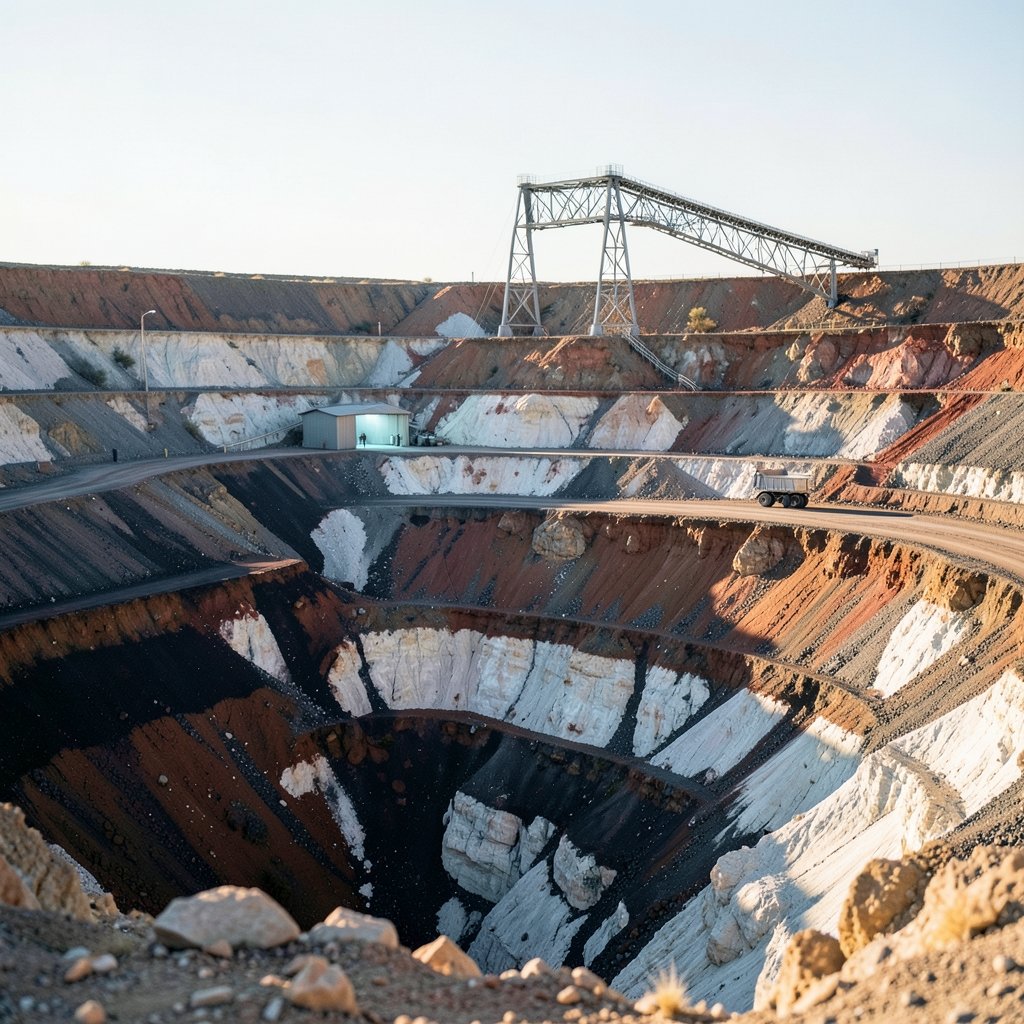
What does someone actually mean when they type “SW iron ore” into a search bar? That question matters more than it first appears, because the phrase is not a standard industry term. It does not appear in commodity price benchmarks, mining glossaries, or trade statistics. Yet people search it every month, and they usually want one of three things: iron ore from the southwestern United States, a specific project or company abbreviated “SW,” or a product grade they heard about somewhere. This article sorts through those possibilities, explains the geology and economics behind southwestern US iron ore, and gives buyers, students, and curious readers a practical way to interpret the term when they encounter it.
Why “SW Iron Ore” Is Not a Standard Industry Term
Start with a simple reality check. Global iron ore trading runs on precise labels: 62% Fe fines, 65% Fe concentrate, lump, pellets, and specific brand names tied to mines in Australia, Brazil, South Africa, and Canada. Traders, steel mills, and index providers use those labels because a one-percent difference in iron content changes the price. “SW iron ore” fits none of these categories.
That ambiguity is the first thing to understand. When a term is not standardized, it usually comes from one of four places:
- A regional shorthand for ore from the southwestern United States.
- A company or project abbreviation, where “SW” might stand for initials, a property name, or a ticker.
- A typo or transcription error for a different product or place name.
- A local or historical usage that never entered formal trade vocabulary.
Anyone researching the term should confirm which meaning applies before relying on any number, price, or production figure attached to it. That single step prevents most of the confusion that surrounds this phrase.
The Most Likely Meaning: Iron Ore From the Southwestern US
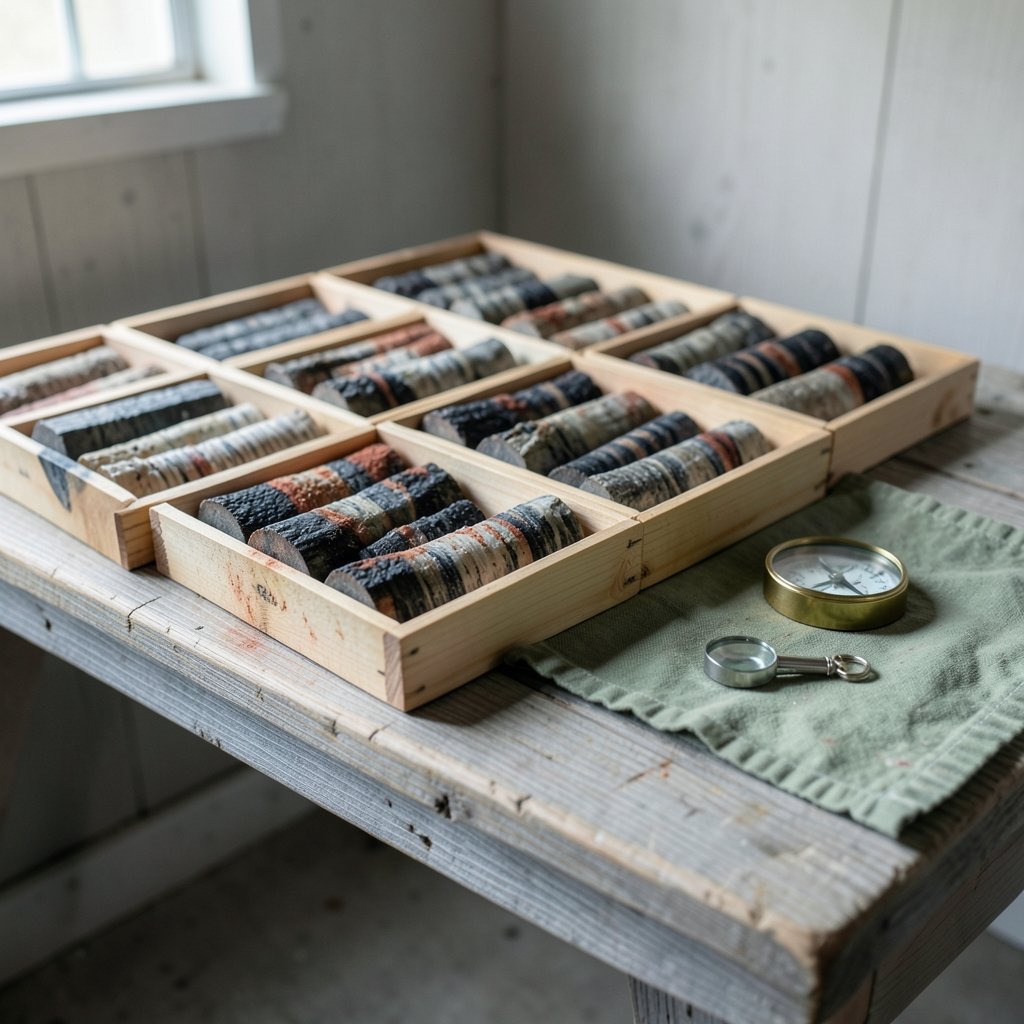
The most defensible reading is geographic. The southwestern United States, meaning Utah, Nevada, Arizona, California, and New Mexico, does contain iron ore deposits, and some have been mined. The scale, however, is modest compared with the American iron ranges that dominate domestic production.
Where US Iron Ore Actually Comes From
United States iron ore production is concentrated in the Great Lakes region, chiefly the Mesabi Range in Minnesota and the Marquette Range in Michigan. Those districts supply the vast majority of domestic ore, most of it destined for integrated steelmaking. National output has run in the range of roughly 40 to 50 million metric tons per year in recent editions of federal mineral summaries, though the exact figure shifts annually with steel demand and trade policy.
Against that backdrop, southwestern deposits are minor players. They exist, they have produced ore, and some remain of interest, but they do not move national numbers. Readers who assume “SW iron ore” refers to a major supply source should recalibrate that expectation early.
Utah’s Iron Springs District
The best-documented southwestern iron district sits in Iron County, Utah, near Cedar City. The Iron Springs district contains magnetite-bearing deposits associated with igneous intrusions, and it has been mined intermittently over many decades. Historically, ore from this area fed steel and iron operations in the region, including the Columbia Steel works near Provo.
Three practical points follow from that history:
- The district is real and geologically significant, not a footnote.
- Its output has been intermittent, rising and falling with the fortunes of local steelmaking.
- Current status requires verification with state geological surveys or operator filings, because small operations open, idle, and restart on short cycles.
Nevada, Arizona, and California Occurrences
Nevada and California host smaller magnetite and specularite occurrences, many in the Great Basin. Exploration has tested several of these for iron, and some magnetite bodies carry vanadium or titanium as byproducts, which can change the economics. Most, however, are small, remote, or uneconomic at prevailing prices. Arizona has iron occurrences as well, though its mining identity is tied far more to copper.
The pattern across the Southwest is consistent: numerous showings, a handful of historical producers, and very few operations of lasting scale.
Hematite, Magnetite, and Why the Mineral Matters
Iron ore is rock from which metallic iron can be extracted economically. Two minerals dominate: hematite (Fe₂O₃), which is reddish and typically around 70 percent iron by weight in pure form, and magnetite (Fe₃O₄), which is black, magnetic, and theoretically about 72 percent iron.
That theoretical content rarely survives contact with real rock. Actual ore grades depend on how much gangue, meaning waste minerals like silica, alumina, and phosphorus, sits alongside the iron. Southwestern magnetite deposits often require beneficiation and pelletizing to become useful feed, which adds capital and energy costs. A deposit that looks rich in the ground can turn marginal once processing enters the calculation.
This is one of the most common mistakes people make when reading about small iron projects. A headline grade is not a delivered product. What matters is the concentrate grade after processing, the impurities left behind, and the distance to a customer.
How Iron Ore Is Priced, and Why Location Hurts
Iron ore is a globally priced commodity. Benchmark reference prices, such as 62% Fe fines delivered to China, set the tone for contracts worldwide. A small southwestern US operation is therefore a price-taker: it cannot set a premium just because its ore is domestic.
Worse, location cuts both ways. Southwestern deposits sit far from the Great Lakes steel belt and far from tidewater export terminals. That means rail freight, trucking, or both, and freight can erase the margin on a low-grade product. The economics favor operations that either serve a nearby customer or produce a high-value specialty product.
Common Uses Beyond Steelmaking
Steel is the dominant destination for iron ore, but not the only one. Iron products also go into:
| Use | What it involves |
|---|---|
| Cement production | Iron-bearing additives adjust kiln chemistry |
| Heavy media separation | Fine magnetite slurry separates coal and ore |
| Vanadium and titanium recovery | Some magnetite deposits carry these byproducts |
| Pigments and specialty iron | Hematite feeds certain industrial applications |
For a small southwestern deposit, these niche markets can matter more than the steel trade. A mine that cannot compete on tonnage to a blast furnace might still supply a cement plant or a coal preparation facility within trucking distance. Buyers sourcing specialty iron sometimes find that direct inquiry to small operators works better than searching commodity indexes, much the way shoppers comparing niche supplement products rely on careful label reading rather than broad category pages, as seen in guides to the best iron tablets for womens.
Regulation: The Rules That Shape Southwestern Mining
Hardrock mining on federal land in the United States operates under the General Mining Law of 1872, a framework older than the states themselves in some cases. Claim staking, maintenance, and patenting all trace back to that law. Surface management on Bureau of Land Management acreage adds another layer through regulations that govern exploration notices and plans of operation.
For anyone evaluating a southwestern iron project, three questions cut through the paperwork:
- Who owns the surface and the minerals? Split estate situations are common in the West.
- What permits are required, and at what stage? Exploration notices are lighter than full plans of operation.
- What reclamation obligations apply? Bonding requirements can sink a marginal project before ore ever moves.
These are not bureaucratic footnotes. They determine whether a deposit can be developed at all, and they explain why many southwestern iron showings have never produced a ton of saleable ore.
Practical Tips for Evaluating an “SW Iron Ore” Claim
People encounter this term in pitch decks, forum posts, historical mining records, and casual conversation. A few habits separate careful readers from credulous ones.
Confirm the definition first. Ask what “SW” stands for. If the answer is vague, treat every number that follows with suspicion.
Check the grade basis. Is the quoted figure a head grade in the ground or a concentrate grade after processing? The gap between them can be enormous.
Look for a named district. Iron Springs, Palisade Mesa, and similar place names can be checked against state geological survey publications. Unnamed “southwest deposits” usually mean someone is generalizing.
Ask about infrastructure. Distance to rail, power, water, and a customer decides more marginal projects than geology does.
Distinguish historical from current. A mine that operated in 1955 tells you the ore exists. It tells you nothing about whether the operation works today.
Watch for byproduct claims. Vanadium and titanium credits are real in some magnetite bodies, but they require separate recovery circuits and separate markets. Treat them as upside, not base case.
A related lesson applies to industrial computing decisions, where mixed infrastructure sounds simple until integration costs appear; the same skepticism about tidy labels serves readers well when evaluating hybrid cloud mixed environments that actually work. Labels promise more than systems deliver, in mining as in IT.
What the Term Probably Is Not
It helps to rule things out. “SW iron ore” is almost certainly not:
- A standard traded brand like Pilbara blend or Carajás fines.
- A published benchmark used in contract settlements.
- A grade classification recognized by any standards body.
- A guaranteed indicator of a specific company, despite the abbreviation’s resemblance to a ticker.
Readers who find the term attached to an investment offer should ask for the underlying property name, the geological report, and the permit status. Legitimate projects answer those questions readily. Vague ones deflect.
Conclusion
“SW iron ore” is best understood as shorthand rather than specification. In its most defensible reading, it points to iron ore from the southwestern United States, a region with genuine deposits, a documented history in Utah’s Iron Springs district, and scattered magnetite occurrences across Nevada, Arizona, and California. None of that adds up to a major supply source. American iron ore remains a Great Lakes story, and global prices set the terms for everyone else.
The practical takeaway is simple. When the term appears, confirm what “SW” denotes, check whether grades are in-ground or delivered, verify current status with state geological sources, and weigh infrastructure before geology. Those four steps turn a fuzzy phrase into something a reader can actually evaluate, whether the context is a historical record, a classroom discussion, or a project pitch.
Frequently Asked Questions
What does “SW iron ore” stand for?
The phrase has no official definition. Most likely it means iron ore from the southwestern United States, particularly Utah, Nevada, Arizona, and California. It could also be a company or project abbreviation, or a typo. Because no standards body recognizes the term, anyone using it should clarify which meaning applies.
Is there iron mining in the southwestern United States?
Yes, though at a small scale. Utah’s Iron Springs district near Cedar City has produced magnetite ore intermittently for decades. Nevada and California host smaller magnetite and specularite occurrences, many of them uneconomic. The Southwest is a minor iron producer compared with Minnesota and Michigan, which dominate domestic output.
How much iron ore does the United States produce?
National production has run in the range of roughly 40 to 50 million metric tons per year in recent federal mineral summaries, with the exact figure changing annually. Nearly all of it comes from the Great Lakes region, chiefly the Mesabi Range in Minnesota and the Marquette Range in Michigan.
Why is southwestern iron ore hard to sell?
Three reasons dominate. First, iron ore is priced globally, so small producers are price-takers. Second, southwestern deposits sit far from steel mills and export terminals, so freight eats margins. Third, many deposits need beneficiation and pelletizing before sale, adding capital and energy costs that larger operations absorb more easily.
What is the difference between hematite and magnetite?
Hematite (Fe₂O₃) is reddish and about 70 percent iron in pure form. Magnetite (Fe₃O₄) is black, magnetic, and about 72 percent iron theoretically. Magnetite often requires more processing but can produce high-grade concentrate, and some deposits carry valuable vanadium or titanium byproducts that affect project economics.
What law governs mining claims on federal land in the Southwest?
The General Mining Law of 1872 provides the foundational framework for staking and maintaining hardrock mining claims on federal land. Surface management regulations add requirements for exploration notices and plans of operation on Bureau of Land Management acreage, along with reclamation and bonding obligations that can determine whether a small project proceeds.



