
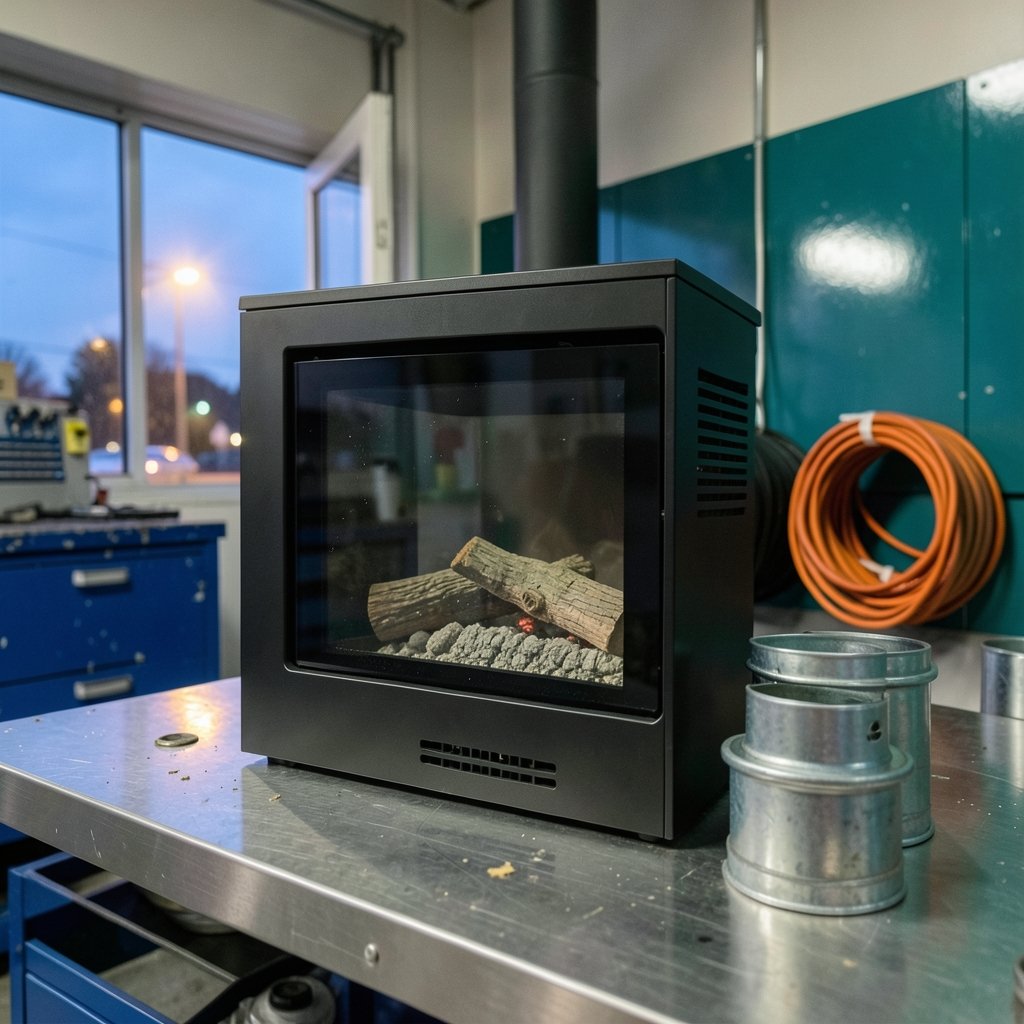
What if the warmest room in your house could also be the one with the cleanest air? That’s the promise behind a direct vent gas fireplace, a sealed-combustion appliance that has quietly replaced the old open-flame hearth in millions of modern homes. But the name hides more than it reveals. “Direct vent” tells you almost nothing about how the unit breathes, why it costs more than a vent-free box, or why some installers refuse to put one where you want it. This guide unpacks the mechanics, the code rules, the real-world quirks, and the mistakes that trip up even careful homeowners.
What Makes a Fireplace “Direct Vent”?
A direct vent fireplace is a sealed-combustion system. It pulls the air needed for burning from outside the house through one channel, burns gas in a firebox that is closed off from room air by a fixed glass panel, and pushes exhaust back outside through a second channel. Most models combine both channels into a single concentric pipe, often called a coaxial vent: fresh air travels down the outer ring while exhaust rises through the inner tube.
That design is the whole point. A traditional natural-draft appliance, often called a B-vent unit, sucks combustion air from the room and relies on a chimney to carry exhaust away. A direct vent unit never borrows your indoor air and never sends exhaust into the room during normal operation.
The practical result matters for anyone living in a tightly built, well-insulated house. Older homes leak enough air that natural-draft appliances usually draft fine. Newer homes are sealed so tightly that a natural-draft fireplace can struggle to establish draft, and in the worst case, exhaust can spill backward into the living space. A direct vent unit sidesteps that problem because its air supply and exhaust path are both dedicated and separate from the room.
Sealed Combustion, Explained Without the Jargon
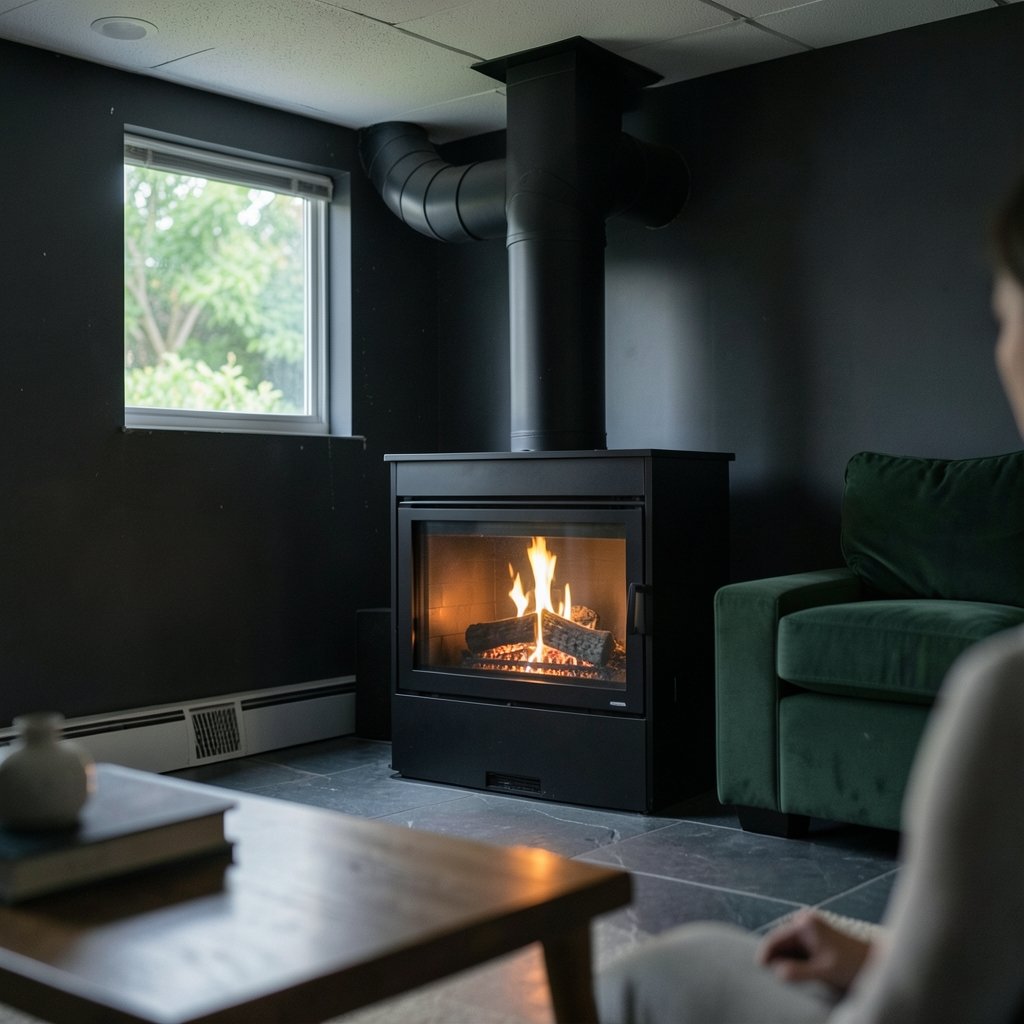
Think of the firebox as a small sealed box inside a bigger box. The inner box holds the flame. The outer shell keeps room air away from it. A glass front lets you see the fire but doesn’t let air pass.
Because the firebox is isolated, three things follow:
- No room-air draft. The fireplace doesn’t pull heated indoor air up a flue, which is why these units tend to be more efficient than natural-draft models.
- No indoor exhaust under normal operation. Combustion gases leave through the vent, not into the living room.
- Placement flexibility. Since the unit doesn’t need a full masonry chimney, it can vent horizontally through a side wall or vertically through the roof.
That last point is why direct vent fireplaces show up in remodels, basements, and rooms that never had a chimney. The vent can run out the wall behind the unit, subject to clearance rules and the manufacturer’s limits on run length and elbow count.
Direct Vent vs. Other Gas Fireplace Types
Not every gas fireplace is a direct vent unit, and mixing them up is one of the most common and most expensive mistakes. Here’s how the main types compare.
| Feature | Direct vent (sealed) | Natural draft (B-vent) | Vent-free (unvented) |
|---|---|---|---|
| Combustion air source | Outdoors | Indoors | Indoors |
| Exhaust destination | Outdoors | Outdoors via chimney | Room air |
| Firebox sealed from room | Yes | No | No |
| Suits tight modern homes | Yes | Often problematic | Yes, with limits |
| Needs a chimney or wall vent | Yes | Yes | No |
| Typical efficiency | Higher than natural draft | Lower | Very high (no flue loss) |
The vent-free column is where people get tempted. Vent-free units are cheap to install and don’t need a vent at all, but they release moisture and combustion byproducts directly into the room. Many jurisdictions restrict them, and some ban them outright in bedrooms and bathrooms. A direct vent fireplace costs more upfront but avoids that whole category of concern.
If you’re comparing equipment types more broadly, the same “sealed versus open” logic shows up in other gear decisions, like choosing between direct drive vs bowden 3d printer extruders which one suits your setup. The principle is identical: a closed, dedicated path usually beats an open one when precision and control matter.
The Codes That Govern Installation
In the United States, gas-fired appliances, including direct vent fireplaces, fall under the National Fuel Gas Code, published as NFPA 54 / ANSI Z223.1. That document covers venting, clearances, and where a vent terminal may legally terminate. In Canada, the governing standard is the CAN/CSA-B149.1 Natural Gas and Propane Installation Code, with B149.2 covering propane.
Two things trip people up here. First, codes are revised periodically, and your jurisdiction may be enforcing an older edition. Second, local amendments are common. The authority having jurisdiction, usually your local building department, has the final say on which edition applies and whether additional rules stack on top.
Vent termination clearances are the classic example. Codes set minimum distances from the vent terminal to windows, doors, air intakes, and grade. The exact numbers vary by code edition and jurisdiction. Anyone who quotes you a single figure without checking your local code is guessing. Ask your installer to show you the clearance table from the manual and the local code before the hole goes in the wall.
Horizontal vs. Vertical Venting
Direct vent systems can terminate two ways, and the choice shapes both the look and the cost.
Horizontal venting runs out a side wall. It’s usually cheaper, shorter, and easier to route in a remodel. The trade-off is that the terminal sits at eye level or lower on the exterior, so it needs careful placement away from windows, doors, walkways, and anything that could block it.
Vertical venting goes up through the roof. It looks cleaner from the outside and keeps the terminal away from ground-level obstructions, but it means more pipe, more penetrations, and higher labor.
Either way, the manufacturer’s manual sets hard limits on total vent run length and the number of elbows allowed. Exceed them and the unit may not draft properly, which defeats the entire purpose of sealed combustion. Some units use a powered vent with a fan to assist drafting, which changes those limits and the termination requirements. Always check the specific model’s manual rather than assuming.
Efficiency: What the Numbers Really Mean
Direct vent units are generally more efficient than natural-draft units because they don’t send conditioned indoor air up the flue. Some condensing models go further and recover latent heat from the exhaust, pushing efficiency higher still.
Here’s the honest part: exact efficiency figures vary widely by model. A single number quoted for “direct vent fireplaces” as a category is meaningless. Look at the specific unit’s rating, and remember that a fireplace’s real-world cost depends as much on how you use it as on its rated efficiency. Running a fireplace for ambiance a few hours a week is a different financial proposition than using it as a primary heat source.
That same logic applies to household energy decisions generally. Small, deliberate changes often beat dramatic overhauls, which is the thinking behind these practical ways to save money gas without changing your whole life.
What Actually Works in Practice
Manufacturer manuals typically call for annual inspection and cleaning of the vent terminal, the glass, and the burner, plus a check for blockage at the outdoor termination. Bird nests, snow, and drifting leaves are the usual culprits. A blocked terminal on a sealed-combustion unit can cause the pressure switch to shut the unit down, which is annoying but at least fails safe.
A few field-tested habits make a real difference:
- Clear the outdoor terminal before the first cold snap. Snow accumulation and nesting debris are the top cause of mid-winter no-starts.
- Read the clearance table before choosing a wall. Moving a vent six inches during planning is cheap; moving it after the hole is cut is not.
- Keep the glass clean but don’t obsess. A light film is normal. Heavy sooting suggests a combustion problem worth investigating.
- Install carbon monoxide alarms near sleeping areas. Sealed combustion is a strong safety design, but CO alarms are a general home-safety measure recommended regardless of appliance type.
- Don’t block the air intake or exhaust with furniture or decor. The concentric terminal needs breathing room on the outside, and interior clearances matter too.
The most common mistake isn’t a technical one. It’s assuming a direct vent fireplace can go anywhere because it “doesn’t need a chimney.” It does need a vent path, and that path has rules.
Installation Realities and Cost Drivers
Installation complexity drives most of the price variation. A straight horizontal run through a rim joist in a new build is a different job from a vertical run through a finished roof in an occupied home. Factors that move the number:
- Vent length and elbow count. More pipe and more turns mean more labor and more fittings.
- Wall or roof penetration. Roof work brings weatherproofing and often a roofer.
- Gas line routing. Distance from the meter or supply matters.
- Electrical. Many units need power for ignition, fans, or controls.
- Permits and inspection. Skipping these is a false economy and can void insurance coverage.
The permit step is where careful homeowners separate themselves from the rest. A direct vent fireplace is a gas appliance with a vent termination, and both the gas connection and the venting are inspected items in most jurisdictions.
Maintenance and Long-Term Ownership
Annual service is the baseline. A technician typically inspects the vent terminal for blockage, checks the burner and pilot assembly, cleans the glass, and verifies the pressure switch and safety shutoffs. Between visits, homeowners can do a few simple things: keep the exterior terminal clear, vacuum dust from accessible areas, and watch for changes in flame appearance.
Flame color is a useful diagnostic. A steady blue flame with occasional yellow tips is normal for many units. A persistently lazy, yellow, or lifting flame is worth a service call.
Longevity depends heavily on vent condition. A terminal that’s constantly battered by wind-driven rain or buried in snowdrifts will need more attention than one sheltered under an eave. If you’re thinking about how venting and airflow decisions play out over years, the same trade-offs appear in other home systems, like the choice between nas transcoding vs direct play cpu bandwidth compatibility when you’re planning a media setup that has to last.
Common Myths Worth Retiring
Myth: Direct vent fireplaces don’t need venting at all. They absolutely do. The “direct” refers to a dedicated path, not the absence of one.
Myth: Sealed combustion means zero indoor air impact. The firebox is sealed, but the unit still radiates heat into the room and needs clearance from combustibles. It’s a heating appliance, not a magic box.
Myth: Any wall works. Clearance rules exist for a reason. A terminal too close to a window or air intake can let exhaust re-enter the home.
Myth: Vent-free is always cheaper over time. Vent-free units avoid vent costs but often face usage restrictions and release moisture into the room. Total cost of ownership isn’t just the sticker price.
Conclusion
A direct vent gas fireplace earns its place in modern homes for one solid reason: it separates the fire from the air you breathe. The sealed firebox, the dedicated air intake, and the coaxial vent work together so the unit doesn’t steal your heated air or spill exhaust into the room. That engineering is why these units fit tight, energy-efficient houses where older natural-draft appliances struggle.
The catch is that “direct vent” is a design promise, not a guarantee. It only holds up when the vent run respects the manufacturer’s limits, the termination clears the code distances, and the terminal stays unobstructed through winter. Get those three things right and you have a fireplace that’s efficient, safe, and genuinely low-maintenance. Get them wrong and you have an expensive box that shuts itself off in January.
Plan the vent path before you fall in love with a wall. Read the manual’s clearance table. Pull the permit. Then enjoy the fire.
Frequently Asked Questions
What is a direct vent gas fireplace?
It’s a sealed-combustion gas fireplace that draws combustion air from outdoors through one channel and exhausts flue gases outdoors through another, usually in a single concentric pipe. The firebox is sealed from room air by a fixed glass panel, so the unit doesn’t depressurize the home or spill exhaust into the room under normal operation.
Does a direct vent fireplace need a chimney?
No, but it does need a vent. Direct vent systems can terminate horizontally through a side wall or vertically through the roof. That flexibility is why they work in remodels and rooms that never had a masonry chimney, subject to clearance rules and the manufacturer’s limits on vent length and elbow count.
Can a direct vent fireplace be installed in a bedroom?
Often yes, but it depends on local code and the specific model. Bedroom installation rules vary by jurisdiction, and some areas restrict or prohibit certain appliance types in sleeping rooms. Check with your local building department and confirm the model is rated for the location before planning the install.
How often does a direct vent fireplace need maintenance?
Manufacturer manuals typically call for annual inspection and cleaning of the vent terminal, glass, and burner, plus a check for blockage at the outdoor termination. Between service visits, keep the exterior terminal clear of snow, leaves, and nesting debris, since blockage is the most common cause of mid-winter shutdowns.
Is a direct vent fireplace safer than a vent-free one?
It’s a different safety profile. A direct vent unit sends combustion byproducts outdoors, while a vent-free unit releases them into the room along with moisture. Many jurisdictions restrict vent-free appliances, especially in bedrooms and bathrooms. Either way, carbon monoxide alarms near sleeping areas are a widely recommended general safety measure.
Why is my direct vent fireplace shutting off on its own?
The most common cause is a blocked or restricted vent terminal outdoors, which triggers a pressure switch safety shutoff. Snow, bird nests, and debris are typical culprits. A faulty pressure switch, ignition problem, or gas supply issue can also cause shutdowns, so if clearing the terminal doesn’t fix it, call a qualified technician.



