
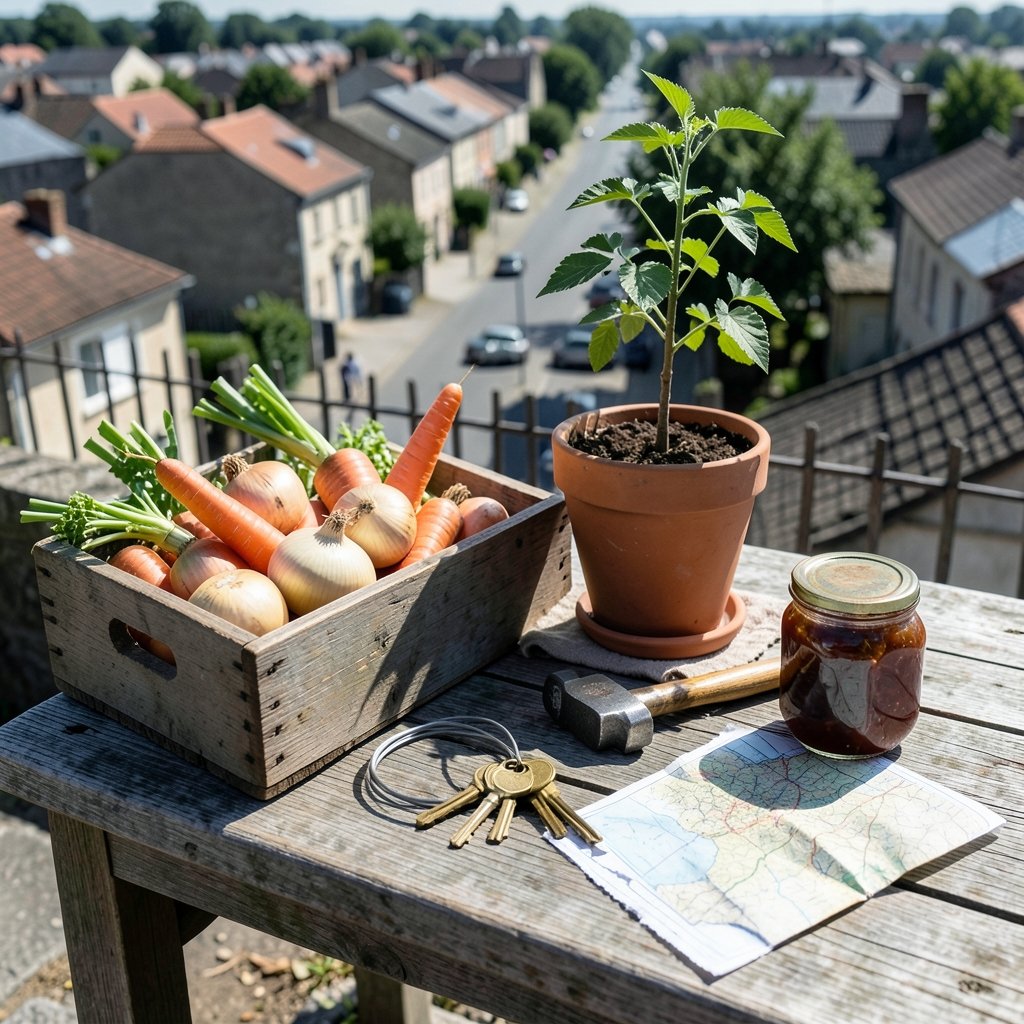
What happens to a town when the factory closes, the young people leave, and the main street starts to look like a ghost? That question runs through every conversation about remaking our heartland today. It is a practical puzzle, less a policy slogan than a problem thousands of small communities are trying to solve at once, often with limited money and a lot of stubbornness.
The phrase “heartland” gets used loosely. Sometimes it means rural farmland. Sometimes it means the post-industrial towns that powered a country’s economy for a century and then got left behind. Either way, the core challenge is the same: how do you rebuild a place that people still love but can no longer easily make a living in?
What “Remaking Our Heartland” Really Means
At its simplest, remaking our heartland describes the effort to give new economic and social life to regions outside big cities. That includes small towns, farming communities, coastal villages, and old manufacturing hubs. The label shifts depending on who is using it, but the underlying story rarely changes.
The story usually goes like this. A region had a purpose. A mine, a mill, a port, or a family farm network kept people employed and kept young adults from moving away. Then the purpose faded, and the community lost its economic anchor. What followed was a slow drift: fewer jobs, fewer services, fewer reasons to stay.
Remaking the heartland is the response to that drift. It is not one program or one government department. It is a mix of infrastructure investment, small business support, housing policy, digital connectivity, and the harder-to-measure work of rebuilding local confidence.
Why the Old Playbook Kept Failing

For decades, the standard approach to reviving a struggling region was to chase one big employer. Bring in a large factory or a distribution center, and the jobs will follow. That approach worked often enough in the twentieth century to become the default.
It fails more often now, for a few reasons:
- Big employers are more mobile. A company that gets tax breaks to move in can get better tax breaks to move out.
- Automation shrinks the job multiplier. A new plant that once hired 800 people may now hire 150.
- Single-anchor economies are fragile. When one employer dominates a town, one closure can wipe out the whole local economy.
The lesson that keeps surfacing in community development work is that resilience comes from many small bets, not one giant one. A town with forty small businesses and a diversified tax base can absorb a shock that would flatten a one-employer town.
The Practical Building Blocks of Revival
When you look at communities that have genuinely turned things around, the same ingredients show up again and again. None of them are glamorous. Most of them are slow.
Housing That Local Workers Can Actually Afford
This is the bottleneck people underestimate most. A town can create jobs, but if there is nowhere for new workers to live, the revival stalls. In many rural and small-town markets, the housing stock is old, poorly maintained, and owned by absentee landlords. Fixing that takes targeted rehab programs, modest infill construction, and zoning changes that allow smaller, cheaper homes.
A common mistake is chasing large speculative developments. What usually works better is incremental housing: repairing existing homes, converting empty upper floors of main-street buildings into apartments, and allowing accessory units. These moves are cheaper, faster, and less likely to distort the local market.
Broadband and Basic Connectivity
It is hard to overstate how much digital infrastructure now determines whether a small town can compete. Remote work, telehealth, online education, and modern farming technology all depend on reliable internet. Communities without it lose both businesses and residents to places that have it.
The practical tip here: when a region gets connectivity funding, the follow-through matters more than the announcement. Training residents to use the new infrastructure, and actively recruiting remote workers, turns a cable in the ground into actual economic activity.
Main Street Reinvestment
Downtowns are a signal. A main street with boarded windows tells visitors and residents alike that the town has given up. A main street with a few occupied storefronts, even modest ones, signals momentum.
What works in practice is usually unglamorous: facade improvement grants, pop-up leases that let new businesses test ideas cheaply, and events that give people a reason to come downtown. What tends not to work is a single large civic building project that consumes the entire budget and leaves nothing for the small stuff.
Skills That Match Local Reality
Retraining programs fail when they prepare people for jobs that do not exist locally. They work better when they are built around what the region can realistically support, whether that is advanced manufacturing, care work, tourism, food processing, or trades.
The communities that get this right tend to build partnerships between employers, colleges, and local government so that training is tied to actual hiring needs rather than generic certificates.
The Role of Money and Outside Attention
Money helps, but how it arrives matters. Lump-sum grants with tight deadlines often overwhelm small local governments that lack the staff to administer them. Flexible, multi-year funding tends to produce better results because communities can sequence projects instead of rushing them.
Outside attention cuts both ways. A wave of media coverage or a sudden influx of visitors can lift a town’s profile, but it can also drive up housing costs and push out the very residents the revival was meant to help. The communities that handle this well tend to plan for it early, protecting affordable housing and supporting locally owned businesses rather than letting outside capital capture all the gains.
The way money and attention move through modern media ecosystems is itself worth understanding. Search trends and viral moments can shape which places get investment and which get ignored, a dynamic that shows up in everything from creator earnings to how a single search spike can distort perceptions of a place or a person, as seen in analysis of the Megan makin money Joi search trend and what it actually reveals. That same attention economy affects small towns trying to attract visitors and investment.
Measuring Success Without Fooling Yourself
One of the biggest traps in regional revival is measuring the wrong things. Ribbon-cuttings and grant announcements feel like progress, but they are inputs, not outcomes.
Better measures include:
| Weak Indicator | Stronger Indicator |
|---|---|
| Number of grants awarded | Number of new businesses still open after three years |
| Jobs “announced” | Payroll tax actually collected |
| Visitors at an event | Overnight stays and repeat visits |
| New buildings permitted | Occupancy rates and local ownership share |
| Population headline | Net migration of 25-to-40-year-olds |
That last row matters more than it looks. A town that keeps its young adults, or attracts new ones in their prime working and family-forming years, is usually doing something right. A town that only grows its retiree population may look stable on paper while quietly losing its future.
What Actually Works in Practice
Across many attempts, a few practical patterns stand out. They are not secrets, but they are easy to skip when a community is desperate for a quick win.
Start with what exists. The strongest revivals build on existing assets, whether that is a river, a historic building stock, a regional food culture, or a cluster of skilled tradespeople. Importing an entirely new identity rarely sticks.
Go small and fast first. A pilot project that opens in six months teaches more than a master plan that takes six years. Communities that run small experiments, learn, and scale what works tend to outperform those waiting for a perfect strategy.
Build local ownership. Businesses owned by people who live in the town reinvest locally and stay through downturns. Programs that help residents buy or start businesses often deliver more durable results than recruiting outside chains.
Fix the boring stuff. Permitting, parking, signage, and code enforcement are unglamorous, but they determine whether a new business can open at all. Streamlining local rules is one of the cheapest revival tools available.
Protect the social fabric. Churches, sports clubs, libraries, and volunteer groups are the connective tissue of a small town. Revival efforts that ignore them can succeed economically while leaving residents feeling that the place they loved has been replaced.
Common Mistakes That Sink Good Intentions
Even well-funded efforts stumble on predictable errors. Chasing a marquee project that consumes the whole budget is one. Ignoring housing until workers cannot find a place to live is another. A third is treating residents as obstacles rather than partners, which breeds resistance that can stall even sensible plans.
Another frequent mistake is confusing growth with wellbeing. A town can add population and jobs while becoming less affordable, more congested, and less cohesive. Remaking a heartland well means asking what kind of place residents actually want, rather than only how to make the numbers go up.
There is also a quieter risk: burnout. Revival work is often carried by a small group of volunteers who eventually tire out. Building paid capacity, even part-time, and spreading leadership across many people keeps efforts alive past the first wave of enthusiasm.
Where the Heartland Conversation Is Heading
The next phase of this work is likely to be shaped by three forces. First, remote and hybrid work has made some small towns viable in ways they were not a decade ago, though the effect is uneven. Second, aging populations in many rural areas are reshaping labor markets and service needs. Third, climate pressure is pushing some regions to rethink agriculture, water, and energy in ways that will redraw local economies.
None of these forces is purely a threat. Each creates openings for communities that plan ahead. The regions that adapt will be the ones that treat remaking the heartland as an ongoing practice rather than a one-time campaign.
For readers interested in how information and money flow through these regional stories, the way a single viral moment or a piece of legislation can reshape a whole sector is instructive. The HR 7567 Save Our Bacon farm bill and prediction markets debate, for instance, shows how policy signals reach rural economies long before any money lands. Similarly, the economics of attention, from Michael Jackson’s posthumous earnings to the real earnings of adult content creators, illustrate how value gets created and captured in ways that rarely match the headlines. And for anyone weighing side income while living in a low-cost region, breakdowns of which money-making apps actually pay in 2026 offer a grounded starting point.
Conclusion
Remaking our heartland is not a single fix. It is a long, patient process of many small decisions: affordable housing, real connectivity, support for local businesses, training that matches actual jobs, and the protection of the social ties that make a place worth living in. The communities that succeed are rarely the ones with the biggest grant or the flashiest plan. They are the ones that start with what they already have, move quickly on small experiments, and measure what actually changes people’s lives rather than what looks good at a ribbon-cutting. The heartland does not need to be reinvented from scratch. It needs to be rebuilt by the people who never left.
FAQ
What does “remaking our heartland” mean?
It refers to efforts to restore economic and social vitality to regions outside major cities, including rural areas, small towns, and former industrial communities. The work usually combines housing, infrastructure, business support, skills training, and community-building.
Why do single-employer strategies often fail?
Because a town dependent on one large employer is fragile. If that employer closes or automates, the whole local economy can collapse. Communities with many smaller, locally owned businesses tend to absorb shocks far better.
What is the biggest hidden barrier to rural revival?
Housing is often the bottleneck people overlook. Even when jobs exist, workers cannot move in if there is nowhere affordable to live. Fixing existing homes and allowing smaller, cheaper units usually beats waiting for large new developments.
How should success be measured?
Focus on outcomes, not announcements. Track how many new businesses survive past three years, actual payroll collected, overnight stays, and net migration of people in their prime working years. These reveal whether real change is happening.
Can outside investment hurt a small town?
Yes, if it is unmanaged. A sudden influx of visitors or capital can drive up housing costs and push out longtime residents. Communities that plan early to protect affordable housing and support local ownership capture more of the benefit.
What can one person do to help their own community?
Start small and local. Support locally owned businesses, join or revive a civic group, show up to planning meetings, and back modest projects that can open quickly. Many successful revivals began with a handful of residents running small experiments.



