
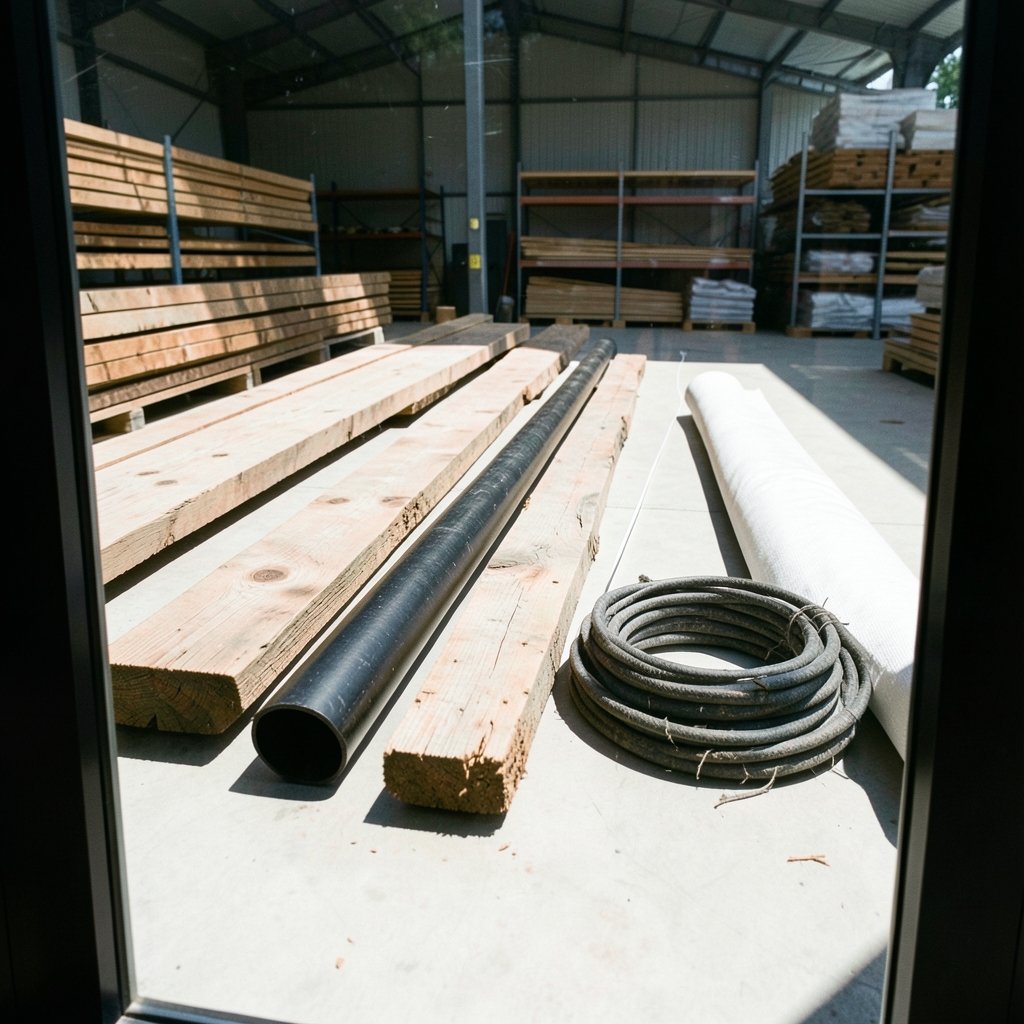
Quick Answer: What is a linear foot?
A linear foot is a measurement of length equal to 12 inches, or about 0.3048 meters, used for items sold by how long they are rather than by area or volume. The word “linear” simply signals that width and thickness are not part of the number, which is why lumber, fencing, pipe, fabric, and cable are often priced this way.
It is not a different unit from the ordinary foot. A linear foot and a foot are the same distance; only the context changes. That separates it from a square foot, which measures area, and a board foot, which measures volume in lumber.
Before buying anything quoted this way, check the stated width or height, the nominal versus actual dimensions, the quantity rounding rules, the waste allowance for cuts, and whether delivery or installation is priced separately.
Why This Tiny Phrase Trips Up So Many Buyers
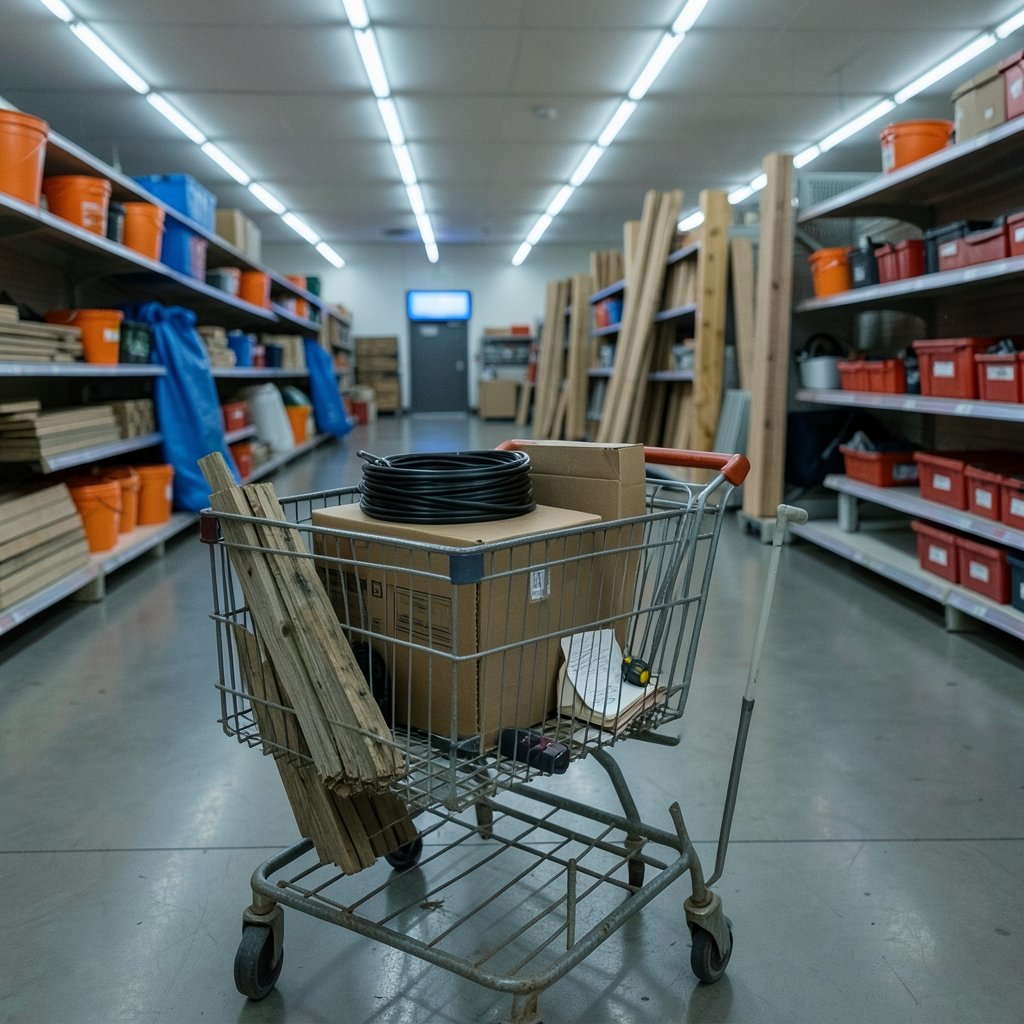
Picture the scene. Someone stands in a hardware aisle holding a quote for decking, fencing, or shelving, squinting at the phrase “priced per linear foot,” and wondering whether they have been quoted for the right amount of material. It happens constantly, and it is not because the shopper is careless. It is because “linear foot” sounds technical when it is really one of the plainest measurements in the building trades.
The confusion has real costs. Buy too little and the project stalls halfway through. Buy too much and money sits unused in the garage. Misread a linear-foot quote as a square-foot quote and a budget can be off by a factor of two or more.
This guide breaks the term down the way a contractor or fabric-shop clerk would explain it across a counter: what the unit means, where it shows up, how it converts, and where people go wrong. No jargon walls, no math for its own sake. Just the working knowledge that makes a quote readable at a glance.
The Plain Definition, Minus the Jargon
A linear foot is a one-dimensional measure of length. It equals 12 inches, or exactly 0.3048 meters under the international definition of the foot. If a board is 8 linear feet long, it is 8 feet long. That is the entire idea.
The word “linear” does one job: it tells the reader that only length is being counted. Width and thickness are left out of the price or quantity on purpose. A 1-inch-wide strip of trim and a 12-inch-wide plank can both be “6 linear feet” if both are 6 feet long.
That is why the term shows up in sales contexts far more than in science. It is a method-of-sale label, a way of saying “you pay for the run, not the surface.” In the United States, model weights-and-measures regulations address how commodities sold by length must be measured and priced, which is the legal backbone behind those labels on shelves and invoices.
One honest caveat worth stating up front: there is no single encyclopedia entry or dedicated standard titled “linear foot.” The term is defined by everyday usage and by retail and regulatory practice, not by a standalone rulebook. That is precisely why it confuses people.
Linear Foot vs. Square Foot vs. Board Foot
Most mistakes come from mixing up three units that sound similar but measure completely different things. Here is the clean comparison.
| Unit | What it measures | Formula | Typical use |
|---|---|---|---|
| Linear foot | Length only | Just the length | Lumber runs, fencing, pipe, cable, fabric, trim |
| Square foot | Area | Length × width | Flooring, roofing, paint coverage, sod, tile |
| Board foot | Volume (in lumber) | Length × width × thickness ÷ 12 | Hardwood lumber, some specialty stock |
| Linear yard | Length only | 3 linear feet | Fabric sold off the bolt |
The board foot deserves a closer look because it is the unit most often confused with the linear foot. A board foot is 1 foot long by 1 foot wide by 1 inch thick, or 144 cubic inches. Hardwood lumber in the U.S. is commonly priced this way, while softwood dimensional lumber is often priced per linear foot for a given nominal width and thickness.
The practical consequence: a linear-foot price and a board-foot price cannot be compared directly without knowing dimensions. A cheap-looking linear-foot quote on thick stock can cost more than a pricier board-foot quote on thin stock. Anyone comparing quotes across suppliers should convert both to the same unit first, the same discipline that pays off when you compare tools side by side using a linear alternatives checklist for choosing the right issue tracker approach to apples-to-apples evaluation. (Set up linear alternatives practical migration guide)
Where Linear Feet Show Up in Real Life
The unit is everywhere once you start noticing it. These are the most common places a shopper or homeowner will meet it.
Lumber and Building Materials
Dimensional softwood, trim, molding, and decking boards are frequently quoted per linear foot at a stated nominal width and thickness. A quote for “1×4 trim at $1.20 per linear foot” tells you the price depends only on how long the pieces are.
Fencing
Chain-link fence, fence panels, and railing systems are commonly priced per linear foot of run. Height and gauge may change the per-foot rate, but the quantity is measured along the fence line. This is why a fence quote for a corner-heavy yard can look different from a straight-run quote of the same total length.
Fabric and Textiles
Fabric is sold by the linear yard or linear foot measured along the bolt, with the fabric’s width stated separately, such as “44/45 inches wide.” Two fabrics at the same price per linear foot can differ enormously in value if one is twice as wide.
Pipe, Cable, and Cordage
Plumbing pipe, electrical conduit, wire, rope, and hose are all sold by the running foot. The length is what matters; diameter or gauge is specified separately.
Flooring and Countertops
Some plank flooring and edging products are quoted per linear foot, while the main flooring surface is quoted per square foot. Seeing both units on one invoice is normal and not a sign of an error.
How to Convert Linear Feet Without Getting Lost
The conversions are simple once the definitions are locked in. The foot is defined as exactly 0.3048 meters, so every conversion below follows directly from that.
- 1 linear foot = 12 inches
- 1 linear foot = 0.3048 meters
- 1 linear yard = 3 linear feet
- 1 linear foot = 1/3 linear yard
To go from linear feet to square feet, multiply by the width in feet. A 10-foot run of material that is 2 feet wide covers 20 square feet. To go from square feet back to linear feet, divide by the width. That single step resolves most quote confusion.
For board feet, multiply length in feet by width in inches by thickness in inches, then divide by 12. A 6-foot board that is 6 inches wide and 1 inch thick is 3 board feet.
A quick habit that saves grief: write the unit next to every number on a quote before comparing anything. “40” means nothing; “40 linear feet” means something specific.
Mistakes People Make With Linear-Foot Quotes
Knowing the traps in advance is half the battle. These are the ones that come up again and again.
Mixing nominal and actual dimensions. A “2×4” is not 2 inches by 4 inches. The nominal label is a name, not a measurement. Width and thickness affect square-foot and board-foot math, so always confirm actual dimensions before calculating.
Forgetting waste allowance. Cuts, defects, and offcuts mean the material needed usually exceeds the measured run. A common practice is to add roughly 10 percent for straightforward layouts and more for diagonal or complex patterns. Skipping this step is the classic reason a project runs short.
Comparing a linear-foot price to a square-foot price. This is the single most expensive error. The two units measure different things, and the gap can be large. Convert to a common unit before deciding which supplier is cheaper.
Ignoring minimum order and rounding rules. Some sellers round up to the next foot or require a minimum length. A 7-foot-4-inch need may be billed as 8 linear feet. Ask before ordering.
Overlooking separate charges. Delivery, cutting fees, installation, and finishing are frequently priced outside the per-foot rate. The headline number is rarely the final number.
Assuming width is included. It never is. If width matters to the project, it must be specified and priced separately.
The same discipline applies beyond the lumber yard. Anyone comparing service quotes, software plans, or even local options benefits from lining up the units and terms before deciding, much as a reader would when using a practical setup guide for getting started with linear alternatives to evaluate options on equal footing.
What Actually Works in Practice
A few habits separate smooth purchases from frustrating ones, and none of them require special tools.
Measure twice, and measure the actual run rather than an estimate from memory. Write the measurement down in feet and inches, then convert to decimal feet before doing any math. A 12-foot-6-inch run is 12.5 feet, not 12.6.
Ask the seller three questions before ordering: what width or height does this price assume, how is quantity rounded, and what is excluded from the per-foot rate. The answers usually surface every hidden variable at once.
Keep a simple sketch with lengths labeled. For fencing or decking, mark corners and gates, since hardware and posts are often priced per unit rather than per foot. For fabric, note the width and the pattern repeat, because both affect how much yardage a project truly needs.
Finally, keep the quote and the receipt together. If a delivery arrives short or a charge looks wrong, having the unit written down turns a argument into a two-minute conversation.
Conclusion
A linear foot is nothing more than a foot of length, used when only length matters. The confusion around it comes from its neighbors: the square foot, which measures area, and the board foot, which measures volume. Once those three are separated in the mind, quotes for lumber, fencing, fabric, pipe, and cable become readable at a glance.
The practical playbook is short. Confirm what the per-foot price assumes, check nominal versus actual dimensions, add a sensible waste allowance, and convert everything to the same unit before comparing suppliers. Do that, and the tiny phrase “per linear foot” stops being a source of doubt and becomes what it was always meant to be: a straightforward way to buy exactly the length needed.
Frequently Asked Questions
Is a linear foot the same as a regular foot?
Yes, in terms of distance. A linear foot equals 12 inches, exactly the same as an ordinary foot. The word “linear” adds context rather than length. It signals that the measurement covers length only, with width and thickness excluded from the price or quantity.
How many linear feet are in a square foot?
There is no fixed answer, because the two units measure different things. A square foot is an area, while a linear foot is a length. The relationship depends on width: a 1-foot-wide strip has 1 linear foot per square foot, while a 2-foot-wide material has half a linear foot per square foot.
Why is lumber sometimes priced per linear foot and sometimes per board foot?
It depends on the product and the market. Softwood dimensional lumber and trim are often priced per linear foot at a stated nominal width and thickness, which makes ordering by run length simple. Hardwood lumber is commonly priced per board foot because volume matters more for that stock. The units are not interchangeable without conversion.
Does a linear foot include width or thickness?
No. A linear foot measures length alone. If a project depends on width or thickness, those dimensions must be specified separately and may change the price. This is why two materials quoted at the same rate per linear foot can deliver very different value.
How much extra material should be added to a linear-foot measurement?
A common practice is to add about 10 percent for straightforward layouts to cover cuts and defects, with more allowed for diagonal runs or complex patterns. Sellers may also round quantities up to the next foot, so it helps to confirm the rounding rule before ordering.
Can linear feet be converted to meters?
Yes. One linear foot equals exactly 0.3048 meters, a conversion fixed by the international definition of the foot. To go the other way, divide the meter figure by 0.3048. For rough planning, multiplying meters by about 3.28 gives a close estimate in feet.



