
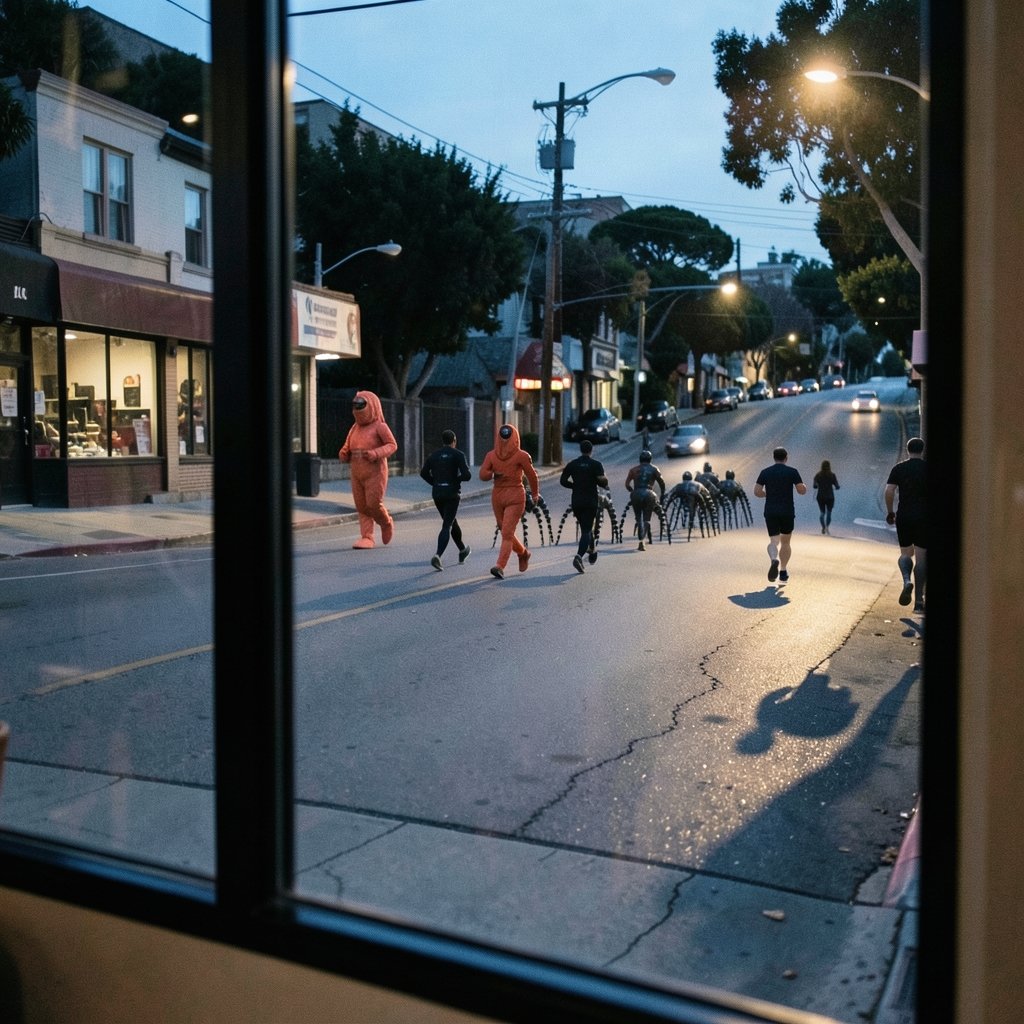
What other footrace on earth puts world-class distance runners, a pack of tethered centipedes, and a guy in a full-body salmon costume on the same starting line? That is the strange, loud, and genuinely beloved world of Bay to Breakers, San Francisco’s annual 12K that has been running since 1912. The 2026 edition is the one people are already planning costumes for, booking hotel rooms around, and arguing about in group chats. Here is a practical, honest look at what the race is, how to prepare for it, and where the reliable information actually comes from.
A Race With More Than a Century Behind It
Bay to Breakers was first staged in 1912 as a cross-city race meant to show off San Francisco’s recovery after the 1906 earthquake and fire. That origin story matters more than it might seem. The event was born as a civic statement, not a commercial product, and that spirit still shapes it. It is one of the oldest continuously run footraces in the United States.
The name describes the route: runners start near the Embarcadero on the San Francisco Bay side and finish at Ocean Beach on the Pacific. The course runs roughly 12 kilometers, or about 7.46 miles. Exact start and finish lines have shifted over the decades as the city’s streets and permit requirements changed, so anyone training on the route should treat older maps with suspicion.
The race has historically combined two events in one: an elite invitational competition and a mass participatory fun run. In peak years the field has numbered in the tens of thousands. That dual identity is the whole point. You can line up next to someone chasing a course record and someone dressed as a slice of sourdough toast, and neither of you finds it odd.
The 2026 Date: What Is Confirmed and What Is Not
Here is where honesty is required. Bay to Breakers is traditionally held on the third Sunday in May, which would put the 2026 edition in mid-May. But the specific 2026 date, start time, route details, and operating organization have not been independently confirmed in the research behind this article.
That is not a reason to panic. It is a reason to be careful about what you read. Every year, a wave of aggregator sites and social posts publish race dates that turn out to be wrong, copied from the previous year, or invented outright. The pattern is predictable enough that it is worth naming as a common mistake.
What actually works: check the official race organizer’s page and the City and County of San Francisco’s event permit and public-safety notices before you book anything non-refundable. The city publishes street-closure and transit advisories for major events, and those notices are tied to real permit records. If a date appears on a random event-listing site but not on the organizer’s page or a city notice, treat it as a rumor.
For anyone traveling in, the safe play is to plan around mid-May generally and lock in flights and hotels only once the organizer confirms. Refundable bookings are worth the small premium on this race.
How the Course Actually Feels
Twelve kilometers sounds manageable, and it is. But Bay to Breakers is not a flat, fast stroll. The route crosses San Francisco, which means hills, and the most famous of them is the Hayes Street Hill around the middle of the course. It is short, steep, and crowded, and it has a way of humbling people who went out too fast in the first two miles.
Three things separate a good Bay to Breakers from a miserable one:
- Start slower than feels natural. The first stretch along the Embarcadero is flat and adrenaline-soaked, and the temptation to sprint is enormous. Don’t.
- Walk the hill if you need to. Nobody is judging. Half the field is walking it anyway, and the costumed chaos makes walking genuinely fun.
- Save something for the finish. The last miles toward Ocean Beach are exposed, and the ocean wind can be cold even in May. A throwaway layer you can ditch is worth carrying.
The course is also a road race on open city streets with closures, so surface conditions vary: asphalt, painted lines, occasional patches. Trail shoes are overkill; a well-cushioned road shoe is right.
Costumes, Centipedes, and the Culture Question
Bay to Breakers is famous for costumed participants, for a long tradition of nude and near-nude runners, and for centipede teams: groups tethered together in one long costume, moving as a single awkward organism. These traditions are decades old and are central to the event’s public image.
If you are new to the race, a few practical notes help. Costumes should be runnable rather than merely photogenic. Anything with loose trailing fabric, full-face masks that limit breathing, or foam structures wider than your shoulders will become a problem by mile four. Hydration access matters more than costume polish. And if you are joining a centipede, agree in advance on pace and on when the team will break formation, because tethered running is harder than it looks and the tether does not care about your personal best.
The nudity tradition is part of the race’s identity and is generally handled with a kind of collective shrug by participants and spectators. Runners who prefer a fully clothed experience are in the overwhelming majority and should not feel out of place.
Training That Fits a 12K
A 12K sits in an awkward zone: longer than a 10K, shorter than a half marathon. Most people can finish it on modest training, but finishing comfortably is a different goal.
A workable eight-week structure for someone already running a few times a week:
- Weeks 1 to 3: three runs per week, building the long run from about 5K to 8K, plus one session of short hill repeats to prepare for Hayes Street.
- Weeks 4 to 6: long run up to 10K, one tempo run at comfortably hard effort, one easy run. Add a weekly hill session.
- Weeks 7 to 8: taper the long run back to 7K to 8K, keep intensity light, and arrive fresh.
The single most common training mistake is neglecting hills entirely and then meeting Hayes Street cold. Ten minutes of hill repeats once a week changes the race completely. The second most common mistake is doing too much in the final week out of nerves.
Logistics, Crowds, and Getting Home
Race morning in San Francisco is a transit puzzle. Street closures are extensive, and driving to the start is a bad idea in almost every scenario. Public transit is the sane choice, and the city publishes advisories for major events that spell out reroutes and closures. Check those advisories in the days before the race, not weeks ahead, because details firm up late.
The finish at Ocean Beach is a long way from the start, which creates a specific problem: you finish at the ocean and your car, hotel, or brunch reservation may be back near the bay. Plan the return trip before race morning. Know which transit lines are running near the finish area and give yourself slack, because tens of thousands of people are all trying to leave at once.
Bag check policies, wave starts, and corral assignments are all organizer-specific details that change year to year. Read the participant guide when it publishes rather than relying on a friend’s memory of a race three years ago.
Records, Elites, and Why the Fast End Matters
The elite race is not a sideshow. Historically the men’s course record sits in the low 33-minute range and the women’s in the high 30s to low 40s, though exact times and whether those marks still stand should be confirmed against official results rather than repeated from memory. Records fall, courses get remeasured, and conditions vary.
Why care if you are running a 9-minute-mile pace? Because the presence of a genuine elite field is what keeps Bay to Breakers a race rather than a parade. It preserves the event’s standing in the sport and keeps the organizational standards high. It is also genuinely thrilling to watch the leaders come through while you are still shuffling toward the hill.
For anyone interested in the broader context of how major events and technology infrastructure intersect in 2026, the same forces of scale, permits, and logistics show up everywhere, from the distributed cloud roadmap planning that keeps timing systems running to the way cities manage huge public gatherings.
What to Bring and What to Leave Behind
The packing list for Bay to Breakers is short and unglamorous:
| Bring | Leave behind |
|---|---|
| Throwaway warm layer | Anything you cannot afford to lose |
| Small soft flask or belt | Heavy hydration packs that chafe |
| Phone in a secure pocket | Loose items in unzipped pockets |
| Sunscreen and a hat | Full-face masks that restrict breathing |
| Cash or card for post-race food | Valuables with no secure storage plan |
The throwaway layer deserves emphasis. Race morning near the Embarcadero can be cold and foggy, and Ocean Beach can be windy and cold too, but the middle of the course can warm up fast. A cheap sweatshirt you can shed and abandon at a designated drop point is the classic solution.
Watching the Race Instead of Running It
Spectators get a genuinely great event. The Hayes Street Hill is the best viewing spot because it produces the most drama: elites gliding up it, centipedes collapsing on it, crowds roaring. Get there early, because it fills up.
The finish at Ocean Beach is atmospheric but windy and cold, and the transit crush afterward is real. Many spectators watch the hill and then walk to a neighborhood spot for food rather than fighting the crowd at the beach.
The Wider 2026 Picture
Big public events in 2026 operate in a different climate than they did a decade ago. Permits, insurance, transit coordination, and public-safety planning have all gotten more complex, and that complexity is visible across the tech and infrastructure world too. The same year has brought intense debate about the AI infrastructure race and its echoes of the 2000 telecom bust, and about how platform economics shape what consumers pay, as in the Apple Supreme Court case over app store fees. None of that changes your mile splits, but it explains why event logistics and city coordination keep getting more involved.
Conclusion
Bay to Breakers 2026 is a 12K road race with a century of history, a serious elite competition, and a sense of humor that no other major race can match. The preparation is straightforward: build a modest base, run some hills, respect Hayes Street, plan your transit, and pack light. The uncertainty is real too. The 2026 date, route specifics, and operating details should be confirmed through the official organizer and city permit notices rather than secondhand listings. Do that, and the rest is easy. Train sensibly, costume wisely, and enjoy the strangest, friendliest 7.46 miles in American running.
Frequently Asked Questions
When is Bay to Breakers 2026?
The race is traditionally held on the third Sunday in May, which would place the 2026 edition in mid-May. However, the specific 2026 date, start time, and route have not been independently confirmed. Runners should verify through the official race organizer and City and County of San Francisco event notices before booking travel.
How long is the Bay to Breakers course?
The course runs roughly 12 kilometers, about 7.46 miles, from near the Embarcadero on the San Francisco Bay side to Ocean Beach on the Pacific. Exact start and finish lines have shifted over the years, so current route maps should be checked against official race materials rather than older versions.
Do you have to wear a costume to run Bay to Breakers?
No. Costumes are a famous tradition and a huge part of the event’s identity, but plenty of participants run in ordinary athletic clothing. If you do dress up, choose something runnable: avoid restrictive masks, trailing fabric, and structures wider than your shoulders, and make sure you can still drink water comfortably.
What is a centipede team at Bay to Breakers?
A centipede is a group of runners tethered together in a single long costume, moving as one unit. The tradition is decades old. Teams should agree on pace and on when to break formation before the start, because tethered running is harder than it looks and the group moves at the slowest member’s pace.
Is the Hayes Street Hill really that hard?
It is short and steep, and it arrives after the fast flat opening along the Embarcadero, which is exactly when runners are most tempted to have gone out too hard. Walking it is completely normal. A few weeks of weekly hill repeats beforehand makes an enormous difference to how it feels.
How should spectators and runners handle getting home?
Street closures are extensive, so public transit is the practical choice. The finish at Ocean Beach is far from the start, and tens of thousands of people leave at once. Check the city’s event transit advisories in the days before the race, plan the return route in advance, and allow extra time.



